Special monthly compensation
Make sense of SMC
Find relevant guides, understand the levels, and explore your next question.
Your situation
Which guides might help?
Answer what you can. Every question is optional.
The SMC reference
Different needs, different pathways
Start with a guide, or open the complete rate comparison.
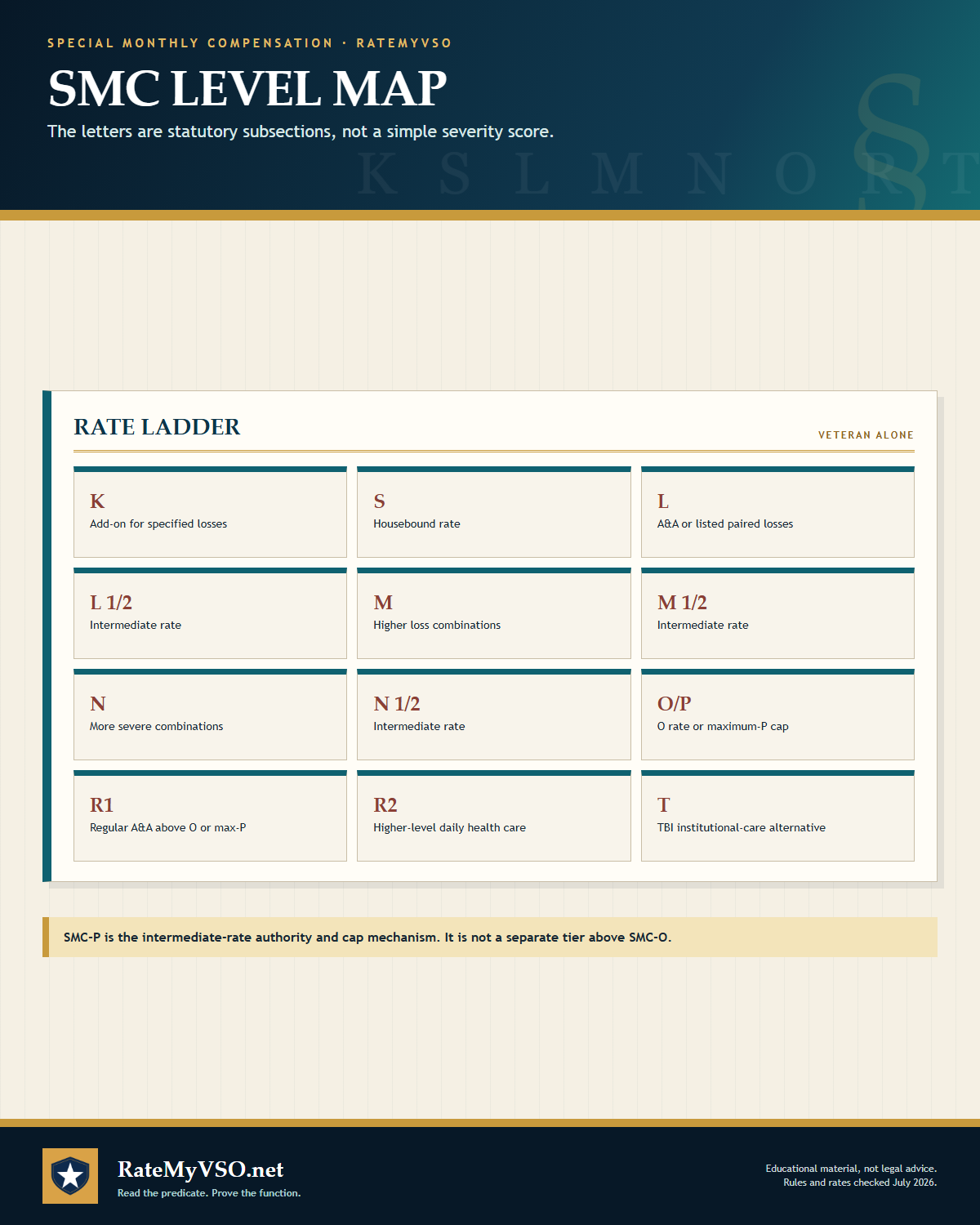
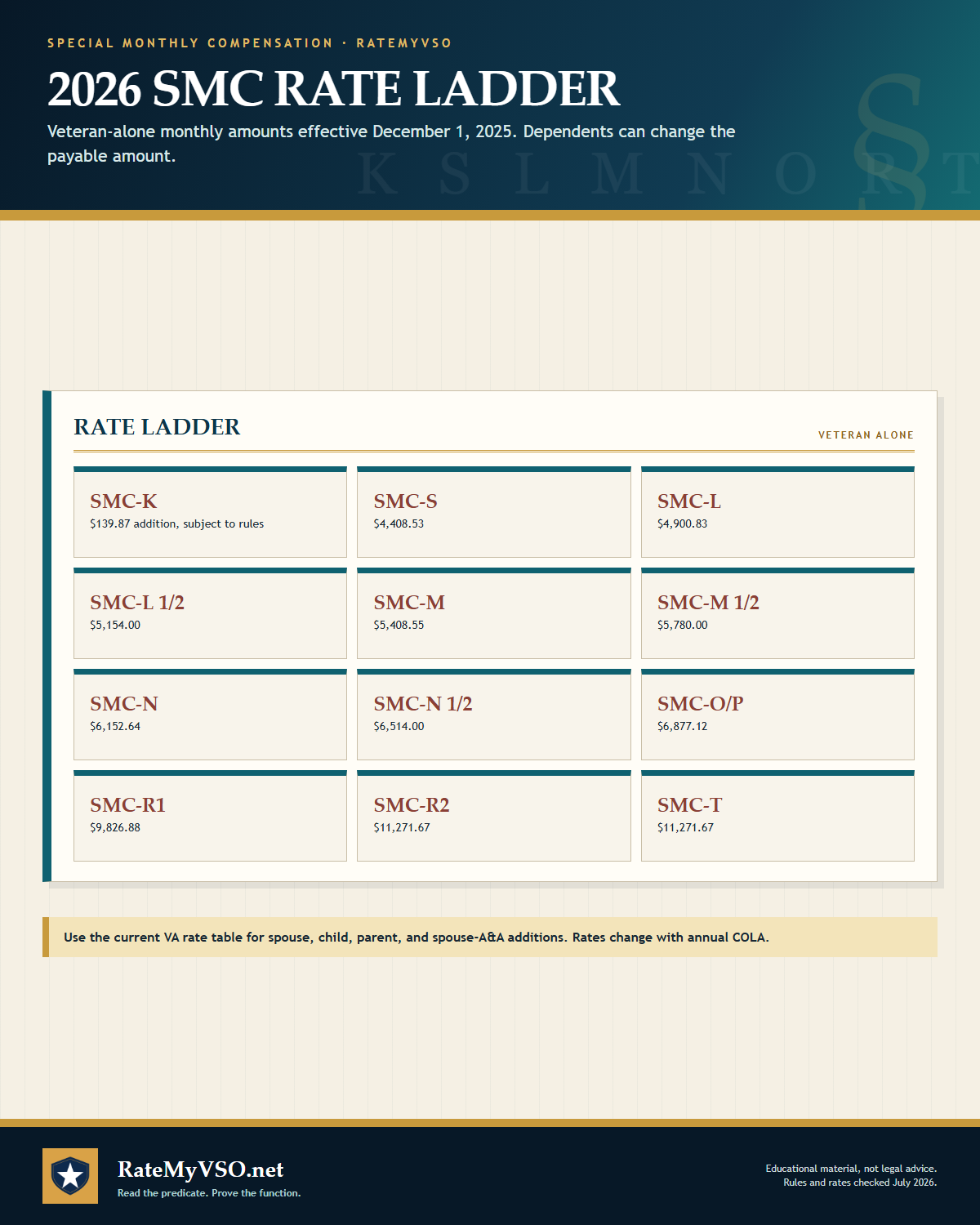
2026 reference rates. Effective December 1, 2025, veteran alone. Dependent additions are extra. SMC-K is an add-on and SMC-P is a rate mechanism, so these cards are not a series of eligibility steps and the amounts do not add up to an award.
SMC-K
Loss / loss of use
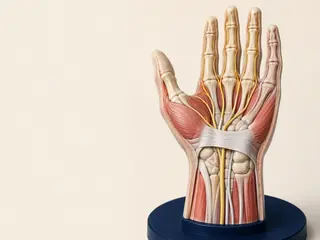
A qualifying anatomical loss or loss of use.
SMC-S
Housebound

Explore the two housebound pathways.
SMC-L
Aid and attendance

Regular assistance with personal functions and daily life.
SMC-M
Loss combinations

Specific paired losses and functional criteria.
SMC-N
Higher loss combinations

Further anatomical, functional and vision criteria.
SMC-O
Highest statutory rate

Qualifying combinations and the L-through-O cap.
SMC-P
Intermediate rates
The mechanism for half-step rates, not a separate tier.
SMC-R
R1 and R2 care levels
Distinct care requirements and their underlying predicates.
SMC-T
TBI and aid and attendance

The separate TBI-related aid-and-attendance pathway.
Full comparison chart
SMC rates are set by Congress and adjusted annually for cost of living. The rates below are 2026 values (effective Dec 1, 2025; 2.8% COLA) for a veteran with no dependents.
| Level | Common Name | Approx. Monthly Rate | Typical Qualifier |
|---|---|---|---|
| SMC-K | Loss of Use | $139.87 | Loss or loss of use of a creative organ, one hand, one foot, or one eye. Added on top of the basic rate and most SMC levels, but not on top of SMC-O, Q, or R. |
| SMC-S | Housebound | $4,409 | One condition rated as total (schedular 100%, or TDIU on that one condition) + 60% or more from separate conditions, OR permanently housebound. |
| SMC-L | Aid & Attendance | $4,900.83 | Need regular aid & attendance of another person due to service-connected disabilities. |
| SMC-L½ | A&A + Additional | $5,154 | A&A need plus additional loss of use or anatomical loss beyond what qualifies for SMC-L. |
| SMC-M | - | $5,409 | Specific combinations of anatomical loss or loss of use (e.g., two extremities). |
| SMC-M½ | - | $5,780 | SMC-M criteria plus additional loss of use. |
| SMC-N | - | $6,153 | More severe combinations (e.g., anatomical loss of both arms, bilateral blindness with loss of extremity). |
| SMC-N½ | - | $6,514 | SMC-N criteria plus additional loss. |
| SMC-O | Highest Standard | $6,877 | Most severe combinations: bilateral amputations, blindness + bilateral loss of use, etc. Statutory predicate for SMC-R1/R2. |
| SMC-P | Intermediate cap | $6,877 | Not a separate tier. § 1114(p) is the statutory mechanism for half-step rates (L½, M½, N½, O½), capped at the SMC-O dollar amount. |
| SMC-R.1 | A&A Higher | $9,827 | Entitlement to SMC-O, the maximum rate under 1114(p), or the intermediate rate between SMC-N and SMC-O plus SMC-K, PLUS the need for regular aid and attendance. |
| SMC-R.2 | A&A + Higher Level of Care | $11,272 | The R.1 predicate plus a "higher level of care" under 3.352(b): daily personal health-care services, without which the veteran would need hospitalization, nursing-home or other institutional care. |
| SMC-T | TBI + A&A | $11,272 | Service-connected TBI needing aid & attendance that would otherwise require institutional care. Paid at the SMC-R-2 rate; no SMC-O predicate required. |
2026 rates (effective Dec 1, 2025), veteran alone. Source: VA.gov. Dependent additions are extra.
Keep exploring
The details, when you need them
About Special Monthly Compensation
SMC is a tax-free, statutory compensation rate paid to veterans for specific types of anatomical loss, loss of use, or special circumstances such as aid and attendance or housebound status that are not adequately compensated by the standard VA rating schedule. These payments are defined by subsections of 38 U.S.C. § 1114 and labeled by letters (SMC-K, SMC-L, SMC-S, etc.). Some SMC levels are paid in addition to regular compensation, while others replace the standard 100% rate with a higher statutory amount. While the standard schedule maxes out at 100%, SMC provides additional monthly payments for veterans who meet the requirements for a given SMC level. Each "level" of SMC corresponds to a subsection of that statute, that's why you see SMC-K, SMC-L, SMC-S, etc. This guide explains each SMC level, the approximate monthly rate, and the qualifying criteria. Dedicated "Deeper Dives" follow for SMC levels that require greater detail. Use the optional guide finder to explore reading related to your situation.
Note: SMC's Aid & Attendance and Housebound add-ons here are paid on top of compensation (service-connected). The Pension program has its own A&A and Housebound add-ons with different MAPR-based rules. See the Pension & Combat Pay guide for the pension side.
SMC-K, Loss of Use
SMC-K is the most commonly awarded level. It adds $139.87/month to whatever your other compensation is.
Who Qualifies
- Loss or loss of use of a creative organ, this is the most common path. Erectile dysfunction (ED) from medication side effects, prostate cancer treatment, or spinal cord injuries qualifies. "Loss of use" means the organ cannot perform its function.
- Loss or loss of use of one hand or one foot, includes situations where a limb exists but has no effective function remaining.
- Loss or loss of use of both buttocks, severe enough to prevent sitting without special equipment.
- Deafness in both ears, complete bilateral deafness.
- Blindness in one eye having only light perception. The test is in 38 CFR § 3.350(a)(4): inability to recognize test letters at 1 foot, plus inability to perceive objects, hand movements, or count fingers at 3 feet. (The 5/200 figure is the bilateral test for SMC-L, not this one.)
Stacking
SMC-K is an add-on, and it can be awarded more than once if you have more than one qualifying loss (for example, loss of a creative organ AND loss of use of one foot). Each K award adds $139.87.
SMC-S, Housebound
SMC-S provides the housebound rate. There are two ways to qualify:
Path 1: Statutory Housebound (most common)
You have one single disability rated as total (a schedular 100% rating, or TDIU based on that one disability alone) AND additional separate disabilities that combine to 60% or more.
- The 100% condition and the additional 60% must be separate disabilities. You can't use the same condition for both.
- The additional disabilities do NOT need to make you housebound. This is a purely mathematical qualifier.
- Many veterans qualify for statutory housebound without realizing it.
Path 2: Factually Housebound
You are substantially confined to your home or its immediate premises due to your service-connected disabilities. This means you can't routinely leave your home.
- Going to medical appointments doesn't disqualify you.
- Occasional trips don't disqualify you. The standard is whether you're "substantially confined."
SMC-L, Aid & Attendance
SMC-L is awarded when your service-connected disabilities are so severe that you need the regular aid and attendance of another person. See the SMC-L deep-dive guide for full legal criteria, evidence patterns, and BVA grant data.
What Counts as "Need for Aid & Attendance"
- Inability to dress or undress yourself
- Inability to keep yourself ordinarily clean and presentable
- Frequent need for adjusting prosthetic or orthopedic appliances
- Inability to feed yourself through disability of the upper extremities or extreme weakness
- Inability to attend to the needs of nature
- Physical or mental incapacity requiring care or assistance on a regular basis to protect you from hazards or dangers of daily life
- Being bedridden, staying in bed apart from any prescribed course of treatment
You do NOT need to meet all of these, even one can qualify you if the need is caused by service-connected conditions.
Automatic Qualifiers
Certain conditions automatically qualify for SMC-L without needing to prove you need aid & attendance:
- Anatomical loss or loss of use of both feet
- Anatomical loss or loss of use of one hand and one foot
- Blindness in both eyes with corrected acuity of 5/200 or less
- Being permanently bedridden
SMC-L½ through SMC-R, Higher Levels
These levels are for increasingly severe combinations of disabilities:
- SMC-L½ to SMC-O: Combinations of anatomical losses, loss of use of extremities, and blindness. Each half-step adds compensation for additional losses beyond what the base level covers.
- SMC-R.1 (Aid and Attendance at the R rate): Two parts. First the predicate: entitlement to SMC-O, to the maximum rate under 38 U.S.C. 1114(p), or to the intermediate rate between SMC-N and SMC-O plus SMC-K (38 CFR 3.350(h)(2)). Then the need for regular aid and attendance, meaning assistance with most activities of daily living.
- SMC-R.2: The same R.1 predicate, plus a higher level of care as defined at 38 CFR 3.352(b): personal health-care services needed on a daily basis in the home, provided by someone licensed to provide them or under the regular supervision of a licensed health-care professional, and without which the veteran would require hospitalization, nursing-home care, or other residential institutional care. Being housebound is not what separates R.2 from R.1. A family member can provide the care; what matters is the level of care, not who delivers it. This is one of the highest compensation rates.
SMC-T, TBI + Aid & Attendance
SMC-T (38 USC § 1114(t), 38 CFR § 3.350(j)) was created in 2010 for veterans whose service-connected traumatic brain injury requires regular aid and attendance that, without in-home care from family or others, would require hospitalization or nursing-home care.
- It pays the SMC-R-2 rate ($11,272/month in 2026), one of the highest SMC levels, recognizing that family caregiving for severe TBI is itself a form of skilled care.
- Unlike SMC-R, it does not require the SMC-O predicate (paraplegia, bilateral amputation, and the like). A TBI veteran without those losses can still reach R-2-level pay.
- Many eligible TBI veterans cared for at home do not know this benefit exists.
How to Claim SMC
VA is required to consider special monthly compensation whenever the record reasonably raises it, and a claim for increased benefits can carry SMC as an inferred issue even if you never named it (Akles v. Derwinski, 1 Vet. App. 118, 121 (1991)). That obligation is real and worth citing if you are appealing. It also gets missed, which is why naming the level you want is the practical move. Doing so is belt and suspenders, not a legal prerequisite.
- For SMC-K (ED/loss of use): File a secondary service connection claim for the condition causing the loss of use (e.g., ED secondary to PTSD medication). Once granted, SMC-K should be automatic.
- For SMC-S (Housebound): If you have a disability rated as total (schedular 100%, or TDIU on one disability alone) plus separate additional disabilities combining to 60% or more, the VA should grant this without you asking. If they haven't, file a claim specifically requesting SMC-S housebound.
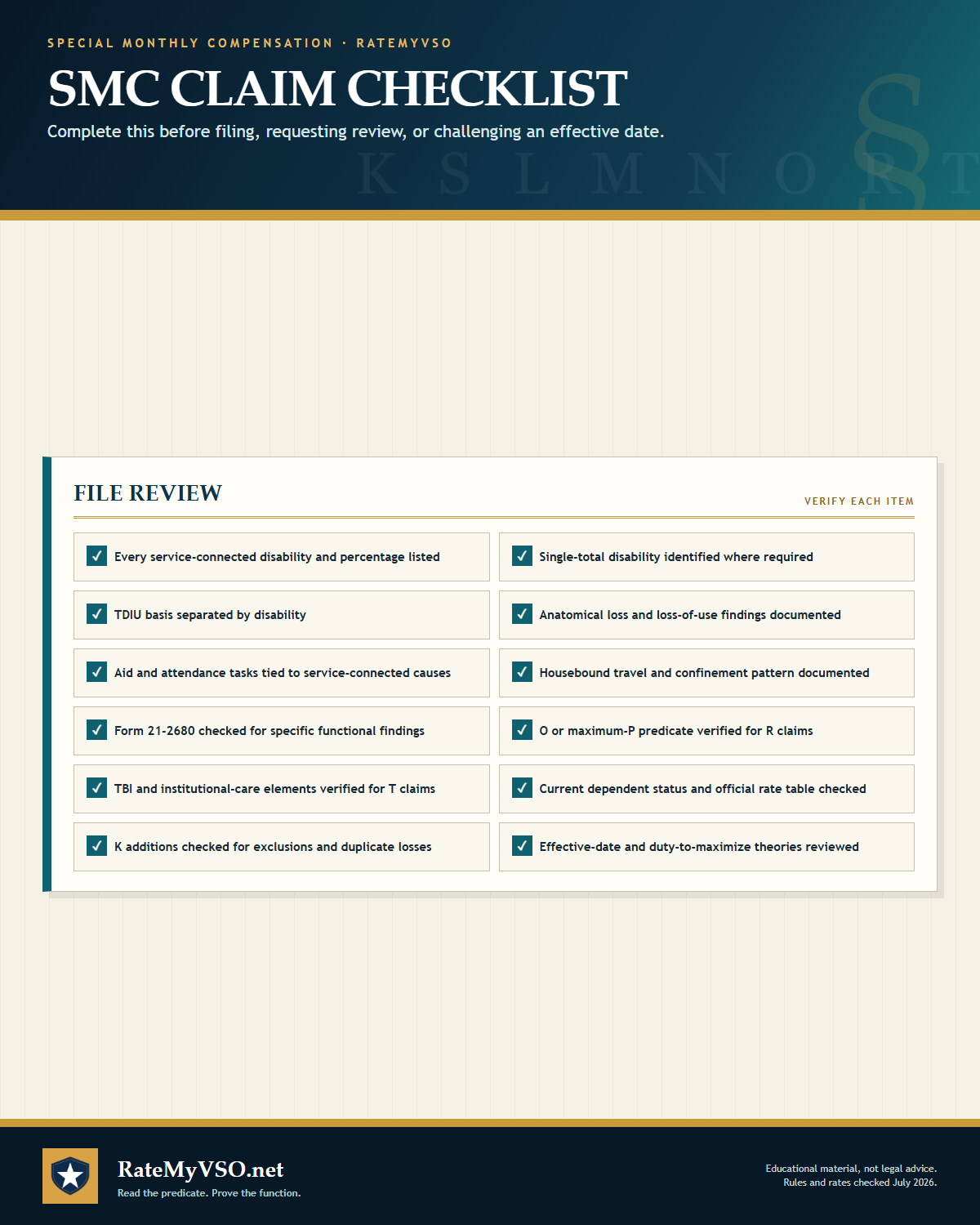
- For SMC-L (A&A): Submit VA Form 21-2680 (Examination for Housebound Status or Permanent Need for Regular Aid and Attendance) completed by your doctor. For a detailed breakdown of the legal criteria, how the A&A exam differs from a standard C&P exam, and what the Board data shows about grants and denials, see the A&A Exam & Evidence Guide.
- For all SMC claims: A detailed statement from your treating physician explaining exactly what you can and cannot do is extremely helpful.
Tips for SMC Claims
- Check your medication side effects. If any medication for a service-connected condition causes ED, loss of balance, or impairs use of a limb, you may qualify for SMC-K or higher.
- Do the math for SMC-S. If you have a 100% schedular rating for one condition, add up your other conditions. If they combine to 60%+, you're eligible for the housebound rate.
- Get a Disability Benefits Questionnaire (DBQ). A DBQ specifically documenting your need for aid & attendance or housebound status carries significant weight.
- Buddy statements help. Statements from your spouse, family, or caregiver describing your daily limitations and the help they provide support A&A claims.
- Don't confuse VA pension A&A with SMC A&A. They're different programs with different rules. Pension A&A is a needs-based benefit for wartime veterans. SMC A&A is additional disability compensation. They are not paid at the same time: under 38 U.S.C. 5304, pension and compensation generally cannot both be paid to the same veteran, so a veteran eligible for both elects one. Which election is better depends on the individual's income, assets, and rating, so take that question to an accredited representative rather than assuming.
A clearer picture
Keep a guide close by
Published decisions and research
Related Tools and Guides
Guide advisor
This guide is for educational purposes only and is not legal or financial advice. SMC rates change annually. For current rates, check the VA compensation rates page. For help with your claim, find a VSO representative. Last reviewed: 2026-04-14.