VA Disability Rating for Intervertebral disc syndrome (DC 5243)
Body system: Musculoskeletal SystemRegulation: 38 CFR § 4.71aDBQ: DBQ MUSC Back (thoracolumbar spine); DBQ MUSC Neck (cervical spine)
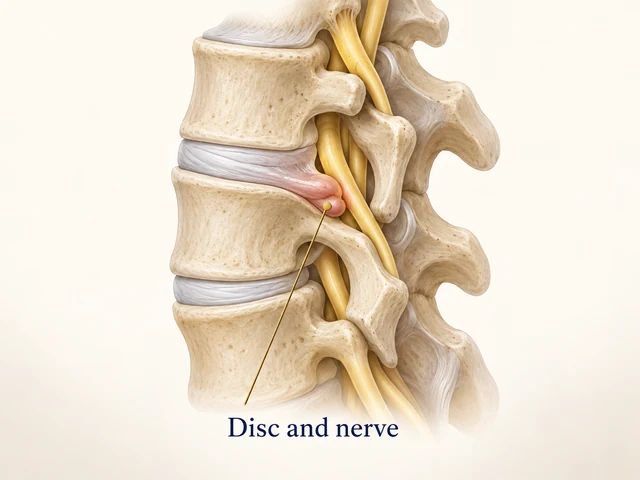
Diagnostic Code 5243 covers intervertebral disc syndrome (IVDS), assigned only when disc herniation compresses or irritates an adjacent nerve root; other disc diagnoses fall under DC 5242. By regulation, IVDS is evaluated under EITHER the General Rating Formula for Diseases and Injuries of the Spine OR the Formula for Rating Intervertebral Disc Syndrome Based on Incapacitating Episodes, whichever method yields the higher combined evaluation under 38 CFR § 4.25. The Incapacitating Episodes ladder ranges from 10% (at least 1 week of doctor-ordered bed rest in the past 12 months) to 60% (at least 6 weeks). The General Rating ladder ranges from 10% to 100% based on how far you can bend forward, total spine range of motion, muscle spasms or guarding, and whether any part of your spine has fused. Both ladders appear below.
Rating levels
60% — You qualify for this rating under the Incapacitating Episodes formula if your intervertebral disc syndrome has caused at least 6 weeks total of doctor-ordered bed rest over the last 12 months. An incapacitating episode means an acute flare-up requiring bed rest prescribed by a physician.
40% — You qualify for this rating under the Incapacitating Episodes formula if your intervertebral disc syndrome has caused at least 4 but less than 6 weeks total of doctor-ordered bed rest over the last 12 months. An incapacitating episode means an acute flare-up requiring bed rest prescribed by a physician.
20% — You qualify for this rating under the Incapacitating Episodes formula if your intervertebral disc syndrome has caused at least 2 but less than 4 weeks total of doctor-ordered bed rest over the last 12 months. An incapacitating episode means an acute flare-up requiring bed rest prescribed by a physician.
10% — You qualify for this rating under the Incapacitating Episodes formula if your intervertebral disc syndrome has caused at least 1 but less than 2 weeks total of doctor-ordered bed rest over the last 12 months. An incapacitating episode means an acute flare-up requiring bed rest prescribed by a physician.
100% — Your entire spine has fused together in a bad position that severely limits your ability to move your back and neck (unfavorable ankylosis means the bones have grown together abnormally). This complete fusion makes it extremely difficult or impossible to bend, twist, or turn your spine in any direction, significantly impacting your daily activities and quality of life.
50% — Your entire middle and lower back spine has fused together in a way that severely limits your movement and function. Unfavorable ankylosis means the vertebrae (spine bones) have grown together abnormally, creating a rigid, inflexible spine that significantly restricts your ability to bend, twist, or move your back normally.
40% — You qualify for this rating if your entire neck is fused or locked in place in a bad position (unfavorable ankylosis), or if you can only bend forward 30 degrees or less in your mid to lower back, or if your entire mid to lower back is fused in a good functional position (favorable ankylosis). Ankylosis means your spine joints have become stiff and immobile, either naturally from your condition or surgically fused together.
30% — You qualify for this rating if your neck can only bend forward 15 degrees or less (normal is 45 degrees), or if your entire neck spine has fused together in a good position (favorable ankylosis means the bones have grown together but in a way that doesn't cause major problems). This represents severe limitation in neck movement that significantly restricts your ability to look down or bend your head forward.
20% — You qualify for this rating if your back or neck injury limits how far you can bend forward - either bending your back forward between 30-60 degrees or bending your neck forward between 15-30 degrees. You also qualify if your overall spine movement is significantly restricted (back movements totaling 120 degrees or less, neck movements totaling 170 degrees or less), or if you have severe muscle spasms that cause you to walk abnormally or develop visible spine curvature like a hunched back, loss of natural back curve, or sideways spine curvature.
10% — You qualify for this rating with any one of these: forward bending of the lower (thoracolumbar) spine of more than 60 but not more than 85 degrees; forward bending of the neck of more than 30 but not more than 40 degrees; combined range of motion of the lower spine of more than 120 but not more than 235 degrees, or of the neck of more than 170 but not more than 335 degrees; muscle spasm, guarding or localized tenderness that does not change your gait or the spine's curves; or a vertebral body fracture with loss of 50 percent or more of its height. The combined range adds the six measured movements together (38 CFR 4.71a, Plate V).
Disclaimer: This tool is for informational purposes only and is not legal or medical advice. Always consult with your VSO representative or a qualified veterans benefits attorney for guidance on your specific claim.