VA Disability Rating for Meniere's syndrome (DC 6205)
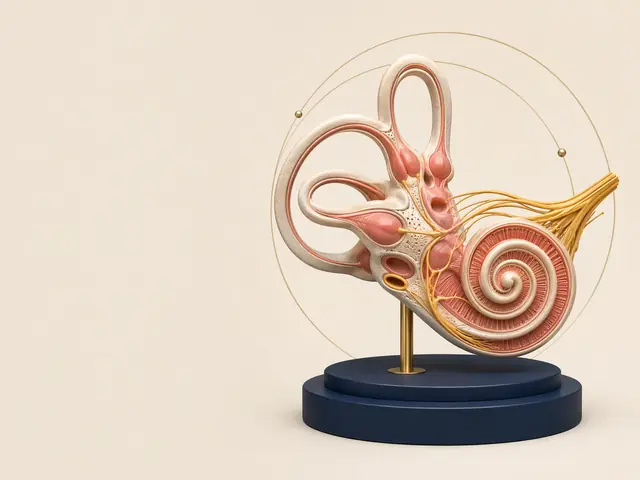
Meniere's syndrome is an inner ear disorder that causes hearing loss, dizziness attacks (vertigo), and often ringing in the ears (tinnitus). The VA rates this condition from 30% to 100% based on how often you have vertigo attacks that affect your balance and walking (cerebellar gait), plus whether you have hearing loss. Higher ratings go to veterans who have more frequent, severe episodes that significantly impact their daily functioning and mobility.
Symptoms Recorded in Granted Vertigo and Vestibular Disorders Decisions
We analyzed 1,094 granted Board decisions involving vertigo and vestibular disorders for symptoms named in sentences about the condition (rating-criteria recitations excluded). Descriptive of the published record, what the Board wrote down, not a checklist of what to report.
VA's rule for DC 6205, word for word
Hearing impairment with vertigo less than once a month, with or without tinnitus
VA's words that name a symptom charted below. Every level is in Rating Levels above, under the "Official VA criteria" tab.
Bar length shows decisions. Percentages remain context.
A small blue tag means VA's sentence names the same symptom, in the same word or its medical word. The bars count any mention of the symptom, at any severity, even to say it was absent. VA's sentence has its own conditions. A tag does not show that any rating level was met, and a symptom with no tag can still matter.
VA's words are today's rule (38 CFR 4.87, last amended July 21, 2017). The bars cover decisions from 1992 to 2026, decided under the wording of their time, which may have named different symptoms.
These bars count whole decisions whose overall result was granted. The At the Board box on this page counts each appealed issue.
Detected by phrase-reading the decision text with condition-specific vocabularies. Source: Board of Veterans' Appeals decisions, RateMyVSO analysis.
Explore Meniere's Resources
Pick a group to see its pages. Everything here is a link to another page on this site.
Start Here (1 page)
Ratings and C&P Exams (3 pages)
What Veterans Claim Alongside It (3 pages)
Evidence and Proof (3 pages)
Disclaimer: This tool is for informational purposes only and is not legal or medical advice. Always consult with your VSO representative or a VA-accredited attorney for guidance on your specific claim.