VA Disability Rating for Hypothyroidism (DC 7903)
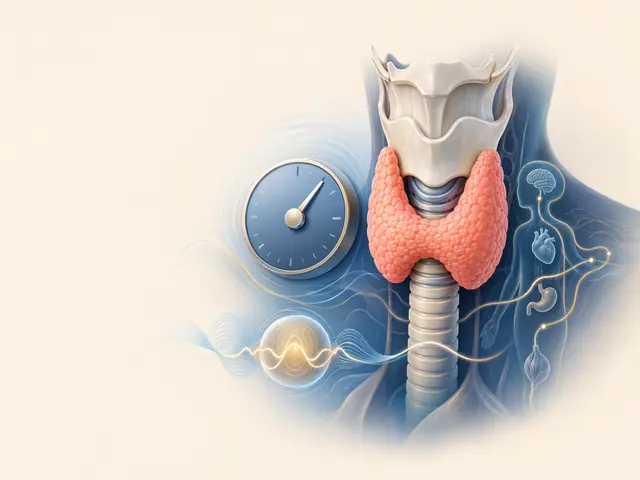
Hypothyroidism is when your thyroid gland does not produce enough thyroid hormone, which controls your body's metabolism and energy levels. The rating schedule gives two ratings, and both are time-limited. Hypothyroidism without myxedema is rated 30% for six months after the initial diagnosis. Hypothyroidism manifesting as myxedema (cold intolerance, muscular weakness, cardiovascular involvement, and mental disturbance) is rated 100%, and that rating continues for six months after an examining physician determines the crisis has stabilized. After either period, the VA rates the lasting effects (residuals) of the disease or its treatment under the diagnostic codes for the body systems affected, for example eye, digestive, or mental disorders.
Symptoms Recorded in Granted Hypothyroidism Decisions
We analyzed 682 granted Board decisions involving hypothyroidism for symptoms named in sentences about the condition (rating-criteria recitations excluded). Descriptive of the published record, what the Board wrote down, not a checklist of what to report.
VA's rule for DC 7903, word for word
Hypothyroidism manifesting as myxedema (cold intolerance, muscular weakness, cardiovascular involvement (including, but not limited to hypotension, bradycardia, and pericardial effusion), and mental disturbance (including, but not limited to dementia, slowing of thought and depression))
VA's words that name a symptom charted below. Every level is in Rating Levels above, under the "Official VA criteria" tab.
Bar length shows decisions. Percentages remain context.
A small blue tag means VA's sentence names the same symptom, in the same word or its medical word. The bars count any mention of the symptom, at any severity, even to say it was absent. VA's sentence has its own conditions. A tag does not show that any rating level was met, and a symptom with no tag can still matter.
VA's words are today's rule (38 CFR 4.119, last amended March 5, 2018). The bars cover decisions from 1992 to 2026, decided under the wording of their time, which may have named different symptoms.
These bars count whole decisions whose overall result was granted. The At the Board box on this page counts each appealed issue, so its granted number is larger.
Detected by phrase-reading the decision text with condition-specific vocabularies. Source: Board of Veterans' Appeals decisions, RateMyVSO analysis.
Disclaimer: This tool is for informational purposes only and is not legal or medical advice. Always consult with your VSO representative or a VA-accredited attorney for guidance on your specific claim.