How to Build a VA Cancer Disability Claim
Everything you need in one place to understand and file a VA cancer claim. This guide explains how the VA evaluates cancer disability claims, from diagnosis through service connection, rating, and long-term benefits. You will learn how presumptive service connection works for burn pits, Agent Orange, ionizing radiation, and Camp Lejeune water, where the VA can link a diagnosis to service automatically if you meet the criteria. It covers the 100 percent rating that most malignant-neoplasm diagnostic codes assign during active disease or qualifying treatment (the exact code controls), how the VA rates residual effects after remission, and what evidence builds a strong claim. Whether you are newly diagnosed, in treatment, or filing an increase or appeal, this guide shows you how cancer claims are decided and what most affects your outcome.

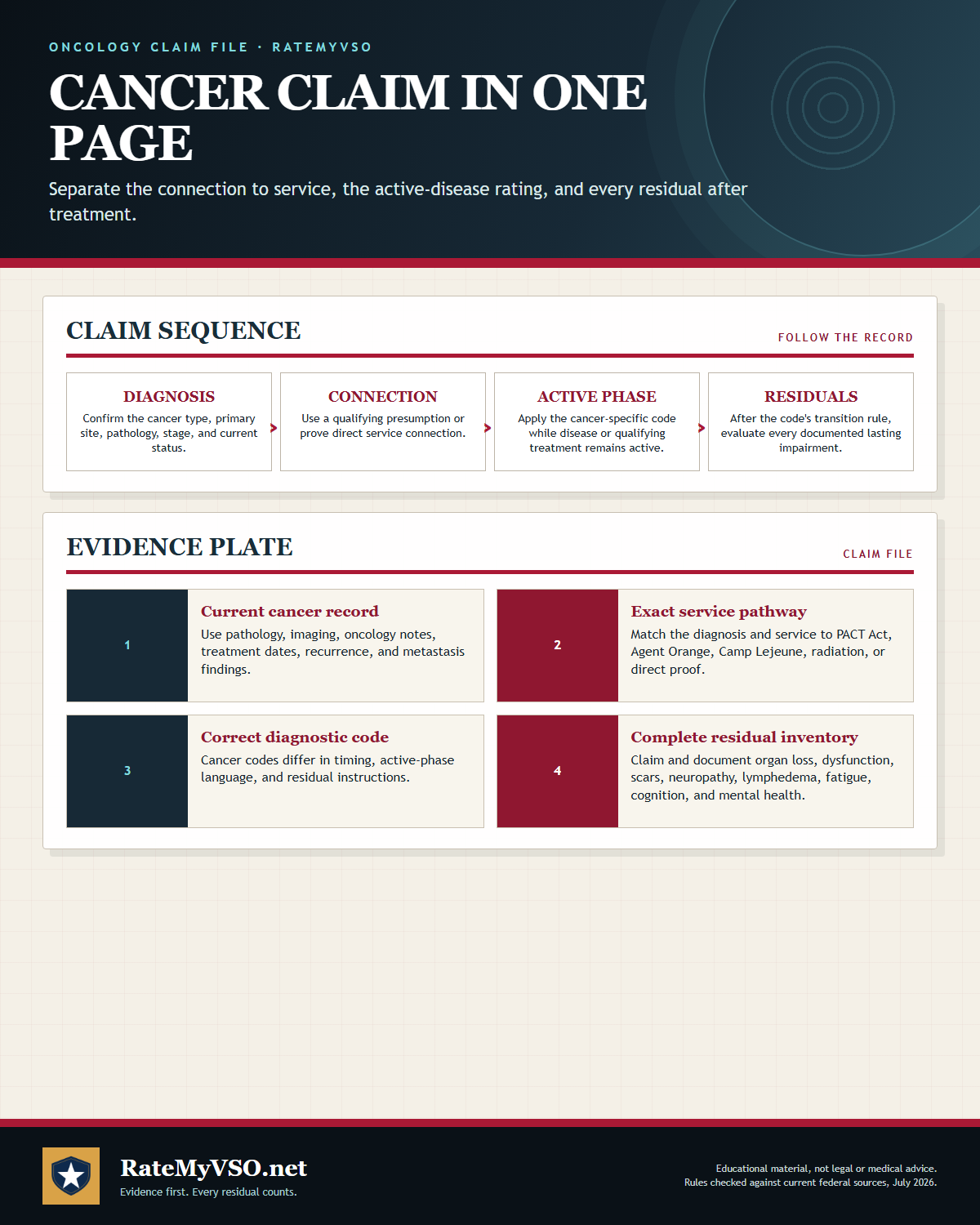 One-page guide: Cancer Claim in One Page
Five-part visual guide to cancer claims covering exact diagnosis, presumptive and direct service connection, active treatment, mandatory review, residual ratings, and a filing checklist. Opens the full-size chart, free to save or print.
One-page guide: Cancer Claim in One Page
Five-part visual guide to cancer claims covering exact diagnosis, presumptive and direct service connection, active treatment, mandatory review, residual ratings, and a filing checklist. Opens the full-size chart, free to save or print.
What This Guide Covers
This guide explains two things in plain language:
- How the VA handles a cancer claim when the veteran is actively sick and in treatment.
- How the VA handles the same claim once treatment ends and the veteran goes into remission, or when the veteran was already in remission when they filed.
Think of cancer claims as having three distinct stages, and each stage has its own set of rules. If a VSO, accredited claims agent, or attorney is helping you, understanding these stages helps you ask better questions and avoid surprises.
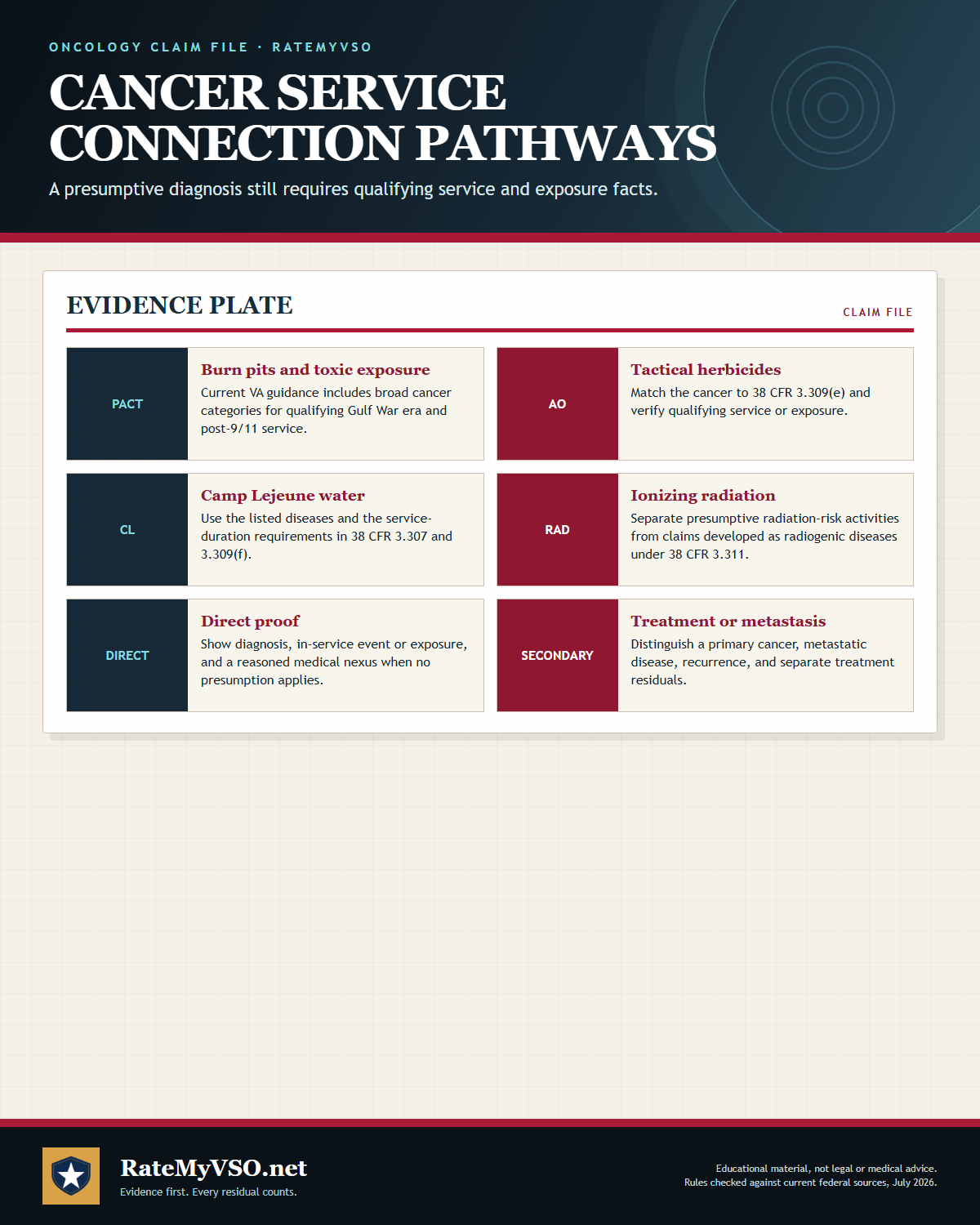
Section 1: How Service Connection Works for Cancer
Before the VA can rate your cancer at any level, it has to agree that your cancer is connected to your military service. This is called "establishing service connection."
For most medical conditions, a veteran must prove three things: a current diagnosis, an in-service event or exposure, and a medical opinion linking the two (called a nexus). For cancer, that third element is often the hardest part because cancers can take decades to develop.
What "Presumptive" Means and Why It Matters
A presumptive service connection removes the burden of proving the nexus. When a condition is presumptive, the VA legally assumes the connection to service exists as long as the veteran meets the service requirements. The veteran only needs to show a current diagnosis and proof they served in the right place at the right time. (38 CFR § 3.307, 38 CFR § 3.309. See also our Presumptive Checker)
With a presumptive condition, you still have to show you served in the right place and time and that you have the diagnosis. You do not have to prove how your service caused the cancer.
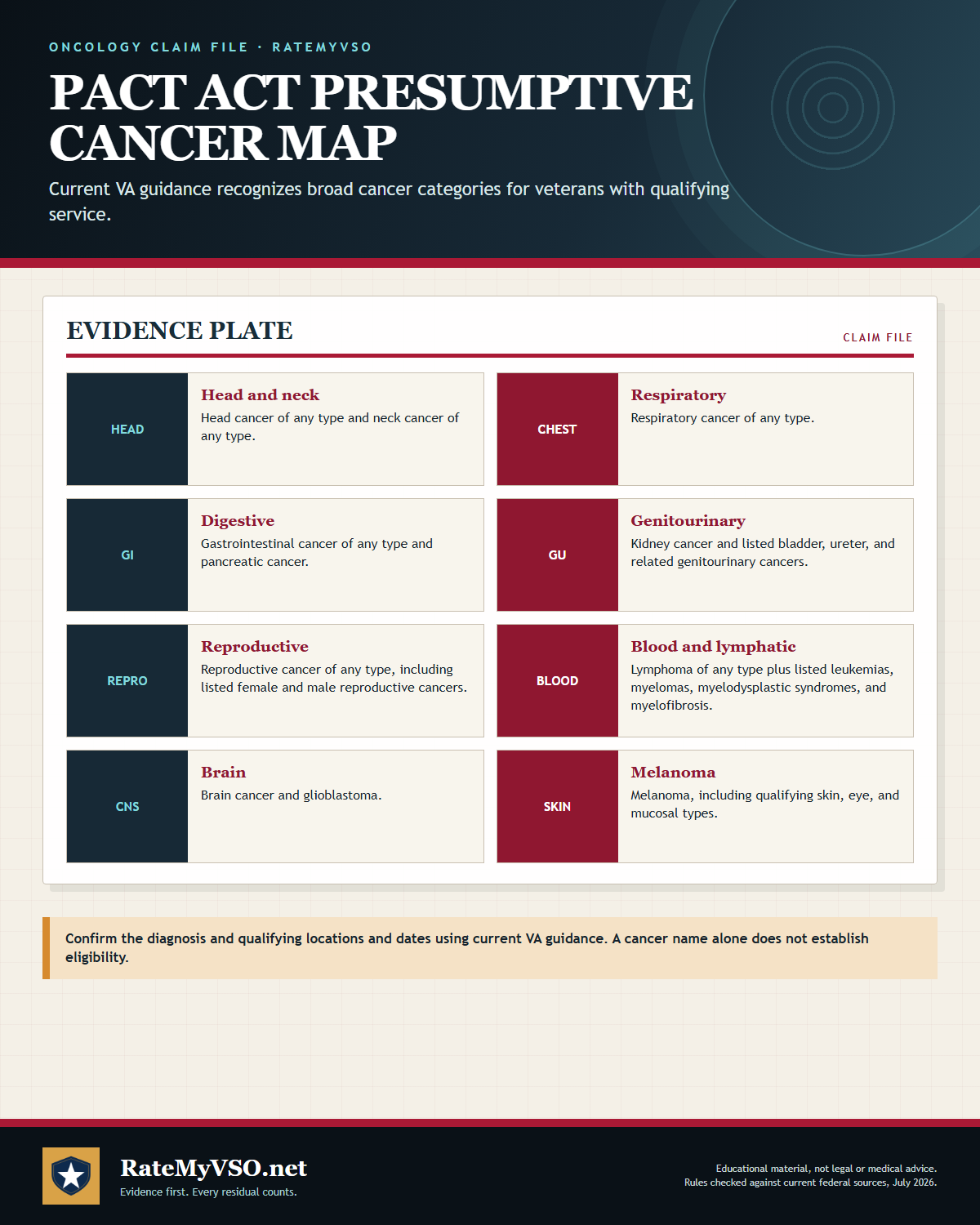 One-page guide: PACT Act Presumptive Cancer Map
Eight broad groups of cancers covered by current VA toxic-exposure guidance. Opens the full-size chart, free to save or print.
One-page guide: PACT Act Presumptive Cancer Map
Eight broad groups of cancers covered by current VA toxic-exposure guidance. Opens the full-size chart, free to save or print.
Major Presumptive Cancer Pathways
The following exposure categories currently carry presumptive cancer coverage. The PACT Act presumptive lists are expanding. Verify the current list at VA.gov before relying on this section for a specific filing.
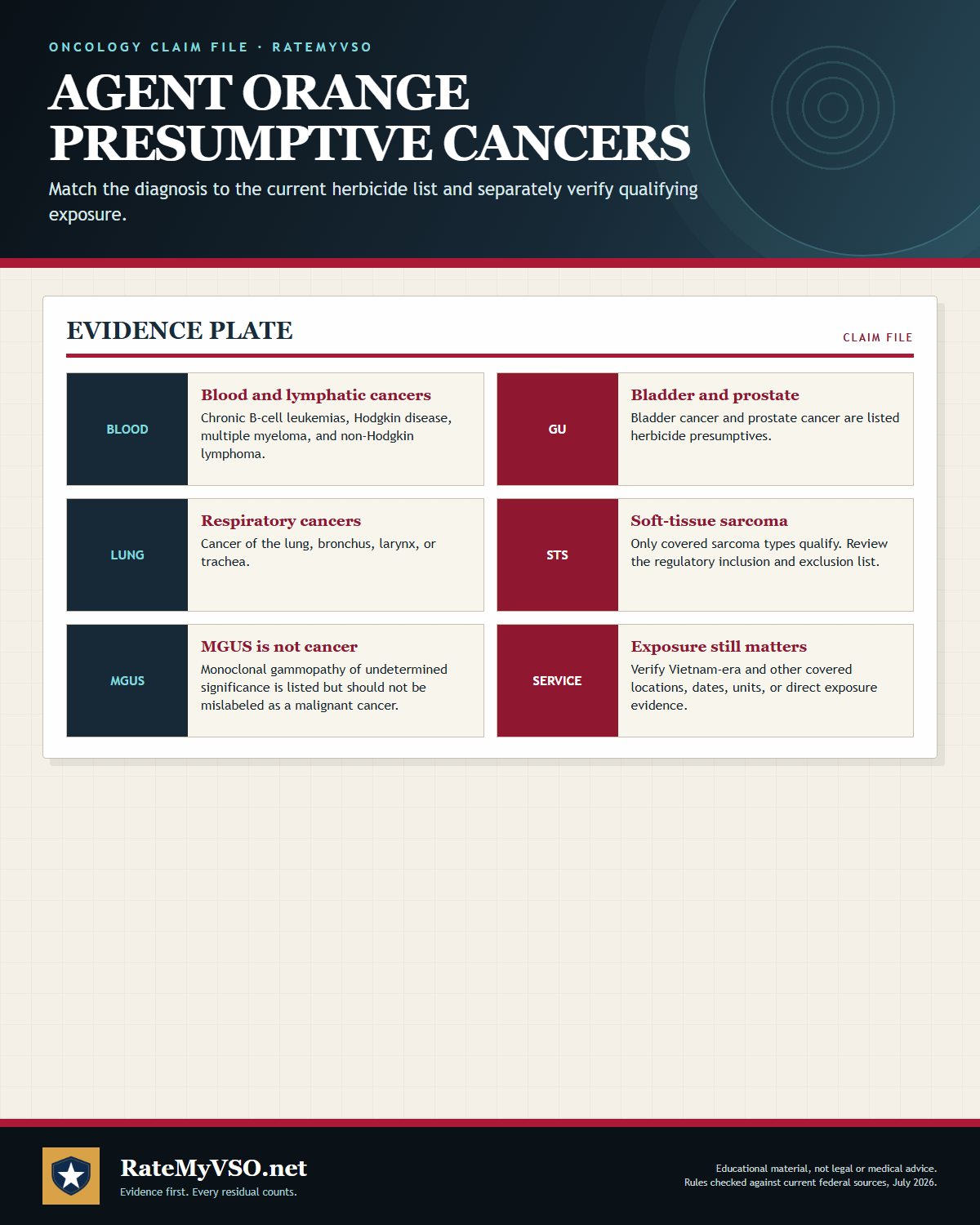 One-page guide: Agent Orange Presumptive Cancers
Blood, bladder, prostate, respiratory, and covered soft-tissue sarcoma groups plus exposure reminder. Opens the full-size chart, free to save or print.
One-page guide: Agent Orange Presumptive Cancers
Blood, bladder, prostate, respiratory, and covered soft-tissue sarcoma groups plus exposure reminder. Opens the full-size chart, free to save or print.
Agent Orange Exposure (38 CFR § 3.309(e))
Covers veterans who served on the ground in Vietnam (January 9, 1962 through May 7, 1975), on inland waterways, as Blue Water Navy within 12 nautical miles, or along the Korean DMZ (September 1, 1967 through August 31, 1971). Cancers on the current Agent Orange presumptive list: prostate cancer, respiratory cancers (lung, larynx, trachea, bronchus), bladder cancer, chronic B-cell leukemias (including hairy cell leukemia), Hodgkin's disease, non-Hodgkin's lymphoma, multiple myeloma, and soft tissue sarcomas (with listed exceptions). The list also covers non-cancer conditions, including hypothyroidism; verify the current list on VA's Agent Orange page.
PACT Act Burn Pit and Toxic Exposure (Pub. L. 117-168, 2022 with subsequent rulemaking)
Covers Gulf War era and post-9/11 veterans who served on or after August 2, 1990 in covered locations including Iraq, Afghanistan, Kuwait, Saudi Arabia, and other Southwest Asia locations. The PACT Act did not make every cancer presumptive: it added specific cancers and broad cancer categories (for example brain cancer, kidney cancer, melanoma, pancreatic cancer, and head, neck, gastrointestinal, lymphatic, reproductive, and respiratory cancer "of any type") for veterans who meet the exposure location and time-period criteria. A diagnosis outside the listed cancers and categories still needs a direct service-connection case. As of January 2025, VA had added acute and chronic leukemias, multiple myeloma, myelodysplastic syndromes, myelofibrosis, urinary bladder cancer, and additional genitourinary cancers. The lists keep expanding, so check VA's current presumptive-cancer list before filing. See our PACT Act guide or Toxic Exposure Appeals data.
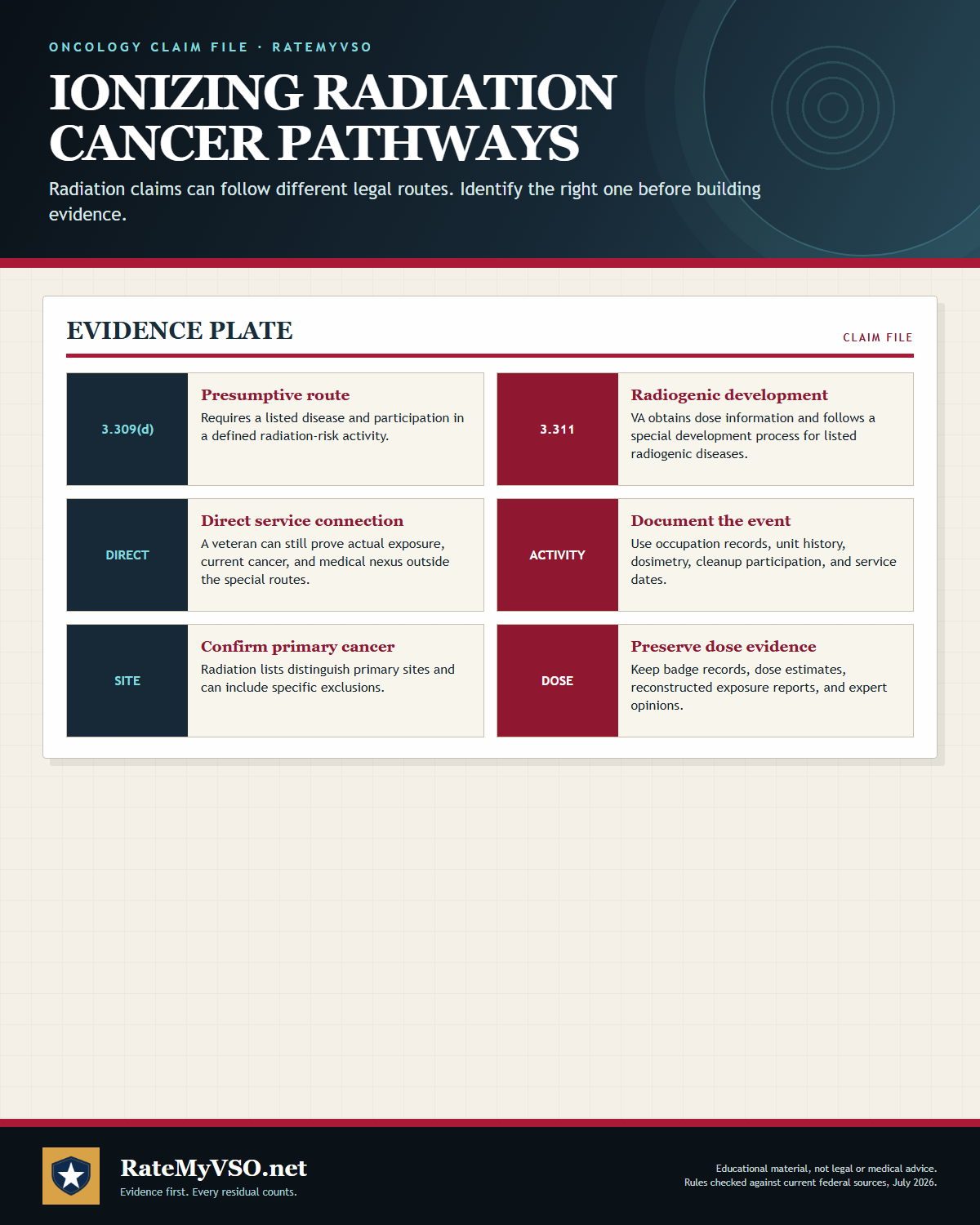 One-page guide: Ionizing Radiation Cancer Pathways
Comparison of presumptive, radiogenic-development, and direct service-connection routes. Opens the full-size chart, free to save or print.
One-page guide: Ionizing Radiation Cancer Pathways
Comparison of presumptive, radiogenic-development, and direct service-connection routes. Opens the full-size chart, free to save or print.
Ionizing Radiation (38 CFR § 3.311)
Covers atomic veterans who participated in nuclear testing, occupation forces in Hiroshima or Nagasaki, or worked at specific gaseous diffusion plants. Covered cancers include leukemia (except chronic lymphocytic leukemia), lymphomas (except Hodgkin's disease), multiple myeloma, and solid tumor cancers of the bile ducts, bone, brain, breast, colon, esophagus, gallbladder, liver, lung, pancreas, pharynx, ovary, salivary gland, small intestine, stomach, thyroid, and urinary tract. See also our radiogenic-disease guide.
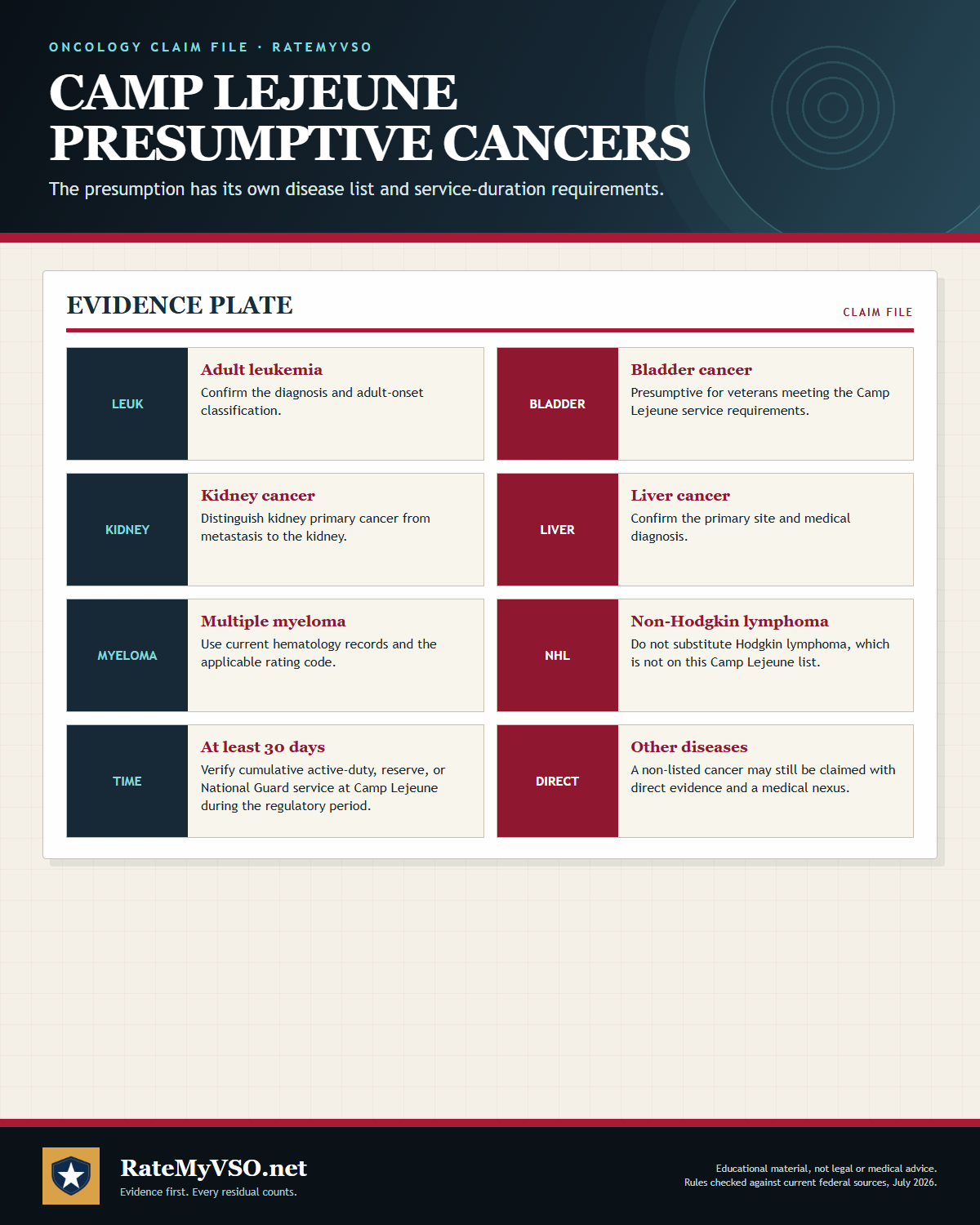 One-page guide: Camp Lejeune Presumptive Cancers
Adult leukemia, bladder, kidney, liver, multiple myeloma, and non-Hodgkin lymphoma. Opens the full-size chart, free to save or print.
One-page guide: Camp Lejeune Presumptive Cancers
Adult leukemia, bladder, kidney, liver, multiple myeloma, and non-Hodgkin lymphoma. Opens the full-size chart, free to save or print.
Camp Lejeune Contaminated Water (38 CFR § 3.309(f))
Covers veterans who lived or worked at Camp Lejeune for at least 30 days between August 1, 1953 and December 31, 1987. Associated cancers include bladder cancer, kidney cancer, non-Hodgkin's lymphoma, adult leukemia, multiple myeloma, renal toxicity, and several others.
Section 2: Scenario A, Active Cancer, Currently in Treatment
This is the scenario most veterans think of first. You have been diagnosed with cancer, you are receiving treatment (surgery, chemotherapy, radiation, immunotherapy, hormone therapy, or any combination), and you want to know what your VA rating will be.
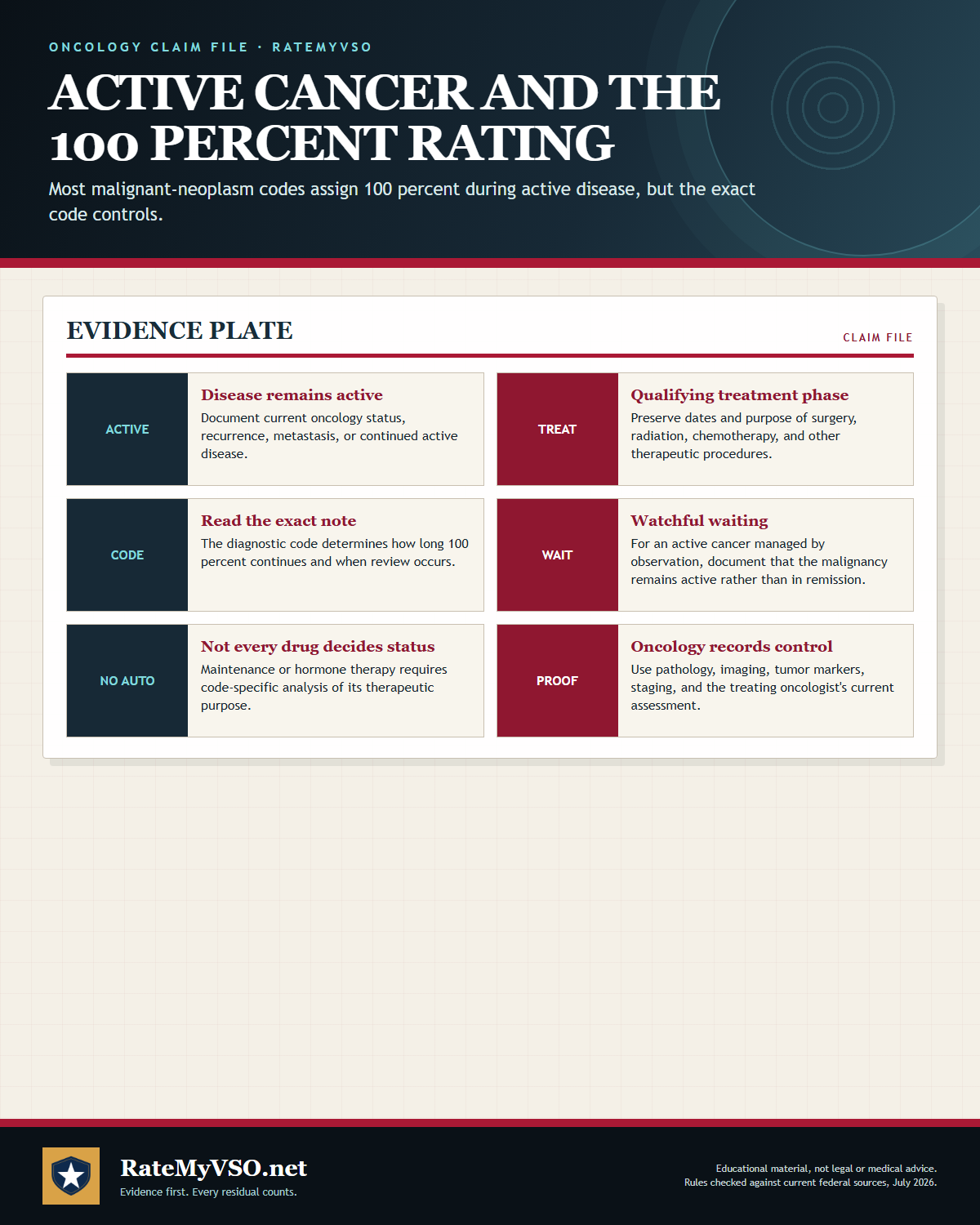
The 100% Rating During Active Disease
Many malignant-neoplasm diagnostic codes assign a 100% disability rating during active disease or qualifying treatment, regardless of how much the cancer is affecting your daily life right now, but the exact diagnostic code controls. For those codes, the diagnosis and proof of active disease or treatment are enough; you do not need to demonstrate how severely your symptoms affect your ability to work. (38 CFR § 4.117 and the malignant-neoplasm diagnostic codes in each body system's schedule)
Two material exceptions worth knowing before you assume the 100% applies:
- Skin cancers and melanoma (DC 7818, DC 7833, 38 CFR § 4.118): treatment confined to the skin (local excision, topical therapy) does not trigger the 100% rule. The 100% applies when the cancer requires therapy comparable to systemic treatment; otherwise the condition is rated on scars, disfigurement, or other impairment.
- Eye malignancy (DC 6014, 38 CFR § 4.79): the 100% depends on therapy comparable to systemic malignancy treatment; without it, the condition is evaluated on visual impairment or nonvisual impairment such as disfigurement.
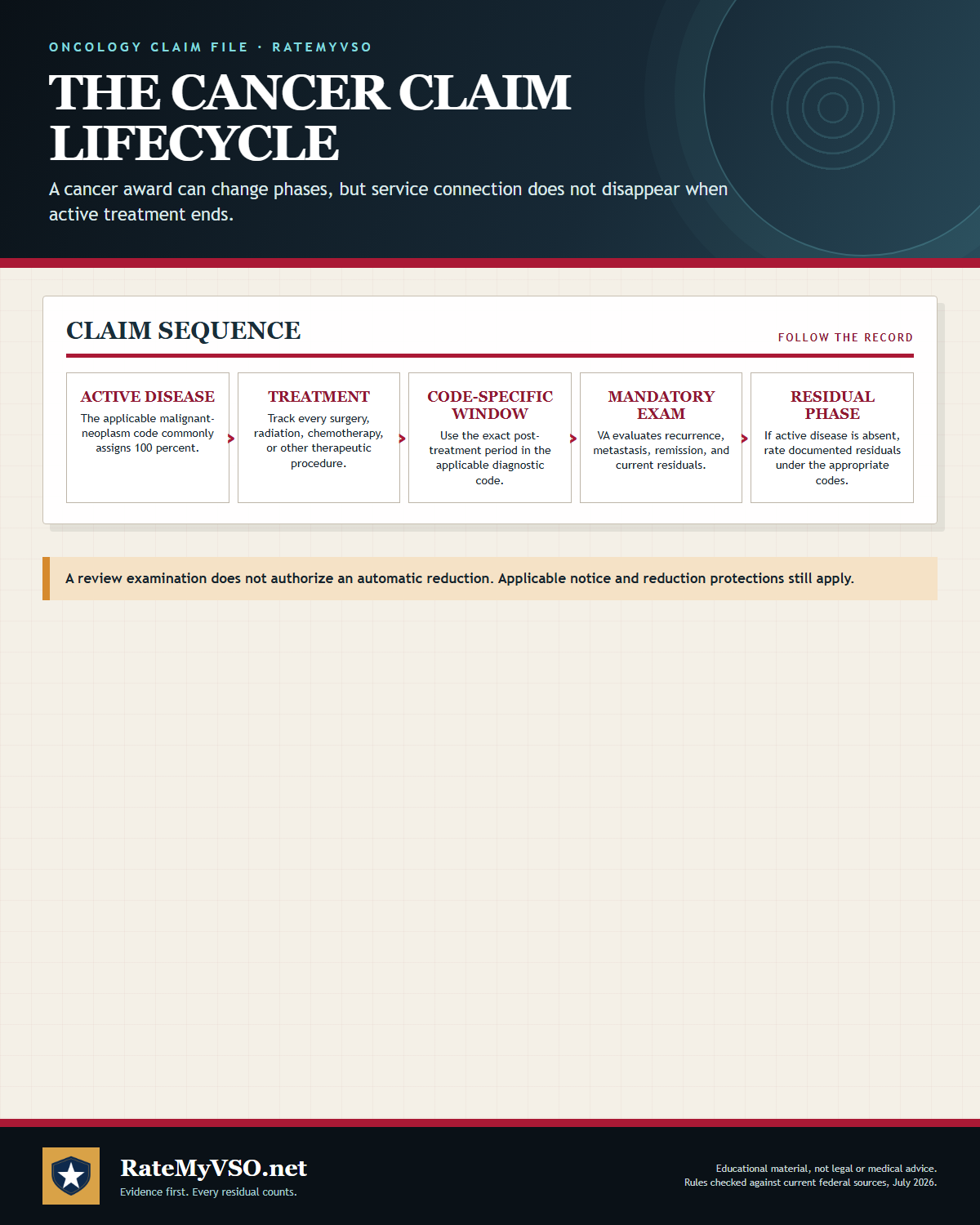
The word "temporary" appears in the regulations, but what it means in practice is that the 100% rating, where a code assigns it, continues until a set period after treatment ends. During that entire window, no one at the VA can reduce your rating without following specific legal procedures.
How Long Does the 100% Last?
This depends on the type of cancer.
The common pattern, written into most (not all) cancer codes: The 100% rating remains in effect for the full duration of active treatment, plus six months after treatment is completely discontinued. The "discontinuance of treatment" means the last date of any surgical, radiation, chemotherapy, immunotherapy, hormone therapy, or other therapeutic procedure. (38 CFR § 4.117, various diagnostic codes)
Six months is the floor, not the ceiling. If treatment continues, the 100% continues. There is no cap on how long a cancer can remain rated at 100% if treatment is ongoing.
The exceptions are code by code, so check your own code. The six-month rule is written into most cancer codes, but not all of them, and two blood cancers are materially different. Read the note under your own diagnostic code rather than assuming the general rule.
- Non-Hodgkin's lymphoma (DC 7715): two years. The 100% continues for two years after treatment is discontinued before the mandatory reexamination is triggered.
- Hodgkin's lymphoma (DC 7709): six months. Despite being the sibling diagnosis, Hodgkin's follows the ordinary six-month rule, not the NHL two-year rule.
- Multiple myeloma (DC 7712): five years, and the clock starts somewhere else. The 100% continues for five years after the diagnosis of symptomatic multiple myeloma, not five years after treatment ends. Asymptomatic or smoldering myeloma and MGUS are rated 0%.
- Leukemia (DC 7703): six months after treatment is discontinued.
Hospitalization Rule (38 CFR § 4.29)
Separately from the cancer-specific rating, if your service-connected condition requires you to be hospitalized in a VA or VA-approved facility for more than 21 consecutive days, the VA must assign a temporary 100% rating for the duration of that hospitalization. This rating starts on the first day of continuous hospitalization and ends on the last day of the month you are discharged.
This rule can stack with your cancer rating in some situations. If you are already at 100% for active cancer, it may not change anything immediately. But it matters if your cancer is not yet service-connected when you are admitted, or if additional service-connected conditions are being treated during the same stay.
Convalescent Ratings (38 CFR § 4.30)
If a service-connected condition requires surgery that needs at least one month of recovery, or if you have severe post-surgical complications (incompletely healed wounds, house confinement, wheelchair or crutch use), you may qualify for a convalescent 100% rating. This is separate from the cancer rating and typically provides one to three months of temporary 100% after hospital discharge, with extensions available up to a total of six months (and further extensions possible with approval from the Veterans Service Center Manager).
For cancer patients, this provision often comes into play during surgical recovery before active radiation or chemotherapy begins, or when recovery takes longer than the standard post-discharge period.
The Mandatory Post-Treatment C&P Exam
Under most cancer codes, six months after your last cancer treatment ends the VA should schedule a Compensation and Pension examination. The clock is set by your own code, and a few differ: two years for non-Hodgkin's lymphoma, and five years from the diagnosis of symptomatic disease for multiple myeloma. This exam is mandatory and will determine your new rating. Three things can happen at this exam:
- Cancer is found to be still active or has returned. The 100% rating continues.
- Cancer is in remission and you have no measurable residual effects. The rating may drop, sometimes to 0%.
- Cancer is in remission but you have residual effects from the cancer or its treatment. Documented residual disability is evaluated under the applicable diagnostic code and rating rules. Some codes prescribe the route (DC 7528 rates residuals as voiding or renal dysfunction, whichever predominates), and the anti-pyramiding rule (38 CFR § 4.14) bars rating the same manifestation twice.
Option 3 is where the most consequential decisions are made and where VSO representation matters most. Residuals are only counted if they are documented. The C&P examiner is not there to find residuals for you. They examine what they are asked to examine.
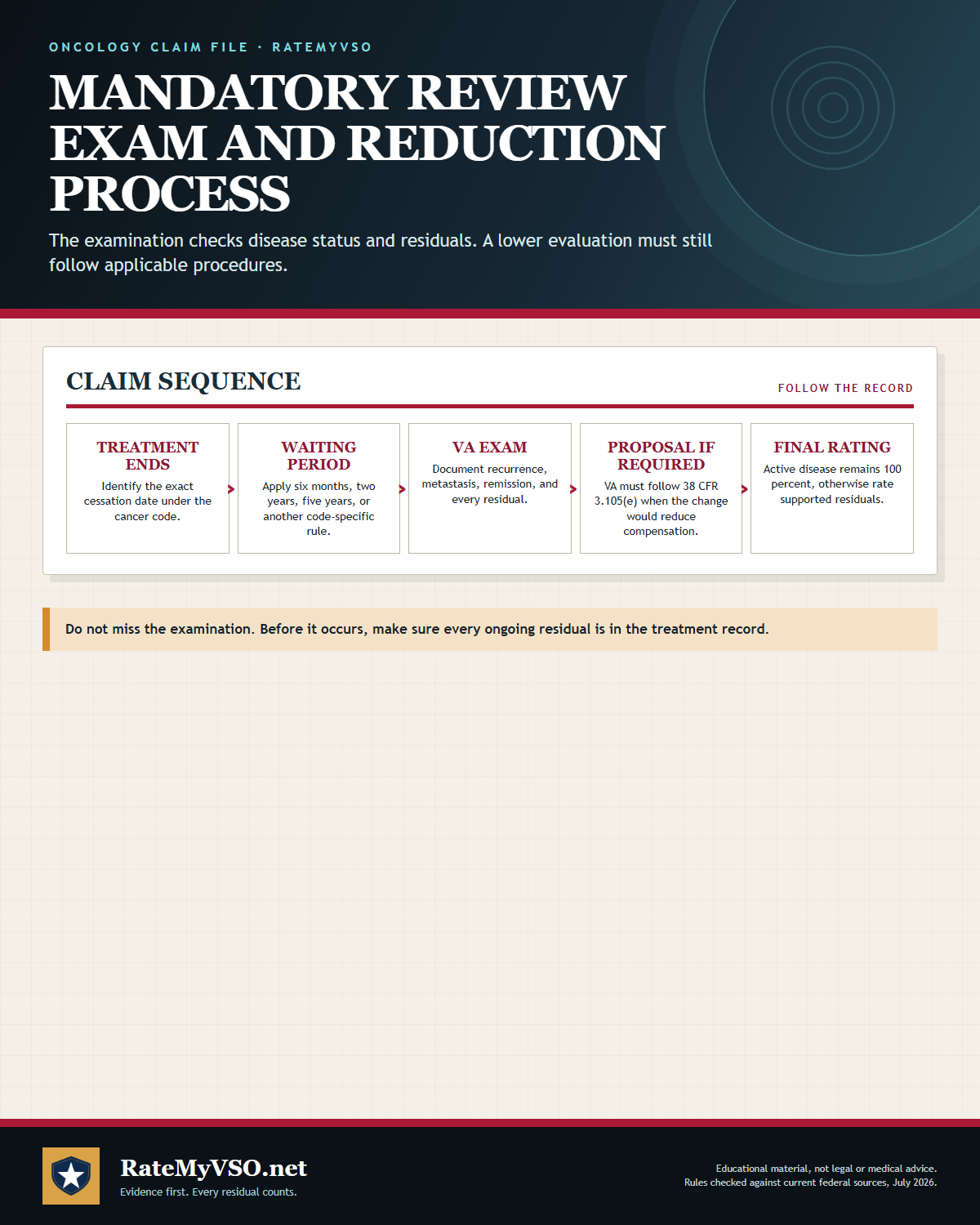 One-page guide: Mandatory Review Exam and Reduction Process
Five-step transition from treatment cessation to final active or residual rating. Opens the full-size chart, free to save or print.
One-page guide: Mandatory Review Exam and Reduction Process
Five-step transition from treatment cessation to final active or residual rating. Opens the full-size chart, free to save or print.
- What the VA measures at your C&P exam
- Evidence that has won at the Board
- Inside the rater's playbook: grant, denial, and remand rates
- Secondary condition map
Section 3: Scenario B, Cancer in Remission After Treatment
Once treatment ends and the mandatory C&P exam confirms remission, the VA transitions from a single 100% rating for active cancer to ratings for the documented residual conditions caused by the cancer or its treatment, each evaluated under its applicable diagnostic code.
These leftover conditions are called residuals.
What Is a Residual?
A residual is any physical or mental health impairment that persists after the cancer itself is gone. The damage was done by the cancer growing where it grew, or by the treatments used to fight it. The residual does not have to be dramatic to be ratable. Mild urinary frequency, a surgical scar that limits motion, or chronic fatigue that affects your concentration all count as residuals if they are documented and linked to your service-connected cancer.
Critically, residuals do not have to appear during treatment. Some emerge months or years later. A veteran who was cancer-free for three years but then develops peripheral neuropathy in both feet that is documented and linked to prior platinum-based chemotherapy can still file a new claim for that residual. The key is showing a medical connection to the service-connected cancer.
How Residuals Are Rated
Each residual condition is rated under its own section of the VA's Schedule for Rating Disabilities (38 CFR Part 4). There is no single "cancer in remission" rating. Instead, you get one or more separate ratings: one for urinary dysfunction, one for neuropathy, one for scarring, one for mental health conditions, and so on. These combine using the standard VA combined ratings math. The VA cannot pay twice for the same symptom: under the anti-pyramiding rule (38 CFR § 4.14), when two conditions produce the same impairment, the VA assigns the single higher evaluation rather than stacking both.
Cancer-Specific Residuals: A Guide by Cancer Type
The following section breaks down the most common residuals for each major cancer category. Diagnostic codes and regulatory citations are included for each.
 One-page guide: Prostate Cancer Board Snapshot
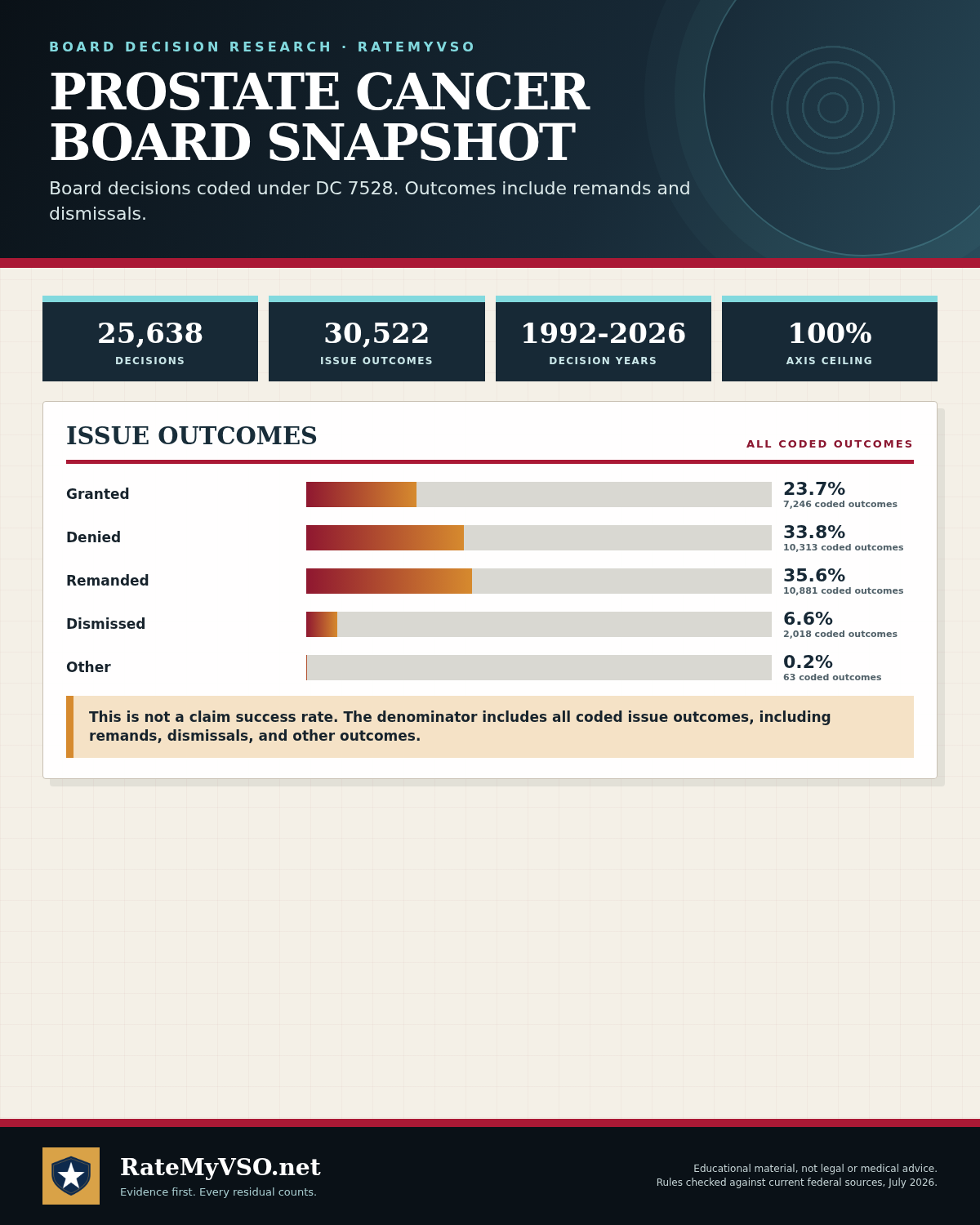
Coded prostate cancer issue outcomes: 30,674 coded issues drawn from 25,848 Board decisions. Opens the full-size chart, free to save or print.
One-page guide: Prostate Cancer Board Snapshot
Coded prostate cancer issue outcomes: 30,674 coded issues drawn from 25,848 Board decisions. Opens the full-size chart, free to save or print.
Prostate Cancer (DC 7528 under 38 CFR § 4.115b)
Prostate cancer is the most common cancer among veterans, comprising approximately 29% of veteran cancer diagnoses according to VA cancer registry data. (VA Central Cancer Registry, as cited by CCK Law, 2017)
Primary residuals after remission:
After active treatment ends, residuals of prostate cancer are rated under DC 7528 as either voiding dysfunction or renal dysfunction, whichever predominates. The criteria for voiding dysfunction live in 38 CFR § 4.115a (a tables-of-criteria section that several genitourinary diagnostic codes cross-reference). The voiding-dysfunction sub-criteria break down as follows:
Urinary frequency (38 CFR § 4.115a, voiding dysfunction):
Urinary incontinence requiring absorbent materials (38 CFR § 4.115a, voiding dysfunction): This is the highest commonly achievable residual rating for prostate cancer based on voiding dysfunction.
Erectile dysfunction (DC 7522): The VA does not compensate erectile dysfunction with a percentage rating in most cases (DC 7522 is rated 0% for ED with retained anatomy). However, veterans with service-connected erectile dysfunction qualify for Special Monthly Compensation at the K rate (SMC-K) under 38 CFR § 3.350(a) for the loss of use of a creative organ. As of 2026, SMC-K adds $139.87 per month on top of the combined disability rating. See our SMC Guide. This is a separate benefit and easy to miss.
Renal dysfunction: If prostate cancer or its treatment damaged kidney function, this is rated separately under the genitourinary schedule (38 CFR § 4.115a, renal dysfunction).
Maximum residual rating commonly seen: 60% for severe voiding dysfunction. Veterans with additional kidney involvement may rate higher in combination.
- What the VA measures at your C&P exam
- Evidence that has won at the Board
- Inside the rater's playbook: grant, denial, and remand rates
- Secondary condition map
Bladder Cancer (DC 7528 under 38 CFR § 4.115b)
Bladder cancer is a malignant neoplasm of the genitourinary system and carries the 100% rating under DC 7528 while active or in treatment. Six months after treatment ends and the cancer is no longer active, a mandatory C&P exam is scheduled and the rating moves to residuals, evaluated as voiding dysfunction or renal dysfunction (whichever predominates) under 38 CFR § 4.115a, the same criteria shown above for prostate cancer.
Primary residuals after remission:
Voiding dysfunction: The most common bladder cancer residual. Urinary leakage or incontinence is rated by how often absorbent materials are changed (up to 60% when an appliance is required or materials are changed more than four times daily). Obstructed voiding with urinary retention can bring recurrent urinary tract infections or the need for a catheter, and abnormal urinary frequency (including waking multiple times nightly) is rated under the urinary frequency criteria shown in the prostate section above.
Renal dysfunction: If treatment reduced kidney function, it is rated separately under the renal dysfunction criteria (see the GFR-based tiers in the kidney cancer section below).
Erectile dysfunction (DC 7522): Rated 0% with retained anatomy, but service-connected ED also qualifies for Special Monthly Compensation at the K rate (SMC-K) for loss of use of a creative organ under 38 CFR § 3.350(a). See our SMC Guide.
Presumptive note: Bladder cancer is a presumptive condition for veterans exposed to contaminated drinking water at Camp Lejeune (August 1953 through December 1987) under 38 CFR § 3.309(f).
Kidney Cancer (DC 7528 under 38 CFR § 4.115b)
Kidney (renal) cancer is rated under DC 7528 at 100% while active, with the same six-month post-treatment window and mandatory C&P exam. After remission, the predominant residual for kidney cancer is usually renal dysfunction, especially when a partial or total nephrectomy leaves the remaining kidney to do the filtering work alone.
Primary residuals after remission:
Renal dysfunction: Reduced kidney function after nephrectomy, chronic kidney disease, proteinuria, or abnormal kidney labs are rated under the renal dysfunction criteria of 38 CFR § 4.115a, based largely on glomerular filtration rate (GFR) sustained over time:
Urinary complications: Some veterans have urinary frequency, urgency, leakage, or recurrent urinary tract infections after surgery, rated as voiding dysfunction under 38 CFR § 4.115a.
Surgical residuals: Persistent flank or surgical-site pain, painful or unstable scars (DC 7800 through 7805), or an incisional hernia after abdominal surgery may each be rated when documented.
Presumptive note: Kidney cancer is a presumptive condition for Camp Lejeune contaminated-water exposure (1953-1987) under 38 CFR § 3.309(f), and renal cancers are also covered under the radiation presumptive framework.
Testicular Cancer (DC 7528; residuals under DC 7524 and 7523)
Testicular cancer is a malignant neoplasm of the genitourinary system, rated 100% under DC 7528 while active. The most common treatment is orchiectomy (surgical removal of a testicle), and several residuals carry their own ratings and Special Monthly Compensation.
Primary residuals after remission:
Removal of a testicle (DC 7524):
Atrophy of the testicle (DC 7523): Complete atrophy of both testes is rated 20%; complete atrophy of one testis is rated 0%. Even a 0% rating establishes service connection and can support SMC-K and secondary claims.
Erectile dysfunction and infertility: ED (DC 7522) and infertility after orchiectomy, chemotherapy, radiation, or hormonal change are generally rated 0% but qualify for SMC-K (loss of use of a creative organ) under 38 CFR § 3.350(a), paid in addition to other compensation. See our SMC Guide.
Other residuals: Hormonal imbalance after orchiectomy, fatigue from chemotherapy or radiation, surgical scars (DC 7800 through 7805), and mental health conditions secondary to the diagnosis or to ED/infertility are each separately ratable when documented.
 One-page guide: Digestive Cancer Residuals
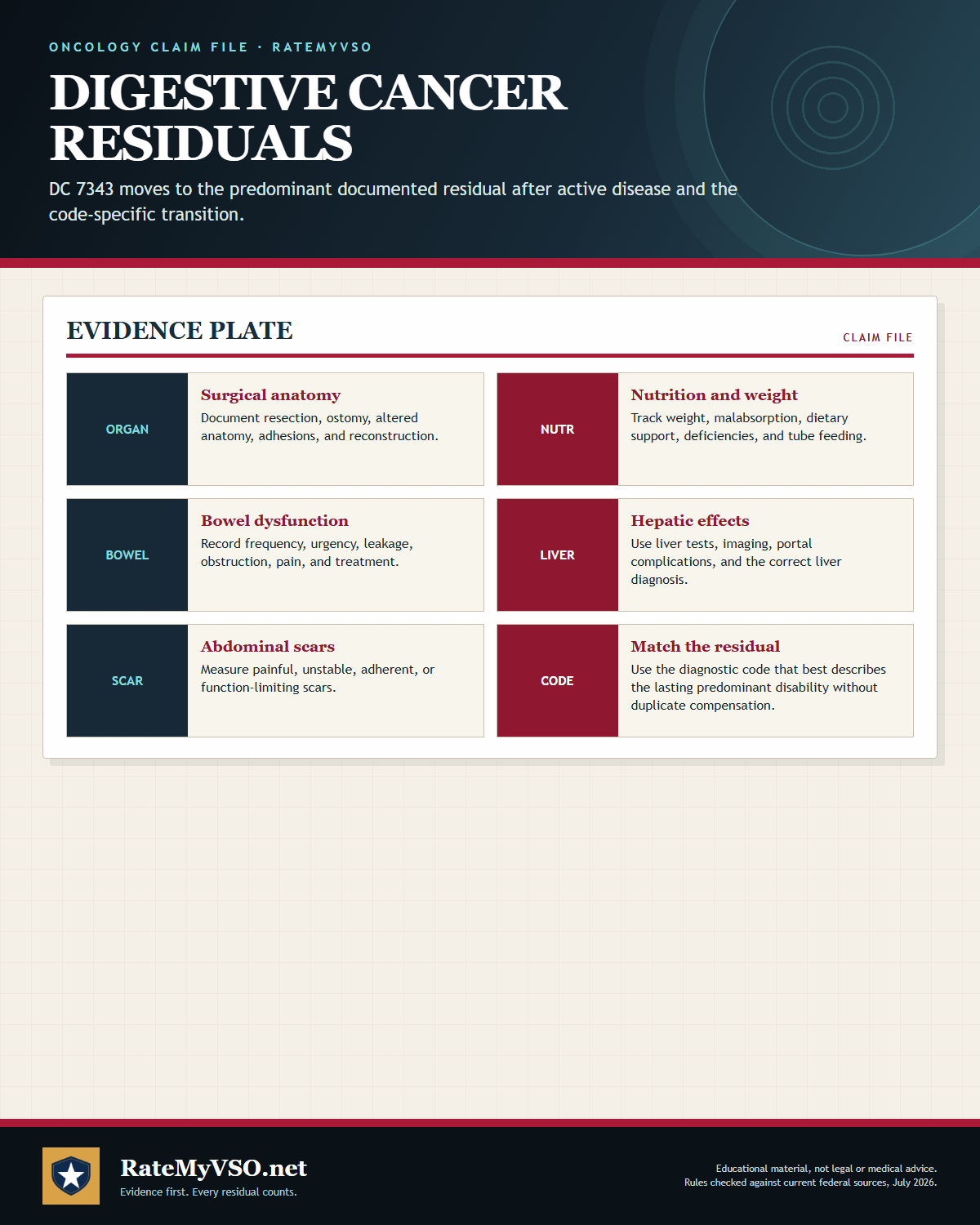
Surgical anatomy, nutrition, bowel, liver, scar, and predominant-residual analysis. Opens the full-size chart, free to save or print.
One-page guide: Digestive Cancer Residuals
Surgical anatomy, nutrition, bowel, liver, scar, and predominant-residual analysis. Opens the full-size chart, free to save or print.
 One-page guide: Digestive Cancer Board Snapshot
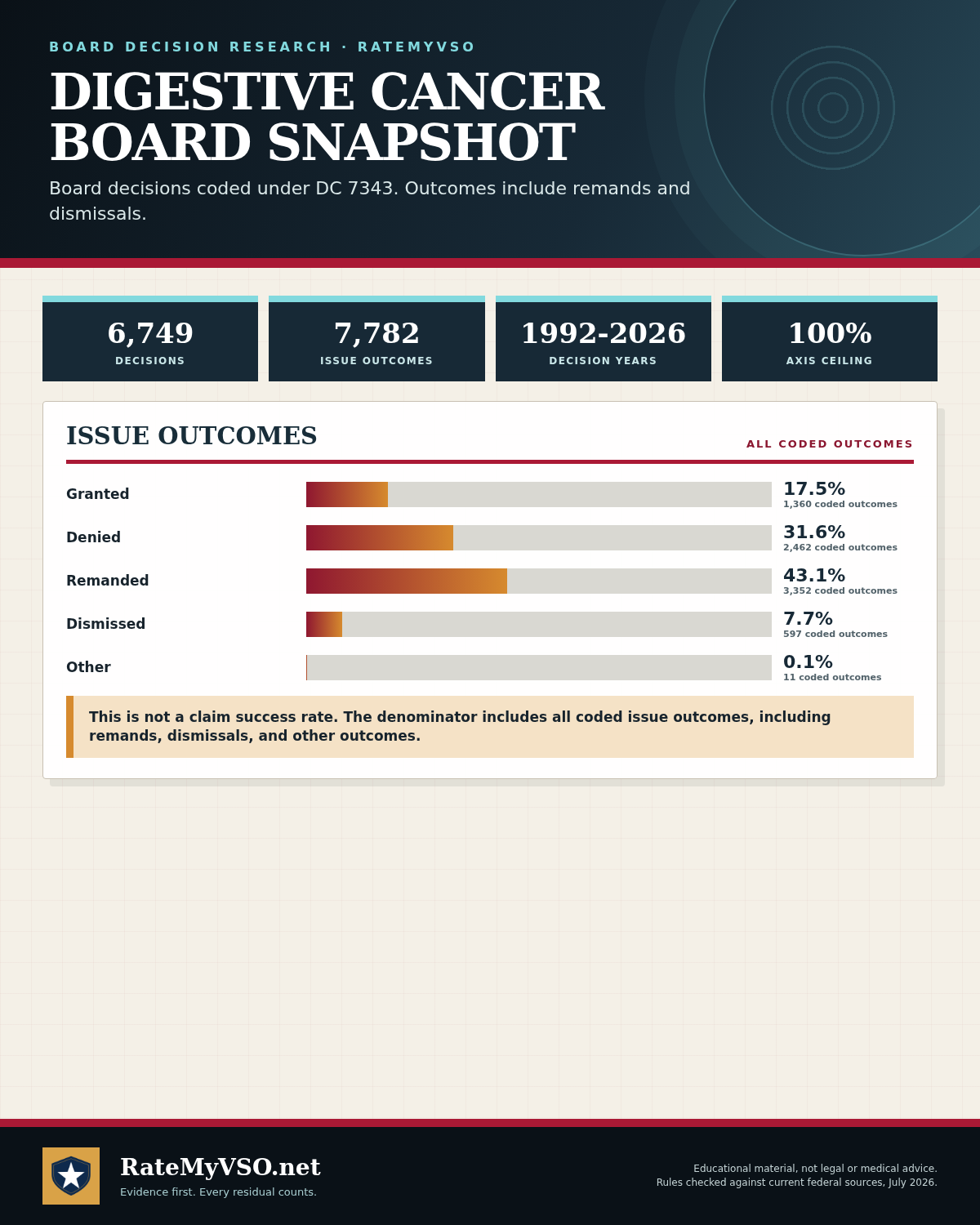
Coded digestive cancer issue outcomes: 7,984 coded issues drawn from 6,959 Board decisions. Opens the full-size chart, free to save or print.
One-page guide: Digestive Cancer Board Snapshot
Coded digestive cancer issue outcomes: 7,984 coded issues drawn from 6,959 Board decisions. Opens the full-size chart, free to save or print.
Colorectal and GI Cancers (DC 7343 under 38 CFR § 4.114)
Colorectal cancer is among the top three cancers in the veteran population. After treatment, the GI tract and related nerves are the primary areas of residual disability.
Primary residuals after remission:
Resection of the large intestine (DC 7329): Partial or total colectomy is rated by the resulting symptoms, which can include diarrhea, urgency, abdominal pain, malabsorption, weight change, or complications where the bowel was reconnected.
Fecal incontinence / impairment of sphincter control (DC 7332): Rated based on the severity of bowel control loss. Complete loss of sphincter control earns 100%. Incomplete loss with frequent involuntary bowel movements and lack of control of gas earns 60%. Ratings step down to 30% and 10% for lesser severity.
Colostomy, ileostomy, or intestinal fistula: A permanent colostomy earns a 100% rating if it requires frequent cleaning and appliance use; a temporary colostomy that was reversed and healed is rated on any remaining functional loss. An ileostomy is rated on the same appliance-and-management basis, and an external intestinal fistula is rated under DC 7330.
Irritable bowel / residual bowel dysfunction (DC 7319 or coded analogously): Rated based on frequency of symptoms including diarrhea, constipation, pain, and urgency.
Bowel obstruction and stricture: Rated under DC 7301 (peritoneal adhesions) or DC 7332/7333 (depending on the structure affected) if related to the service-connected malignancy.
Abdominal and perineal scarring: Rated under scar diagnostic codes (DC 7800 through 7805) based on surface area, pain, and functional limitation.
Peripheral neuropathy from chemotherapy: Oxaliplatin (used in colorectal cancer regimens) and other platinum agents are among the most common causes of chemotherapy-induced peripheral neuropathy (CIPN). This is rated under the peripheral nerve diagnostic codes (DC 8520 through 8530 depending on the specific nerve and extremity). This is frequently underclaimed.
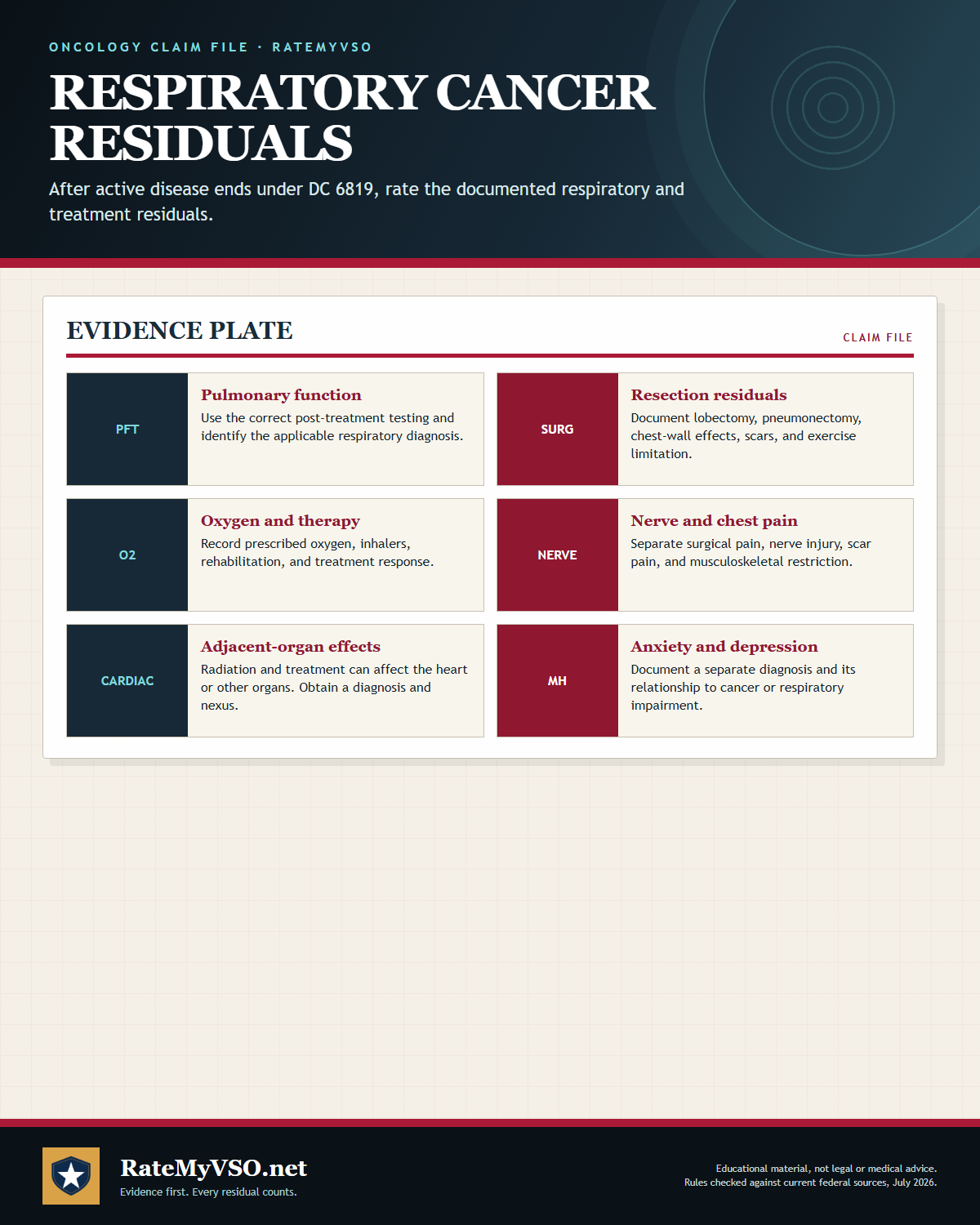 One-page guide: Respiratory Cancer Residuals
Pulmonary testing, resection, oxygen, pain, adjacent-organ, and mental-health effects. Opens the full-size chart, free to save or print.
One-page guide: Respiratory Cancer Residuals
Pulmonary testing, resection, oxygen, pain, adjacent-organ, and mental-health effects. Opens the full-size chart, free to save or print.
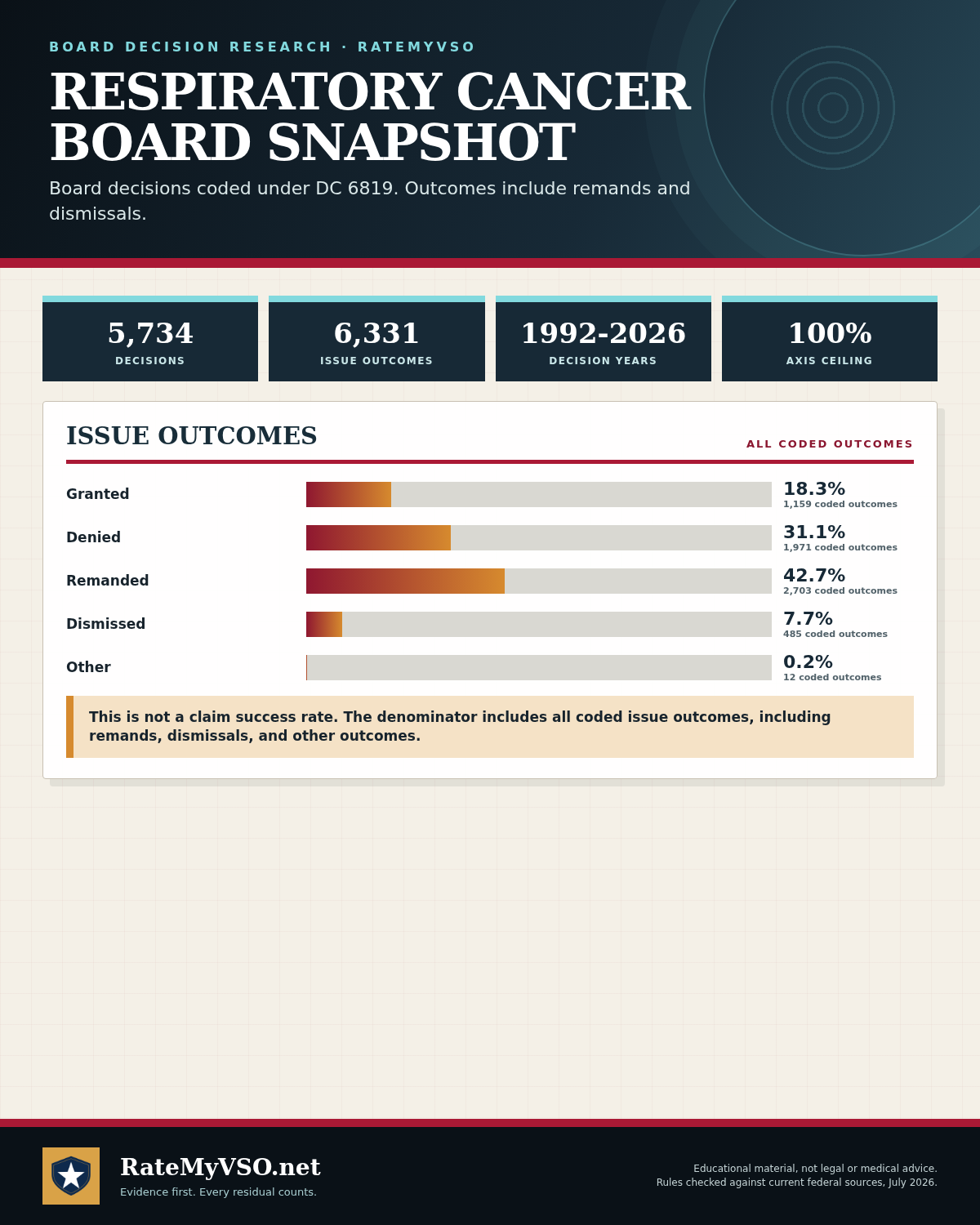 One-page guide: Respiratory Cancer Board Snapshot
Coded respiratory cancer issue outcomes: 6,428 coded issues drawn from 5,838 Board decisions. Opens the full-size chart, free to save or print.
One-page guide: Respiratory Cancer Board Snapshot
Coded respiratory cancer issue outcomes: 6,428 coded issues drawn from 5,838 Board decisions. Opens the full-size chart, free to save or print.
Lung and Respiratory Cancers (DC 6819 under 38 CFR § 4.97)
Respiratory cancers include lung, tracheal, bronchial, and related cancers originating in the breathing system. These are heavily represented in PACT Act claims.
Primary residuals after remission:
Pulmonary function impairment: Post-treatment lung capacity is measured by FEV-1 (forced expiratory volume in one second), FVC (forced vital capacity), and DLCO (diffusion capacity for carbon monoxide). These are the core metrics for all respiratory ratings under 38 CFR § 4.97. Veterans who required lobectomy or pneumonectomy will have permanently reduced lung function.
Oxygen dependency: A veteran who requires continuous oxygen therapy to maintain oxygen saturation maintains a 100% rating for that residual alone, because the rating schedule assigns 100% when supplemental oxygen is medically necessary. This means a lung cancer veteran on home oxygen does not fall below 100% even in full remission. (38 CFR § 4.97, DC 6819)
Post-surgical pulmonary scarring and fibrosis: Rated based on resulting reduction in lung function metrics.
Cardiac effects from thoracic radiation: Radiation-induced pericarditis, constrictive pericarditis, or coronary artery disease secondary to chest radiation can be rated under the cardiac schedule as secondary conditions.
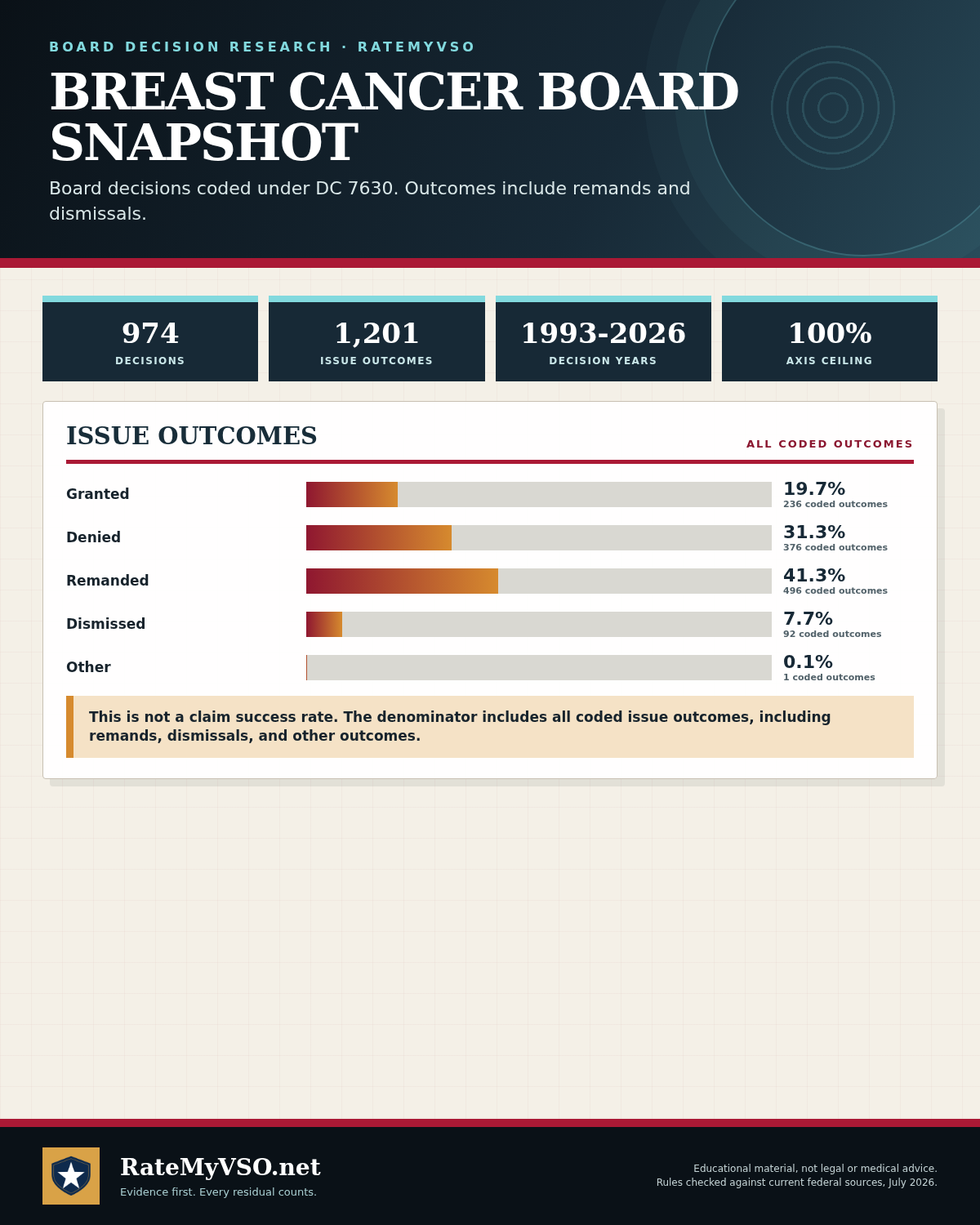 One-page guide: Breast Cancer Board Snapshot
Coded breast cancer issue outcomes: 1,136 coded issues drawn from 911 Board decisions. Opens the full-size chart, free to save or print.
One-page guide: Breast Cancer Board Snapshot
Coded breast cancer issue outcomes: 1,136 coded issues drawn from 911 Board decisions. Opens the full-size chart, free to save or print.
Breast Cancer (active disease DC 7630; mastectomy residuals DC 7626, under 38 CFR § 4.116)
Surgery of the breast (DC 7626) ratings. When treatment involves surgery, the residual is rated by the type of mastectomy and whether one or both breasts were affected:
- Radical mastectomy (breast, underlying pectoral muscles, and regional lymph nodes removed): 80% both breasts, 50% one breast.
- Modified radical mastectomy (breast and axillary nodes removed, pectoral muscles left intact): 60% both, 40% one.
- Simple mastectomy (all breast tissue and nipple removed), or a wide local excision that significantly alters breast size or form: 50% both, 30% one.
- Wide local excision (lumpectomy, partial mastectomy, segmentectomy) without significant alteration: 0%.
Primary residuals after remission:
Scars and disfigurement: The rating schedule for breast cancer explicitly mentions impairment due to scars or disfigurement as the primary basis for residual rating. Rated under DC 7800 through 7805 (scar codes) based on size, location, pain, and functional limitation.
Lymphedema (DC 7121): Lymph node removal during mastectomy or lumpectomy, or damage from radiation, frequently causes lymphedema in the arm or hand on the treated side. Lymphedema is rated from 0% to 100% based on severity and functional impairment. This is a commonly underclaimed residual.
Limited shoulder and arm range of motion: Post-surgical or post-radiation limitation of shoulder and arm motion is rated under musculoskeletal codes (DC 5201 through 5203).
Postmastectomy Pain Syndrome (PMPS): Chronic pain in the chest, armpit, shoulder, or arm that persists long after surgical healing. Federal case law (Saunders v. Wilkie, 886 F.3d 1356, Fed. Cir. 2018) holds that pain alone can be a ratable disability when it causes functional impairment, even when no specific nerve injury is identified. PMPS claims typically rest on records documenting persistent pain and its effect on movement, strength, or endurance.
Treatment-related hormonal and bone changes: Hormone-suppressing therapy can reduce bone density and contribute to osteoporosis (DC 5013), along with fatigue and joint pain. These are ratable as secondary conditions when medical evidence links them to the cancer treatment.
Mental health conditions: Depression and anxiety secondary to breast cancer diagnosis and treatment are ratable if documented and linked.
Hodgkin's and Non-Hodgkin's Lymphoma (DC 7709 / DC 7715 under 38 CFR § 4.117)
Hodgkin's lymphoma (DC 7709) and non-Hodgkin's lymphoma (DC 7715) are both rated 100% while active and for a period after treatment. NHL is one of the most common Agent Orange-associated cancers and is heavily represented in PACT Act and Camp Lejeune claims. A confirmed recurrence after remission returns the rating to 100%.
Primary residuals after remission:
Peripheral neuropathy: Many chemotherapy regimens for lymphoma (particularly vincristine and bortezomib) cause significant peripheral neuropathy. Rated under nerve-specific diagnostic codes based on which nerve groupings are affected and severity of loss.
Chronic fatigue and anemia: Persistent fatigue may be rated as chronic fatigue syndrome (DC 6354), and anemia under the hemic and lymphatic system schedule (38 CFR § 4.117), with treatment-related marrow failure rated as aplastic anemia (DC 7716).
Lymphedema (DC 7121): Chronic swelling from damaged or removed lymph nodes, rated by severity, pain, and the degree to which it limits movement or daily function.
Hodgkin's treatment late effects: Chest or neck radiation and anthracycline chemotherapy used for Hodgkin's are associated with hypothyroidism (DC 7903, common after neck or upper-chest radiation), coronary artery disease and other cardiac injury, pulmonary fibrosis, and an elevated long-term risk of secondary cancers that can emerge years to decades after treatment. Each is separately ratable as a secondary condition when documented.
Reproductive effects: Alkylating chemotherapy used for both Hodgkin's and non-Hodgkin's lymphoma can cause infertility or early menopause. Loss of reproductive function may support Special Monthly Compensation at the K rate (SMC-K) under 38 CFR § 3.350(a), and the emotional impact is a documentable basis for a secondary mental health claim.
Immune dysfunction and infection susceptibility: Rated by analogy if documentable and disabling.
Mental health: Depression and anxiety secondary to lymphoma treatment are ratable if documented.
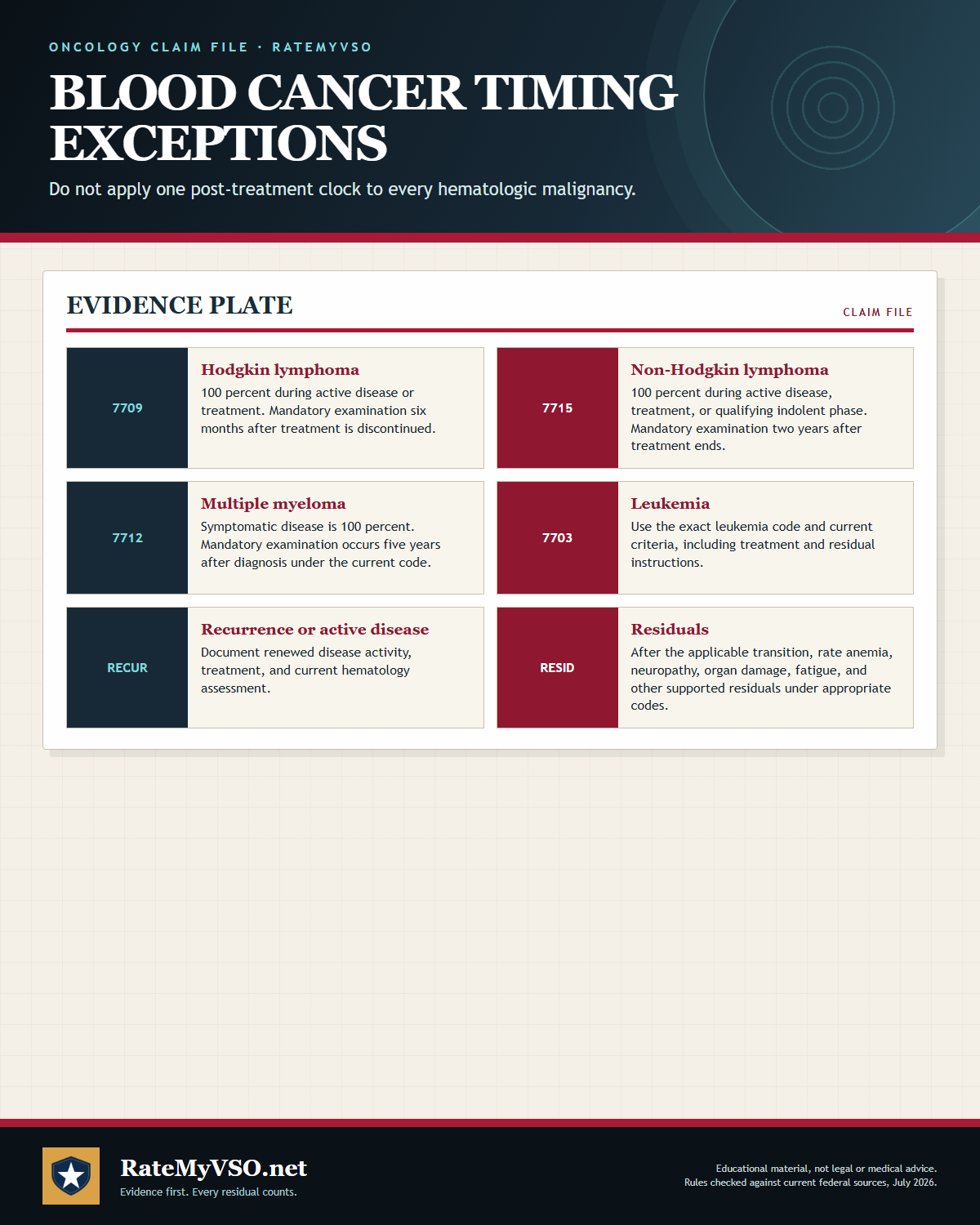 One-page guide: Blood Cancer Timing Exceptions
Current timing rules for Hodgkin lymphoma, non-Hodgkin lymphoma, multiple myeloma, and leukemia. Opens the full-size chart, free to save or print.
One-page guide: Blood Cancer Timing Exceptions
Current timing rules for Hodgkin lymphoma, non-Hodgkin lymphoma, multiple myeloma, and leukemia. Opens the full-size chart, free to save or print.
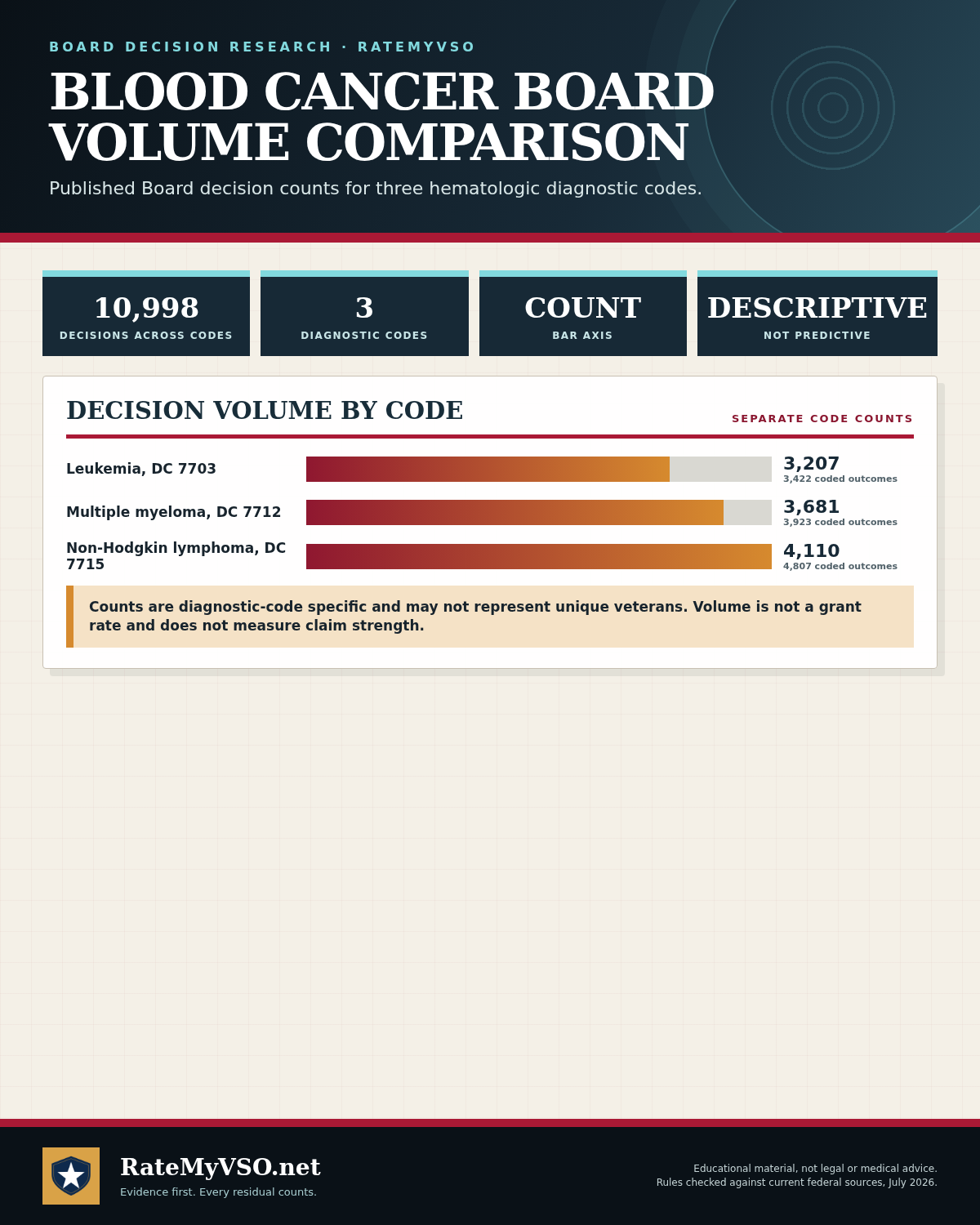 One-page guide: Blood Cancer Board Volume Comparison
Separate published Board decision counts for the leukemia, multiple myeloma and non-Hodgkin lymphoma diagnostic codes, 9,433 decisions in total. Opens the full-size chart, free to save or print.
One-page guide: Blood Cancer Board Volume Comparison
Separate published Board decision counts for the leukemia, multiple myeloma and non-Hodgkin lymphoma diagnostic codes, 9,433 decisions in total. Opens the full-size chart, free to save or print.
Hematologic Cancers: Leukemia, Multiple Myeloma, Myelodysplastic Syndromes (DC 7703 leukemia, DC 7712 multiple myeloma, under 38 CFR § 4.117)
These blood and bone marrow cancers were significantly expanded under PACT Act presumptive lists, with additional types added in January 2025. Adult leukemia and multiple myeloma are also presumptive for Camp Lejeune contaminated-water exposure under 38 CFR § 3.309(f).
Primary residuals after remission or during chronic disease management:
Anemia: Evaluated under the hemic and lymphatic system schedule (38 CFR § 4.117). The former standalone anemia code (DC 7700) was removed effective December 9, 2018; treatment-related marrow failure is now rated as aplastic anemia (DC 7716) by transfusion frequency, infection frequency, and ongoing treatment needs, up to 100%.
Immune dysfunction (DC 7702, agranulocytosis): A weakened immune system with recurring infections from low or ineffective white blood cells, rated by frequency and severity.
Peripheral neuropathy: Heavily associated with platinum-agent and bortezomib-based chemotherapy. Rated under the nerve-specific codes (for example DC 8520 for the lower extremities) by severity.
Chronic fatigue: Long-term cancer-related fatigue is often rated as chronic fatigue syndrome (DC 6354) by the degree of daily-activity restriction.
Bone damage (myeloma): Multiple myeloma weakens bone, causing lytic lesions, osteoporosis (DC 5013), and fracture risk; documented skeletal damage is rated under musculoskeletal codes. Hypercalcemia from bone breakdown may also occur.
Kidney damage (renal myeloma): Rated under the genitourinary renal dysfunction criteria when kidney function is measurably impaired.
Mental health: Depression (DC 9434) and anxiety tied to chronic illness, pain, or treatment are ratable secondary conditions when documented.
 One-page guide: Malignant Skin Cancer Board Snapshot
Coded skin cancer issue outcomes: 14,307 coded issues drawn from 12,704 Board decisions. Opens the full-size chart, free to save or print.
One-page guide: Malignant Skin Cancer Board Snapshot
Coded skin cancer issue outcomes: 14,307 coded issues drawn from 12,704 Board decisions. Opens the full-size chart, free to save or print.
Skin Cancers, Melanoma and Non-Melanoma
Melanoma (DC 7833), non-melanoma malignant skin cancers (DC 7818), metastatic skin cancer (DC 7818): Skin cancers follow a different rule from most malignancies. The 100% rating applies only when the cancer requires therapy comparable to systemic treatment, and it continues for six months after that treatment ends. Treatment confined to the skin, such as local excision or topical therapy, does not trigger the 100%: those cases are rated from the start on scars, disfigurement, or other documented impairment (38 CFR § 4.118, DC 7818 and 7833).
Scarring (DC 7800 through 7805): The primary residual. Rated by surface area affected, whether it is painful, whether it limits function (especially near joints), and cosmetic impact.
Thyroid Cancer (DC 7914 under 38 CFR § 4.119)
Primary residuals after remission:
Hypothyroidism (DC 7903): Thyroidectomy typically results in permanent hypothyroidism requiring lifelong hormone replacement. Rated from 0% for asymptomatic cases managed by medication, through 30% for moderate symptoms, to higher ratings for severe cases. Even well-controlled hypothyroidism can rate at 10% or 30% depending on symptom burden.
Hypoparathyroidism: Parathyroid glands can be damaged during thyroid surgery, causing calcium regulation problems. Rated under DC 7905 or by analogy.
Vocal cord damage or hoarseness: If the recurrent laryngeal nerve was affected during surgery, rated under the laryngeal and vocal cord schedule.
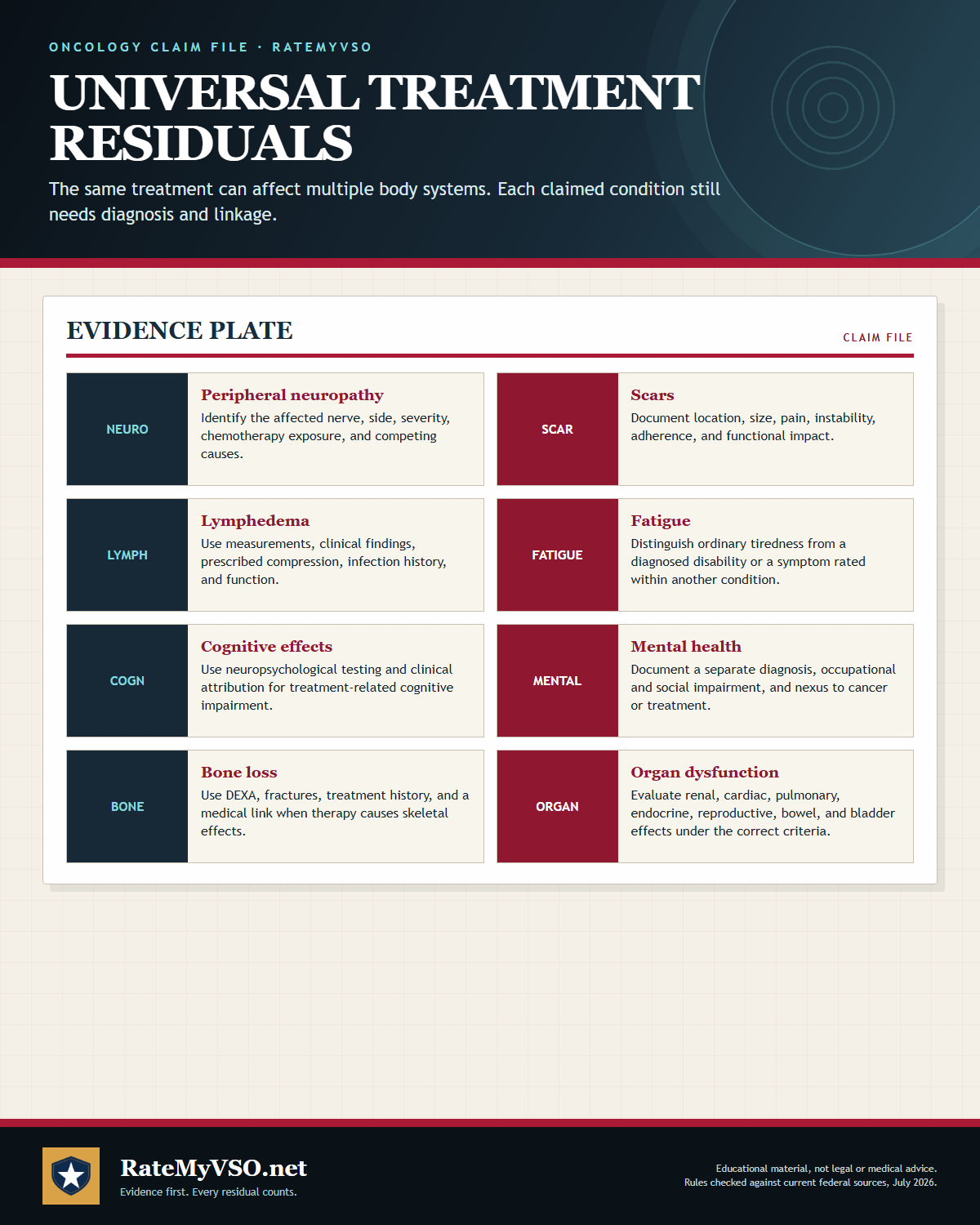
Universal Residuals That Apply Across Cancer Types
Regardless of cancer type, the following residuals appear across many claims and are frequently underdocumented.
Chemotherapy-Induced Peripheral Neuropathy (CIPN)
One of the most common and most underclaimed residuals. Platinum agents (cisplatin, carboplatin, oxaliplatin), taxanes (paclitaxel, docetaxel), vinca alkaloids (vincristine), and bortezomib all carry significant neuropathy risk. Symptoms include numbness, tingling, burning pain, and weakness in hands and feet. Rated under the peripheral nerve diagnostic codes (DC 8510 through 8530 under 38 CFR § 4.124a) based on the specific nerve affected and severity (mild, moderate, severe, or complete loss).
Mental Health Secondary Conditions
Depression (DC 9434), anxiety (DC 9400), and PTSD-pattern responses to cancer diagnosis and treatment are ratable secondary conditions. They require documentation and a nexus opinion from a treating provider or examiner linking the mental health condition to the service-connected cancer. Rated under 38 CFR § 4.130 using the General Rating Formula for Mental Disorders. See also our Secondary Service Connection guide.
Lymphedema (DC 7121)
Any cancer involving lymph node removal or lymph-node-field radiation (breast, melanoma, lymphoma, GI cancers, genitourinary cancers) can cause lymphedema as a residual. Rated from 0% for asymptomatic, through increasing percentages for edema with functional impairment. Often overlooked and underdocumented.
Chronic Fatigue and Cognitive Impairment ("Chemo Brain")
Persistent fatigue and cognitive slowing following chemotherapy are real, documentable conditions. VA can rate these under the neurological or mental health schedules if well-documented by treating providers. This requires thorough medical records and, ideally, a treating provider's statement linking the cognitive symptoms to the service-connected cancer treatment. Adjudication outcomes vary depending on documentation quality.
Radiation-Induced Secondary Conditions
Radiation targeting one area can damage adjacent organs or structures. Thoracic radiation can cause pericarditis or coronary artery disease. Pelvic radiation can cause bowel dysfunction, bladder dysfunction, or sexual dysfunction. Each of these is ratable as a secondary condition.
Section 4: Scenario C, The Veteran Is Already in Remission at Time of Filing
This scenario deserves its own section because it is fundamentally different in how the claim proceeds, and it surprises many veterans.
What Happens When There Is No Active Cancer at Filing
When a veteran files a claim and their cancer is already in remission, with treatment having ended more than six months ago (or more than two years ago for non-Hodgkin's lymphoma, or more than five years after a diagnosis of symptomatic multiple myeloma), there is no active cancer to rate at 100%. The temporary 100% rating only applies while cancer is active and during the post-treatment window. If the veteran files after that window has passed, the claim goes straight to a residual-based rating from the start. (38 CFR § 4.117)
Think of it this way: the temporary 100% rating is available only while cancer is active and during the post-treatment window. Once that window closes, it is not available retroactively, unless the veteran can show the clock should have started earlier.
Why Effective Date Matters in This Scenario
The effective date is the date from which the VA begins paying benefits. It is normally the date the claim is received, or the date an Intent to File was submitted if that was earlier. Back pay is calculated from the effective date.
If a veteran filed an Intent to File while their cancer was actively being treated, and their formal claim is later decided when cancer is in remission, the VA must still consider the claim from the Intent to File date. Under 38 CFR § 4.117, the regulation provides for the temporary 100% rating to apply during the active-treatment window covered by the ITF date, with residuals taking effect after the post-treatment window expires. See our Effective Dates guide for more on how dates determine back pay.
If a veteran never filed while cancer was active and only files years after remission, the effective date is the new claim date. There is no retroactive 100% period. The claim is rated on residuals from the start.
This is a high-stakes effective-date question, and it is one VSO representatives commonly walk veterans through during the active-treatment window precisely because filing an Intent to File while still in treatment costs nothing and preserves the effective date.
How the Remission-at-Filing Claim Is Processed
- Service connection is established (presumptive or direct).
- C&P examination is scheduled to assess current status.
- Examiner evaluates residuals, not active cancer.
- Each residual is rated separately and the ratings are combined.
- If cancer is not active and there are no measurable residuals, the VA can rate the condition at 0%, meaning service connection exists but no compensation is paid. This is called a non-compensable service connection.
A 0% rating still matters. It establishes service connection, so if residuals worsen later you are filing for an increase rather than fighting the connection over again, and it gives you a service-connected primary that secondary conditions can attach to. In cancer claims specifically, a 0% can still pay: erectile dysfunction and testicular atrophy are commonly rated 0% and still support Special Monthly Compensation at the K rate for loss of use of a creative organ.
What Examiners Commonly Evaluate (Regardless of Scenario)
For any cancer claim, the C&P examination is the moment when the rating is effectively decided. The exam reflects what the examiner observes and what is in the medical record. Residuals that exist but are not documented before or during the exam are often missed.
Items examiners commonly evaluate during a cancer residuals exam include:
- Every symptom that persists from treatment, no matter how minor it seems
- Neuropathy in fingers or toes
- Fatigue levels
- Bowel or bladder frequency or control issues
- Emotional health changes
- Cognitive changes
- Pain at surgical sites
- Lymphedema
- Reduced range of motion
A personal statement (lay statement) describing daily functional impact of each symptom is recognized evidence under the standard established in Buchanan v. Nicholson, 451 F.3d 1331 (Fed. Cir. 2006): a competent lay statement about observable symptoms carries genuine evidentiary weight, and VA cannot reject it merely because contemporaneous medical records do not corroborate it.
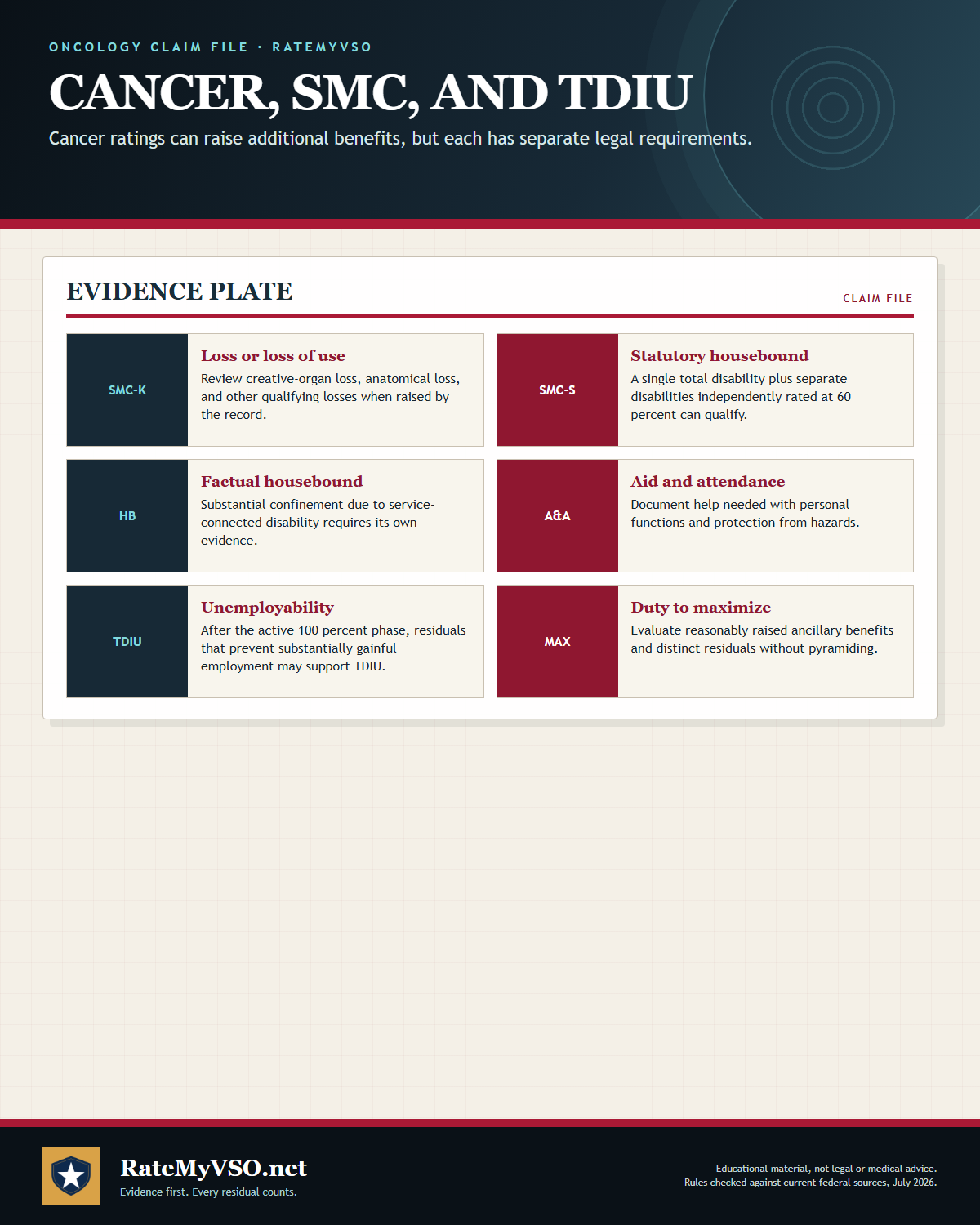 One-page guide: Cancer, SMC, and TDIU
Review of SMC-K, SMC-S, housebound, aid-and-attendance, TDIU, and duty-to-maximize concepts. Opens the full-size chart, free to save or print.
One-page guide: Cancer, SMC, and TDIU
Review of SMC-K, SMC-S, housebound, aid-and-attendance, TDIU, and duty-to-maximize concepts. Opens the full-size chart, free to save or print.
Section 5: Special Benefits Tied to Cancer Claims
TDIU (Total Disability Individual Unemployability)
Veterans whose service-connected cancer residuals prevent them from holding substantially gainful employment may meet the criteria for TDIU under 38 CFR § 4.16. TDIU pays at the 100% rate even when the combined schedular rating is below 100%. Basic eligibility requires either one service-connected condition rated at 60% or more, or a combined rating of 70% or more with at least one condition at 40%. Veterans whose residuals limit work capacity often discuss TDIU eligibility with their representative. See our TDIU Guide for more.
SMC-K for Reproductive System Loss
Veterans with service-connected erectile dysfunction or loss of use of a creative (reproductive) organ qualify for Special Monthly Compensation at the K rate under 38 CFR § 3.350(a). This is a monthly supplement added to the combined rating payment. As of 2026, SMC-K adds $139.87 per month. It is frequently missed in prostate, testicular, and pelvic cancer claims.
You are not required to file a separate claim for it. VA is supposed to consider special monthly compensation whenever the record reasonably raises it, and a request for increased benefits can carry SMC as an inferred issue even when the veteran never named it (Akles v. Derwinski, 1 Vet. App. 118, 121 (1991)). In practice, though, it does get overlooked. The reliable move is to name it yourself: say plainly in your claim or statement that you are seeking SMC-K for loss of use of a creative organ, and make sure the record documents the loss. That is belt and suspenders, not a legal requirement. See our SMC Guide for the full ladder.
SMC-S if Already at 100%
A veteran rated at a schedular or TDIU 100% who also has a separate service-connected condition rated at 60% or more may qualify for Special Monthly Compensation at the S rate (SMC-S) under 38 CFR § 3.350(i). Cancer residuals that collectively push a veteran toward additional separate ratings are worth evaluating through this lens.
Section 6: Mental Health Secondary to Cancer
Depression and anxiety are well-documented consequences of cancer diagnosis and treatment. The VA rates mental health conditions under 38 CFR § 4.130 using the General Rating Formula for Mental Disorders, with ratings from 0% to 100% based on functional impairment.
A secondary claim for depression or anxiety secondary to a service-connected cancer requires:
- A current diagnosis of the mental health condition.
- A medical nexus opinion linking the mental health condition to the service-connected cancer or its treatment.
The treating oncologist, primary care physician, or mental health provider can provide this opinion. It does not require a formal independent medical examination, though those strengthen the claim. The VA examiner may also provide this nexus during the C&P exam if appropriately asked.
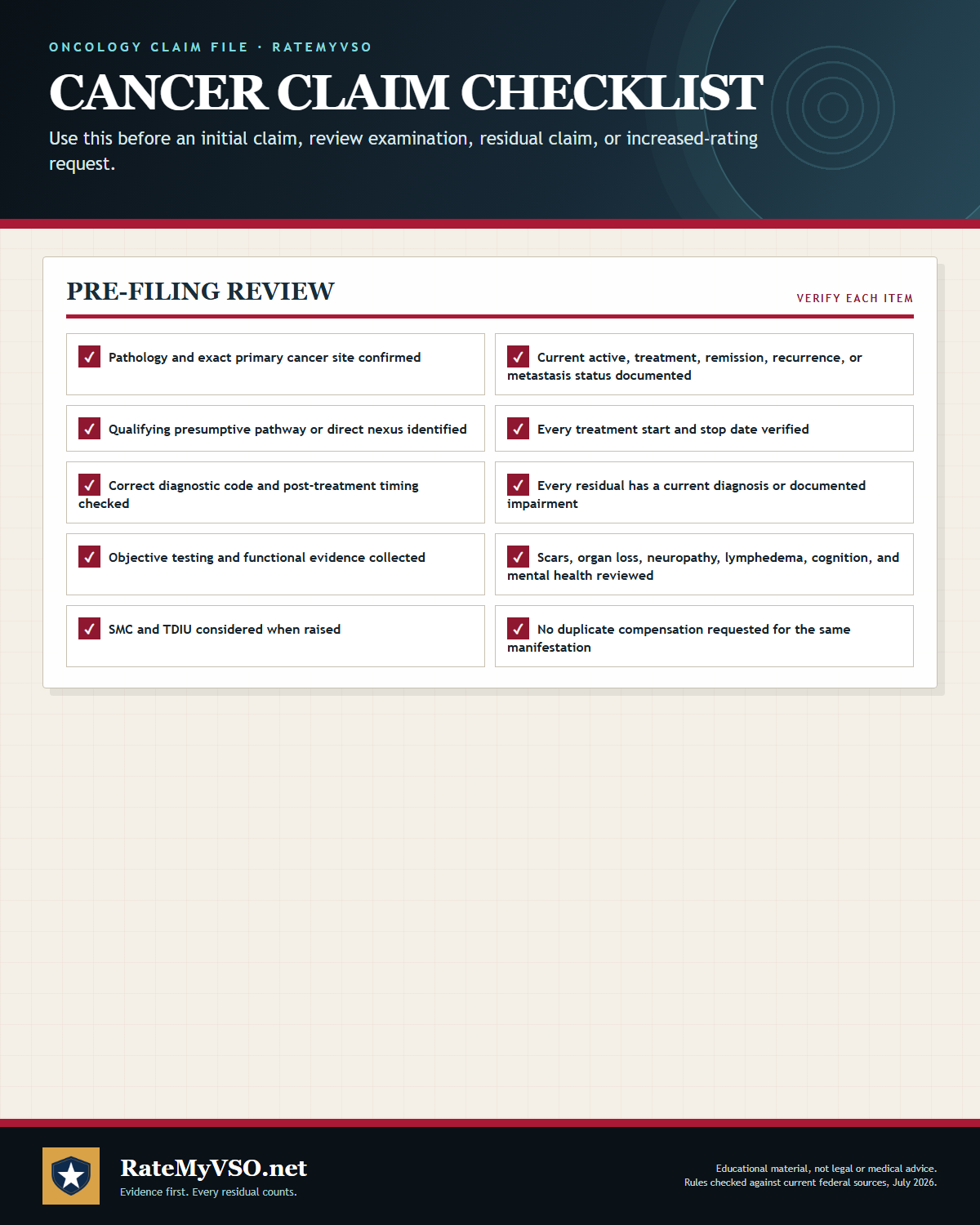 One-page guide: Cancer Claim Checklist
Ten checks covering diagnosis, status, service pathway, treatment dates, timing, residuals, evidence, and additional benefits. Opens the full-size chart, free to save or print.
One-page guide: Cancer Claim Checklist
Ten checks covering diagnosis, status, service pathway, treatment dates, timing, residuals, evidence, and additional benefits. Opens the full-size chart, free to save or print.
Section 7: Quick Reference Table
| Cancer Type | Active Rating | Post-Treatment Window | Most Common Residuals | Key DC |
|---|---|---|---|---|
| Prostate | 100% | 6 months | Voiding dysfunction, urinary frequency, ED (SMC-K) | 7528 |
| Bladder | 100% | 6 months | Voiding dysfunction, recurrent UTIs, ED (SMC-K) | 7528 |
| Kidney | 100% | 6 months | Renal dysfunction (GFR), CKD, scars, hernia | 7528 |
| Testicular | 100% | 6 months | Testicle removal/atrophy, ED, infertility (SMC-K) | 7528 / 7524 |
| Colorectal/GI | 100% | 6 months | Fecal incontinence, colostomy, bowel dysfunction, CIPN | 7343 |
| Lung/Respiratory | 100% | 6 months | Pulmonary function loss, oxygen dependency, fibrosis | 6819 |
| Breast | 100% | 6 months | Scars, lymphedema, limited arm ROM, mental health | 7630 / 7626 |
| Non-Hodgkin's Lymphoma | 100% | 2 years | Neuropathy, fatigue, anemia, lymphedema, mental health | 7715 |
| Hodgkin's Lymphoma | 100% | 6 months | Hypothyroidism, cardiac injury, pulmonary fibrosis, secondary cancers | 7709 |
| Leukemia | 100% | 6 months | Anemia, immune dysfunction, neuropathy, bone damage | 7703 |
| Multiple myeloma | 100% | 5 years from diagnosis | Bone damage, anemia, renal impairment, neuropathy | 7712 |
| Thyroid | 100% | 6 months | Hypothyroidism, hypoparathyroidism, vocal cord damage | 7914 |
| Skin/Melanoma | 100% only with systemic-type therapy | 6 months after that therapy; skin-confined treatment rated on residuals instead | Scarring, disfigurement, metastatic spread | 7818 / 7833 |
Six months is the common pattern, not a universal rule: the exact diagnostic code controls both the 100% rating and the post-treatment window, and eye malignancy (DC 6014, 38 CFR § 4.79) conditions its 100% on therapy comparable to systemic treatment the same way skin cancers do. Documented residuals are rated under their applicable diagnostic codes and combined per 38 CFR § 4.25 (see our VA Math Guide), subject to the anti-pyramiding rule (38 CFR § 4.14).
Section 8: Key Dates, Rules, and Pitfalls
For codes using the six-month rule, the window starts from the last treatment date, not the date of remission confirmation. If the last chemotherapy infusion was on January 1, the clock starts January 1. The mandatory C&P exam is scheduled around July 1.
Three codes break the six-month rule, and one of them is not a lymphoma. Non-Hodgkin's lymphoma (DC 7715) gets two years after treatment stops. Multiple myeloma (DC 7712) gets five years, measured from the diagnosis of symptomatic disease rather than from the end of treatment. Hodgkin's lymphoma (DC 7709) does not share the NHL window; it follows the ordinary six months.
A 0% service-connected rating is still worth having. It establishes the baseline for future claims for increase and supports eligibility for VA health care and other benefits.
Not all residuals appear immediately. Peripheral neuropathy, radiation-induced heart disease, and mental health conditions can emerge years after remission. A veteran can file a new claim for a residual that was not present at the first post-treatment exam.
Watchful waiting for prostate cancer does not mean no rating. If an oncologist recommends watchful waiting rather than active treatment, and the cancer remains active (not in remission), the 100% rating must be maintained. VA cannot reduce the rating for a veteran under watchful waiting with an active cancer diagnosis. (38 CFR § 4.117, DC 7528)
Section 9: Breast Cancer and Prostate Cancer, DC-Level Detail
Breast cancer and prostate cancer are the two most common cancers in the veteran population and each has rules that differ from the generic active-cancer framework. This section covers both.
Breast Cancer (DC 7630)
Malignant neoplasms of the breast are rated under Diagnostic Code 7630 (see 38 CFR § 4.116). While active, the veteran receives 100% regardless of sex. Six months after the last surgical, radiation, chemotherapy, or other therapeutic procedure ends, the VA must schedule a mandatory C&P examination. After that exam, if cancer is in remission, rating moves to residuals (see breast cancer residuals above and the PACT Act presumptive note below).
Verification note: The PACT Act presumptive for reproductive cancers derives from the statute itself (38 USC Ch. 11, Pub. L. 117-168) and subsequent VA rulemaking. Breast cancer is not specifically named in 38 CFR 3.320, which covers fine particulate matter presumptives (specific rare lung cancers plus asthma/rhinitis/sinusitis). Veterans should verify current VA guidance at VA.gov or through an accredited representative when filing.
- What the VA measures at your C&P exam
- Evidence that has won at the Board
- Inside the rater's playbook: grant, denial, and remand rates
- Secondary condition map
Prostate Cancer (DC 7528)
Malignant neoplasms of the genitourinary system, including prostate cancer, are rated under Diagnostic Code 7528 (see 38 CFR § 4.115b). Two rules are unique to prostate cancer claims.
Biopsy requirement for initial diagnosis
The VA's M21-1 Adjudication Manual requires that an initial diagnosis of prostate cancer for VA rating purposes be confirmed by prostate biopsy. An elevated PSA level alone does not satisfy element one (current diagnosis) for VA purposes. This is a firm VBA requirement. If a veteran had a radical prostatectomy without a prior biopsy, no VA diagnostic code can be applied without that biopsy record. Veterans in this situation may consider filing an appeal through the Board of Veterans Appeals, where adjudicators are not bound by M21-1 in the same way VBA rating personnel are. Once an initial biopsy has confirmed the diagnosis and is in the record, a repeat biopsy is not required for recurrence or metastasis evaluations.
Post-treatment window and the six-month rule
The VA shall continue the 100% rating with a mandatory VA examination at the expiration of six months following cessation of any surgical, radiation, chemotherapy, or other therapeutic procedure (see 38 CFR § 4.115b, DC 7528). The M21-1 manual recognizes treatment-specific variations: low-dose radiation may carry an extended window of approximately 18 months, and chemical hormone therapy may carry a two-year routine future exam interval. Note what those are: they set when VA schedules the next look, not a guarantee that the 100% is permanent. Whether ongoing hormone therapy is still treatment of active cancer is decided on the medical evidence in each case.
After the mandatory exam, if there is no local recurrence or metastasis, rating moves to residuals. Under DC 7528, residuals are rated as voiding dysfunction or renal dysfunction, whichever is predominant, using the criteria at 38 CFR § 4.115a. See the prostate cancer residuals section above for the full breakdown of urinary frequency, incontinence, and SMC-K for erectile dysfunction.
PACT Act presumptive note for prostate cancer: "Genitourinary cancer" is listed as a PACT Act presumptive for qualifying veterans under the same burn pit / Southwest Asia framework described above for breast cancer. Veterans who served in qualifying locations and have a prostate cancer diagnosis confirmed by biopsy may file a presumptive claim without an independent nexus opinion. Agent Orange remains the primary presumptive pathway for Vietnam-era veterans under 38 CFR § 3.309(e).
- What the VA measures at your C&P exam
- Evidence that has won at the Board
- Inside the rater's playbook: grant, denial, and remand rates
- Secondary condition map
Related Tools and Guides
Evidence Cited in Published Cancer (service connection) Decisions
We analyzed 6,519 published Board decisions involving cancer (service connection) for condition-specific evidence, counting only case-specific mentions (boilerplate recitations excluded). "Favorable" is the share of decisions citing that evidence where every issue was granted or the outcome was mixed; the baseline across all these decisions is 41.5%, combining every diagnostic code below. Evidence appearing in a decision does not mean it decided the case. Descriptive of the published record, not a prediction.
Bar length shows decisions citing the evidence.
By diagnostic code
These codes are grouped together above. They do not perform the same, so find your own code here rather than reading the combined figure. A code retired in the schedule rewrites appears without a link, because its decisions were judged under criteria that no longer apply.
Bar length shows published decisions reviewed.
Detected by phrase-reading the decision text with condition-specific vocabularies. Source: Board of Veterans' Appeals decisions, RateMyVSO analysis.
Sources
- 38 U.S.C. § 5901 (Prohibition on unauthorized representation)
- 38 CFR § 3.307, 3.309, 3.311 (Presumptive service connection framework)
- 38 CFR § 4.29 (Hospitalization rating)
- 38 CFR § 4.30 (Convalescent rating)
- 38 CFR Part 4, Schedule for Rating Disabilities (Full rating schedule)
- 38 CFR § 4.97 (Respiratory system ratings)
- 38 CFR § 4.114 (Digestive system ratings)
- 38 CFR § 4.115a (Genitourinary system dysfunctions, voiding dysfunction, urinary frequency, urinary tract infection, renal dysfunction tables)
- 38 CFR § 4.115b (Genitourinary diagnostic codes including DC 7528)
- 38 CFR § 4.116 (Gynecological and breast ratings)
- 38 CFR § 4.117 (Hemic and lymphatic system ratings)
- 38 CFR § 4.118 (Skin ratings, including DC 7818 and 7833 skin malignancy rules)
- 38 CFR § 4.79 (Eye ratings, including DC 6014 eye malignancy rule)
- 38 CFR § 4.119 (Endocrine ratings)
- 38 CFR § 4.124a (Neurological ratings including peripheral nerve codes)
- 38 CFR § 4.130 (Mental health ratings)
- 38 CFR § 3.350 (Special Monthly Compensation rates and eligibility)
- 38 CFR § 4.16 (TDIU criteria)
- Public Law 117-168 (Sergeant First Class Heath Robinson PACT Act of 2022)
- 89 Fed. Reg. (January 2025 VA rulemaking adding new PACT Act presumptives)
- Buchanan v. Nicholson, 451 F.3d 1331 (Fed. Cir. 2006) (lay evidence cannot be rejected solely for lack of contemporaneous medical records)
- Akles v. Derwinski, 1 Vet. App. 118 (1991) (special monthly compensation is an inferred issue when raised by the record)
- Saunders v. Wilkie, 886 F.3d 1356 (Fed. Cir. 2018) (Pain alone can be a ratable disability when it causes functional impairment)
- 38 CFR § 3.309(f) (Camp Lejeune contaminated-water presumptive diseases, including bladder cancer, kidney cancer, adult leukemia, and multiple myeloma)
- 38 CFR § 4.71a (Musculoskeletal ratings, including osteoporosis residuals DC 5013 and fractures)
- 38 CFR § 3.320 (Fine particulate matter presumptives: specific rare lung cancers, asthma, rhinitis, sinusitis)
- VA.gov, "The PACT Act and Your VA Benefits"
- VA.gov, "Presumptive cancers related to burn pit exposure" (the current listed-cancer categories)
- VA press release, priority processing for PACT Act cancer claims
- VA Form 20-10207 (Priority Processing Request, including terminal illness)
- VA Central Cancer Registry (cancer prevalence statistics)