VA Disability Rating for Paralysis of sciatic nerve (DC 8520)
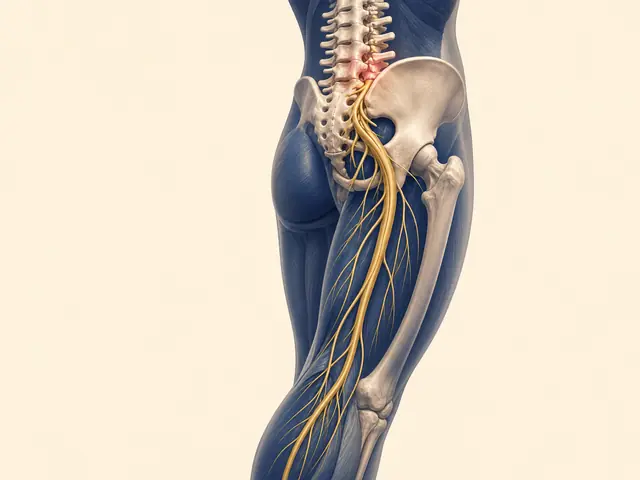
Diagnostic Code 8520 covers paralysis of the sciatic nerve, the large nerve that runs from the lower back down the back of the leg. With complete paralysis the foot dangles and drops, no active movement is possible in the muscles below the knee, and bending the knee is weakened or, very rarely, lost. The VA rates complete paralysis at 80%. Incomplete paralysis is rated 60% when severe with marked muscular atrophy, 40% when moderately severe, 20% when moderate, and 10% when mild.
Explore Sciatic Nerve Resources
Pick a group to see its pages. Everything here is a link to another page on this site.
Start Here (1 page)
Ratings and C&P Exams (2 pages)
Claimed Secondary to Something Else (4 pages)
- Peripheral Neuropathy Secondary to DiabetesHow the Board has handled this pairing.
- Sciatic Radiculopathy Secondary to Back or Neck StrainHow the Board has handled this pairing.
- Sciatic Radiculopathy Secondary to Disc SyndromeHow the Board has handled this pairing.
- Sciatic Radiculopathy Secondary to Type 2 DiabetesHow the Board has handled this pairing.
Those Conditions on Their Own (4 pages)
- VA Lumbar Spine (Low Back) Claims GuideThe full guide to claiming a low-back condition.
- VA Diabetes Claims GuideThe full guide to claiming diabetes.
- VA Cancer Claims GuideRatings during treatment, the six-month exam, and what is left afterwards.
- VA Musculoskeletal Rating GuideThe shared rules behind every joint, spine and bone rating.
Evidence and Proof (4 pages)
- Secondary Claim GuideHow a condition caused by another rated condition is claimed.
- VA Causation Chains GuideHow one service-connected condition can lead to another.
- The Painful Motion RuleWhy pain on movement can carry a minimum rating.
- Private Medical Records for a VA ClaimGetting your own doctor’s records in front of the rater.
Disclaimer: This tool is for informational purposes only and is not legal or medical advice. Always consult with your VSO representative or a qualified veterans benefits attorney for guidance on your specific claim.