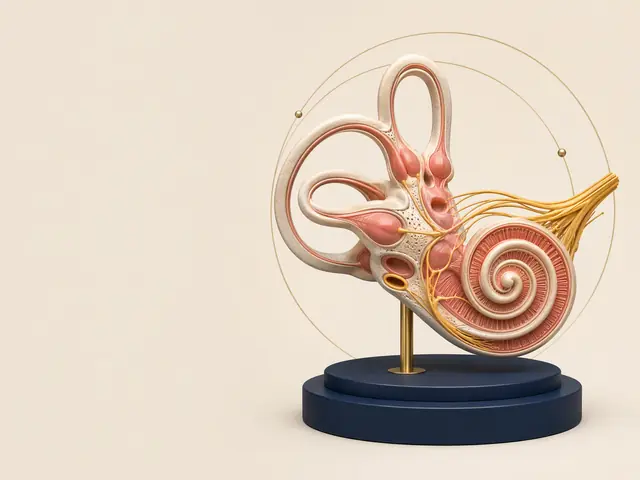
Body system: EarRegulation: 38 CFR § 4.85-4.86DBQ: DBQ AUDIO Hearing Loss and Tinnitus
Hearing loss is rated based on how well you can hear, measured by two tests: puretone audiometry (how loud sounds need to be for you to hear them at different frequencies) and speech discrimination (how well you can understand spoken words). The VA plugs your test results into a table that compares your left ear and right ear scores to determine your rating percentage. Ratings range from 0% to 100%, with most veterans receiving 0% or 10% because the VA's rating tables require significant hearing loss before higher ratings apply. The rating is mechanical: it's based purely on the numbers from your hearing test, not on how much hearing loss affects your daily life.
Rating levels
Note — Hearing loss is rated on a scale from 0% to 100% in 10% steps. The rating is not based on prose descriptions, it comes from a strict numeric lookup. Step 1: an audiologist measures your puretone hearing thresholds at 1, 2, 3, and 4 kHz in each ear and tests your speech discrimination. Step 2: each ear's puretone average + speech discrimination are looked up in Table VI to produce a Roman numeral (I = best hearing, XI = worst). Step 3: the two numerals (one per ear) are cross-referenced in Table VII to give the final percentage. Tables VI and VII are published in 38 CFR § 4.85.
Note — A special rule under § 4.86 applies when hearing loss matches certain patterns common in noise-exposed veterans. Pattern A: hearing thresholds of 55 dB or worse at all four frequencies (1, 2, 3, 4 kHz). Pattern B: relatively normal at 1 kHz (30 dB or better) but 70 dB or worse at 2 kHz, a steep drop typical of noise damage. If either pattern matches, an alternate Table VIa is used (puretone-only, no speech-discrimination input), and the better-for-the-veteran numeral is the one that counts. Many veterans with combat or flightline noise exposure qualify for higher ratings under this rule than they would under the standard Table VI calculation. For Pattern B, the Roman numeral the ear gets from Table VI or Table VIa is then raised to the next higher numeral (38 CFR 4.86(b)).
Note — Ringing in the ears (tinnitus) is rated under a different code (DC 6260) at a flat 10%, that is the highest rating tinnitus can ever receive, no matter how loud or constant. Hearing loss and tinnitus are usually claimed together because the same noise exposure causes both, but each gets its own rating; the two are then combined using the VA combined-ratings table in § 4.25.
Disclaimer: This tool is for informational purposes only and is not legal or medical advice. Always consult with your VSO representative or a qualified veterans benefits attorney for guidance on your specific claim.