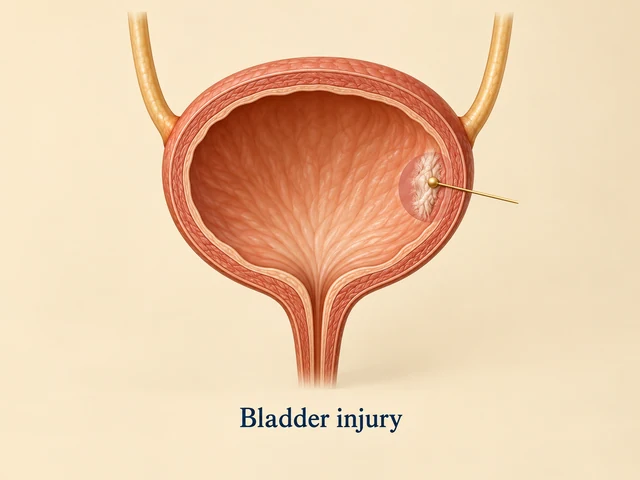
Bladder injury covers traumatic, surgical, or radiation-induced damage to the bladder wall, neck, or function. Causes include blunt or penetrating trauma (pelvic fracture, gunshot wound, stab wound), iatrogenic injury during pelvic or abdominal surgery, radiation therapy, and chronic catheterization with mucosal damage. Residuals include incontinence, urinary frequency, retention, and obstructive symptoms. The VA does not maintain a separate ladder for bladder injury. Instead, 38 CFR § 4.115a directs raters to evaluate this condition under the voiding dysfunction umbrella with three parallel sub-formulas: urine leakage (20/40/60%), urinary frequency (10/20/40%), and obstructed voiding (0/10/30%). Apply whichever sub-formula matches the predominant residual symptom.
Rating levels
60% — You qualify for 60% under the urine leakage sub-formula if your bladder injury causes leakage requiring a urinary collection appliance OR absorbent materials changed more than 4 times per day.
40% — You qualify for 40% under the urine leakage sub-formula if you wear absorbent materials and change them 2 to 4 times per day.
40% — You qualify for 40% under the frequency sub-formula if your bladder injury causes you to urinate more than once per hour during the day, OR wake 5+ times per night.
30% — You qualify for 30% under the obstructed voiding sub-formula if the injury causes urinary retention requiring intermittent self-catheterization OR continuous indwelling catheter (Foley or suprapubic).
20% — You qualify for 20% under the urine leakage sub-formula if absorbent material changes are fewer than 2 per day.
20% — You qualify for 20% under the frequency sub-formula with daytime intervals of 1-2 hours OR 3-4 nocturnal voids.
10% — You qualify for 10% under the frequency sub-formula with daytime intervals of 2-3 hours OR exactly 2 nocturnal voids.
10% — You qualify for 10% under the obstructed voiding sub-formula if you have marked obstructive symptoms PLUS at least one objective finding (PVR > 150 cc, peak flow < 10 cc/sec, recurrent UTIs from obstruction, or strictures requiring dilation every 2-3 months).
0% — You qualify for 0% under the obstructed voiding sub-formula if obstructive symptoms only require dilation 1-2 times per year or no dilation. Recognized as service-connected but not currently producing compensable disability.
Disclaimer: This tool is for informational purposes only and is not legal or medical advice. Always consult with your VSO representative or a qualified veterans benefits attorney for guidance on your specific claim.