VA Disability Rating for Prostate gland injuries, infections, hypertrophy, postoperative residuals, bladder outlet obstruction (DC 7527)
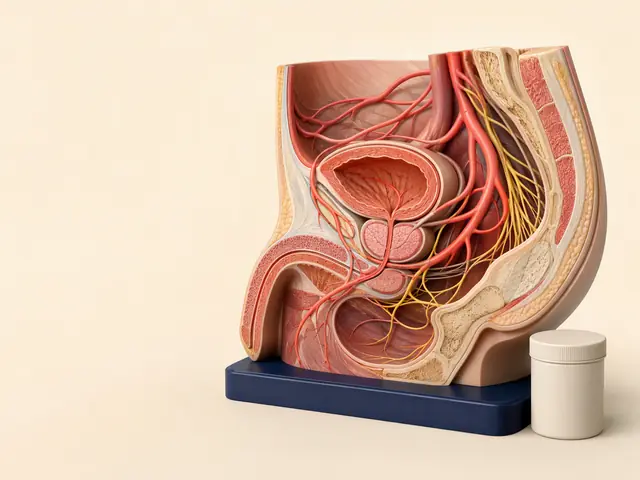
DC 7527 covers a broad group of prostate conditions: traumatic prostate injuries, prostate infections, benign prostatic hypertrophy (BPH), post-prostatectomy or post-TURP residuals, and bladder outlet obstruction from any prostate cause. Symptoms range from obstructive (hesitancy, weak stream, retention) to irritative (frequency, urgency, nocturia) to incontinent (post-prostatectomy leakage), with potential for recurrent infections. The VA rates this condition under whichever ladder produces the higher evaluation for the predominant symptom: voiding dysfunction (3 sub-formulas at 0-60%) or urinary tract infection (0/10/30%). The 30% and 0% tiers can be reached through either ladder; the upper voiding-dysfunction tiers (40-60%) handle severe leakage and frequency cases.
Symptoms Recorded in Granted Urinary Conditions Decisions
We analyzed 1,369 granted Board decisions involving urinary conditions for symptoms named in sentences about the condition (rating-criteria recitations excluded). Descriptive of the published record, what the Board wrote down, not a checklist of what to report.
VA's rule for DC 7527, word for word
Continual Urine Leakage, Post Surgical Urinary Diversion, Urinary Incontinence, or Stress Incontinence
Daytime voiding interval between two and three hours
awakening to void two times per night
Marked obstructive symptomatology (hesitancy, slow or weak stream, decreased force of stream) with any one or combination of the following: 1. Post void residuals greater than 150 cc. 2. Uroflowmetry; markedly diminished peak flow rate (less than 10 cc/sec). 3. Recurrent urinary tract infections secondary to obstruction. 4. Stricture disease requiring periodic dilatation every 2 to 3 months
VA's words that name a symptom charted below. Every level is in Rating Levels above, under the "Official VA criteria" tab.
Bar length shows decisions. Percentages remain context.
A small blue tag means VA's sentence names the same symptom, in the same word or its medical word. The bars count any mention of the symptom, at any severity, even to say it was absent. VA's sentence has its own conditions. A tag does not show that any rating level was met, and a symptom with no tag can still matter.
VA's words are today's rule (38 CFR 4.115a, last amended November 14, 2021). The bars cover decisions from 1992 to 2026, decided under the wording of their time, which may have named different symptoms.
These bars count whole decisions whose overall result was granted. The At the Board box on this page counts each appealed issue.
Detected by phrase-reading the decision text with condition-specific vocabularies. Source: Board of Veterans' Appeals decisions, RateMyVSO analysis.
Disclaimer: This tool is for informational purposes only and is not legal or medical advice. Always consult with your VSO representative or a VA-accredited attorney for guidance on your specific claim.