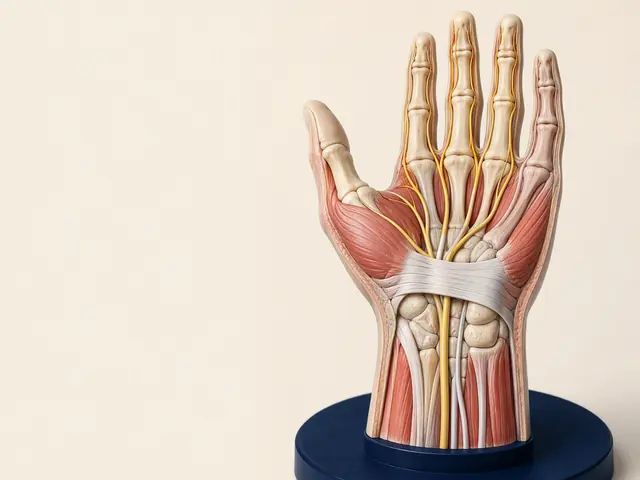
VA Disability Rating for Paralysis of median nerve (DC 8515)
Body system: Neurological Conditions and Convulsive DisordersRegulation: 38 CFR § 4.124aDBQ: DBQ NEURO Peripheral Nerves
DC 8515, paralysis of median nerve, is rated by the level below that matches your condition; the dominant (major) arm is rated higher than the non-dominant (minor) arm at the upper levels. The levels: Complete; the hand inclined to the ulnar side, the index and middle fingers more extended than normally, considerable atrophy of the muscles of the thenar eminence, the thumb in the plane of the hand (ape hand); pronation incomplete and defective, absence of flexion of index finger and feeble flexion of middle finger, cannot make a fist, index and middle fingers remain extended; cannot flex distal phalanx of thumb, defective opposition and abduction of the thumb, at right angles to palm; flexion of wrist weakened; pain with trophic disturbances: 70% for the dominant arm, 60% for the non-dominant arm. Incomplete, severe: 50% for the dominant arm, 40% for the non-dominant arm. Incomplete, moderate: 30% for the dominant arm, 20% for the non-dominant arm. Incomplete, mild: 10% for either arm.
Rating levels
70% — Complete paralysis of the median nerve causes severe hand deformity where your hand bends toward the pinky side, your index and middle fingers stay straight when you try to bend them, and your thumb lies flat against your palm instead of sticking up normally (called "ape hand"). You cannot make a fist, cannot bend the tip of your thumb, have major muscle wasting in the thick part of your palm below the thumb (thenar eminence), and experience significant weakness when bending your wrist along with pain and skin/nail changes. Your ability to turn your palm down is also incomplete and you cannot properly touch your thumb to your other fingers.
60% — This rating applies when you have complete paralysis of the median nerve, causing severe hand deformity and loss of function. Your hand will be bent toward the pinky side with your index and middle fingers stuck in a straight position, significant muscle wasting at the base of your thumb, and your thumb positioned flat against your palm instead of being able to move normally - this creates what doctors call "ape hand." You cannot make a fist, bend your index finger, have very weak middle finger movement, cannot properly bend your thumb tip or move your thumb away from or toward your palm, have weakened wrist bending, and experience pain along with skin and tissue changes in the affected area.
50% — You have severe damage to your median nerve, but it's not completely paralyzed. This means you have significant weakness and loss of function in your hand and wrist - you can't make a strong fist, have trouble gripping objects, and may have numbness in your thumb, index, and middle fingers, but you still have some limited movement and sensation remaining.
40% — Your median nerve (the nerve that runs through your wrist and controls thumb movement and sensation in your thumb, index, and middle fingers) is severely damaged but not completely destroyed. You would have significant weakness in your thumb and difficulty gripping or pinching objects, along with numbness or tingling in your thumb, index finger, middle finger, and part of your ring finger, but you still retain some nerve function and movement.
30% — You have moderate damage to your median nerve that causes some but not complete loss of function in your hand and wrist. This typically means you have noticeable weakness in gripping, pinching, or using your thumb, along with some numbness or tingling in your thumb, index finger, middle finger, and part of your ring finger, but you can still use your hand for most daily activities with some difficulty.
20% — Your median nerve (the nerve that runs through your wrist and controls thumb movement and feeling in your thumb, index, and middle fingers) is partially damaged but not completely non-functional. You experience noticeable weakness in your thumb and some loss of sensation in your hand, but you still retain some movement and feeling - it's more than mild impairment but less than severe paralysis.
10% — You have some nerve damage in your median nerve (the nerve that controls thumb movement and feeling in your thumb, index, and middle fingers), but it's not severe. Your symptoms are mild - you might have slight weakness in your thumb or some numbness/tingling in those fingers, but you can still use your hand for most daily activities without major problems.
10% — You have some nerve damage in your median nerve (the nerve that controls thumb movement and feeling in your thumb, index, and middle fingers), but it's not severe. Your symptoms are mild - you might have slight weakness in your thumb or some numbness/tingling in those fingers, but you can still use your hand for most daily activities without major problems.
Disclaimer: This tool is for informational purposes only and is not legal or medical advice. Always consult with your VSO representative or a qualified veterans benefits attorney for guidance on your specific claim.