Anatomy of a Strong VA Nexus Letter
This is an educational reference showing what a thorough nexus letter typically contains and why each section matters. It is not a fillable template, and it is not a substitute for a medical opinion from a clinician who has reviewed your specific record. The fictional veteran, condition, and clinician below are illustrative only.

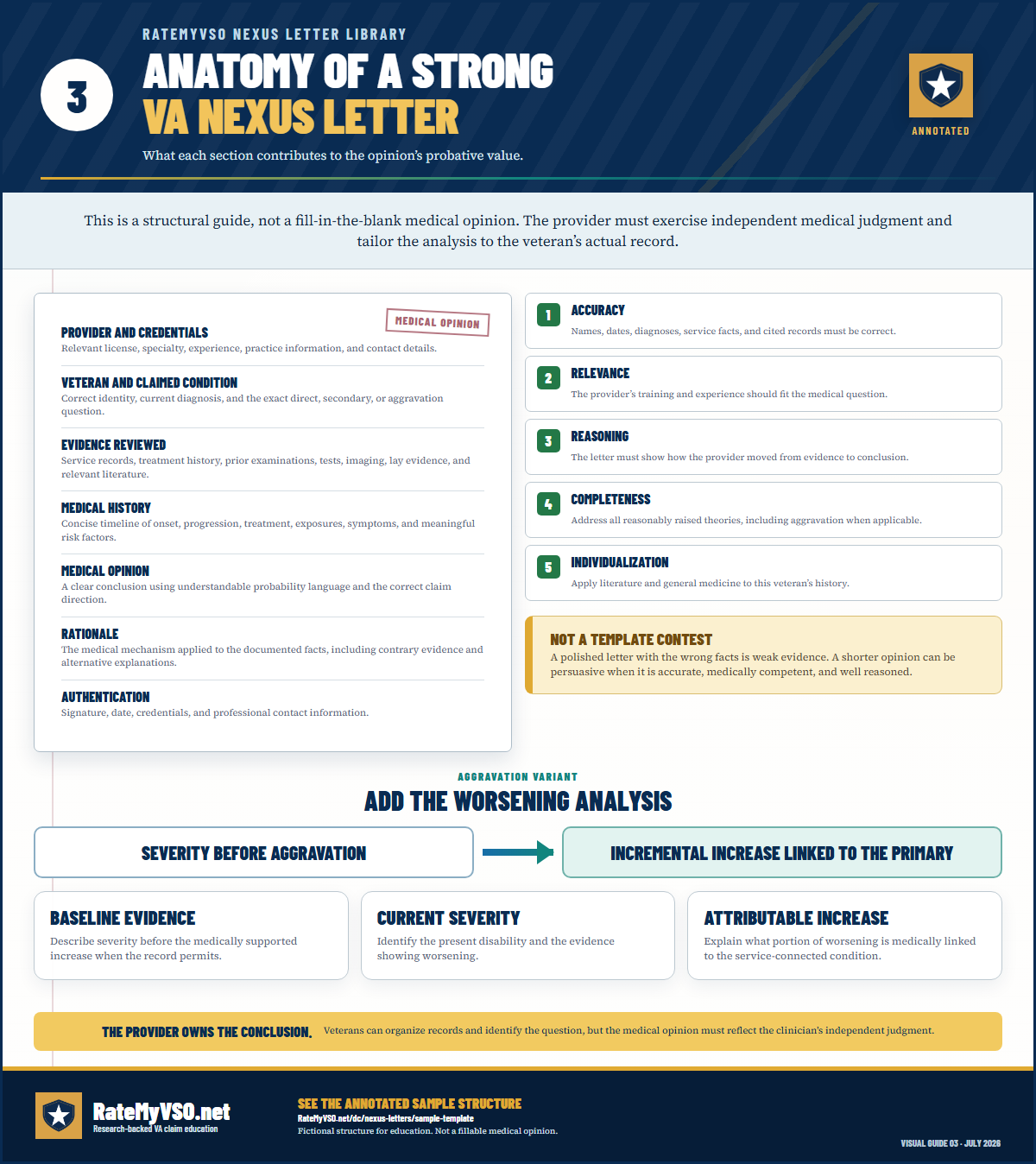
Annotated Example (Fictional)
Why Each Section Matters
- Letterhead. Establishes credentials before the substance is read. Adjudicators weigh specialist opinions more heavily, and a license number lets VA verify the writer is who they claim.
- Records reviewed. An opinion without a stated record review is treated as speculative. Listing the documents reviewed defeats the "no foundation" critique VA often applies to bare opinions.
- Veteran's relevant history. Demonstrates the clinician understands the specific claim, not a generic template. Anchors the opinion to the actual record.
- Medical reasoning. The single most important section. A bare conclusion ("PTSD causes OSA") carries little weight. A reasoned explanation citing literature carries substantial weight.
- Opinion statement. The "at least as likely as not" formulation is the legal standard. Softer language ("possible," "may be related") falls below the 50-percent probability bar and is regularly discounted.
- Rationale summary. Restates the four-or-five factors driving the conclusion. Gives the adjudicator a clean paragraph to quote in the rating decision.
- Literature cited. Optional but powerful. Peer-reviewed sources counter the "this is the clinician's hunch" critique.
The Aggravation Variant
For aggravation claims under 38 CFR 3.310(b), the opinion needs one additional element: a stated baseline severity. The opinion identifies how severe the secondary condition was before the aggravating service-connected condition appeared or worsened, and how much worse it is now. Without that baseline, VA cannot compute the rateable increase.
Example wording from the literature: "Prior to the documented worsening of the veteran's service-connected lumbar spine condition in 2020, his pre-existing depression was characterized by mild symptoms managed with one antidepressant. Since 2020, the depression has progressed to moderate severity requiring two medications and weekly therapy. In my opinion, the additional disability above the prior baseline is at least as likely as not aggravated by the worsened spine condition."
Educational reference only, not legal or medical advice. For help with your claim, find an accredited VSO representative.