Where VA Nexus Letters Come From
Nexus letters and Independent Medical Opinions come from four broad categories of medical professional. Each category has a different cost, a different clinician relationship to the veteran, and a different weight pattern in published Board of Veterans' Appeals decisions. This page catalogs the categories. It is reference information, not a referral and not an endorsement of any specific clinician or company.

The Four Source Categories
1. VA C&P Examiner
A Compensation & Pension exam is the medical evaluation VA orders to develop a claim. The examiner can be a VA clinician (direct hire) or a contractor (LHI, VES, QTC). The examiner reviews the claims file, examines the veteran, and writes an opinion on whether the condition is at least as likely as not service-connected.
C&P opinions appear in every direct-evidence VA decision, so they are the default starting point. Veterans who disagree with a C&P examiner's opinion often submit a competing private medical opinion to rebut it.
2. VHA Primary Care Provider
Veterans enrolled in VA health care can request a written opinion from their VHA primary care provider, mental health clinician, or specialist. The provider has access to the veteran's full VA medical history and can speak to the longitudinal course of the condition. Whether a given VHA clinician will write a nexus opinion is provider-discretionary.
3. Private Treating Physician
A non-VA doctor who has treated the veteran can write a nexus opinion based on their treatment history. Some charge nothing beyond a normal office visit, some bill separately for the time it takes, and some decline. We have no data on how often each happens, so treat a free letter as possible, never as expected. Many are unfamiliar with the VA's "at least as likely as not" standard and benefit from being shown the language requirement explicitly.
4. Independent Medical Examiner (IME) / Independent Medical Opinion (IMO)
A specialist who is retained specifically to review a claim record and write a nexus opinion. Often a board-certified specialist in the relevant field. The veteran (or a VSO/attorney) sends the C-file and relevant records; the IME reviews and produces a detailed written opinion. Multiple companies advertise this service nationwide. What they charge varies by provider and by how complex the record is, and we have no concrete range to give you. Ask for the price in writing before you agree to anything.
IMEs are usually the most expensive option but are also the most likely to deliver a thorough, literature-citing opinion calibrated to VA standards. They are common in claims that have been previously denied or that involve complex causation chains.
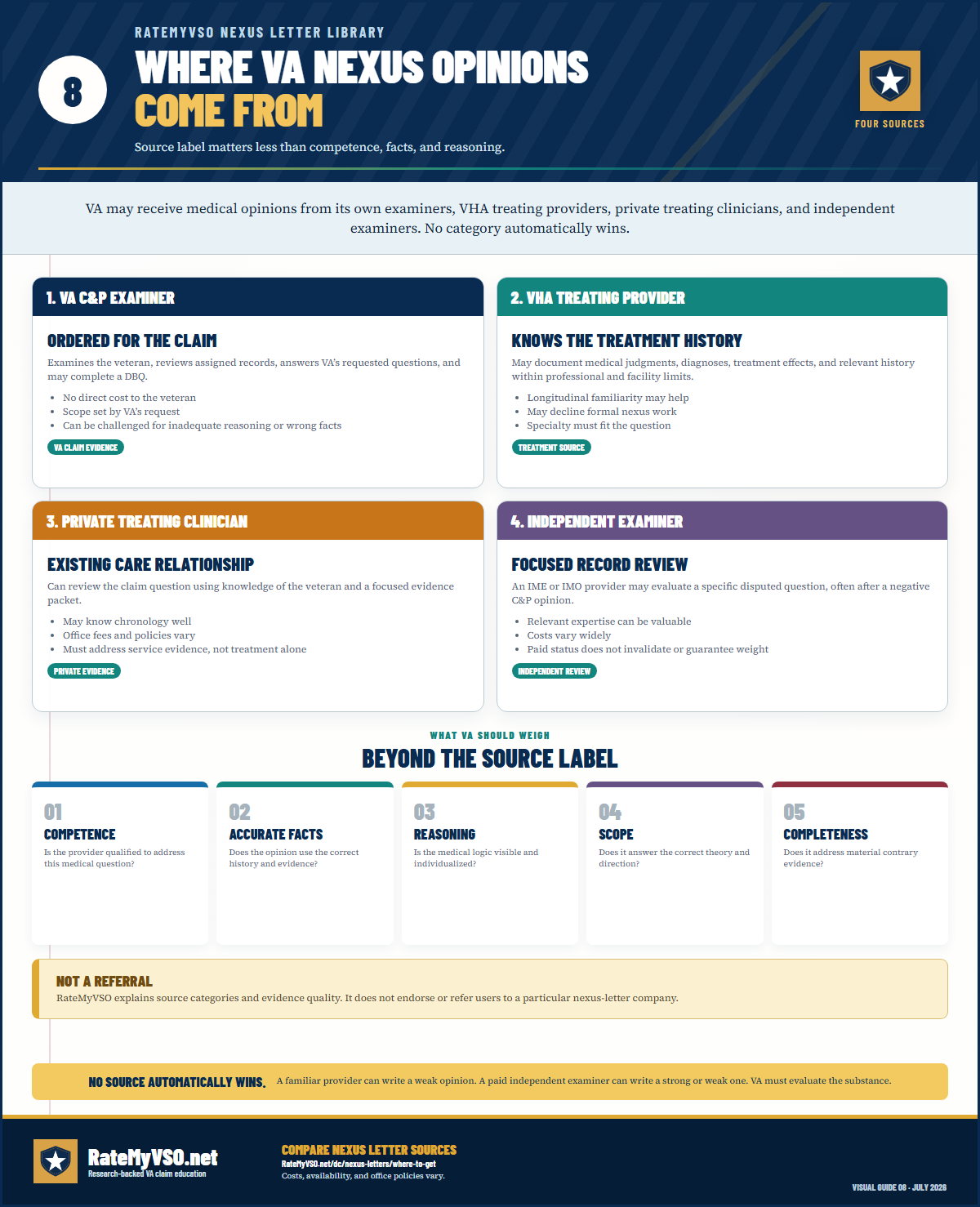
What the Board Weighs (Beyond the Source Label)
Source category is one input. We analyzed the published Board decisions and found several other factors that consistently drive how much weight an opinion gets, regardless of who wrote it:
- Specialty match. An orthopedic surgeon opining on a knee condition has more weight than a family doctor opining on the same. A family doctor opining on a knee still has weight.
- File review. An opinion that lists what records were reviewed beats an opinion with no foundation paragraph.
- Rationale depth. Detailed medical reasoning with citations beats a one-paragraph conclusion. The strongest opinions explain the biological mechanism.
- "At least as likely as not" language. The 50-percent standard in the regulation requires that phrasing or its equivalent. Softer wording falls below the threshold.
- Engagement with counter-evidence. Opinions that address a prior negative C&P opinion or alternative causes are weighted more highly than opinions that ignore the contrary evidence.
Not a Referral
This page describes the categories of medical opinion sources. It does not endorse any specific clinician, IME company, or service. RateMyVSO does not refer veterans to specific medical providers and does not receive compensation from any nexus-letter business.
Reference material only, not legal, medical, or financial advice. For help with your claim, find an accredited VSO representative.