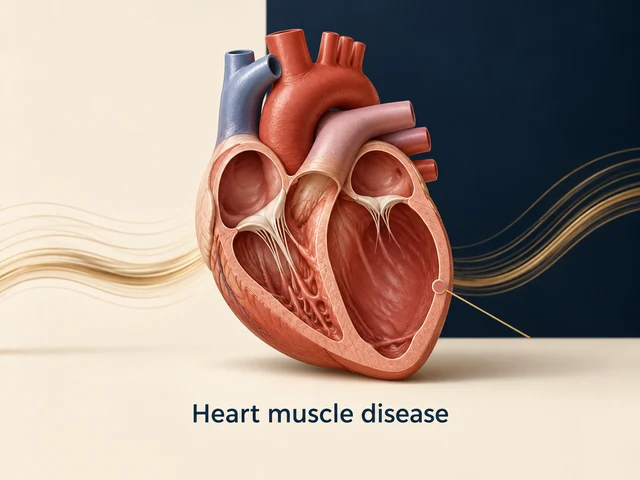
Cardiomyopathy is disease of the heart muscle that weakens or stiffens the heart, impairing its ability to pump blood effectively. The major subtypes include dilated cardiomyopathy (DCM, enlarged and weakened ventricles), hypertrophic cardiomyopathy (HCM, thickened ventricular walls), restrictive cardiomyopathy (stiff ventricles), and arrhythmogenic right ventricular cardiomyopathy (ARVC). The VA rates this condition under the General Rating Formula for Diseases of the Heart (38 CFR § 4.104) from 10% to 100% based on the MET workload at which heart failure symptoms appear (dyspnea, fatigue, angina, dizziness, or syncope) and the presence of cardiac structural changes such as hypertrophy or dilatation on imaging. Continuous cardiac medication required for control supports a 10% rating. Most cardiomyopathy patients require ongoing medication, so the 10% minimum commonly applies even when MET-tolerance alone would yield a lower rating.
Rating levels
100% — You qualify for 100% if exercise testing (or clinical equivalent) shows that a workload of 3.0 METs or less brings on heart failure symptoms. 3.0 METs is roughly slow walking on a level surface, so this rating means even minimal activity provokes symptoms. Severe cardiomyopathy at this tier often involves reduced left ventricular ejection fraction and may require advanced therapy (ICD, biventricular pacing, LVAD, or transplant evaluation).
60% — You qualify for 60% if a workload of 3.1 to 5.0 METs brings on heart failure symptoms. The 3-5 MET range covers light housework, slow walking, and dressing.
30% — You qualify for 30% if a workload of 5.1 to 7.0 METs brings on heart failure symptoms, OR you have echocardiographic evidence of cardiac hypertrophy (thickening, classic in hypertrophic cardiomyopathy) or dilatation (enlargement, classic in dilated cardiomyopathy) confirmed by echocardiogram, Doppler echo, MUGA scan, or cardiac MRI.
10% — You qualify for 10% if a workload of 7.1 to 10.0 METs brings on heart failure symptoms, OR you require continuous cardiac medication (beta blockers, ACE inhibitors, ARBs, diuretics, antiarrhythmics, or other cardiac drugs) for control. Most cardiomyopathy patients require continuous medication, which by itself supports the 10% minimum.
Disclaimer: This tool is for informational purposes only and is not legal or medical advice. Always consult with your VSO representative or a qualified veterans benefits attorney for guidance on your specific claim.