VA Disability Rating for Degenerative arthritis, other than post-traumatic (DC 5003)
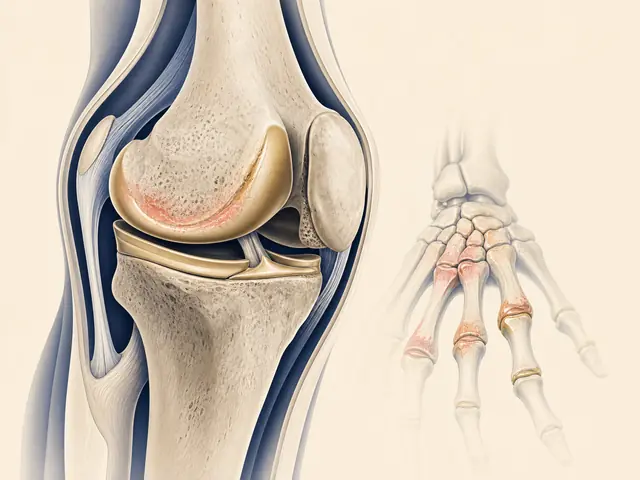
Degenerative arthritis (also called osteoarthritis) is the wear-and-tear breakdown of cartilage in your joints that happens over time, but this code specifically covers cases that aren't directly caused by a specific injury. The VA rates this condition at 10% if X-rays show it affects 2 or more major joints (like knees, hips, shoulders) or 2 or more groups of smaller joints, and 20% if you have the same X-ray evidence plus you experience occasional flare-ups that temporarily disable you. The key difference between ratings is whether you have those periodic episodes where the pain and stiffness become so severe they significantly limit your daily activities.
Symptoms Recorded in Granted Arthritis Decisions
We analyzed 7,530 granted Board decisions involving arthritis for symptoms named in sentences about the condition (rating-criteria recitations excluded). Descriptive of the published record, what the Board wrote down, not a checklist of what to report.
VA's rule for DC 5003, word for word
With X-ray evidence of involvement of 2 or more major joints or 2 or more minor joint groups, with occasional incapacitating exacerbations
Limitation of motion must be objectively confirmed by findings such as swelling, muscle spasm, or satisfactory evidence of painful motion
VA's words that name a symptom charted below. Every level is in Rating Levels above, under the "Official VA criteria" tab.
Bar length shows decisions. Percentages remain context.
A small blue tag means VA's sentence names the same symptom, in the same word or its medical word. The bars count any mention of the symptom, at any severity, even to say it was absent. VA's sentence has its own conditions. A tag does not show that any rating level was met, and a symptom with no tag can still matter.
VA's words are today's rule (38 CFR 4.71a, last amended January 14, 2025). The bars cover decisions from 1992 to 2026, decided under the wording of their time, which may have named different symptoms.
These bars count whole decisions whose overall result was granted. The At the Board box on this page counts each appealed issue.
Detected by phrase-reading the decision text with condition-specific vocabularies. Source: Board of Veterans' Appeals decisions, RateMyVSO analysis.
Disclaimer: This tool is for informational purposes only and is not legal or medical advice. Always consult with your VSO representative or a VA-accredited attorney for guidance on your specific claim.