VA Disability Rating for Arm, limitation of motion of (DC 5201)
Body system: Musculoskeletal SystemRegulation: 38 CFR § 4.71aDBQ: MUSC Shoulder and arm

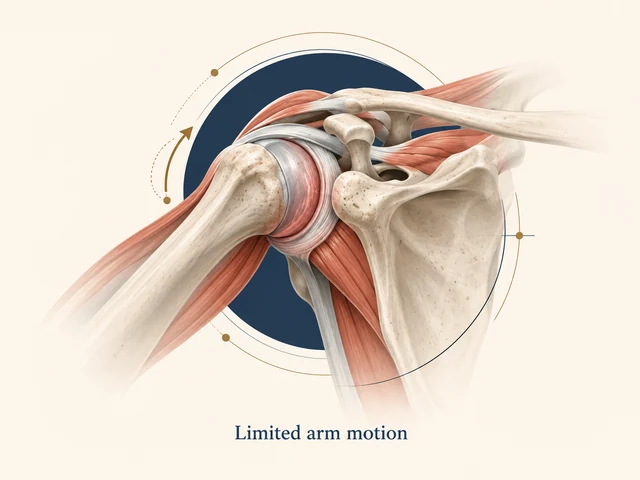
DC 5201, arm, limitation of motion of, is rated by the level below that matches your condition; the dominant (major) arm is rated higher than the non-dominant (minor) arm at the upper levels. The levels: Flexion and/or abduction limited to 25° from side: 40% for the dominant arm, 30% for the non-dominant arm. Midway between side and shoulder level (flexion and/or abduction limited to 45°): 30% for the dominant arm, 20% for the non-dominant arm. At shoulder level (flexion and/or abduction limited to 90°): 20% for either arm.

Rating levels

  • 40%: You can only lift your arm forward or out to the side a maximum of 25 degrees from your body. This means your arm movement is severely restricted - you can barely raise your arm away from hanging straight down at your side, making it extremely difficult to reach for objects, dress yourself, or perform most daily activities that require arm movement.
  • 30%: Your arm can only move forward or lift out to the side a maximum of 25 degrees from your body. This means you have severely limited shoulder movement - you can barely lift your arm away from your side (abduction) or bend it forward at the shoulder (flexion), with normal range being much greater.
  • 30%: You can only lift your arm halfway between hanging at your side and reaching shoulder height, whether you're lifting it forward (flexion) or out to the side (abduction). This means your arm movement is limited to just 45 degrees in these directions, which is one quarter of the normal 180 degrees.
  • 20%: You can only lift your arm about halfway up to shoulder level, whether raising it straight out to the side or forward in front of you. Your arm movement is limited to 45 degrees (flexion means bending forward, abduction means moving away from your body), so you cannot reach shoulder height or above.
  • 20%: You can only lift your arm up to shoulder height - about 90 degrees - either when raising it forward (flexion) or out to the side (abduction). This means you cannot reach above shoulder level, like reaching up to a high shelf or raising your hand fully overhead.
  • 20%: You can only lift your arm up to shoulder height - about 90 degrees - either when raising it forward (flexion) or out to the side (abduction). This means you cannot reach above shoulder level, like reaching up to a high shelf or raising your hand fully overhead.

Symptoms Recorded in Granted Shoulder and Arm Conditions DecisionsCollapse

We analyzed 3,161 granted Board decisions involving shoulder and arm conditions for symptoms named in sentences about the condition (rating-criteria recitations excluded). Descriptive of the published record, what the Board wrote down, not a checklist of what to report.

Bar length shows decisions. Percentages remain context.

Shoulder pain
2,559 decisions81.0% of granted
Instability or dislocation
995 decisions31.5% of granted
Weakness
605 decisions19.1% of granted
Tenderness
558 decisions17.7% of granted
Flare-ups
399 decisions12.6% of granted
Grinding or popping (crepitus)
345 decisions10.9% of granted
Stiffness
311 decisions9.8% of granted
Swelling
268 decisions8.5% of granted
Numbness
250 decisions7.9% of granted

These bars count whole decisions whose overall result was granted. The At the Board box on this page counts each appealed issue.

Detected by phrase-reading the decision text with condition-specific vocabularies. Source: Board of Veterans' Appeals decisions, RateMyVSO analysis.

Disclaimer: This tool is for informational purposes only and is not legal or medical advice. Always consult with your VSO representative or a VA-accredited attorney for guidance on your specific claim.