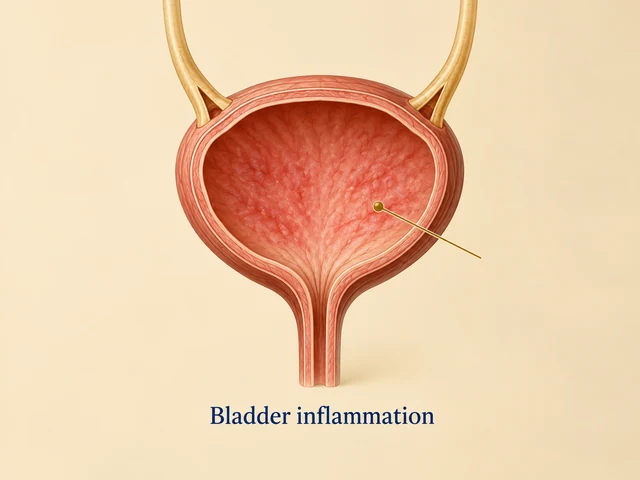
Chronic cystitis is long-term inflammation of the bladder wall, including interstitial cystitis (bladder pain syndrome, with chronic pelvic pain and urinary urgency/frequency in the absence of identifiable infection) and chronic infectious cystitis from any organism. The VA does not maintain a separate ladder for cystitis. Instead, 38 CFR § 4.115a directs raters to evaluate this condition under the voiding dysfunction umbrella, which contains three parallel sub-formulas: urine leakage (20/40/60%), urinary frequency (10/20/40%), and obstructed voiding (0/10/30%). The rater applies the sub-formula that best matches the predominant symptom; the tile list below shows all three sub-formulas combined.
Rating levels
60% — You qualify for 60% under the urine leakage sub-formula if your chronic cystitis causes leakage severe enough that you either use a urinary collection appliance OR you wear absorbent pads or briefs that you must change more than 4 times in a 24-hour period.
40% — You qualify for 40% under the urine leakage sub-formula if you wear absorbent materials for cystitis-related leakage and change them 2 to 4 times per day. No collection appliance required at this tier.
40% — You qualify for 40% under the frequency sub-formula if your chronic cystitis causes you to urinate more than once per hour during the day, OR you wake up 5 or more times per night to urinate. Either threshold alone qualifies.
30% — You qualify for 30% under the obstructed voiding sub-formula if your cystitis causes urinary retention severe enough to require intermittent self-catheterization (passing a catheter several times per day) OR continuous indwelling catheter (Foley or suprapubic). The catheterization requirement is the threshold.
20% — You qualify for 20% under the urine leakage sub-formula if you wear absorbent materials for cystitis-related leakage and change them fewer than 2 times per day.
20% — You qualify for 20% under the frequency sub-formula if your daytime voiding interval is between 1 and 2 hours, OR you wake up 3 to 4 times per night to urinate. Either threshold alone qualifies.
10% — You qualify for 10% under the frequency sub-formula if your daytime voiding interval is between 2 and 3 hours, OR you wake up exactly 2 times per night to urinate.
10% — You qualify for 10% under the obstructed voiding sub-formula if you have significant obstructive symptoms (hesitancy starting urination, slow or weak stream, decreased force of stream) PLUS at least one objective finding: post-void residual urine > 150 cc, peak urinary flow rate < 10 cc/sec on uroflowmetry, repeated UTIs from obstruction, OR strictures requiring dilation every 2-3 months.
0% — You qualify for 0% under the obstructed voiding sub-formula if you have obstructive symptoms, with or without strictures requiring dilation only 1-2 times per year. Recognized as service-connected but not currently producing compensable disability at this level.
Disclaimer: This tool is for informational purposes only and is not legal or medical advice. Always consult with your VSO representative or a qualified veterans benefits attorney for guidance on your specific claim.