Voiding Dysfunction Secondary to Diabetes
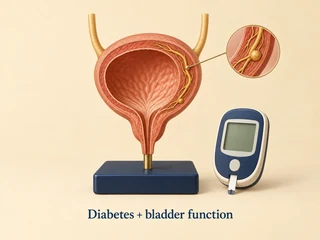
Voiding dysfunction and chronic cystitis (DC 7512) claimed as secondary to diabetes is a small claim pool in the Board's published record, just 60 issues, and the smallest, hardest-to-generalize-from pairing this site covers. It's granted 39 percent of the time decided issues reach a merits ruling, and most issues in this pool never reach a merits ruling at all, 60 percent are remanded. This guide is upfront about that: the mechanism, why a blanket VA denial across several conditions at once routinely fails, four recent Board decisions dissected, and the evidence that separates the wins.
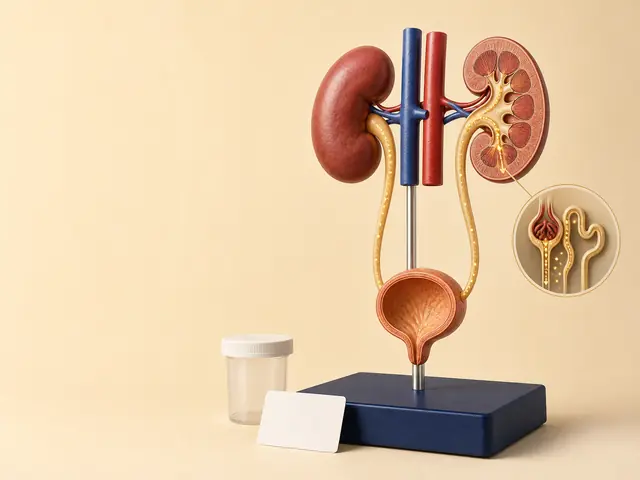
Start with the essentials
- 01Service Connection
The ways a secondary connection can be established for this pairing.
- 02Diagnosis and Evidence
Common symptoms and the evidence that supports this kind of claim.
- 03Your History
What you experienced, what others observed, and what treatment changed.
Understand the claim
ICD-10 Diagnosis Codes
The ICD-10 diagnosis codes most commonly used for DC 7512, Cystitis, chronic, includes interstitial and all etiologies, infectious and non-infectious (the kind on your medical records, decision letter, or C&P exam report). VA rates the disability and its residuals, not the diagnosis itself, so coding can vary.
The Legal Path: 38 CFR § 3.310, and Why "It's Just a Symptom" Isn't a Real Denial
A secondary service connection claim needs three things (Allen v. Brown, 7 Vet. App. 439 (1995) (en banc)):
- A current disability: a diagnosed voiding dysfunction or chronic cystitis, which for DC 7512 means a documented diagnosis in your file, typically confirmed through a urology evaluation or urodynamic study.
- A service-connected primary: the diabetes rating itself.
- A nexus: medical evidence connecting the two.
Two points recur in this specific, small pool.
Symptoms and rating
If Granted: The Rating
DC 7512 is rated under the voiding dysfunction criteria at 38 CFR § 4.115a, not on its own numeric scale. Continual urine leakage requiring an appliance or absorbent materials is rated 60, 40, or 20 percent depending on how often materials must be changed; urinary frequency alone is rated 40, 20, or 10 percent depending on daytime voiding intervals and nighttime awakenings; urinary retention requiring catheterization is rated separately. Which tier applies depends on your specific symptoms as documented in your file. The secondary rating combines with your diabetes rating under VA math rather than adding, run it in the VA Math Calculator. Full detail on the genitourinary rating scheme is in the Urinary and Genitourinary Claims Guide.
Evidence and Board research
The Numbers, from 1.9M Appeals
In the Board's published decisions, voiding dysfunction and chronic cystitis (DC 7512) claimed as secondary to diabetes (DC 7913) is the smallest pairing this site tracks in depth. Be honest with yourself about what a pool this size can and can't tell you.
How those 60 issues came out
Remand, not denial, is what actually happens to most of these claims. Sixty percent of the pool never reaches a merits ruling at all, sent back for more development, most often because a VA exam gave a blanket negative opinion across several claimed conditions at once without addressing any of them individually. The four grants dissected below are a meaningful slice of a small "granted" bucket, nine total in the whole published record, but they say nothing directly about the 14 denials or the 36 remands. Treat the win pattern below as real but narrow, not a confident population estimate.
Four Recent Board Decisions Dissected
All four decisions below granted service connection for voiding dysfunction or a related bladder condition secondary to diabetes, decided February 2016 through March 2026 before four different Veterans Law Judges. Published Board decisions are not precedent, but the patterns repeat.
A blanket VA denial across five conditions, found inadequate · Citation A26027833 (Mar. 27, 2026), Evidence Submission docket
The record: a VA exam gave one negative nexus opinion covering sleep apnea, diabetes, hypertension, PTSD, and a vestibular disorder together, without individualized rationale for any single condition and without an aggravation analysis. A private nurse-practitioner opinion, by contrast, cited a 2024 study linking diabetes duration and severity to overactive bladder.
Why it won: the Board found the elements of secondary service connection met for urinary frequency secondary to both hypertension and diabetes "given the unique facts and circumstances of this Veteran's claim," an explicit equipoise call after discounting the blanket VA opinion.
"It's just a symptom" rejected as a legal dodge · Citation A25061734 (Jul. 21, 2025), Hearing docket
The record: a VA examiner refused to give a nexus opinion, reasoning that urinary frequency "is not a diagnosis or a disease but is a symptom of a disease," and that bladder and prostate diseases are the most common causes of urinary frequency in men generally. A private opinion identified diabetes as "a known contributor to polyuria, nocturia, and detrusor overactivity" and flagged the veteran's medication regimen as an independent contributor.
Why it won: the Board rejected the examiner's framing outright, whether something is a compensable disability is a legal question, not a medical one, and found the VA opinion only diminished, not eliminated, in weight. Combined with the private opinion and the veteran's own hearing testimony describing nighttime frequency, the record reached equipoise.
VA's own exam concedes the secondary theory while denying the direct one · Citation 22047422 (Aug. 19, 2022), Evidence Submission docket, Vietnam-era veteran
The record: service treatment records documented in-service cystitis, but the veteran's incontinence claim was won on a secondary, not direct, theory. A VA exam gave a negative direct-connection opinion, no continuity from 1983 to 2016, but affirmatively opined the incontinence "is more likely due to diabetes mellitus." A companion hypertension issue in the same decision was remanded separately. That's a different outcome. Don't confuse it with this grant.
Why it won: "there is no contrary etiology opinion of record... there is no sufficient basis for the Board to reject this supportive opinion and to further develop the claim," citing the rule that VA cannot seek additional development solely to build a case against an unrebutted, already-favorable opinion (Mariano v. Principi).
A narrow single-pathway VA opinion, and a factual date error on remand · Citation 1607008 (Feb. 24, 2016), legacy docket, second Board review after a prior remand
The record: urinary incontinence and erectile dysfunction were both claimed secondary to diabetes. A 2008 VA exam gave a negative opinion reasoned narrowly on the absence of diabetic peripheral neuropathy findings, assuming neuropathy was the only possible pathway from diabetes to these symptoms. A 2013 post-remand VA exam was also negative, but relied on incorrect onset dates for the veteran's diabetes and symptom timeline. A 2009 private opinion found diabetes "most likely" caused both conditions, citing medical literature.
Why it won: "when weighing the VA opinions with the private opinion, the Board finds that at most they show that the evidence for and against the Veteran's claim is in relative equipoise," resolved in the veteran's favor. The ED grant also triggered SMC-K (loss of use) as a derivative benefit.
The pattern across all four
- A blanket negative opinion covering several conditions at once is a recurring, fixable VA defect, courts have repeatedly found these inadequate for lacking individualized reasoning and an aggravation analysis.
- "It's just a symptom" is not a medical opinion, it's an attempt to avoid the nexus question, and the Board has called it out as a legal question dressed up as a medical one.
- VA's own exam can concede the winning theory even inside an otherwise negative report, read every sentence.
- A single-mechanism assumption (only neuropathy could connect diabetes to bladder symptoms) is a narrower theory than the medical literature actually supports, and an opinion built on it is vulnerable.
The Evidence Checklist
What the winning files contained, item by item.
- A specific mechanism, not a generic claim: detrusor overactivity, a named medication side effect, or a recurrent-infection pathway tied to your diabetes, instead of just saying diabetes "affects the bladder."
- Both causation and aggravation addressed: a nexus opinion silent on aggravation, or one that lumps your claim into a blanket denial with several other conditions, is a recurring, discounted VA defect in this pool.
- Push back on the "just a symptom" framing directly: if your denial reframes voiding dysfunction as a non-compensable symptom rather than engaging the medical nexus, that is a legal argument the Board has already rejected, not a real medical conclusion.
- Read your own VA exam closely: a denial on direct connection can still concede the secondary theory in passing. That sentence can be the whole case.
- Correct dates matter: verify the onset timeline for both your diabetes and your bladder symptoms against your actual treatment records, a factually wrong VA opinion is a discounted one.
Across all published DC 7512 decisions, files with a private medical opinion track a different grant rate than VA-exam-only files, shown live below.
Why VA Denies These Claims, and What the Board Said Back
Each rationale below is drawn from the actual VA examinations in the cases above, alongside how the Board answered it.
| VA examiner's rationale | How the Board answered it |
|---|---|
| One blanket negative opinion covering four or five claimed conditions at once. | Inadequate, lacks individualized rationale for any single condition and skips the required aggravation analysis (A26027833). |
| "Urinary frequency is not a diagnosis or disease, it's a symptom." | Whether something is a compensable disability is a legal question, not a medical determination; this dodges the actual nexus question (A25061734). |
| Negative opinion reasoned only on the absence of diabetic peripheral neuropathy findings. | Assumes neuropathy is the only possible pathway, ignoring detrusor overactivity and medication-side-effect mechanisms the medical literature also supports (1607008). |
| Post-remand opinion relies on incorrect onset dates for diabetes or symptom timeline. | Discounted for factual error, not medical disagreement, helping tip the record to equipoise (1607008). |
| (From VA's own exam) incontinence "is more likely due to diabetes mellitus," stated even while denying direct connection. | An unrebutted favorable statement, even inside a negative exam, can carry the claim; VA cannot seek more development just to build a case against it (22047422, citing Mariano v. Principi). |
Across the Board's full record for chronic cystitis and voiding dysfunction, the most common denial reason is shown live below.
Secondary relationships
The Mechanism: How Diabetes Connects to Voiding Dysfunction
The winning opinions in this pool name a specific bladder mechanism rather than asserting "diabetes affects the bladder" generally.
1. Detrusor overactivity and diabetic cystopathy
Chronic hyperglycemia and diabetic nerve damage can affect the nerves controlling bladder function, producing detrusor overactivity, urinary frequency, nocturia, and impaired bladder emptying. One credited private opinion in the cases below cited a 2024 study directly linking diabetes duration and severity to overactive bladder.
2. Medication side effects, another real cause
Diabetes and its commonly co-occurring conditions are often treated with medications, diuretics for blood pressure, metformin, that independently affect urinary frequency. More than one credited opinion in this pool flagged a veteran's medication regimen as an independent contributor alongside the underlying disease process itself.
3. Recurrent infection risk
Diabetes impairs the body's ability to fight infection, raising the risk of recurrent urinary tract infections, a related but distinct pathway from the detrusor-overactivity mechanism above, and one that can also support a DC 7512 claim depending on the specific diagnosis in your file.
A blanket denial across several conditions at once is usually inadequate
Several VA exams in this pool addressed urinary frequency alongside four or five other claimed conditions in one blanket negative opinion, without individualized reasoning for any single condition and without an aggravation analysis. The Board has repeatedly found this inadequate (Bd. Vet. App. A26027833).
"It's a symptom, not a disability" is a legal dodge, not a medical opinion
One VA examiner refused to give a nexus opinion at all, reasoning that "urinary frequency is not a diagnosis or a disease but is a symptom of a disease." The Board rejected this directly: "whether a diagnosis constitutes a 'disability' for compensation purposes is a legal question, not a medical determination" (Bd. Vet. App. A25061734). An examiner cannot avoid the nexus question by reframing a compensable condition as a mere symptom.
The Wider Data
Where voiding dysfunction and chronic cystitis sit among the conditions veterans claim as secondary to diabetes. Live from the Board's published decisions, refreshed weekly:
Bars are BVA grant rates among decided issues for each condition claimed as secondary to diabetes, with issue counts. Descriptive of the published record, not a prediction about any one claim. Explore the underlying decisions in BVA Decision Search.
Prepare and take the next step
Prepare: your own working pages
Optional. These are your own notes, in your own words. They are not a VA form, they are not sent to the VA, and nothing here is a medical finding or a prediction about your claim.
Three reminders while you prepare
- Keep the two conditions separate
Record the history, diagnosis, symptoms, and treatment for Diabetes and Voiding Dysfunction separately before describing the possible relationship. Go to this part
- Ask about causing and worsening separately
A clinician may need to address whether Diabetes caused Voiding Dysfunction, whether it worsened it, and what other explanations the record shows. Go to this part
- Build the timeline from records you have
Mark missing or unverified records honestly. Research from published Board decisions describes the record reviewed; it does not predict an individual claim. Go to this part
Sign in or create an account to save your answers and come back to them later. You can fill these in and print them without an account.
Two-condition timeline
Voiding Dysfunction: symptoms and daily function
Provider questions about the relationship
Records and unanswered questions
Decision-letter reading sheet
Quick Checklist Before You File
- A documented voiding dysfunction or chronic cystitis diagnosis in your file.
- One named mechanism (detrusor overactivity, a specific medication side effect, or recurrent infection risk) that matches your actual record, not a generic "diabetes affects the bladder" claim.
- Both causation and aggravation addressed in the nexus opinion, not just one.
- Your own VA exam reviewed line by line for any statement that concedes the secondary theory even while denying a direct one.
- Onset dates for your diabetes and your bladder symptoms checked against your actual treatment records.
- If your denial calls urinary frequency "just a symptom, not a disease," flag that as a legal framing to challenge, not a medical fact to accept.
For the mechanics of filing itself, see the Standard Claim Guide and the Fully Developed Claim Guide.
Do's and Don'ts
A condensed version of the pattern across the four decisions and the denial rationales above. Given the pool's small size, treat these as directional habits, not guarantees.
- Name a specific mechanism, detrusor overactivity, a specific medication side effect, or recurrent infection risk, instead of just saying diabetes "affects the bladder."
- Read your own VA exam closely, even a report denying direct connection can concede the secondary theory in a single sentence, as happened in the 2022 grant.
- Push back directly if a denial reframes your condition as "just a symptom, not a disease", the Board has already rejected that as a legal dodge, not a medical opinion.
- Verify the onset dates for both your diabetes and your bladder symptoms against your actual treatment records; a factually wrong VA opinion is a discounted one.
- Raise a dual theory if it fits your record, one grant reached equipoise on urinary frequency secondary to both diabetes and hypertension together.
- Don't accept a blanket VA opinion covering several claimed conditions at once without individualized reasoning for yours specifically, the Board has repeatedly found these inadequate.
- Don't let a negative opinion that assumes only one pathway (like diabetic neuropathy) stand unchallenged if the medical literature also supports detrusor overactivity or a medication-effect route.
- Don't assume a missing aggravation analysis is a minor gap, it's a recurring, fixable VA defect in this exact pool.
- Don't expect this small pool's 39 percent grant rate to predict any one claim's odds, most issues here never even reach a merits ruling, 60 percent are remanded.
- Don't overlook a post-remand opinion's stated dates, a timeline error there has directly discounted a VA opinion in this pool before.
The Claims Process, Step by Step
A secondary claim moves through the same pipeline as any other. Understanding who does what helps you know who to contact and what to expect.
- You file the claim, naming diabetes as the service-connected primary and voiding dysfunction or chronic cystitis as secondary. Directly with VA, through VA.gov, or with an accredited representative's help.
- VA assigns a Veteran Service Representative (VSR) to develop the claim: gather your service treatment records, VA and private medical records, and order a C&P exam if needed.
- The C&P exam is conducted, ideally with the examiner asked to address the specific secondary theory (causation and aggravation both) rather than a blanket opinion covering several conditions at once.
- The file goes to a Rating Veteran Service Representative (RVSR), the "rater," who weighs the medical evidence and decides service connection and, if granted, the rating percentage.
- VA issues the decision letter stating the outcome and the reasoning.
- If denied or under-rated, you choose an appeal lane, Supplemental Claim, Higher-Level Review, or a Board appeal, covered below.
Who's who: VSO vs. VSR vs. Rater vs. C&P Examiner
Your VSO
An accredited representative, agent, or attorney. Not a VA employee. Helps prepare and file, and can represent you on appeal. Has no authority to decide your claim.
VSR
VA staff who develops the claim: gathers records and schedules the exam. Does not decide the rating.
Rater (RVSR)
VA staff who reviews the complete file and makes the actual decision on service connection and percentage.
C&P Examiner
Conducts the exam and, where asked, gives a nexus opinion. Does not decide the claim, but as the case dissections above show, even a single sentence in an otherwise negative exam can carry real weight.
For the full walkthrough, see Inside Your Claim and Claim Stages.
DBQs and Your C&P Exam
A Disability Benefits Questionnaire (DBQ) is the standardized form the examiner completes for your condition. See the DBQ Guide for how these forms work and whether a private DBQ from your own doctor can be submitted instead of relying solely on a VA exam. For what to expect and how to prepare, see the C&P Exam Prep Guide, and be specific about your medication list, symptom frequency, and how your bladder symptoms track your diabetes history; several of the decisions above turned on exactly that kind of detail being addressed individually rather than folded into a blanket opinion.
Reading Your Decision Letter, and What to Do If Denied
Your decision letter has a narrative "reasons and bases" section and a codesheet with the rating and effective date. See the Reading Your Decision Letter Guide or use the Letter Interpreter tool to decode your own letter. If denied, or if the reasoning rests on a blanket opinion covering several conditions or on the "it's just a symptom" framing discussed above, you have three main lanes:
- Supplemental Claim: refile with new and relevant evidence, such as a nexus opinion that names a specific mechanism or addresses an aggravation theory VA never developed. See Supplemental Claim Guide.
- Higher-Level Review (HLR): a senior reviewer looks at the same evidence again, useful if the denial rested on a legal error like treating "it's a symptom" as a medical conclusion. See HLR Guide.
- Board Appeal: your case goes to a Veterans Law Judge, with a direct review, evidence, or hearing docket. See Board Appeal Guide.
Not sure which lane fits? See the Appeals decision guide for a side-by-side comparison.
After You Win: Maintaining Your Rating
Keep your treatment for voiding dysfunction or chronic cystitis consistent, ongoing urology visits, medication records, and any documented changes in frequency or leakage, protects you if VA schedules a future reexamination. See Protect Your Rating for when a rating becomes protected and Future Reexaminations for what triggers one. If your symptoms worsen, you can file for an increased rating, see the Rating Increase Guide.
References and related resources
Frequently Asked Questions
Why is the grant rate here lower (39 percent) than other diabetes-secondary pairings?
Be honest about the sample: this is the smallest pool this site tracks, 60 total issues, and most of it never even reaches a merits decision, 60 percent is remanded. Every published grant reviewed for this guide won on equipoise, not a clearly one-sided record, several turned on the opposing VA opinion's own defects rather than an overwhelming affirmative case. That's consistent with a claim type where VA examiners haven't settled on consistent guidance, not necessarily a claim that's inherently unwinnable.
My VA exam said urinary frequency is "just a symptom, not a disease." Is that a real denial?
No, at least not a medical one. The Board has directly rejected this framing: whether something counts as a compensable disability is a legal question, not something a medical examiner gets to decide by reclassifying it (A25061734).
Only 60 cases exist in the whole published record. Does that mean this claim doesn't win often?
It means the population is small, remand is the dominant outcome by far, and any percentage drawn from it should be read as directional, not a precise, confident estimate. Read the pattern in the grants above as real but narrow.
My VA exam denied a direct connection but noted diabetes "likely" caused my symptoms anyway. Does that help me?
It can be decisive. In one published grant, a VA examiner's negative direct-connection opinion still stated the veteran's incontinence "is more likely due to diabetes mellitus." That sentence alone carried the secondary grant, since there was no contrary opinion to weigh against it (22047422).
Do I need a urologist, or can a nurse practitioner's opinion work?
The grants above ran on private nurse-practitioner and physician opinions, not a specific specialty credential. What mattered was naming a specific mechanism and engaging the veteran's actual medication list and symptom history.
I also have hypertension. Can both conditions be argued as causes?
Yes. One published grant reached equipoise on a dual theory, urinary frequency secondary to both hypertension and diabetes together, rather than isolating a single cause (A26027833).
Sources
- Bd. Vet. App. A26027833 (Mar. 27, 2026); A25061734 (Jul. 21, 2025); 22047422 (Aug. 19, 2022); 1607008 (Feb. 24, 2016) (published, non-precedential).
- 38 U.S.C. §§ 1110, 1131, 5107; 38 CFR §§ 3.102, 3.303, 3.310, 4.115a (voiding dysfunction rating criteria, DC 7512).
- Allen v. Brown, 7 Vet. App. 439 (1995) (en banc); Shedden v. Principi, 381 F.3d 1163 (Fed. Cir. 2004); Mariano v. Principi, 17 Vet. App. 305 (2003); Gilbert v. Derwinski, 1 Vet. App. 49 (1990); Layno v. Brown, 6 Vet. App. 465 (1994); Reonal v. Brown, 5 Vet. App. 460 (1993); Monzingo v. Shinseki, 26 Vet. App. 97 (2012).
- Aggregate outcome counts: RateMyVSO index of published BVA decisions (as of July 2026 for the static chart; live widgets refresh weekly).