C&P Exam Prep Guide for Malignant neoplasms of the digestive system, exclusive of skin growths (DC 7343)
YOUR EXAM BLUEPRINT
Malignant neoplasms of the digestive system, exclusive of skin growths
A dental and oral exam for VA rating looks at the jaw bones and at tooth or bone loss from injury or disease, not routine tooth decay. The rating is set under 38 CFR 4.150.
DBQ used for this condition
- PPublic formDBQ DENTAL Oral and DentalOpen the public DBQ
- PPublic formDBQ GI Esophageal DisordersOpen the public DBQ
- PPublic formDBQ GI Stomach and DuodenumOpen the public DBQ
- PPublic formDBQ GI IntestinesOpen the public DBQ
- PPublic formDBQ GI Liver ConditionsOpen the public DBQ
- PPublic formDBQ GI GallbladderOpen the public DBQ
- PPublic formDBQ GI PancreasOpen the public DBQ
- PPublic formDBQ GI Rectum and AnusOpen the public DBQ
What the examination is likely to focus on
Functional-impact topics to describe
- Loss of jaw bone or of teeth due to bone loss, and whether it can be restored by a prosthesis, which set the rating.
- Findings map to the tiers in 38 CFR 4.150 (e.g. tooth loss DC 9913; mandible DCs 9903-9904).
Which form the examiner uses
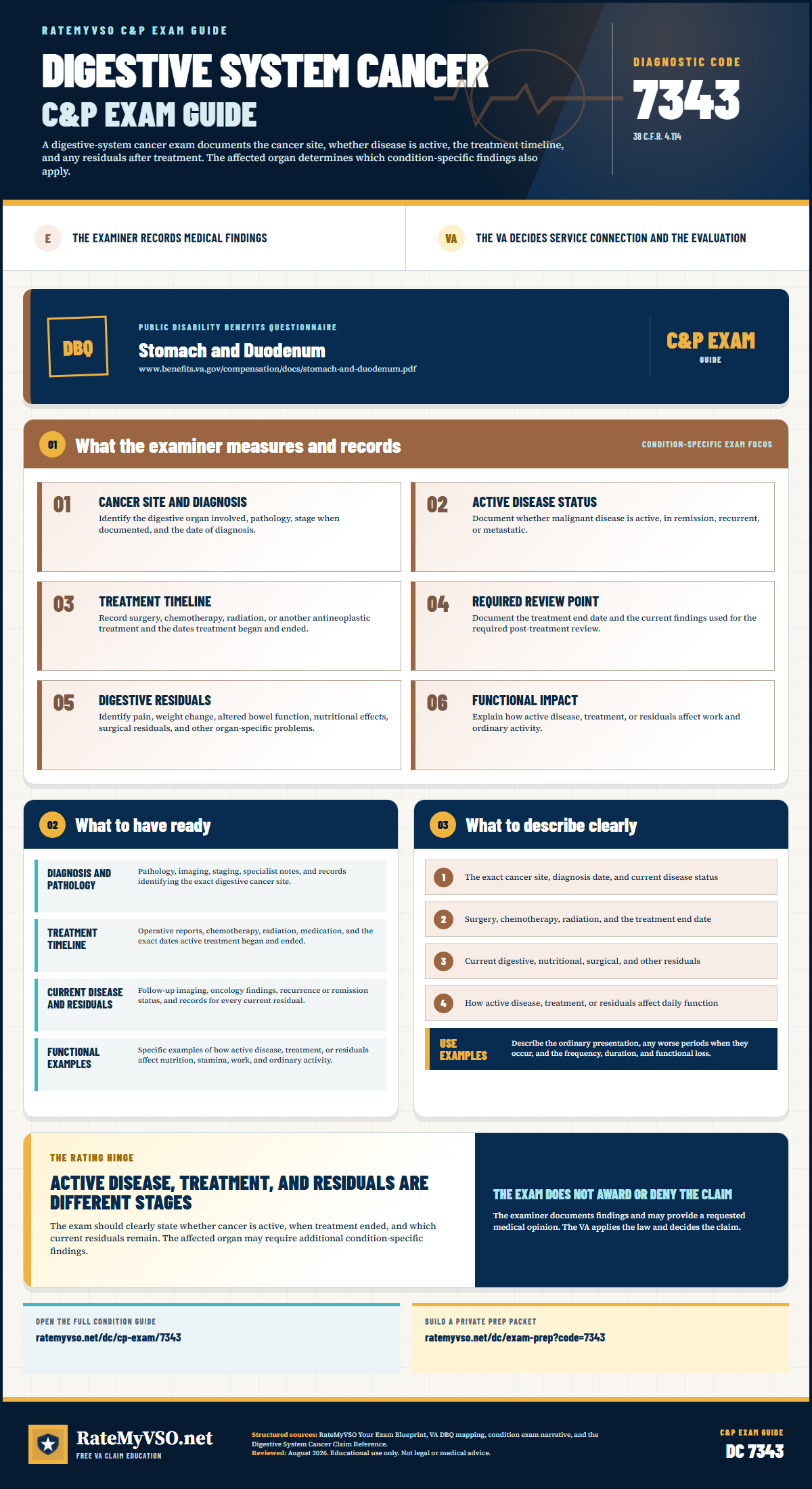
For malignant neoplasms of the digestive system, exclusive of skin growths (DC 7343), the C&P examiner uses the Disability Benefits Questionnaire (DBQ) that matches the condition, which can be more than one of these. The topics section below asks which ones apply.
- DBQ DENTAL Oral and Dental (public PDF on VA.gov)
- DBQ GI Esophageal Disorders (public PDF on VA.gov)
- DBQ GI Stomach and Duodenum (public PDF on VA.gov)
- DBQ GI Intestines (public PDF on VA.gov)
- DBQ GI Liver Conditions (public PDF on VA.gov)
- DBQ GI Gallbladder (public PDF on VA.gov)
- DBQ GI Pancreas (public PDF on VA.gov)
- DBQ GI Rectum and Anus (public PDF on VA.gov)
DBQs are Department of Veterans Affairs Form 21-0960 series documents. Public DBQs are hosted on benefits.va.gov. A handful are examiner-only and are not posted publicly.
The DBQ topics for this condition
These are the parts of the DBQ form that apply to malignant neoplasms of the digestive system, exclusive of skin growths (DC 7343). Sections the form uses for other conditions are left out. Topics marked Only if this applies depend on your own history, such as surgery, a device, or a complication; open one if it applies to you. Section and question numbers are the ones printed on the VA form.
Which form applies depends on your answer above. Depending on your answer, the examiner uses one or more of: Oral and Dental; Esophageal Disorders; Stomach and Duodenum; Intestinal Conditions; Liver Conditions; Gallbladder; Pancreas; Rectum & Anus.
This is a preparation view built from the current public VA forms. It is not an official VA crosswalk, it does not decide which exam VA orders, and it does not tell the examiner to skip anything. Measurements, diagnoses and opinions on the form are the examiner's to record.
What to expect at your C&P exam
A dental and oral exam for VA rating looks at the jaw bones and at tooth or bone loss from injury or disease, not routine tooth decay. The rating is set under 38 CFR 4.150.
1Initial interview (history)
- Jaw injury or disease and any bone loss.
- Difficulty chewing or speaking.
- Surgeries, and whether dentures or a prosthesis are used.
- Effect on eating and daily life.
2Physical examination
- Examining the upper and lower jaw (maxilla and mandible) and any tooth loss.
- Checking how far the jaw opens and how the bite lines up.
3Diagnostic tests the examiner may rely on
Imaging of the jaw and teeth.
4Functional assessment
- Loss of jaw bone or of teeth due to bone loss, and whether it can be restored by a prosthesis, which set the rating.
- Findings map to the tiers in 38 CFR 4.150 (e.g. tooth loss DC 9913; mandible DCs 9903-9904).
Here is what the exam itself usually looks like for an esophageal condition. The examiner uses these steps to document severity against the rating criteria.
1Initial interview (history)
- When your symptoms first started.
- How often you have heartburn, acid reflux, or regurgitation.
- Whether symptoms worsen after eating, when lying down, or at night.
- Associated symptoms: chest pain, difficulty swallowing (dysphagia), chronic cough, sore throat, or a sour taste.
- How symptoms affect your daily activities, sleep, and ability to work.
- Treatments and medications tried (antacids, H2 blockers, proton pump inhibitors) and whether they helped.
- Any complications: esophagitis, strictures, Barrett's esophagus, or aspiration pneumonia.
- Smoking, alcohol, or dietary triggers, and family history.
2Physical examination
- Vital signs (blood pressure, heart rate, respiratory rate, temperature).
- Inspection of the chest and abdomen.
- Listening to lung and bowel sounds.
- Palpating the abdomen for tenderness, bloating, or discomfort.
3Diagnostic tests the examiner may rely on
These are usually already in your records rather than performed at the exam. The examiner reviews the results to gauge severity.
4Functional assessment
- Impact on sleep quality and daily comfort.
- Diet limitations and food restrictions.
- Need for ongoing medication or medical care.
- Frequency of flare-ups or incapacitating episodes.
- Effect on employment and physical activity.
A stomach or duodenum exam is mostly an interview plus a review of your test results. The examiner documents how often and how severely the condition affects you, under 38 CFR 4.114.
1Initial interview (history)
- Pain, nausea, vomiting, heartburn, and how often.
- Signs of bleeding: vomiting blood or black, tarry stools.
- Weight loss, fatigue, or anemia.
- Ulcers, gastritis, or stomach surgery, and current medications.
2Physical examination
- Abdominal exam: tenderness, masses, and bowel sounds.
- Checking weight and signs of anemia.
3Diagnostic tests the examiner may rely on
Usually already in your records.
4Functional assessment
- How often and how severe episodes are, and any weight loss or anemia, which set the rating.
- Findings map to the tiers in 38 CFR 4.114 (peptic ulcer DC 7304; gastritis DC 7307; postgastrectomy syndrome DC 7308).
An intestinal exam is mostly an interview plus a records review. The examiner reviews your test results and documents how often and how severely the condition flares.
1Initial interview (history)
- When symptoms began and how often you have flares.
- Diarrhea, constipation, abdominal pain, cramping, urgency, or blood in the stool.
- Weight loss, fatigue, and whether flares confine you or keep you from work.
- Diet, medications, surgeries, and any ostomy.
- Hospitalizations or ER visits for the condition.
2Physical examination
- Abdominal exam: inspection, listening to bowel sounds, and palpating for tenderness or masses.
- Checking weight and signs of malnutrition or anemia.
3Diagnostic tests the examiner may rely on
Usually already in your records. The examiner reviews them to confirm the diagnosis and severity.
4Functional assessment
- How often and how severe flares are, and whether they cause weight loss or malnutrition.
- Whether the condition keeps you from working during flares.
- Findings map to the tiers in 38 CFR 4.114 (IBS DC 7319; ulcerative colitis DC 7323; Crohn's DC 7326).
A liver-condition exam reviews your symptoms, history, and lab results. The rating depends on symptoms and episodes of worsening, under 38 CFR 4.114.
1Initial interview (history)
- Fatigue, nausea, abdominal pain, jaundice (yellowing), or weight loss.
- Hepatitis or other liver disease, and any alcohol history.
- Episodes of worsening, hospitalizations, and current treatment.
2Physical examination
- Abdominal exam, checking the liver for enlargement or tenderness.
- Looking for jaundice, swelling, or other signs of liver disease.
3Diagnostic tests the examiner may rely on
Lab tests and imaging the examiner reviews.
4Functional assessment
- Symptoms such as fatigue, weight loss, and incapacitating episodes, and any liver damage, which set the rating.
- Findings map to the tiers in 38 CFR 4.114 (hepatitis C DC 7354; chronic liver disease DC 7345).
A hemorrhoid or anorectal exam is a brief physical exam, often with a short scope, plus a few questions about symptoms.
1Initial interview (history)
- Bleeding, pain, itching, swelling, or prolapse (tissue coming out).
- How often you have flare-ups and what triggers them.
- Treatments tried (creams, procedures, surgery) and whether they helped.
- Any anemia from chronic bleeding.
2Physical examination
- Visual inspection of the anal area.
- Digital rectal exam.
- Anoscopy: a short scope to view the anal canal and internal hemorrhoids.
3Diagnostic tests the examiner may rely on
Usually only to rule out other causes of bleeding.
4Functional assessment
- Frequency of flare-ups and bleeding, and whether hemorrhoids are large, thrombosed, or prolapsed.
- Any anemia from chronic bleeding.
- Findings map to the tiers in 38 CFR 4.114, DC 7336.
Test explainers open MedlinePlus (NIH National Library of Medicine), or Wikipedia where MedlinePlus has no matching page. This describes what happens and what is measured, not how to influence a result.
Rating Levels for DC 7343
The following tiers are reproduced from 38 CFR Part 4, the VA Schedule for Rating Disabilities. Toggle between the official VA criteria and a Plain English explanation.
Plain-English summaries are AI-generated to explain the official criteria. The official 38 CFR language is the binding legal standard. When in doubt, ask a VSO.
Evidence cited in published BVA decisions for DC 7343
Each row counts the issues for this diagnostic code that the Board granted or denied and whose decision text discussed that type of evidence. An issue is one condition the Board ruled on, and one decision can contain several. Remanded issues are not included. This is a count from the public record, not a prediction or a recommendation for any claim.
- Service treatment records: discussed in 2,353 granted or denied BVA issues (594 granted; 1,759 denied)
- Medical literature: discussed in 962 granted or denied BVA issues (474 granted; 488 denied)
- Buddy / lay statements: discussed in 1,679 granted or denied BVA issues (429 granted; 1,250 denied)
When the Board found the exam inadequate (DC 7343)
In 770 published Board of Veterans' Appeals decisions involving this condition, the Board found a C&P examination or medical opinion inadequate. Where the defect could be read from the decision, it was most often one of the following (counts are a floor from the decisions on file, not a total):
- 237 Conclusion given without a supporting rationale
- 208 Failed to address a contention or part of the condition
- 73 Veteran's lay statements not considered
- 39 Claims file or records not reviewed
- 34 Opinion relied on the absence of records instead of the evidence
- 31 Examiner said an opinion would require speculation
An inadequate exam is usually sent back for a new one rather than decided against the veteran. This is a factual report of published decisions, not advice about any exam or claim; whether an exam is adequate is decided case by case.
Disclaimer: This page reproduces public Department of Veterans Affairs forms (DBQs) and verbatim text from 38 CFR Part 4 (the VA Schedule for Rating Disabilities). It is informational only and is not legal or medical advice. For guidance on a specific claim, contact a VA-accredited representative.