The VA Sets a Claims Record With Fewer Staff
Data through September 26, 2026

AI-generated editorial illustration; the people shown are fictional.
The VA and its benefits staff deserve credit: they have already surpassed last year's claims-processing record while working with a substantially smaller claims-examining workforce than at the 2024 hiring peak.
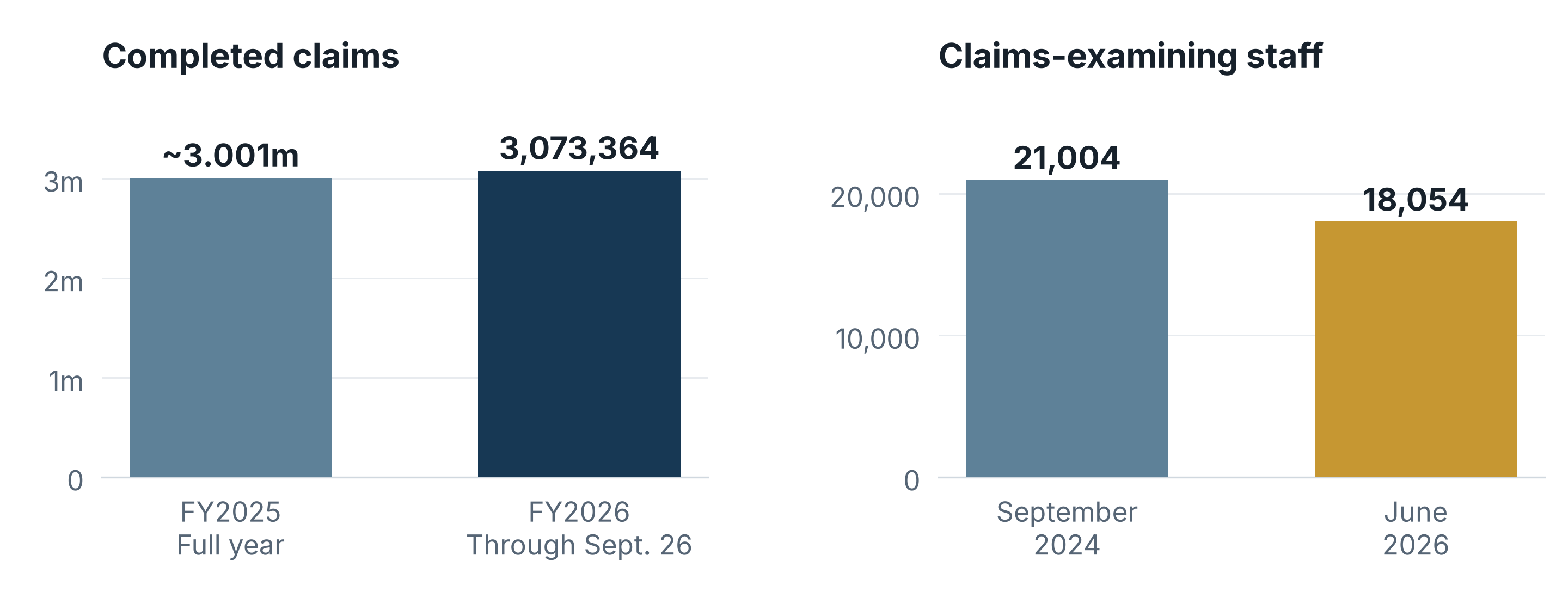
By September 26, the VA had completed 3,073,364 compensation and pension rating-bundle claims in fiscal year 2026. The VA says it passed last year's record of about 3.001 million on September 18. These are completed claims, not necessarily approvals or separate Veterans. FY2026 runs from October 1, 2025, through September 30, 2026. Latest workload report, the VA's record announcement.
FederalHiringData's analysis of federal personnel records found 18,054 claims-examining employees in June 2026, down from 21,004 in September 2024: a reduction of 2,950, or 14%. Setting a new production record despite that decrease is a significant accomplishment for the people handling Veterans' claims. Workforce analysis.
A new record with a smaller workforce
Eight weeks of strong production
Across the eight weeks ending August 8 through September 26, staff completed 491,557 claims, averaging 61,445 a week. That is nearly half a million claims completed in just eight weeks.
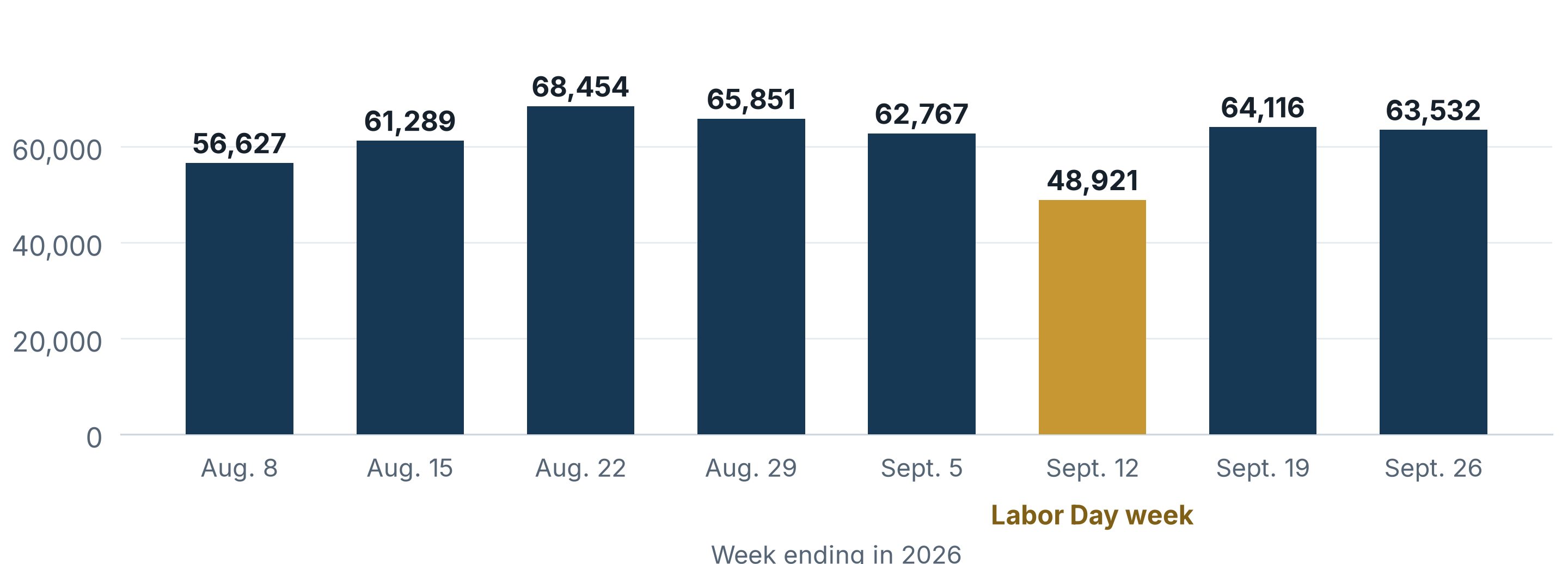
The lower total of 48,921 for the week ending September 12 came during Labor Day week, with four regular workdays instead of five. That shorter calendar matters when comparing weekly totals. The following two weeks produced 64,116 and 63,532 completions. Federal holiday calendar, weekly reports.
At the same time, the waiting list grew:
| Measure | August 1 starting balance | September 26 | Change |
|---|---|---|---|
| All pending claims | 611,453 | 670,845 | Up 9.7% |
| Backlog: pending more than 125 days | 70,529 | 74,448 | Up 5.6% |
The August 1 balance lets us measure all eight full weeks. The backlog is part of the pending total, not an additional group. Starting report, ending report.
How can the VA finish so many claims and still have more waiting? New and returning work can enter faster than completed claims leave. Unfinished claims also enter the backlog when they cross 125 days. The recent growth shows continued pressure on the system, even with strong production. These snapshots do not separate new filings, returned work and reporting adjustments. Weekly reports.
The longer view, and the people behind it
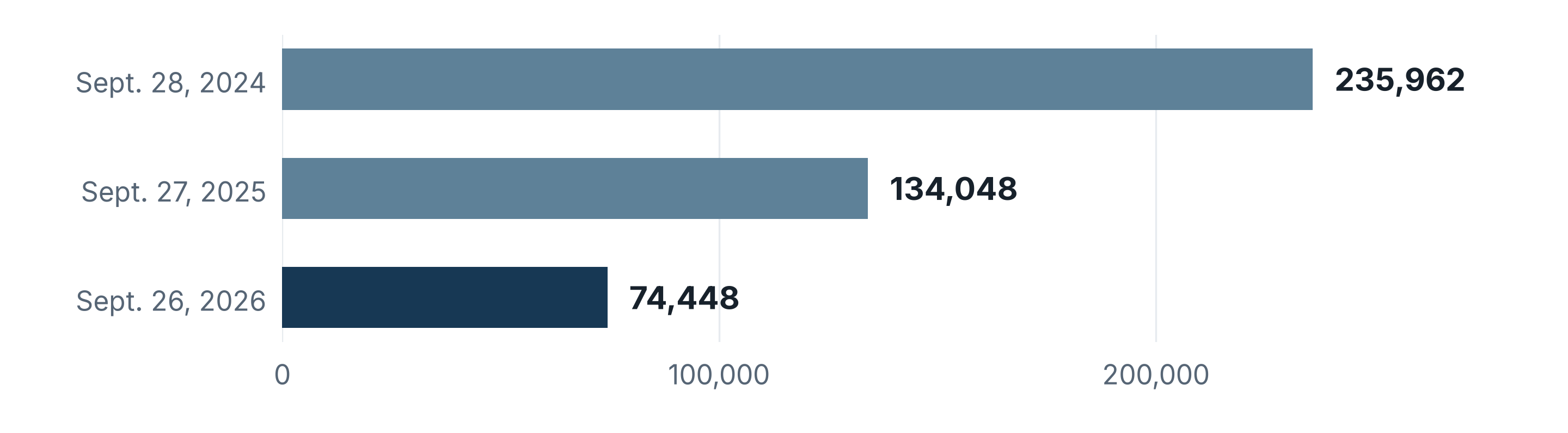
The longer trend remains much better. The backlog exceeded 400,000 in 2024 after pandemic-related exam disruptions and the PACT Act's expansion of eligibility helped swell the workload. Today's 74,448 is more than 80% below that peak. However, the backlog briefly fell below 70,000 earlier this year, so the recent increase deserves attention. The War Horse's reporting and historical chart, the VA's July milestone.
Backlog: late-September snapshots
Several factors help explain this performance. The VA previously expanded hiring, uses overtime, and has automation that gathers and summarizes evidence for human decision-makers. The War Horse reported these efforts in May. Former rater Jason Anderson described working early on weekends to meet overtime requirements while preserving time with his children. That is a reminder of the people and extra hours behind the production totals. The War Horse.
Contractors provide substantial support, too: they performed about 3.2 million disability exams in FY2024, compared with 1.8 million in FY2022. That work sits outside the federal claims-examiner headcount. GAO's exam review.
Technology is part of the picture, but the public data do not tell us how much of the improvement each factor produced. GAO's July review describes further AI uses being explored and stresses accountability. The achievement belongs to the broader operation, including the staff who review evidence and make decisions. GAO's technology review.
For Veterans, this is substantial progress: record output with fewer claims-examining staff and a backlog far below its peak. The recent increase is worth following as we track whether those gains can be sustained. The staff delivering these results deserve recognition alongside that scrutiny.