Board decision network
Free VA Secondary Conditions Finder
Find secondary VA disabilities backed by historical precedent.
More about this data
This 100% free interactive tool analyzes 1.9 million published Board of Veterans' Appeals decisions covering 1992 to 2026, and 4.1 million+ issue results inside them. Combined with curated data, this map reveals the statistical links between your service-connected disabilities and possible secondary condition claims.
A line means the connection was claimed and decided at the Board. It does not mean one condition causes the other. Hover a line to see what the Board actually found. Grant rates on this page are a share of decided appeals, which means granted plus denied. Remands, where the Board sent a case back without deciding it, are not counted.

What does the body-system filter do?
A body-system filter shows every connection that involves that system. The condition on the other end of a connection often belongs to a different system, which is the point: secondary claims cross body systems constantly.
Loading network data...
Conditions grouped by body system. Each links to its diagnostic code page.
How To Read The Secondary Condition Map
- Teal rings: Conditions claimed secondary to your selected disability.
- Purple rings: Conditions your selected disability is claimed secondary to.
- Dashed gray rings: Bidirectional conditions linked both ways.
Search Claims Evidence Instantly
- Hover any condition to spotlight its specific connection lines.
- Arrow direction points from the primary condition to the secondary claim.
- Click to lock your view and display both connection lists.
- Open the diagnostic code page for your nexus evidence.
After you find a pairing
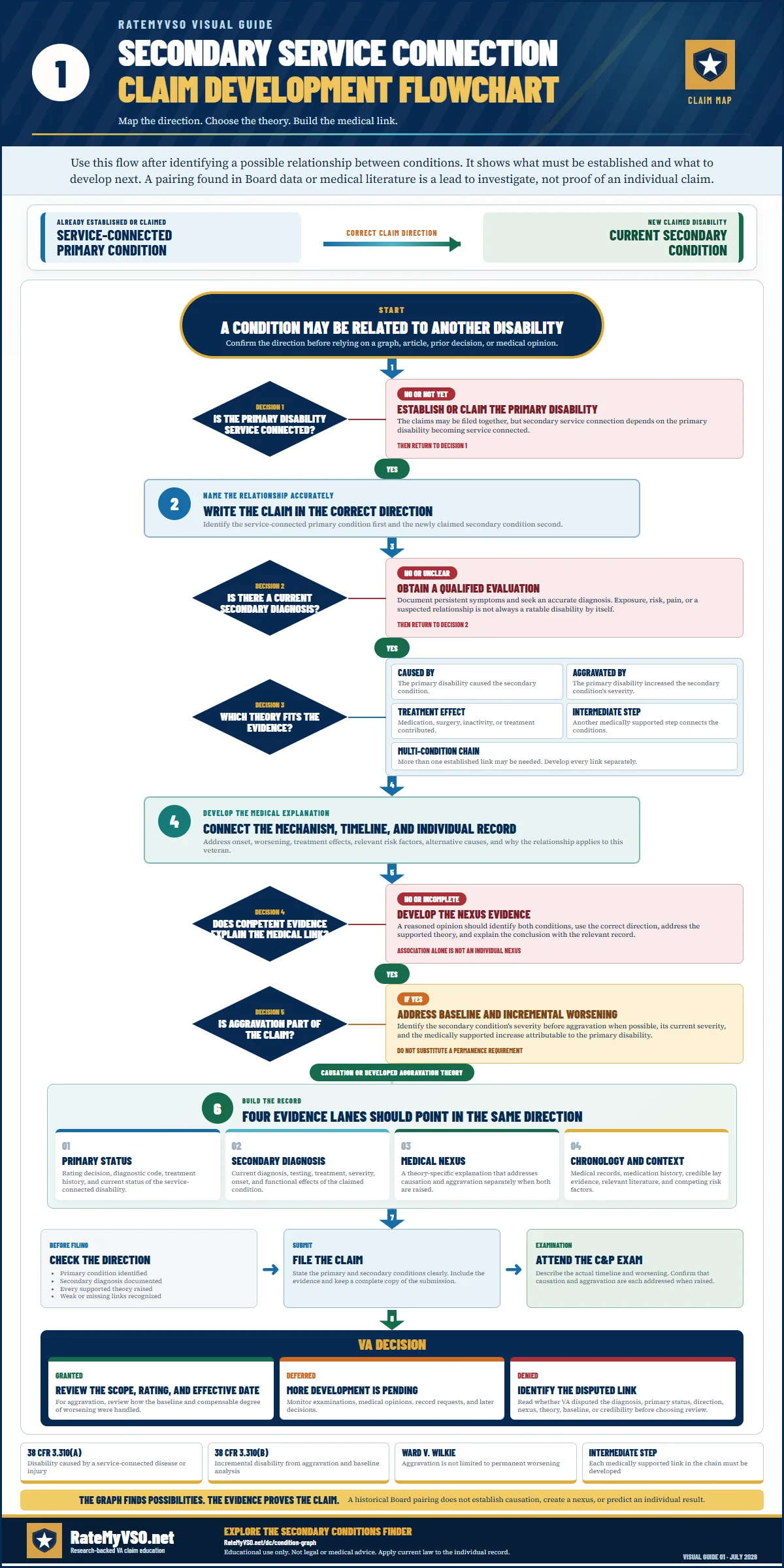 Develop the claim → The Secondary Service Connection Claim Development Flowchart walks through direction, causation vs. aggravation, nexus, and evidence once you've found a possible pairing here.
Claiming through a chain? → Causation Chains and the intermediate-step rule: how a condition is claimed secondary to a second condition that traces back to a service-connected one, with worked examples and the Board decisions that granted them.
Develop the claim → The Secondary Service Connection Claim Development Flowchart walks through direction, causation vs. aggravation, nexus, and evidence once you've found a possible pairing here.
Claiming through a chain? → Causation Chains and the intermediate-step rule: how a condition is claimed secondary to a second condition that traces back to a service-connected one, with worked examples and the Board decisions that granted them.
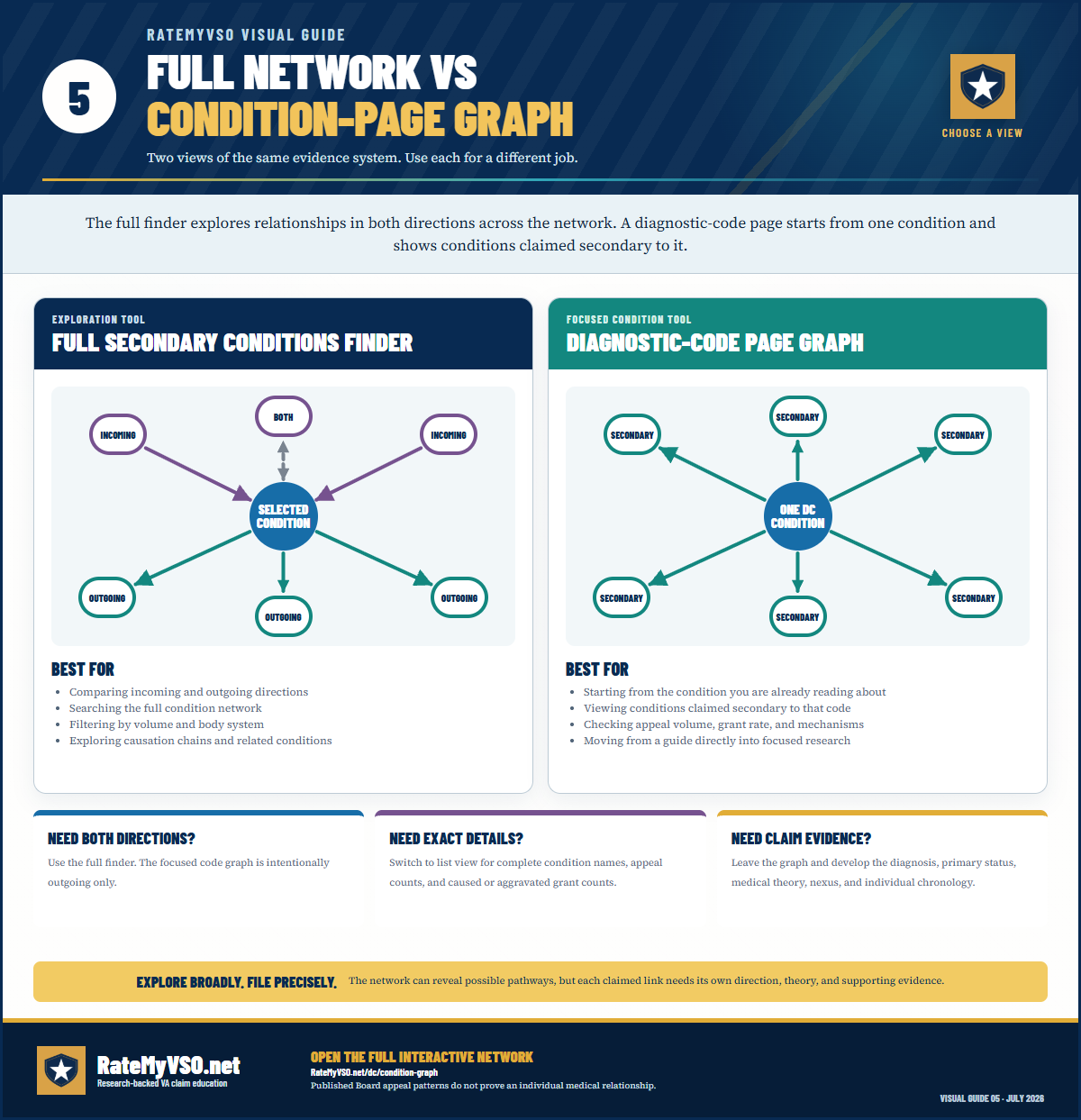 This map vs the graph on a condition page. The full finder compares both directions across every condition. A diagnostic-code page shows only what is claimed secondary to that one code. One page explains the difference.