Claim Preparation and Filing Visual Guides
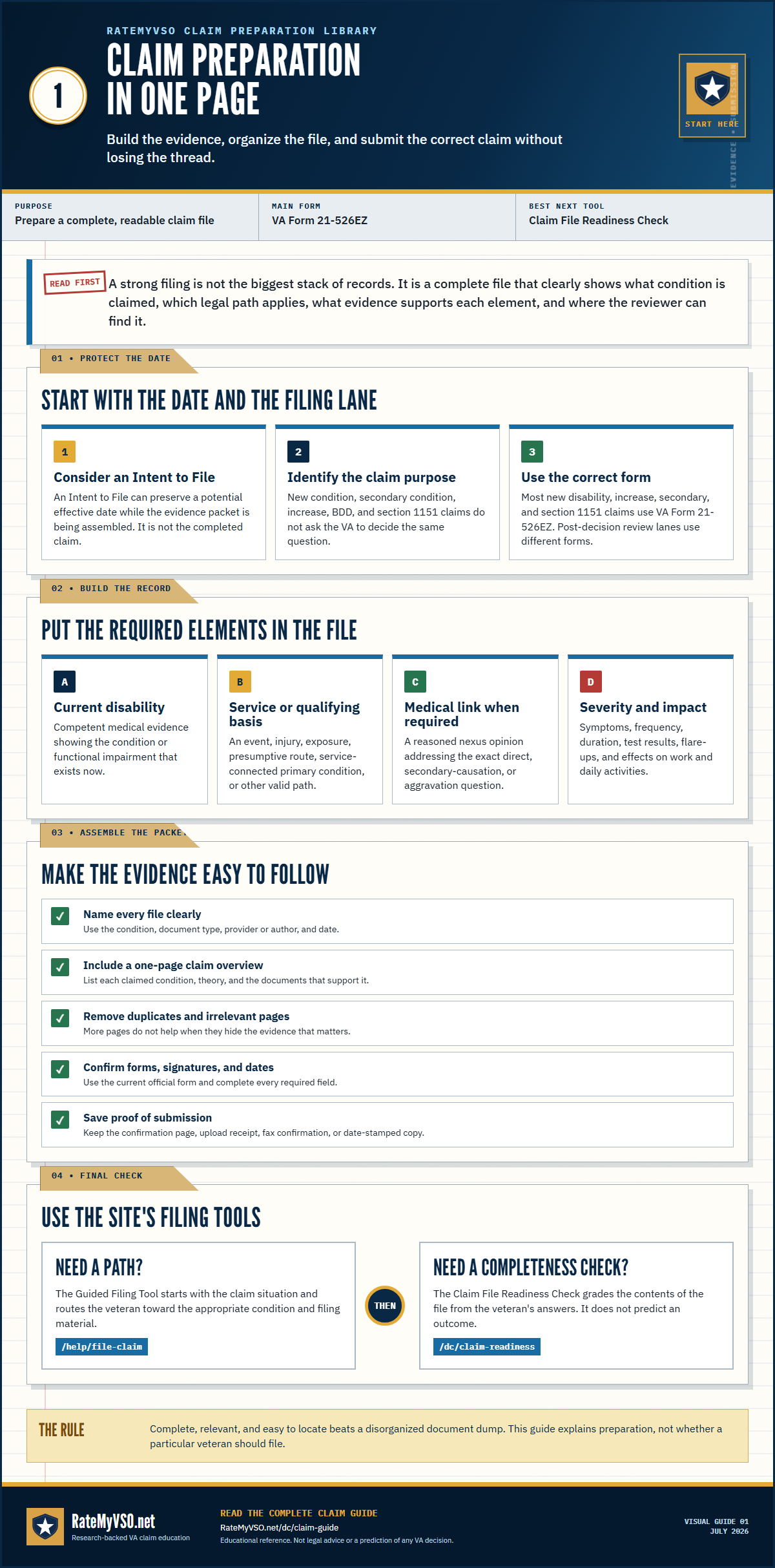
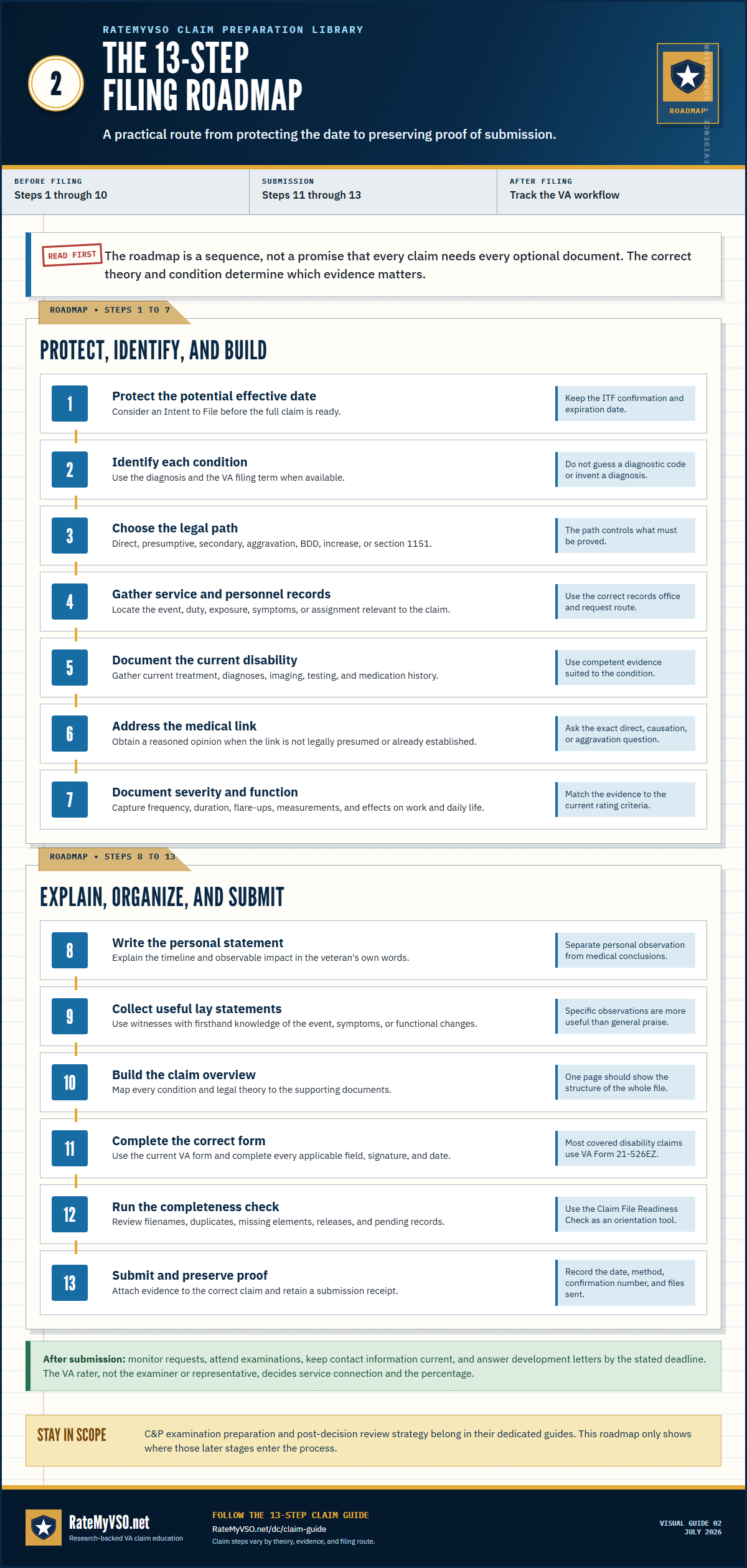
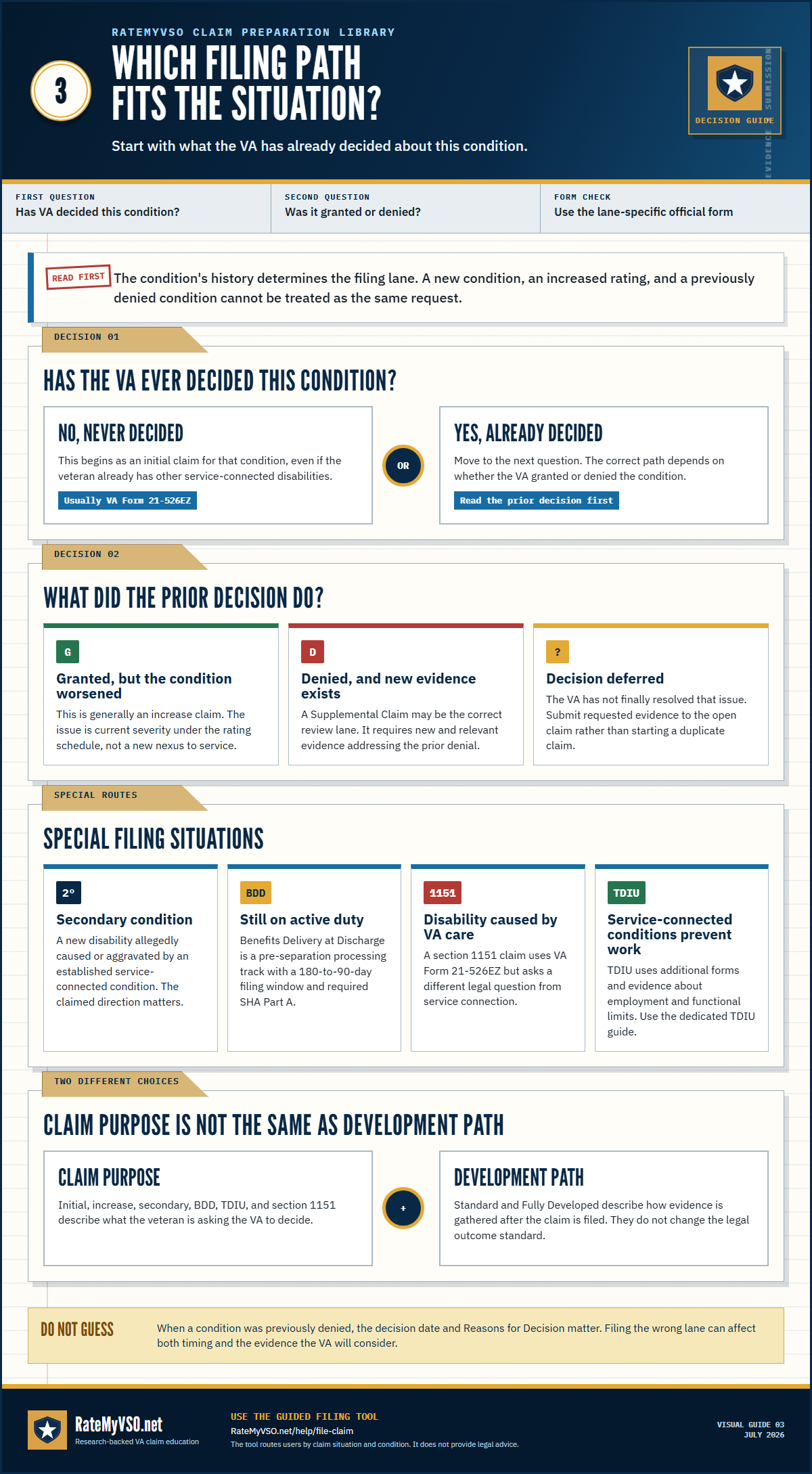
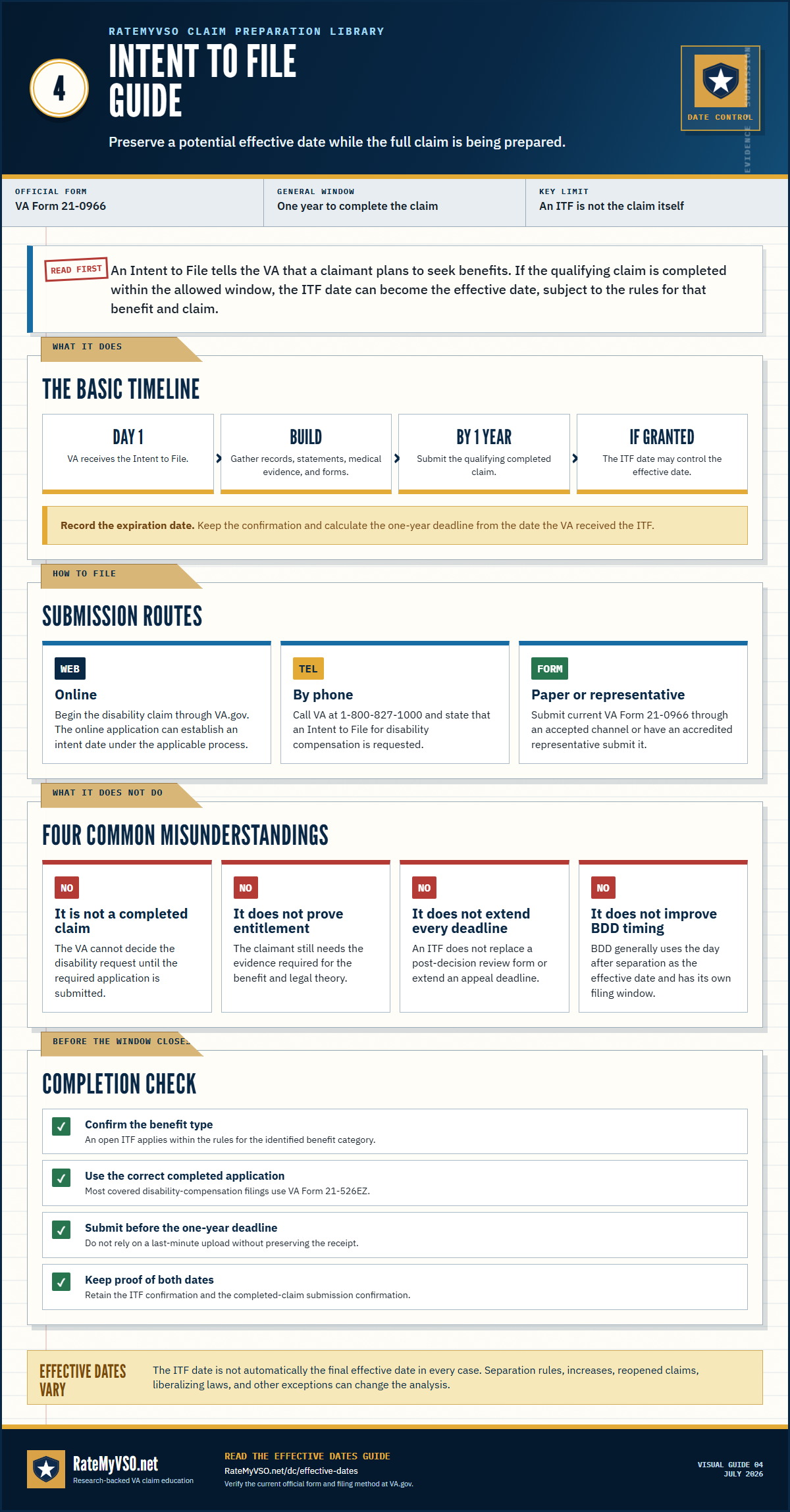
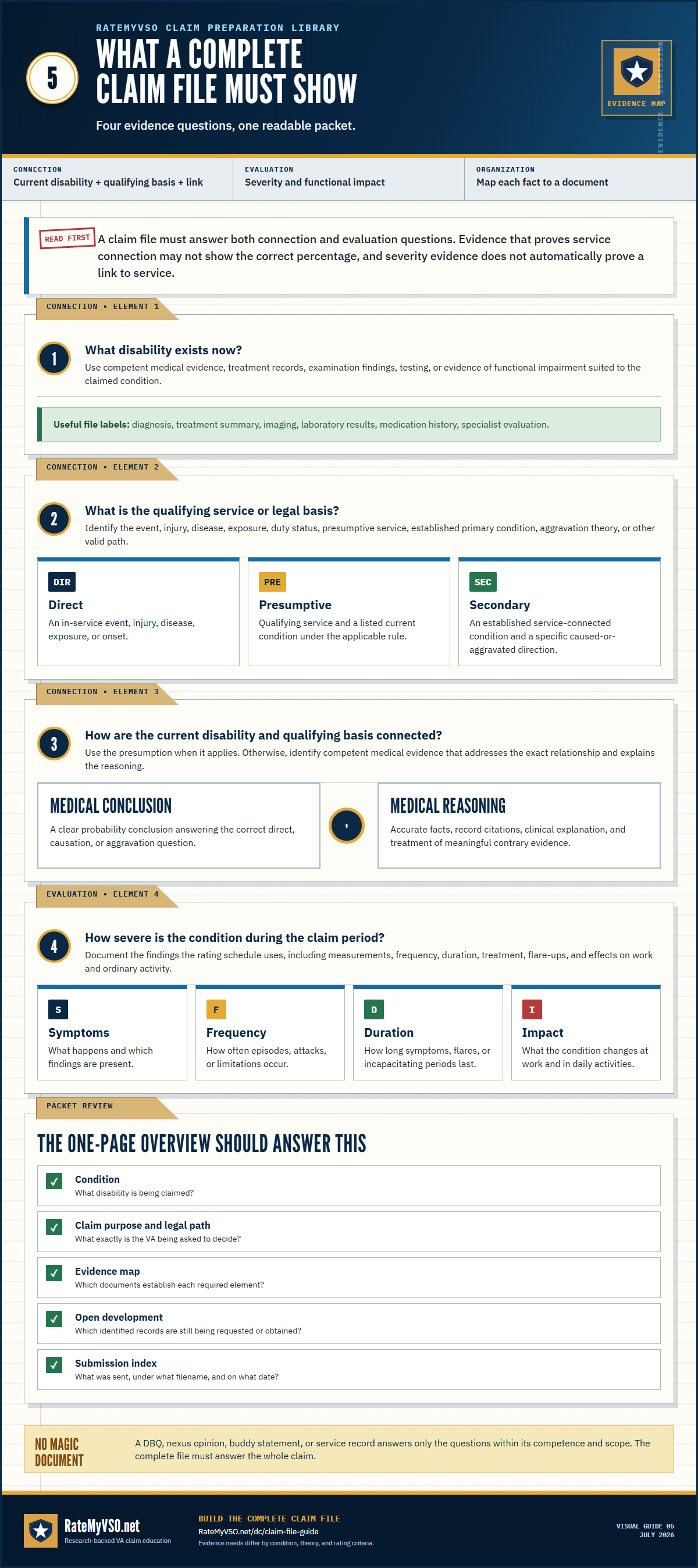
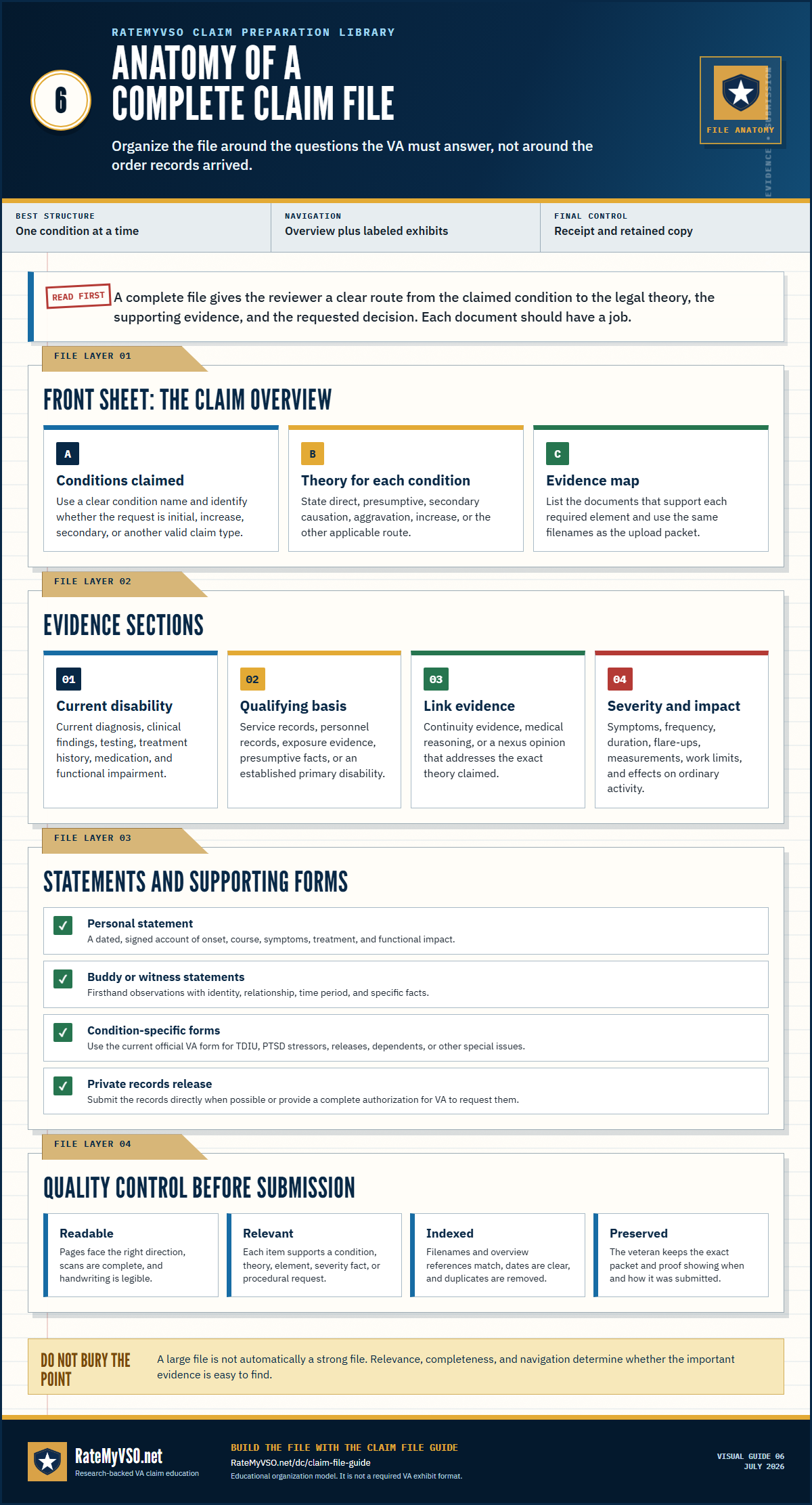
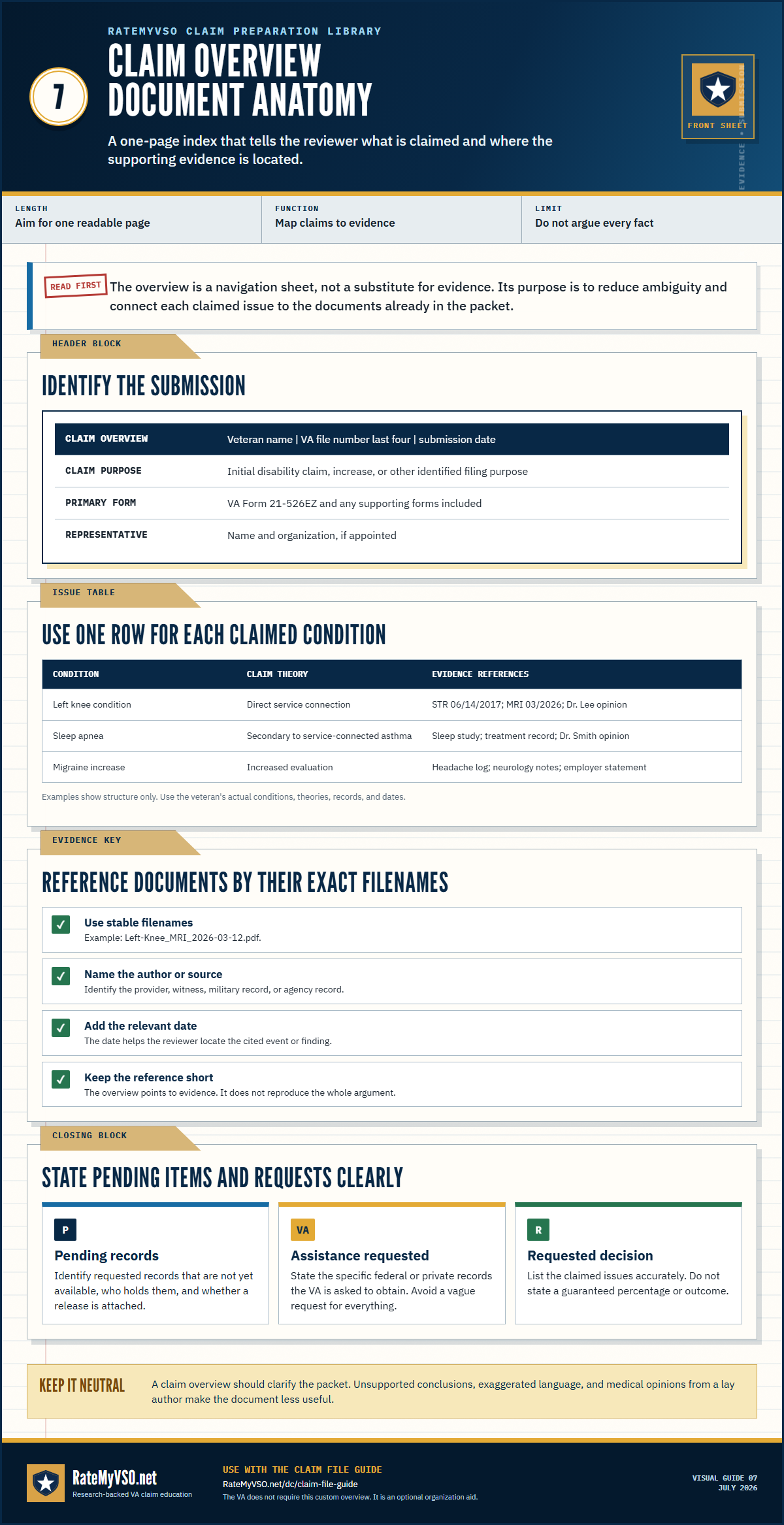
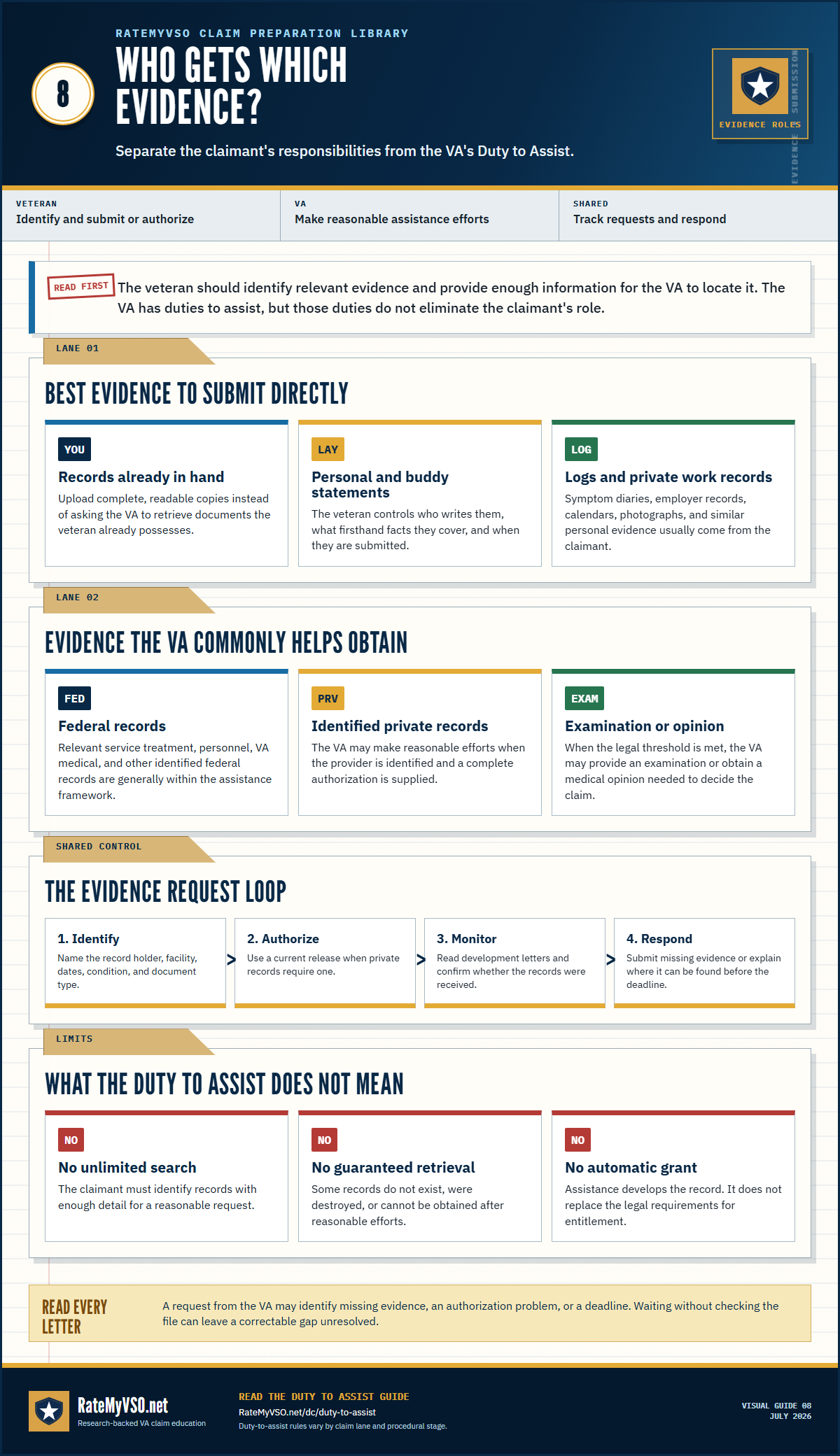
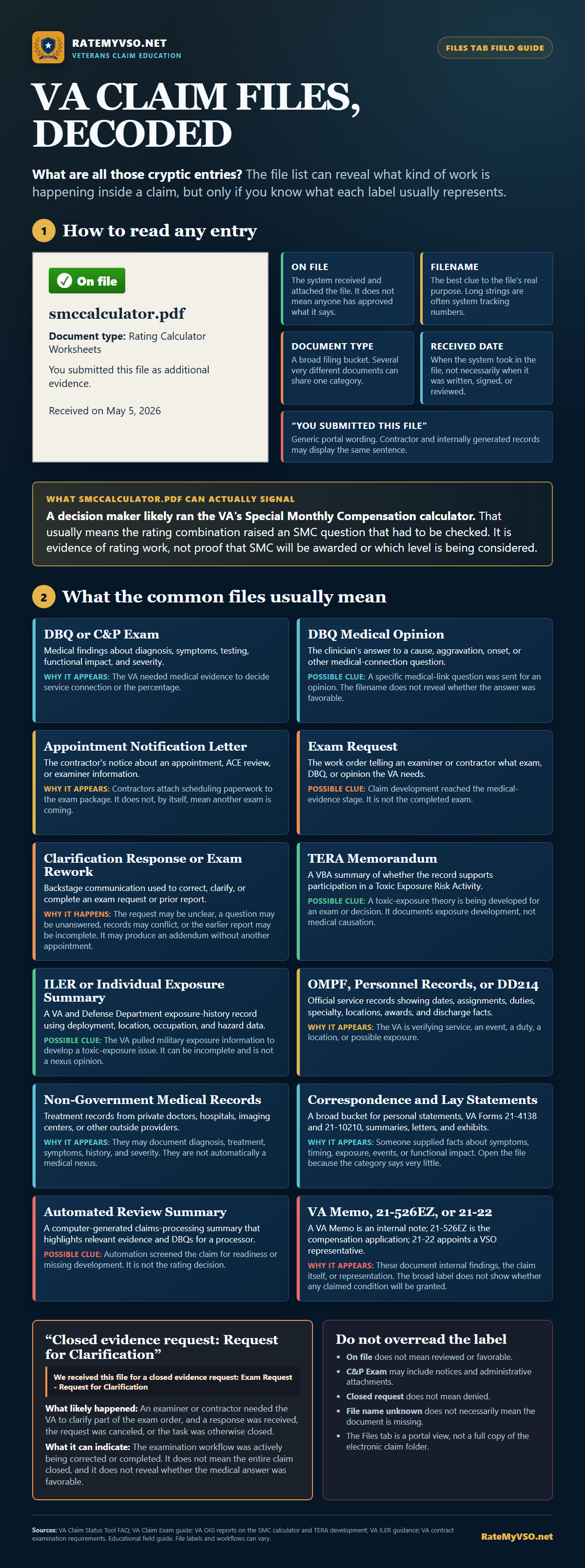
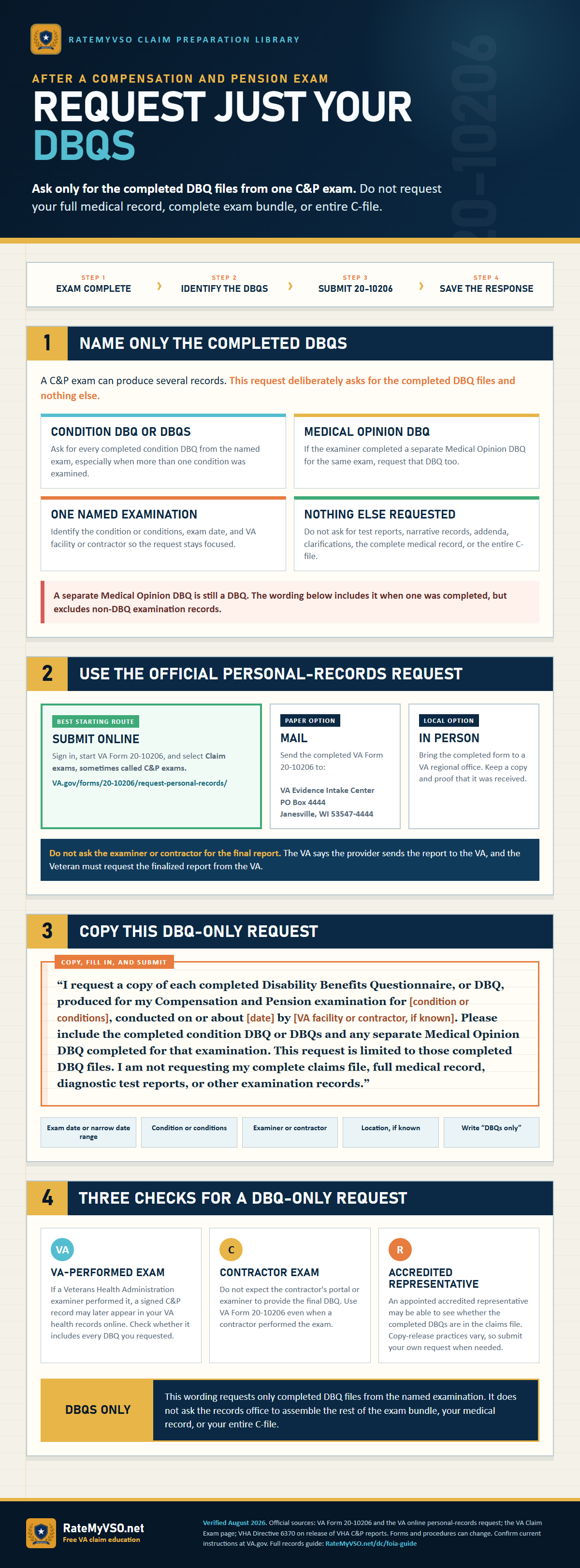
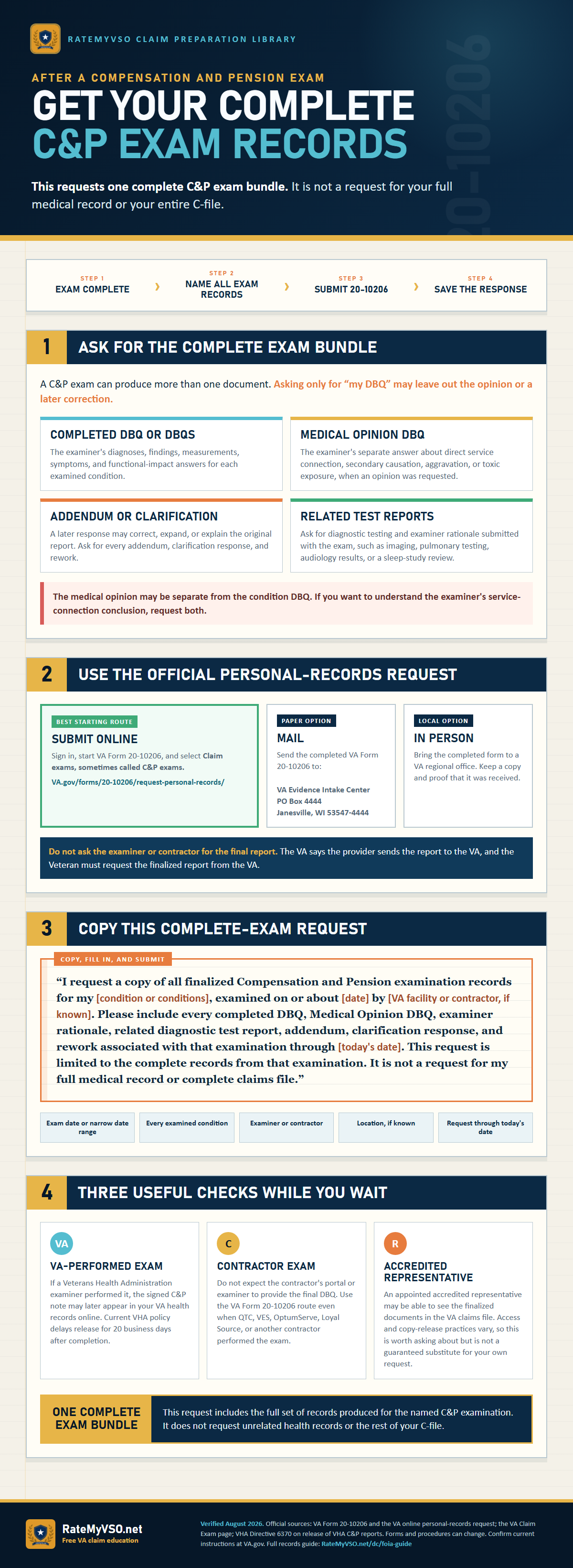
27 printable one-page charts covering how a VA disability claim is prepared and filed: which filing path fits, what an Intent to File protects, what a complete claim file has to show, how to organize evidence and request records, the 21-526EZ and its supporting forms, what to check on submission day, what happens after the claim goes in, what the entries in your VA claim file mean, and how to request only your completed DBQs or the complete records from one C&P exam instead of a whole C-file. Three research charts report what the published Board of Veterans' Appeals record shows about lay evidence and missing service records.
All 27 visual guides
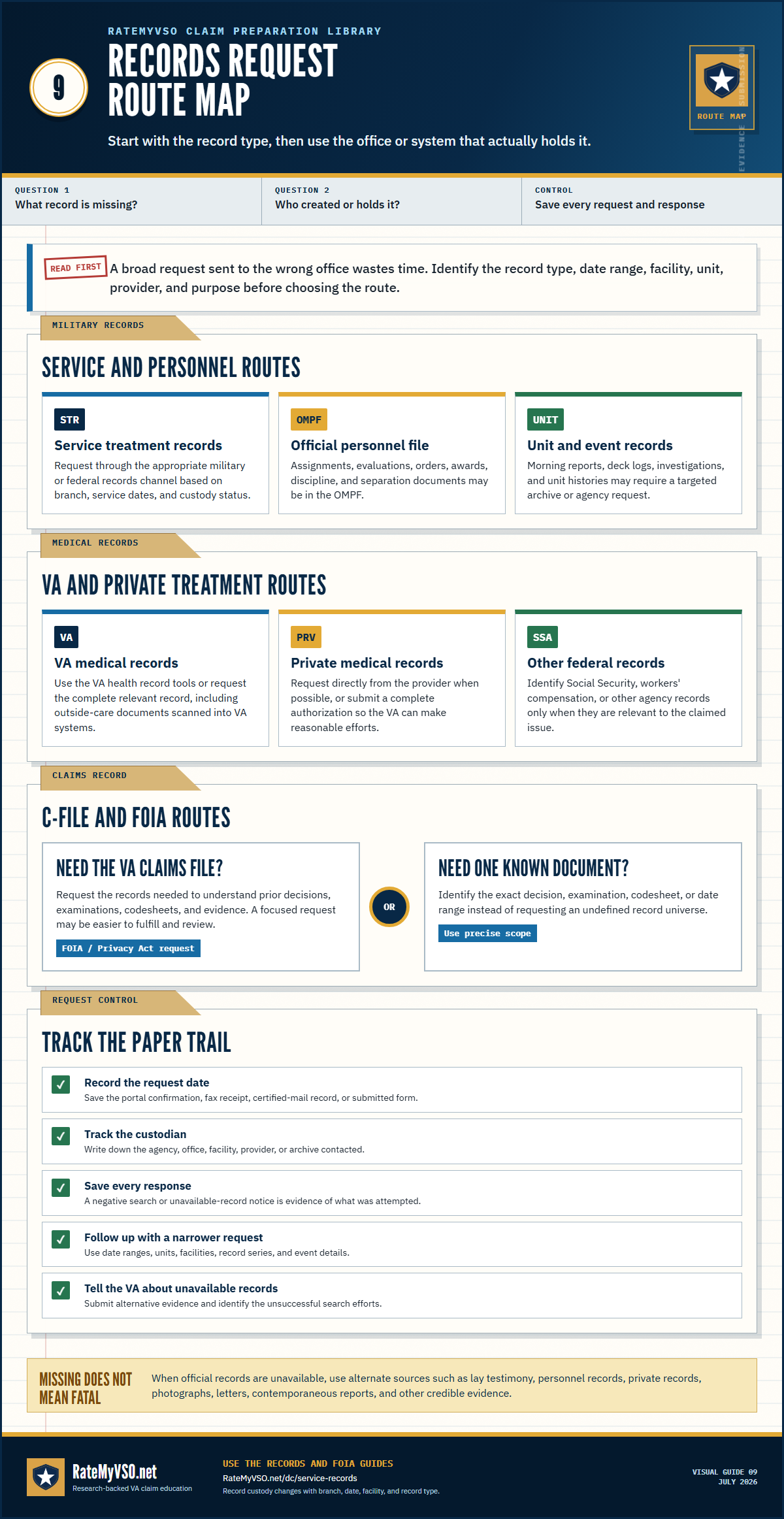
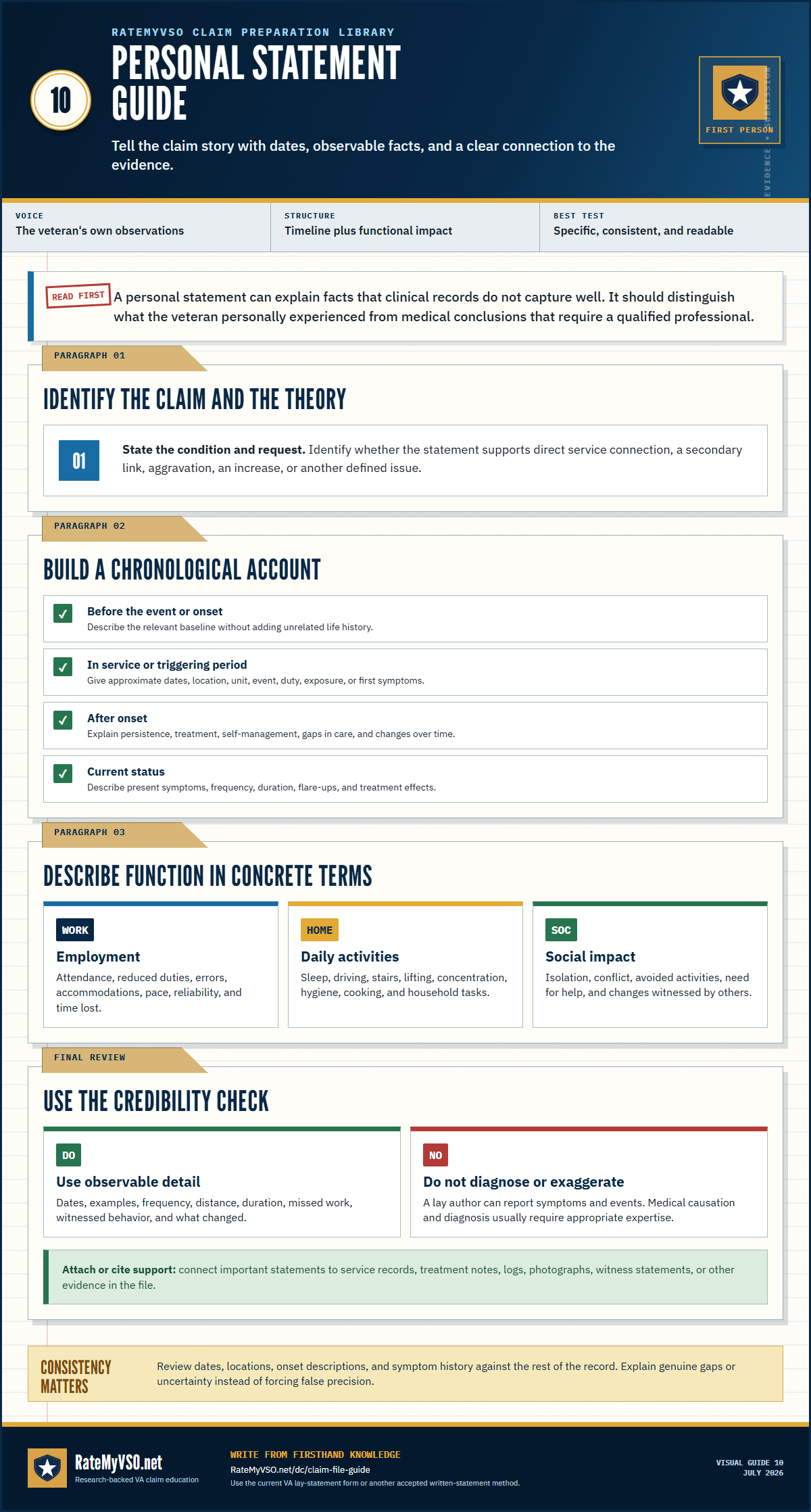
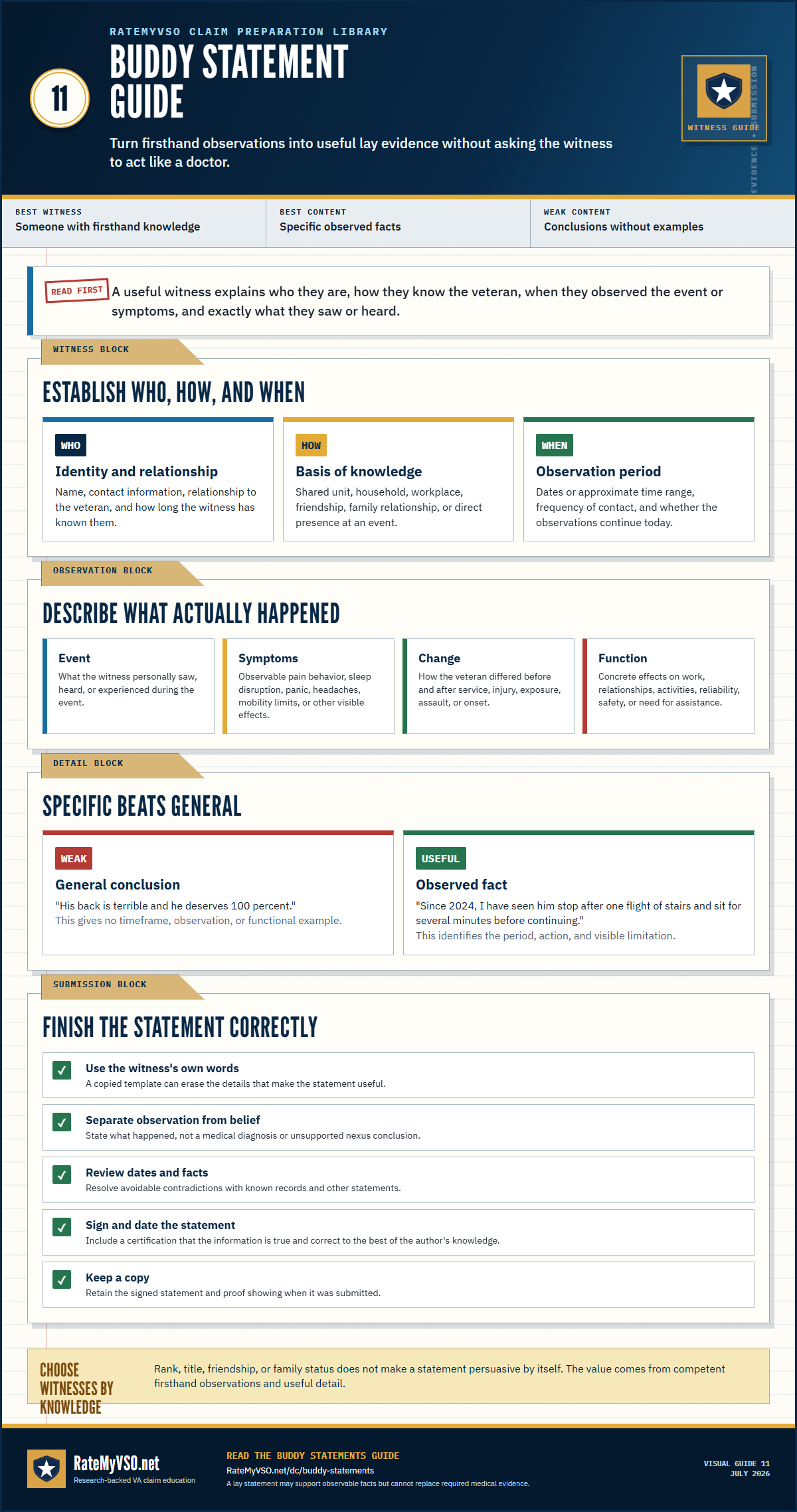
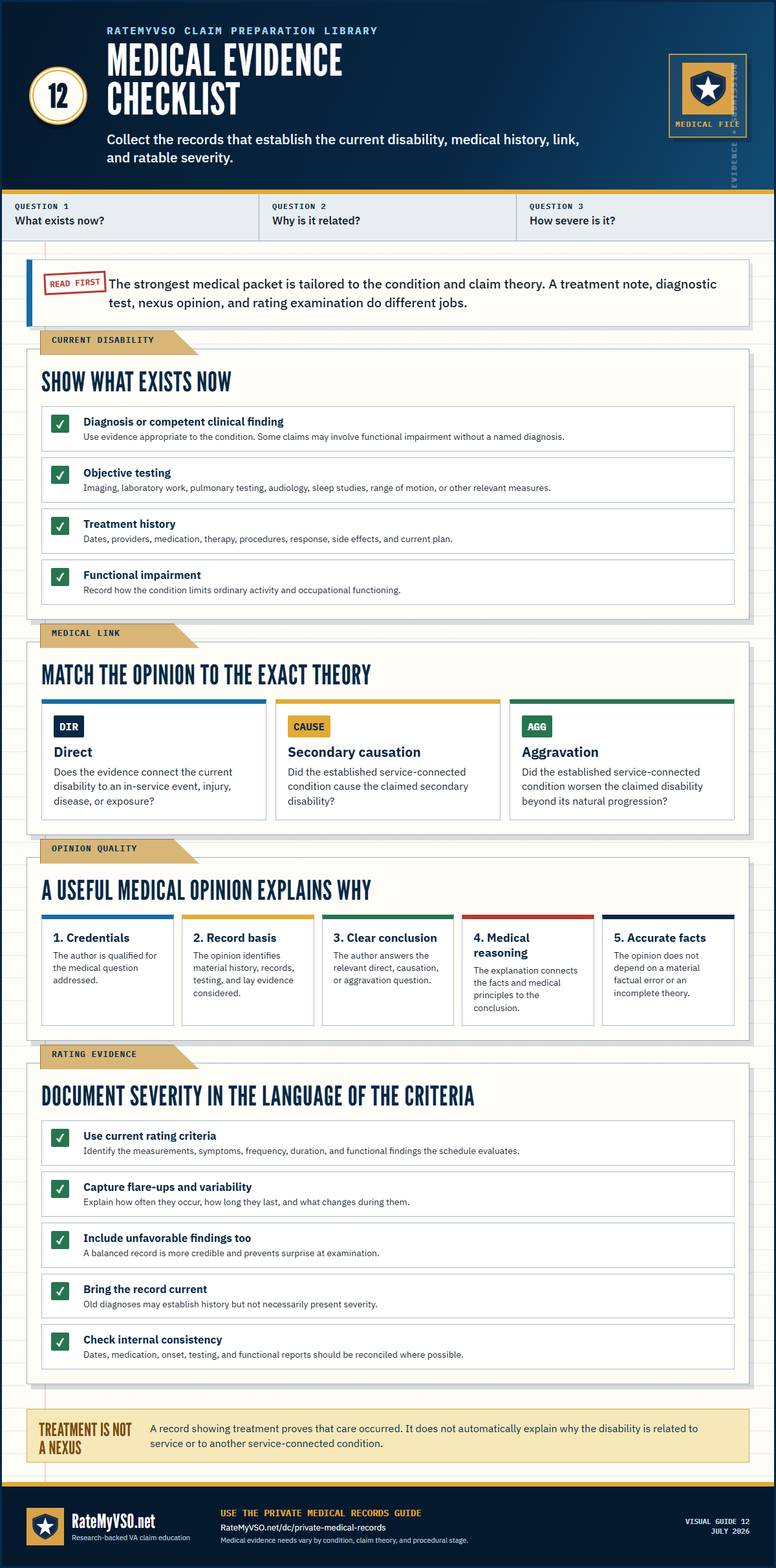
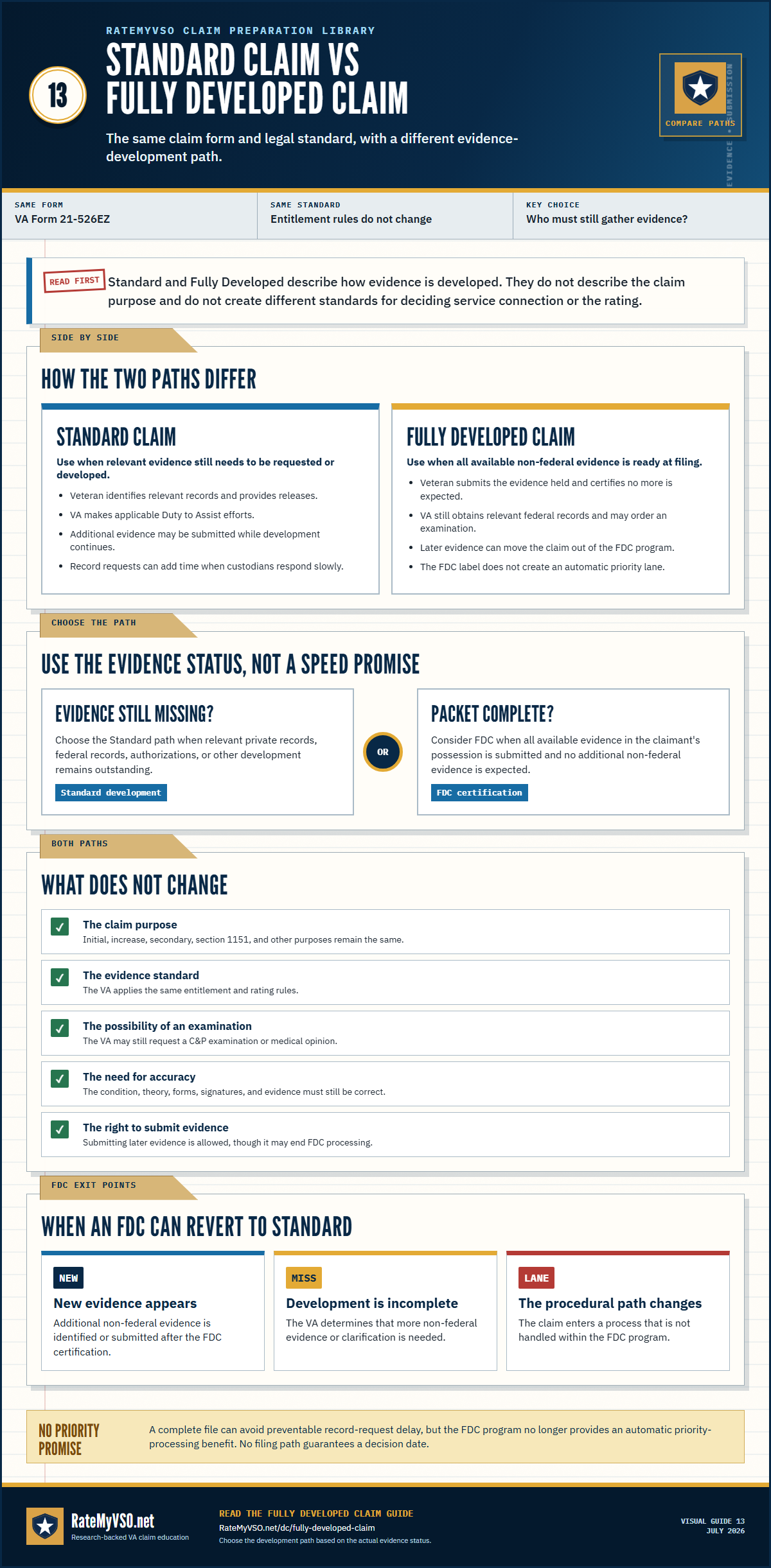
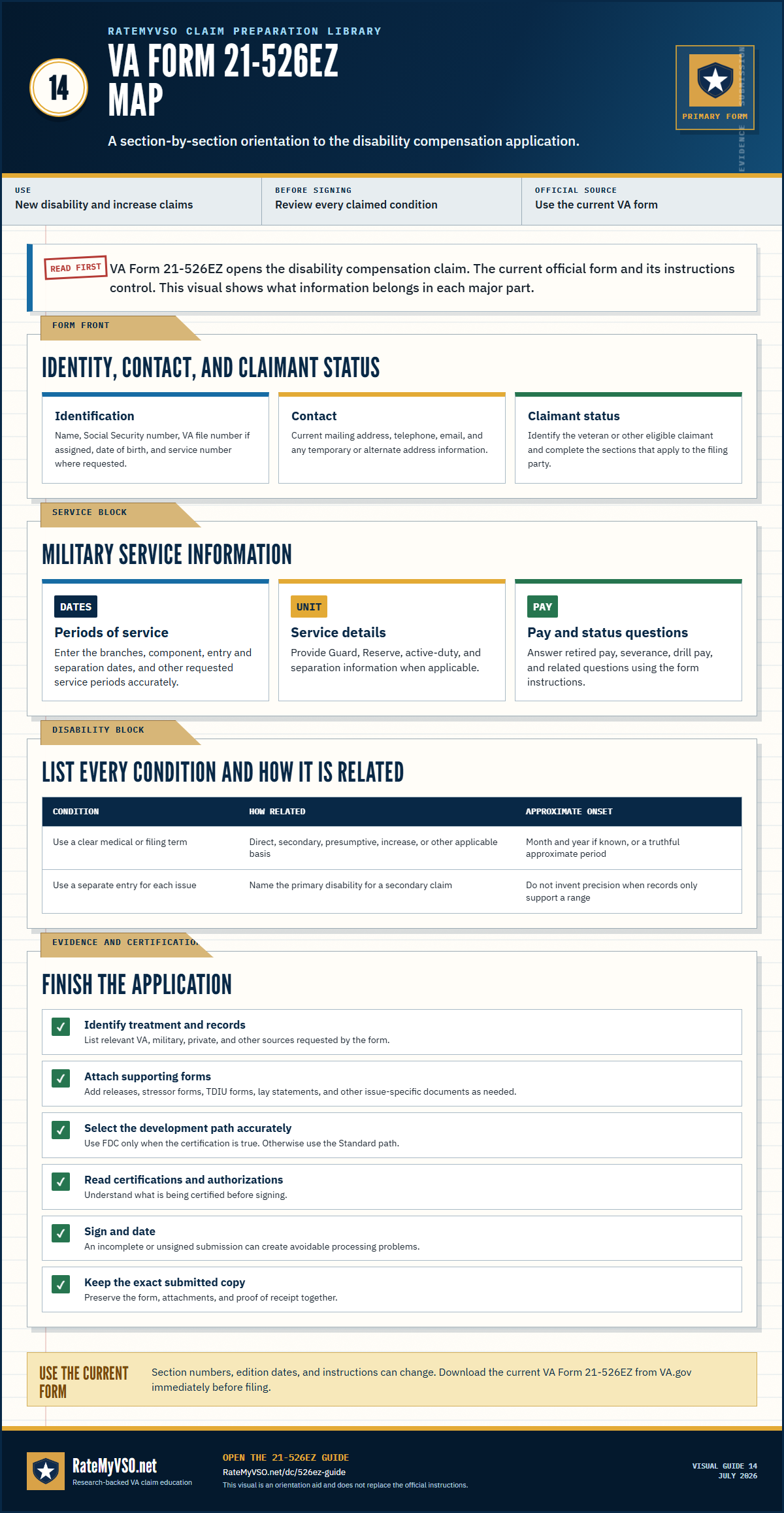
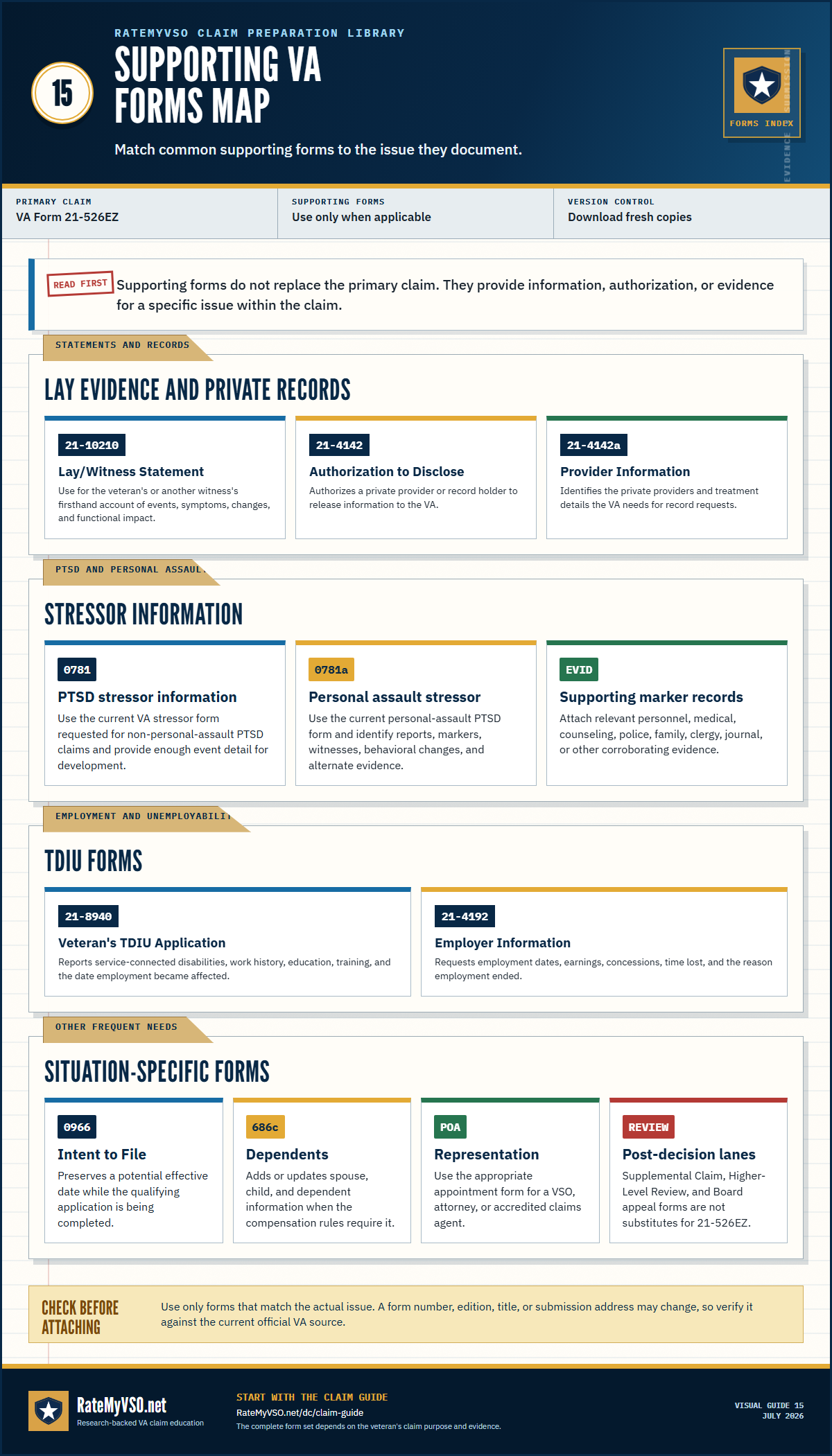
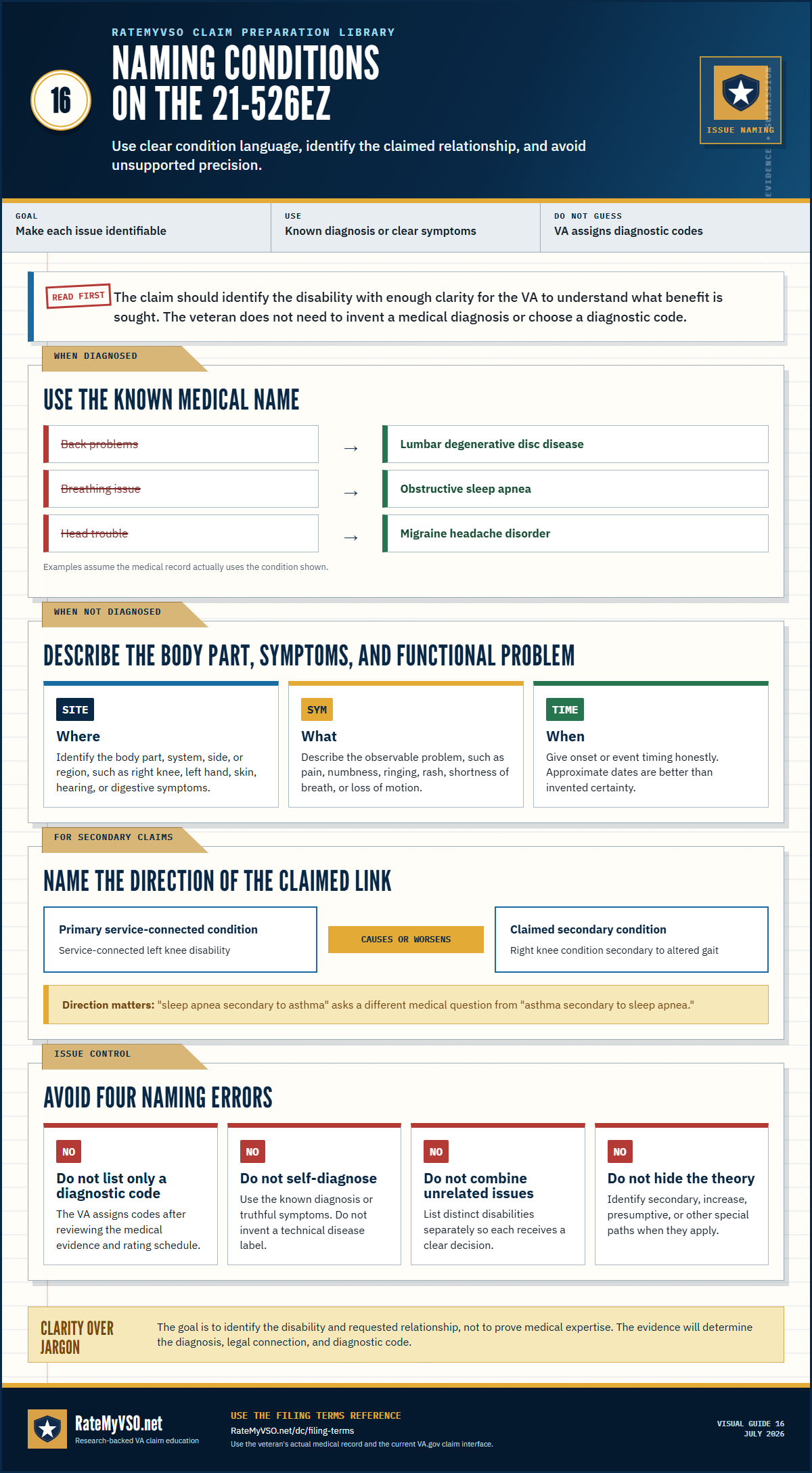
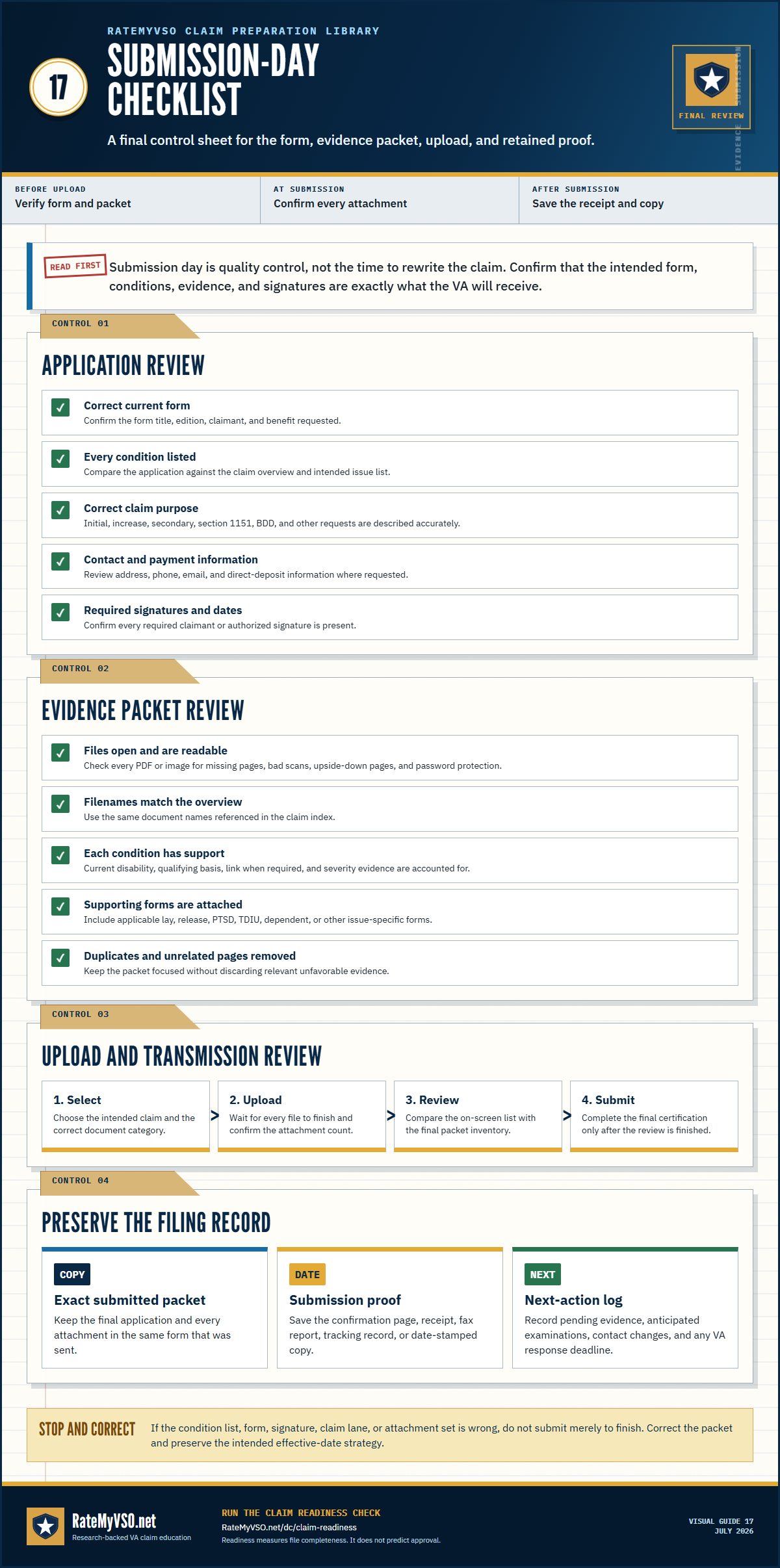
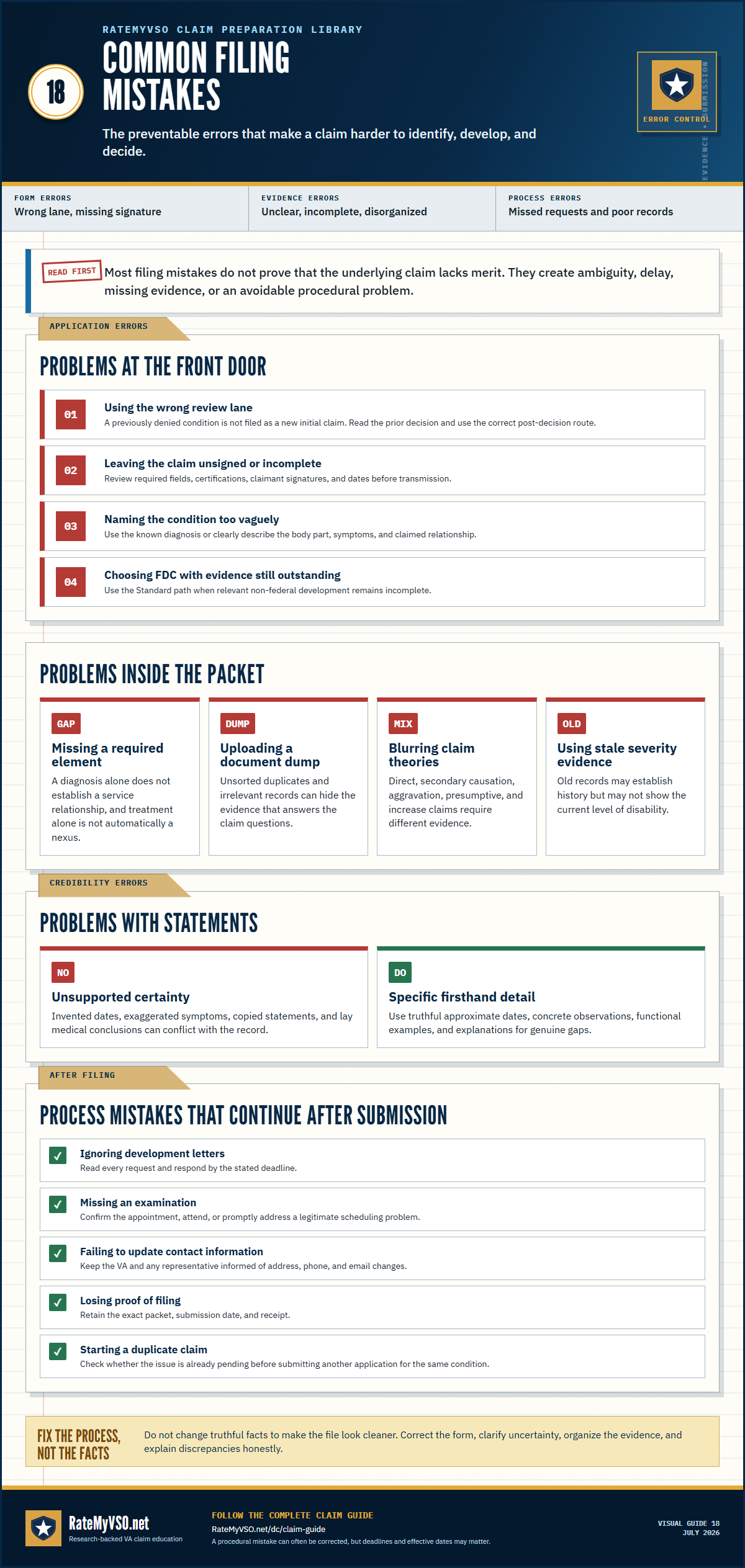
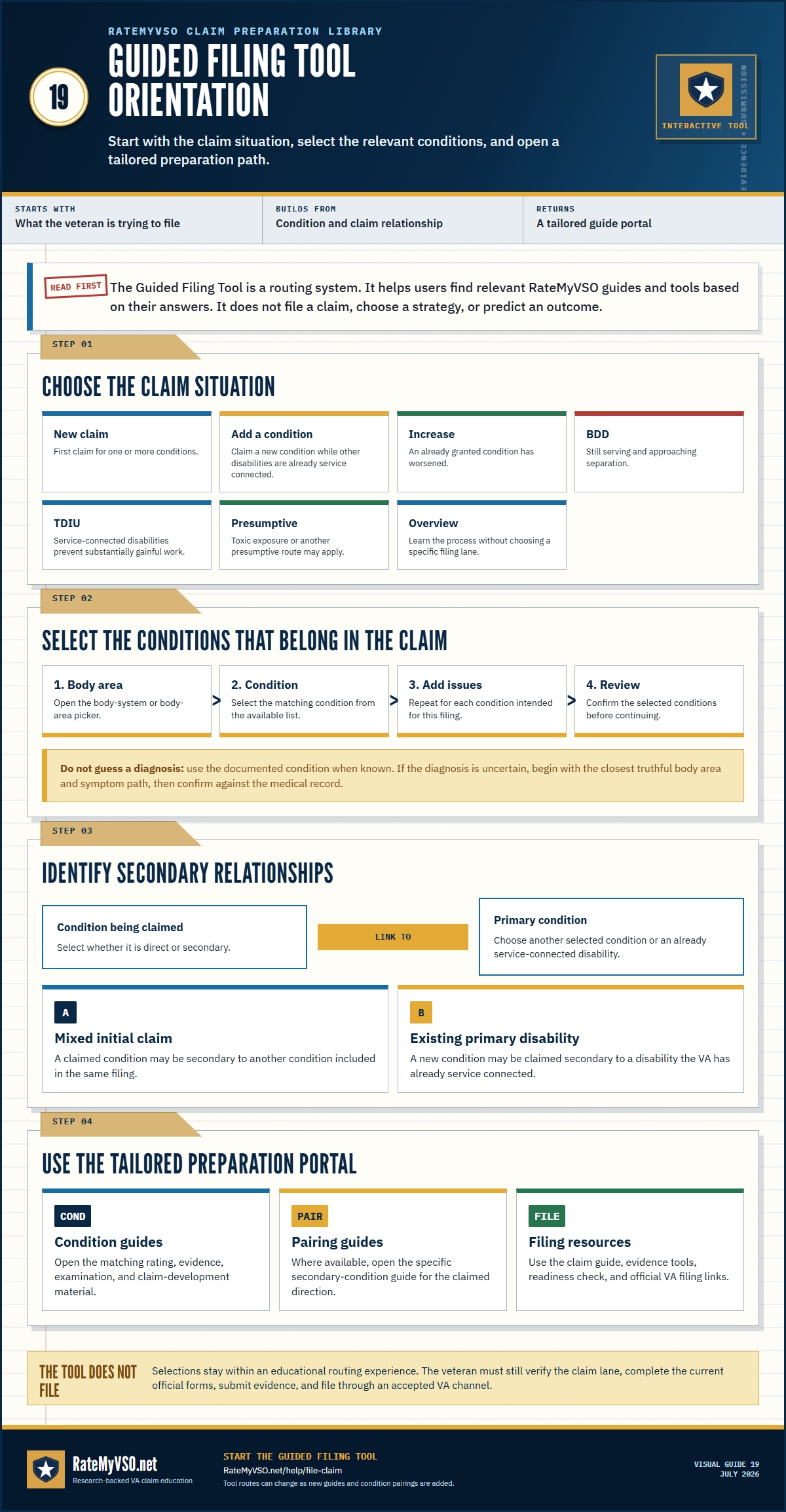
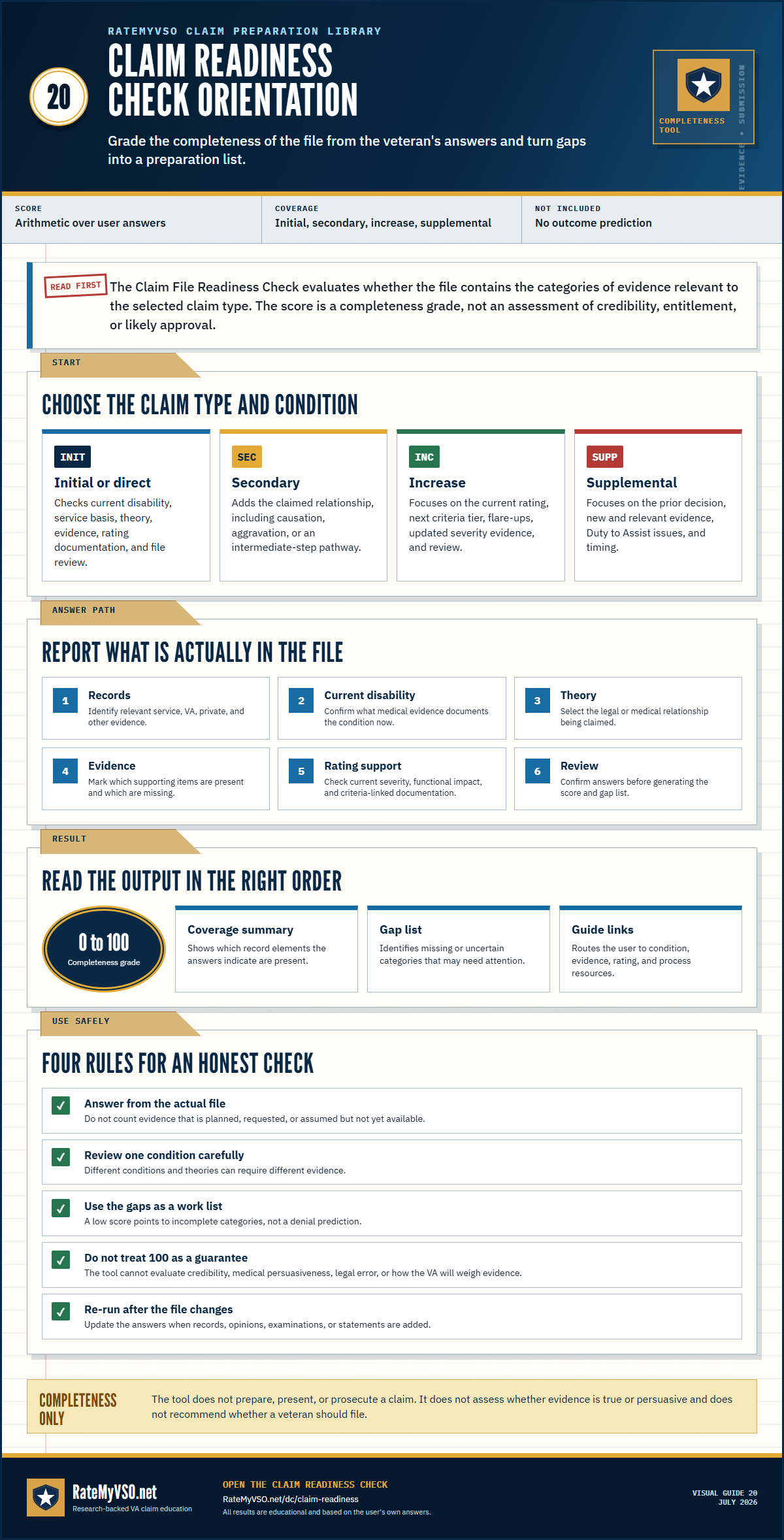
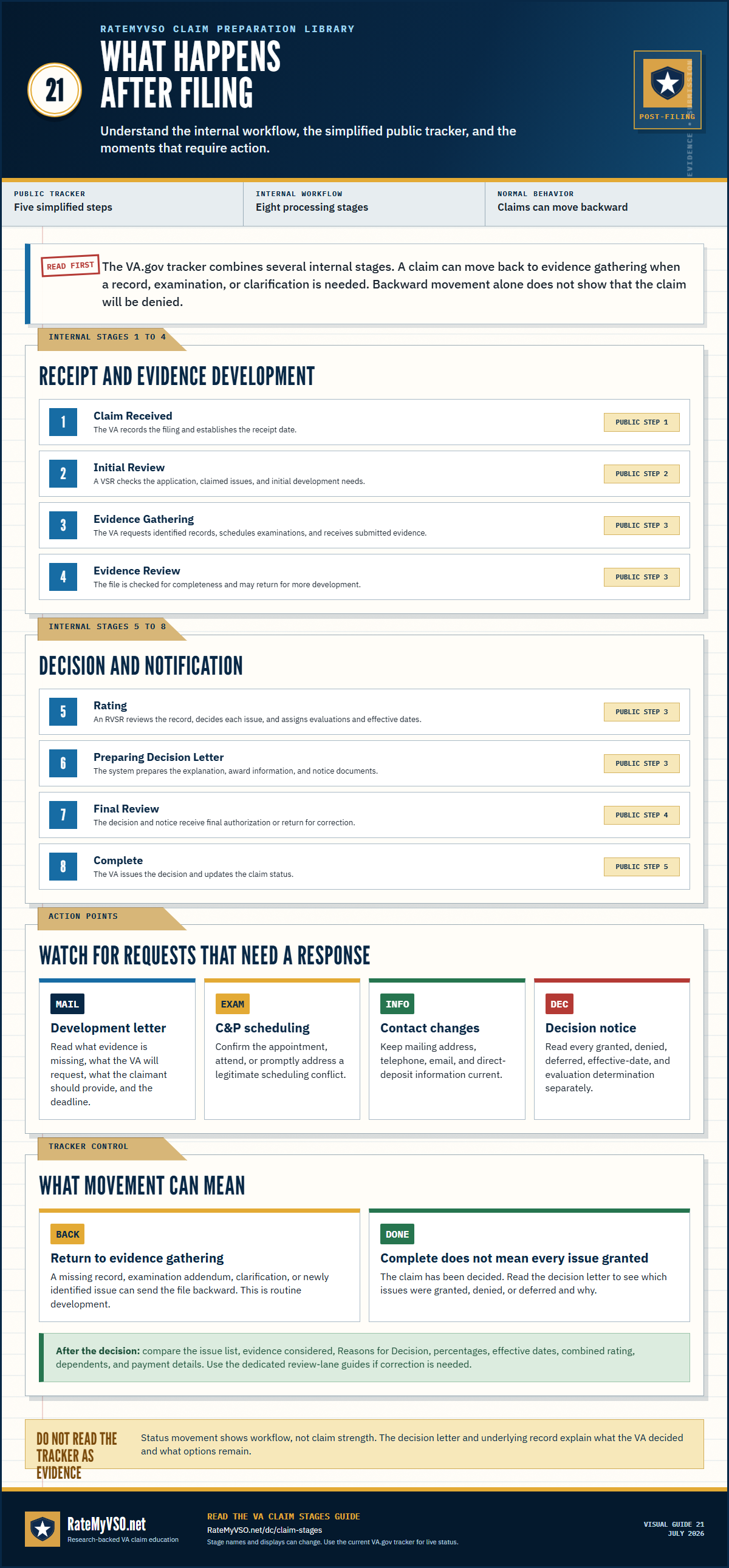
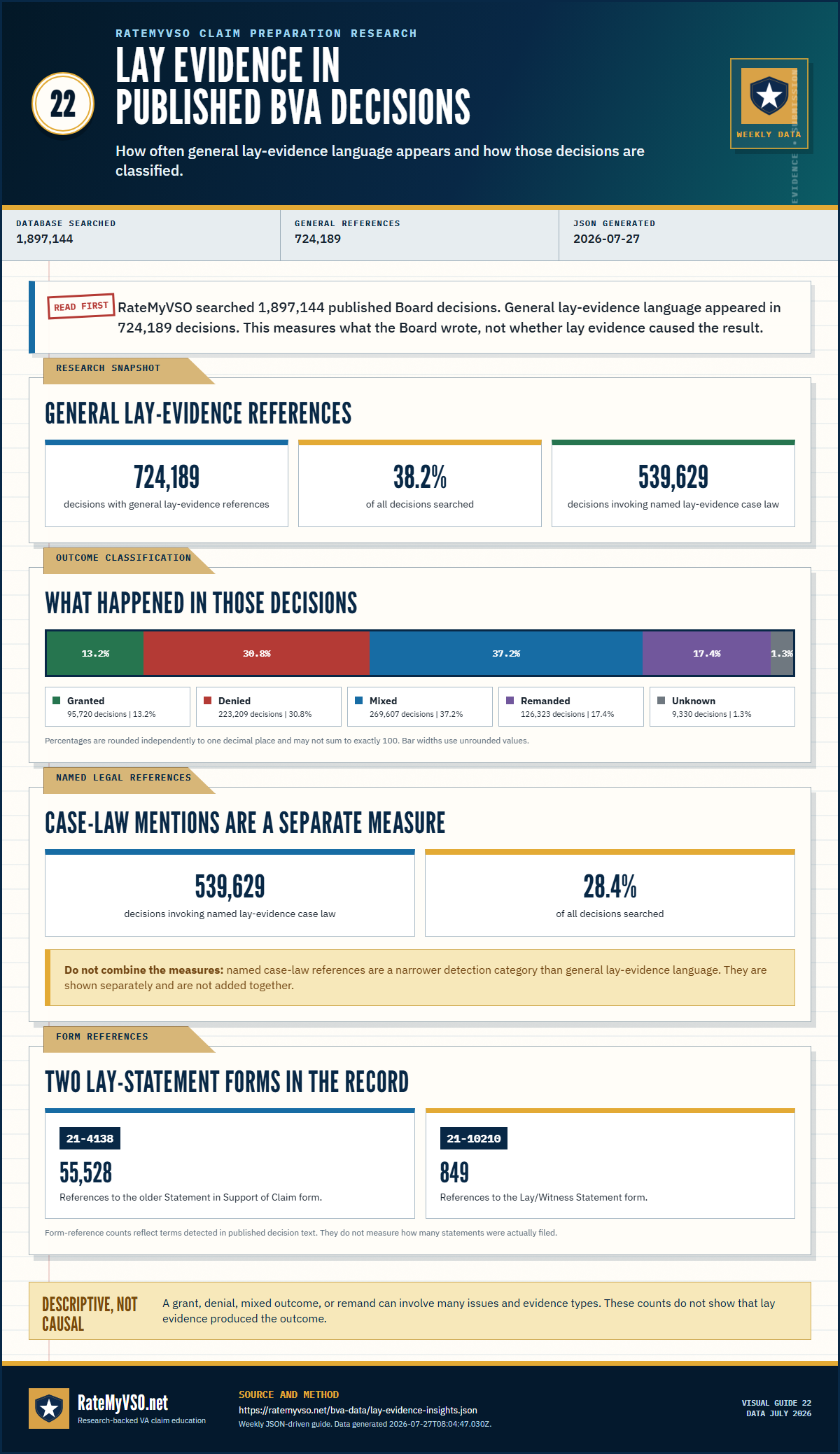
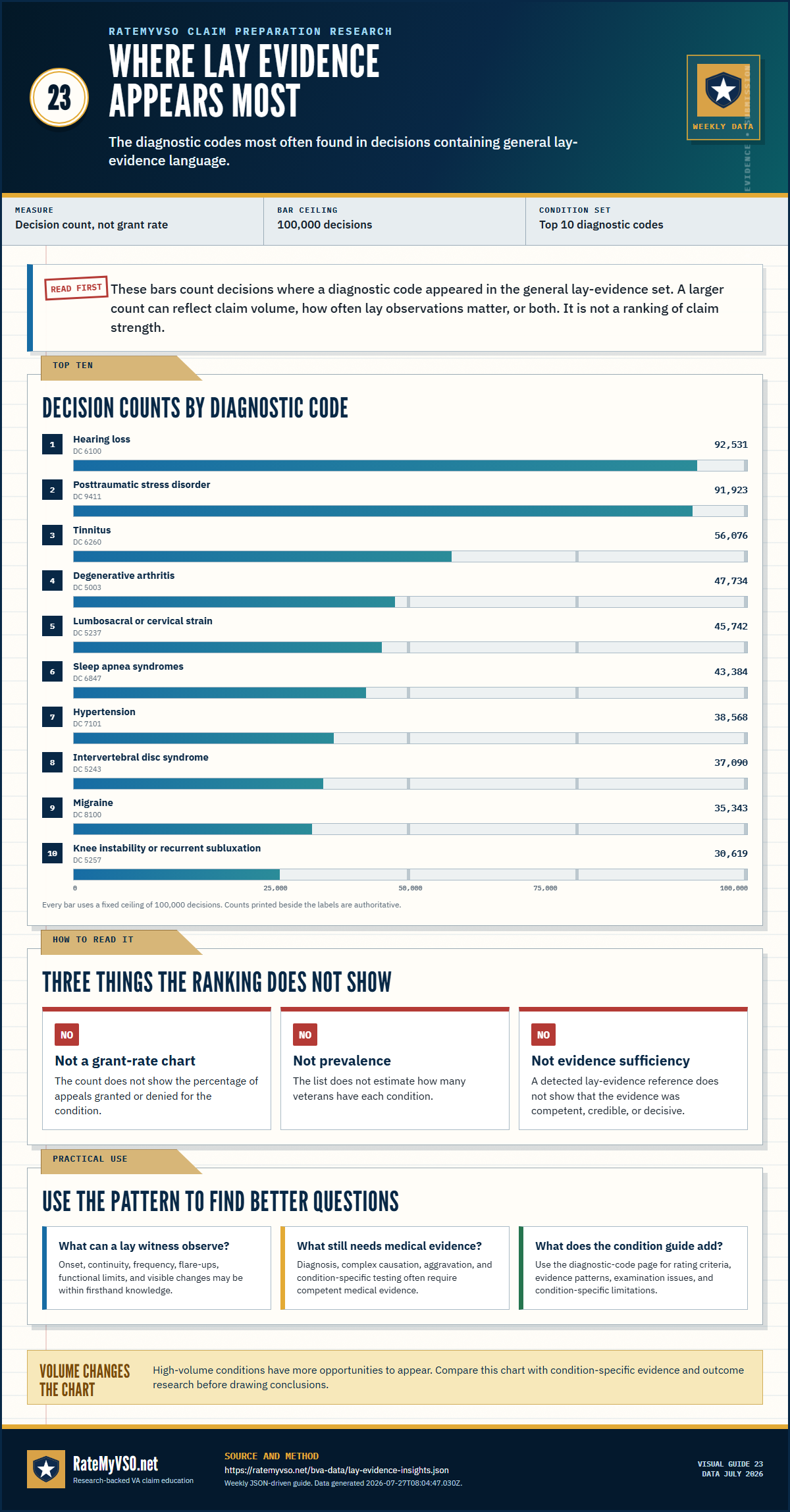
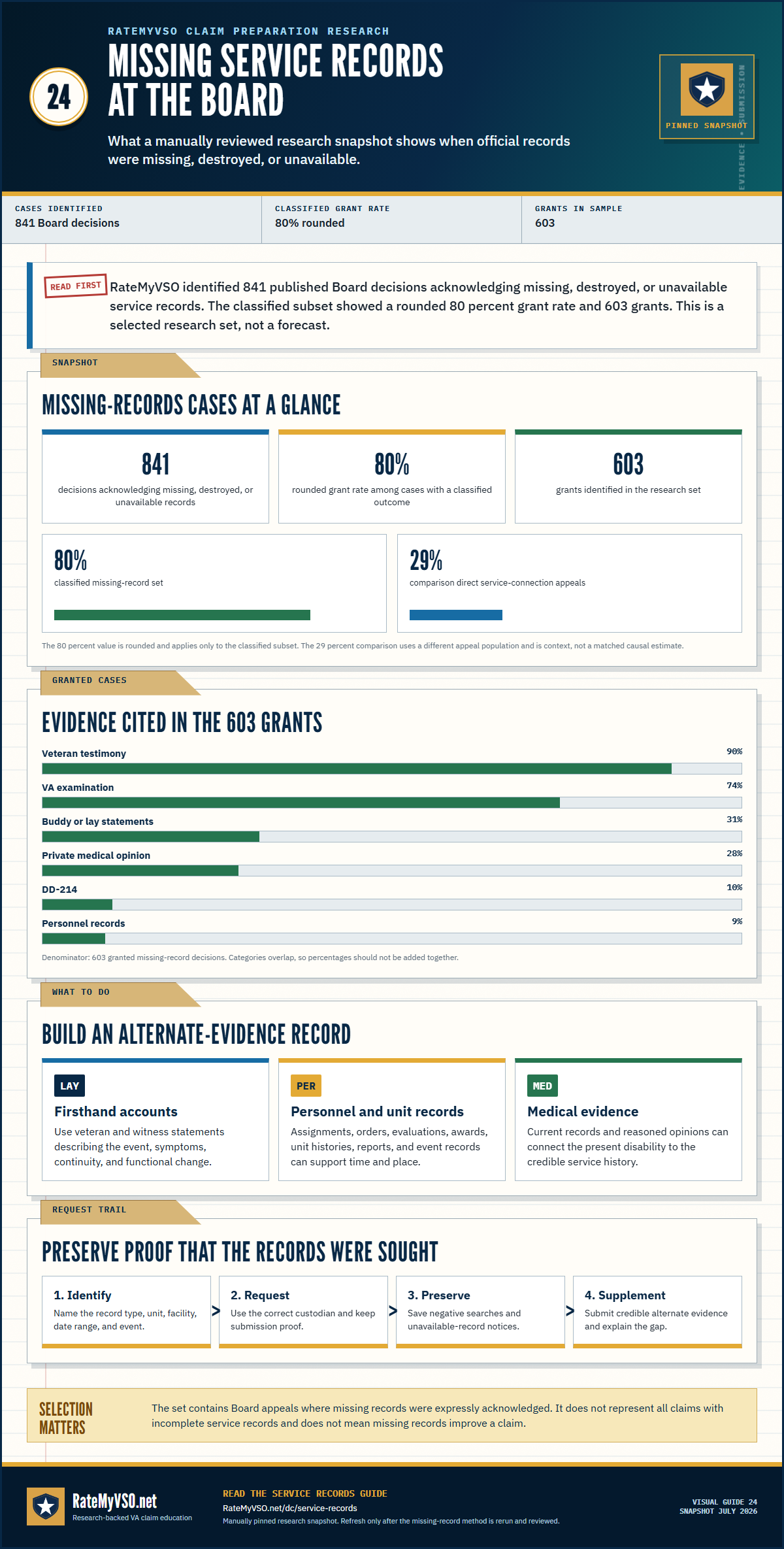
How to read these charts. The research charts count Board DECISIONS, not veterans: one veteran can appear in several decisions, so a count is never a headcount. A detected lay-evidence reference means the Board wrote about lay evidence in that decision. It does not show that the lay evidence was competent, credible, or that it caused the outcome. The ranked-conditions chart reports decision VOLUME only: it is not a grant rate, not how common a condition is among veterans, and not a measure of whether the evidence was enough. Every chart prints its own sample size, scale and date. None of this predicts an individual claim's outcome.