VA Disability Rating for Dermatitis or eczema (DC 7806)
Body system: SkinRegulation: 38 CFR § 4.118DBQ: DBQ DERM Skin Diseases

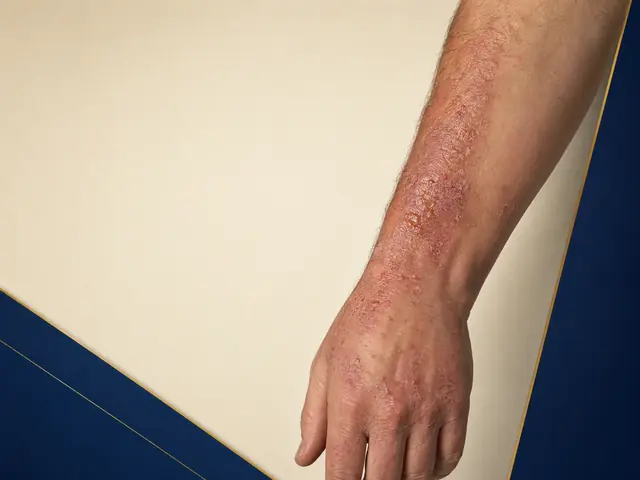
Dermatitis or eczema under DC 7806 covers chronic inflammatory skin conditions, atopic dermatitis (eczema), contact dermatitis (allergic and irritant), nummular dermatitis, dyshidrotic eczema (pompholyx), stasis dermatitis, seborrheic dermatitis, and other forms of chronic skin inflammation. The VA rates this condition under the General Rating Formula for the Skin (38 CFR § 4.118) from 0% to 60% based on either (a) the percentage of body or exposed-area surface affected by characteristic lesions, OR (b) the type and duration of systemic therapy required over the past 12 months, corticosteroids, phototherapy, retinoids, biologics, photochemotherapy/PUVA, or other immunosuppressives. Either route can reach each level: lesions on at least 5% but under 20% of the body or of exposed areas, or intermittent systemic therapy, is 10%; 20% to 40% of the body or exposed areas, or 6 weeks or more (not constant) of systemic therapy, is 30%; more than 40%, or constant or near-constant systemic therapy, is 60%. Topical-only treatment is 0% only when the lesions cover less than 5% of the body and of exposed areas; a larger affected area rates on its own even with topical treatment. The same formula applies to several other inflammatory and infectious skin conditions (DCs 7809, 7813-7816, 7820-7822, 7824). If the dermatitis leaves scarring or disfigurement of the head, face or neck, the regulation allows rating it as disfigurement (DC 7800) or scars instead of under this code, whichever is the predominant disability; the two are alternatives, not combined.

Rating levels

  • 60% — You qualify for 60% if your eczema or dermatitis is severe enough to meet either of these: characteristic skin lesions cover more than 40% of your entire body or more than 40% of your exposed areas (face, neck, hands), or you have needed strong systemic medications like corticosteroids, phototherapy, retinoids, biologics, PUVA, or other immunosuppressive drugs almost constantly over the past 12 months.
  • 30% — You qualify for 30% if either: characteristic skin lesions cover 20% to 40% of your entire body or 20% to 40% of your exposed areas, or you have needed systemic medications (corticosteroids, phototherapy, retinoids, biologics, PUVA, or other immunosuppressive drugs) for a total of 6 weeks or more, but not constantly, over the past 12 months.
  • 10% — You qualify for 10% if any of these apply: characteristic skin lesions cover at least 5% but less than 20% of your entire body; characteristic lesions cover at least 5% but less than 20% of your exposed areas; or you have needed intermittent systemic medications (corticosteroids, phototherapy, retinoids, biologics, PUVA, or other immunosuppressive drugs) for a total of less than 6 weeks over the past 12 months.
  • 0% — You qualify for 0% (a non-compensable rating) if both: you have needed no more than topical creams or ointments over the past 12 months, and your characteristic skin lesions cover less than 5% of either your entire body or your exposed areas. The condition is service-connected but is not currently disabling enough for monthly compensation.
  • Note — Instead of the levels above, dermatitis or eczema can be rated as disfigurement of the head, face or neck (DC 7800) or as scars (DC 7801, 7802, 7804 or 7805), whichever is the predominant disability. It is one or the other, not both combined.

Disclaimer: This tool is for informational purposes only and is not legal or medical advice. Always consult with your VSO representative or a qualified veterans benefits attorney for guidance on your specific claim.