VA Disability Rating for Paralysis of upper radicular group (DC 8510)
Body system: Neurological Conditions and Convulsive DisordersRegulation: 38 CFR § 4.124aDBQ: DBQ NEURO Peripheral Nerves
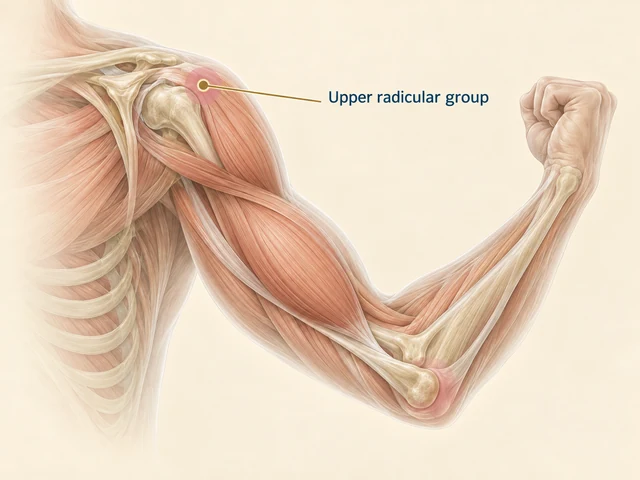
Diagnostic Code 8510 covers paralysis of the upper radicular group, the nerve roots from the fifth and sixth cervical levels of the neck that control the shoulder and elbow. With complete paralysis, all shoulder and elbow movements are lost or severely affected, while the hand and wrist are not affected. The VA rates complete paralysis at 70% for the dominant arm and 60% for the non-dominant arm. Incomplete paralysis is rated 50% (dominant) or 40% (non-dominant) when severe, 40% or 30% when moderate, and 20% for either arm when mild.
Rating levels
70% — You have complete paralysis of the upper radicular group (the nerve roots that control certain arm muscles), which means you've lost all or most movement in your shoulder and elbow. Your hand and wrist still work normally, but you cannot lift your arm, rotate your shoulder, or bend/straighten your elbow due to the nerve damage affecting the fifth and sixth cervical nerves in your neck.
60% — You have complete paralysis affecting the fifth and sixth cervical nerve roots, which leave the spine in the neck and control the shoulder and elbow, which means you've lost all or most movement in your shoulder and elbow. Your hand and wrist still work normally, but you cannot move your shoulder and elbow joints properly due to the nerve damage.
50% — The paralysis affecting your fifth and sixth cervical nerve roots is severe but not complete, meaning you have significant weakness and loss of function in your shoulder and upper arm muscles, but some movement or feeling may still remain. This typically causes major difficulty lifting your arm away from your body, rotating your shoulder, and bending your elbow, though you haven't lost all ability to move these areas. Your symptoms are serious enough to substantially limit your daily activities and work capacity, but you retain some partial function in the affected muscles.
40% — You have severe but not complete paralysis affecting the nerves that control your shoulder and upper arm muscles (the fifth and sixth cervical nerve roots). This means you have significant weakness and limited movement in your shoulder, making it very difficult to lift your arm away from your body or rotate your shoulder, but you still have some muscle function remaining rather than total paralysis.
40% — You have moderate nerve damage affecting the fifth and sixth cervical nerves in your neck, which control shoulder and upper arm movement. This means you have significant but not complete weakness in lifting your arm away from your body and bending your elbow, along with some numbness or tingling in your shoulder and thumb side of your arm. Your symptoms interfere with daily activities but you still have some useful function in the affected arm.
30% — Your nerve damage to the fifth and sixth cervical nerves (nerves in your neck that control shoulder and upper arm movement) is partially affecting your ability to move and function, but you still have some strength and movement remaining. You experience noticeable weakness and limited range of motion in your shoulder, upper arm, but the paralysis isn't complete or severe.
20% — You have mild, partial paralysis affecting the nerves that control your shoulder and upper arm muscles (specifically the 5th and 6th cervical nerve roots). This means you experience some weakness and limited movement in your shoulder, but you still have significant function and can perform most activities, just with some difficulty or reduced strength.
20% — You have mild, partial paralysis affecting the nerves that control your shoulder and upper arm muscles (specifically the 5th and 6th cervical nerve roots). This means you experience some weakness and limited movement in your shoulder, but you still have significant function and can perform most activities, just with some difficulty or reduced strength.
Disclaimer: This tool is for informational purposes only and is not legal or medical advice. Always consult with your VSO representative or a qualified veterans benefits attorney for guidance on your specific claim.