Peripheral Neuropathy Secondary to Diabetes
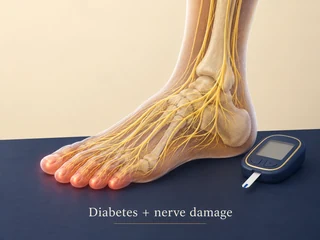
Peripheral neuropathy claimed as secondary to diabetes, most often coded to the sciatic nerve, is the single highest-volume secondary pairing under diabetes anywhere in the Board's published record: 7,653 issues, more than any other diabetic complication veterans file. It's granted 55 percent of the time decided issues reach a merits ruling. The nerve-damage mechanism, why a normal or borderline EMG doesn't end your claim, why there's no rule requiring your diabetes diagnosis to predate your neuropathy, five recent Board decisions dissected, and the evidence that separates the wins.
Start with the essentials
- 01Service Connection
The ways a secondary connection can be established for this pairing.
- 02Diagnosis and Evidence
Common symptoms and the evidence that supports this kind of claim.
- 03Your History
What you experienced, what others observed, and what treatment changed.
Understand the claim
The Legal Path: 38 CFR § 3.310, and Why "Specifically Relate" Is the Wrong Standard
A secondary service connection claim needs three things (Wallin v. West, 11 Vet. App. 509, 512 (1998)):
- A current disability: a diagnosed peripheral neuropathy, which for DC 8520 means a nerve conduction study or EMG, though not required.
- A service-connected primary: the diabetes rating itself.
- A nexus: medical evidence connecting the two.
Two recurring points separate the wins from the losses in this specific pairing.
Symptoms and rating
If Granted: The Rating
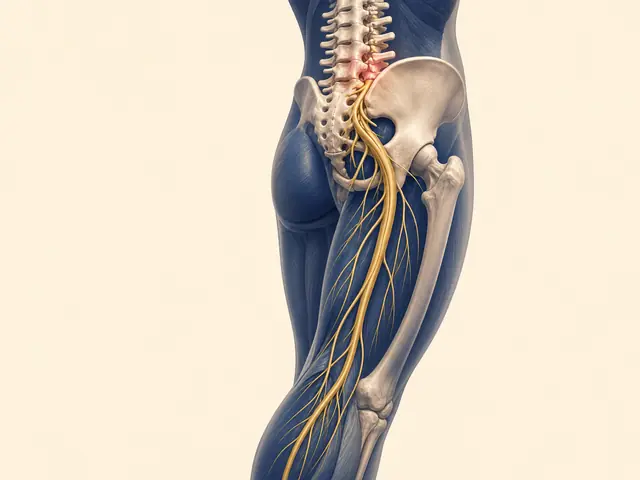
Peripheral nerve conditions are rated under 38 CFR § 4.124a by the specific nerve involved and the severity of impairment, mild, moderate, moderately severe, or severe incomplete paralysis, up to complete paralysis. DC 8520 (sciatic nerve) is the most common code for diabetic lower-extremity neuropathy, but femoral (DC 8526), peroneal (DC 8521), and upper-extremity nerves can also be involved, sometimes several at once. When both legs are affected, the bilateral factor applies. Each affected nerve is typically rated separately, then combined under VA math rather than added, run it in the VA Math Calculator. Full complication detail for diabetes is in the general Diabetes Claims Guide.
Evidence and Board research
The Numbers, from 1.9M Appeals
In the Board's published decisions, peripheral neuropathy (typically coded to DC 8520, paralysis of the sciatic nerve, the most common code used for diabetic lower-extremity neuropathy) claimed as secondary to diabetes (DC 7913) outnumbers every other diabetes-secondary claim in this site's index by a wide margin.
How those 7,653 issues came out
Diabetic peripheral neuropathy can affect several nerves at once (sciatic, femoral, peroneal), often bilaterally, and the Board's published grants below never once turned on the nerve-conduction study alone. Every winning file paired a competent medical opinion with either a specific mechanism, a rebuttal of an alternative cause, or a factual correction the VA's own exam had gotten wrong.
Five Recent Board Decisions Dissected
All five decisions below granted service connection for peripheral neuropathy secondary to diabetes, decided May 2021 through April 2025 before five different Veterans Law Judges. Published Board decisions are not precedent, but the patterns repeat.
"Multifactorial" and a temporal gap, both rejected · Citation A21009019 (May 10, 2021), Hearing docket
The record: bilateral upper- and lower-extremity neuropathy. Three VA exams (2015, 2019, 2020) each gave negative opinions, calling the neuropathy "multifactorial", pointing to a colon-cancer chemotherapy history and cardiovascular disease, and stating the examiner couldn't "specifically relate" it to diabetes. The exams also noted an eight-year gap between neuropathy onset (2004, after colon-cancer surgery) and the diabetes diagnosis (2012).
Why it won: the Board rejected "specifically relate" as the wrong standard, the actual bar is equipoise. It also found the temporal gap irrelevant: "service connection on a secondary basis does not include a temporal requirement... a primary disability need not be service connected, or even diagnosed, at the time the secondary condition is incurred" (citing Frost v. Shulkin).
A straightforward positive-evidence stack, nothing on the other side · Citation 23028950 (May 17, 2023), legacy docket, widow substituted as claimant
The record: a 2009 private endocrinology letter linked the veteran's diabetes to his peripheral neuropathy, VA treatment notes documented "occasional peripheral neuropathy due to DM" since 2001, and a December 2009 VA exam confirmed the diabetic-neuropathy diagnosis. The veteran's widow, substituted as claimant after his 2011 death, testified to his dropped items and inability to wear dress shoes.
Why it won: with a private nexus letter, corroborating VA treatment notes, and a confirming VA exam all pointing the same direction, and no adequate negative opinion anywhere in the file, the claim was granted on the strength of an unopposed record.
A "normal" EMG that ignored a medication masking the symptoms · Citation A24023922 (May 8, 2024), Hearing docket
The record: an August 2018 nerve conduction study came back a "normal test result" with "borderline low amplitude... suggestive of very mild sensory neuropathy," which a VA examiner used as the basis for a negative opinion the following October. The veteran had been taking gabapentin, a neuropathic-pain medication, throughout 2018, testimony at his hearing raised this directly. Multiple VA treatment records independently documented "diabetic neuropathy."
Why it won: the negative opinion never addressed whether the gabapentin was masking the true severity of the veteran's symptoms at the time of testing, a gap that undermined its probative value. Combined with the independent VA treatment-record documentation, the Board found the record supported a grant.
Pre-diabetes bloodwork bridges the timeline gap · Citation A24012423 (Mar. 13, 2024), Hearing docket
The record: a September 2022 VA exam found the neuropathy predated the veteran's formal Type II diabetes diagnosis (December 2021), since he'd been on gabapentin since before 2016. A private physician assistant's opinion countered that the neuropathy's onset actually coincided with the veteran's pre-diabetes diagnosis, not the later formal diabetes diagnosis, supported by the veteran's hearing testimony that he'd had pre-diabetic bloodwork since 2005.
Why it won: the VA exam was discounted for failing to address the pre-diabetes history at all. A formal diagnosis date is not the same as the actual onset of the underlying metabolic disease, and the pre-diabetes evidence bridged what otherwise looked like a fatal timeline problem.
Rationale, not direction, decides which opinion wins · Citation A25038023 (Apr. 24, 2025), Hearing docket, herbicide exposure conceded
The record: three opinions were discounted in this file: an August 2021 VA opinion blamed B12 deficiency using stale 2013 labs with no current testing; a March 2022 private opinion, though positive for the veteran, was conclusory with no supporting rationale and was also given low weight; and a second March 2022 VA opinion cited unspecified "multiple other explanations" without naming or ruling any of them out. The opinion that won was a March 2025 private nurse-practitioner opinion citing a November 2021 nerve conduction study showing small fiber neuropathy, and affirmatively ruling out B12 deficiency and alcohol use with current lab work.
Why it won: probative value turned on rationale and current data, not on which side offered the opinion or which direction it favored. A positive opinion with no reasoning lost just as readily as a negative one built on outdated records.
The pattern across all five
- "Multifactorial" and "can't specifically relate" are not denials on the merits, they're a mismatch between the examiner's stated standard and the actual legal bar of equipoise.
- Timing arguments routinely fail when pre-existing bloodwork, pre-diabetes history, or simply the settled no-temporal-requirement rule fills the gap.
- A "normal" or borderline EMG is not fatal if the opinion relying on it ignores a confound like medication masking symptoms at the time of testing.
- Named-but-unexcluded alternative causes lose, an opinion has to affirmatively rule out a competing explanation with current evidence, not just mention it.
The Evidence Checklist
What the winning files contained, item by item.
- A documented neuropathy diagnosis: a nerve conduction study or EMG helps, but is not required, several grants above won without one, or despite a normal/borderline result.
- Address medication masking directly: if you're on gabapentin or a similar neuropathic-pain medication, note it and its potential to understate your true symptom severity at the time of any nerve-conduction testing.
- Current lab work, not old records: if your file has a competing explanation on the table (B12 deficiency, alcohol use, an unrelated surgery), current testing that rules it out carries far more weight than a stale reference to old labs.
- Pre-diabetes history if your timeline looks backwards: pre-diabetic bloodwork, sometimes years before a formal Type II diagnosis, can bridge an apparent gap between neuropathy onset and diagnosis date.
- Both causation and aggravation addressed: a nexus opinion silent on aggravation is incomplete under the same doctrine that governs every other secondary claim on this site.
Across all published DC 8520 decisions, files with a private medical opinion track a different grant rate than VA-exam-only files, shown live below.
Why VA Denies These Claims, and What the Board Said Back
Each rationale below is drawn from the actual VA examinations in the cases above, alongside how the Board answered it.
| VA examiner's rationale | How the Board answered it |
|---|---|
| Neuropathy is "multifactorial"; examiner "cannot specifically relate" it to diabetes. | Wrong legal standard. The bar is equipoise, "at least as likely as not," not certainty (A21009019). |
| Neuropathy was diagnosed years before the diabetes diagnosis. | No temporal requirement exists for secondary service connection (Frost v. Shulkin); pre-diabetes bloodwork can bridge the gap (A21009019, A24012423). |
| Nerve conduction study came back normal or borderline. | Doesn't defeat the claim if the opinion relying on it ignores a confound, like a neuropathic-pain medication masking symptom severity at testing (A24023922). |
| An alternative cause exists (B12 deficiency, prior surgery, unspecified "other explanations"). | Naming a cause is not ruling it out. An opinion citing an alternative must exclude it with current evidence, not stale records or a bare assertion (A25038023). |
| (From the veteran's side) a positive private opinion with no stated rationale. | Given reduced weight regardless of favoring the veteran; conclusory reasoning loses on either side of the ledger (A25038023). |
Across the Board's full record for peripheral neuropathy, the most common denial reason is shown live below.
Secondary relationships
The Mechanism: How Diabetes Connects to Nerve Damage
Diabetic peripheral neuropathy is one of the best-documented complications of diabetes in the medical literature, but the case law shows the actual fight is rarely about whether the general mechanism exists. It's about whether the specific opinion in the veteran's file addresses the veteran's specific facts.
1. Chronic hyperglycemia damages small blood vessels and nerve fibers directly
Sustained high blood sugar injures the vasa nervorum, the small blood vessels that supply peripheral nerves, and directly damages nerve fibers through metabolic pathways. The result is the classic "stocking-glove" pattern of numbness, tingling, and pain, most often starting in the feet.
2. The landmark trial VA's own examiners rarely cite
The Diabetes Control and Complications Trial, a landmark 1993 study, found intensive glycemic control reduced the onset of clinical neuropathy by 60 percent compared to conventional treatment, alongside similar reductions in retinopathy and nephropathy. See DCCT Research Group, The Effect of Intensive Treatment of Diabetes on the Development and Progression of Long-Term Complications in Insulin-Dependent Diabetes Mellitus, N. Engl. J. Med. 329:977-986 (1993). The flip side of that finding is direct evidence for causation: poor glycemic control measurably raises neuropathy risk.
3. The two conditions don't need to be diagnosed in any particular order
A recurring argument in VA's denials is that the neuropathy was diagnosed years before diabetes, so it can't be secondary to it. That argument misunderstands the law. Secondary service connection carries no requirement that the primary condition predate the secondary one in diagnosis; a primary disability "need not be service connected, or even diagnosed, at the time the secondary condition is incurred." Frost v. Shulkin, 29 Vet. App. 131 (2017). Pre-diabetes bloodwork, sometimes documented years before a formal Type II diagnosis, has bridged exactly this kind of gap in published grants below.
"Can't specifically relate it" is not the legal bar
Several VA exams reviewed for this guide declined to connect neuropathy to diabetes because the condition was "multifactorial," citing competing causes like chemotherapy or cardiovascular disease, and stated they "could not specifically relate" the neuropathy to diabetes. The Board has rejected that framing directly: the correct standard is equipoise under 38 U.S.C. § 5107(b), "at least as likely as not," not certainty. An examiner demanding more than that has applied the wrong legal test (Bd. Vet. App. A21009019).
An alternative cause must actually be ruled out, not just floated
Naming a competing explanation, low B12, a cervical spine surgery, alcohol use, "other unspecified causes", is not the same as ruling it out. In one published grant, the Board found a VA opinion blaming B12 deficiency inadequate because it relied on stale, years-old labs rather than current testing, while the winning private opinion affirmatively excluded B12 and alcohol with current labs (Bd. Vet. App. A25038023).
The Wider Data
Where peripheral neuropathy sits among the conditions veterans claim as secondary to diabetes. Live from the Board's published decisions, refreshed weekly:
Bars are BVA grant rates among decided issues for each condition claimed as secondary to diabetes, with issue counts. Descriptive of the published record, not a prediction about any one claim. Explore the underlying decisions in BVA Decision Search.
Prepare and take the next step
Prepare: your own working pages
Optional. These are your own notes, in your own words. They are not a VA form, they are not sent to the VA, and nothing here is a medical finding or a prediction about your claim.
Three reminders while you prepare
- Keep the two conditions separate
Record the history, diagnosis, symptoms, and treatment for Diabetes and Peripheral Neuropathy separately before describing the possible relationship. Go to this part
- Ask about causing and worsening separately
A clinician may need to address whether Diabetes caused Peripheral Neuropathy, whether it worsened it, and what other explanations the record shows. Go to this part
- Build the timeline from records you have
Mark missing or unverified records honestly. Research from published Board decisions describes the record reviewed; it does not predict an individual claim. Go to this part
Sign in or create an account to save your answers and come back to them later. You can fill these in and print them without an account.
Two-condition timeline
Peripheral Neuropathy: symptoms and daily function
Provider questions about the relationship
Records and unanswered questions
Decision-letter reading sheet
Quick Checklist Before You File
- Documented neuropathy diagnosis, ideally with a nerve conduction study or EMG, though not required.
- Any pre-diabetes bloodwork or history if your neuropathy diagnosis predates your formal diabetes diagnosis.
- Current lab work ruling out any competing explanation on the table (B12 deficiency, alcohol use, an unrelated surgery).
- Note any gabapentin or similar neuropathic-pain medication use, especially around the time of any nerve-conduction testing.
- A nexus opinion written to the equipoise standard, "at least as likely as not," addressing both causation and aggravation.
- Every affected nerve identified (sciatic, femoral, peroneal, and whether it's bilateral).
For the mechanics of filing itself, see the Standard Claim Guide and the Fully Developed Claim Guide.
Do's and Don'ts
A condensed version of the pattern across the five decisions and the denial rationales above.
- Get a documented neuropathy diagnosis in your file. A nerve conduction study or EMG helps, but several grants above won without one, or despite a normal or borderline result.
- If you're on gabapentin or a similar neuropathic-pain medication, document it and its potential to mask your true symptom severity at the time of any nerve-conduction testing.
- If a competing cause is on the table (B12 deficiency, an unrelated surgery, alcohol use), get current lab work that actually rules it out, not a reference to old records.
- Pull any pre-diabetes bloodwork or history if your neuropathy diagnosis looks like it predates your formal diabetes diagnosis, that history can bridge the gap.
- Make sure the nexus opinion addresses both causation and aggravation, and identifies every nerve potentially affected (sciatic, femoral, peroneal, often bilaterally).
- Don't accept "multifactorial" or "cannot specifically relate" as the real legal question, the standard is equipoise, "at least as likely as not," not certainty.
- Don't assume a temporal gap, neuropathy diagnosed before diabetes, sinks the claim. Secondary service connection has no requirement that the primary predate the secondary in diagnosis.
- Don't assume a positive private opinion automatically wins, a conclusory opinion with no stated rationale gets discounted just like a weak negative one.
- Don't let a named alternative cause stand unchallenged, an opinion has to affirmatively rule it out with current evidence, not just mention it.
- Don't treat a "normal" EMG as the end of the analysis without checking whether a medication or other confound could have masked the result.
The Claims Process, Step by Step
A secondary claim moves through the same pipeline as any other. Understanding who does what helps you know who to contact and what to expect.
- You file the claim, naming diabetes as the service-connected primary and peripheral neuropathy as secondary. Directly with VA, through VA.gov, or with an accredited representative's help.
- VA assigns a Veteran Service Representative (VSR) to develop the claim: gather your service treatment records, VA and private medical records, and order a C&P exam if needed.
- The C&P exam is conducted, usually with the examiner asked to address the specific secondary theory (causation and aggravation both), and ideally which nerves are involved.
- The file goes to a Rating Veteran Service Representative (RVSR), the "rater," who weighs the medical evidence and decides service connection and, if granted, the rating percentage for each affected nerve.
- VA issues the decision letter stating the outcome and the reasoning.
- If denied or under-rated, you choose an appeal lane, Supplemental Claim, Higher-Level Review, or a Board appeal, covered below.
Who's who: VSO vs. VSR vs. Rater vs. C&P Examiner
Your VSO
An accredited representative, agent, or attorney. Not a VA employee. Helps prepare and file, and can represent you on appeal. Has no authority to decide your claim.
VSR
VA staff who develops the claim: gathers records and schedules the exam. Does not decide the rating.
Rater (RVSR)
VA staff who reviews the complete file and makes the actual decision on service connection and percentage.
C&P Examiner
Conducts the exam and any nerve-conduction testing, and where asked, gives a nexus opinion. Does not decide the claim, but as the case dissections above show, the opinion's reasoning and legal framing carry real weight.
For the full walkthrough, see Inside Your Claim and Claim Stages.
DBQs and Your C&P Exam
A Disability Benefits Questionnaire (DBQ) is the standardized form the examiner completes for your condition. See the DBQ Guide for how these forms work and whether a private DBQ from your own doctor can be submitted instead of relying solely on a VA exam. For what to expect and how to prepare, see the C&P Exam Prep Guide, and be specific about your gabapentin or other neuropathic-pain medication use, which nerves feel affected, and whether symptoms have changed over time; several of the grants above turned on exactly that kind of detail being in the record.
Reading Your Decision Letter, and What to Do If Denied
Your decision letter has a narrative "reasons and bases" section and a codesheet with the rating and effective date. See the Reading Your Decision Letter Guide or use the Letter Interpreter tool to decode your own letter. If denied, or if the reasoning applies the "multifactorial" or "cannot specifically relate" framing discussed above, you have three main lanes:
- Supplemental Claim: refile with new and relevant evidence, such as current lab work ruling out an alternative cause, or pre-diabetes history bridging a timeline gap. See Supplemental Claim Guide.
- Higher-Level Review (HLR): a senior reviewer looks at the same evidence again, useful if the denial rested on a legal error like demanding certainty instead of equipoise. See HLR Guide.
- Board Appeal: your case goes to a Veterans Law Judge, with a direct review, evidence, or hearing docket. See Board Appeal Guide.
Not sure which lane fits? See the Appeals decision guide for a side-by-side comparison.
After You Win: Maintaining Your Rating
Keep your treatment for both diabetes and neuropathy consistent, ongoing prescriptions, follow-up visits, and any nerve-conduction results, protects you if VA schedules a future reexamination. See Protect Your Rating for when a rating becomes protected and Future Reexaminations for what triggers one. If your neuropathy worsens or spreads to additional nerves, you can file for an increased rating, see the Rating Increase Guide.
References and related resources
Frequently Asked Questions
Why is this the single biggest secondary claim under diabetes?
Volume, 7,653 published issues, more than any other diabetes-secondary pairing in this site's index, reflecting how common diabetic peripheral neuropathy is as a real medical complication. The 55 percent grant rate is solid but not automatic; the losses in this pool consistently trace back to a VA opinion that either applied the wrong legal standard or left a real gap in its reasoning that the veteran's side didn't close.
My EMG or nerve conduction study came back normal. Does that end my claim?
Not necessarily. In one published grant, a "normal" test with a borderline finding was the basis for a negative VA opinion that never addressed the veteran's gabapentin use, a medication that can mask true symptom severity at the time of testing. The Board discounted the opinion on that gap (A24023922).
My neuropathy was diagnosed before my diabetes. Can I still win?
Yes. Secondary service connection carries no requirement that the primary condition predate the secondary one in diagnosis (Frost v. Shulkin, 29 Vet. App. 131 (2017)). Pre-diabetes bloodwork, documented years before a formal diagnosis, has bridged this exact gap in published grants.
My VA exam says my neuropathy is "multifactorial" and can't be specifically related to diabetes. Is that a real denial?
Read it carefully. The Board has rejected "cannot specifically relate" as the wrong legal standard; the actual bar is equipoise, "at least as likely as not," not certainty (A21009019).
Does it matter which nerve is affected?
The DC code changes (sciatic 8520, femoral 8526, peroneal 8521, and others), and diabetic neuropathy commonly affects more than one nerve, often bilaterally. The underlying secondary-connection legal theory is the same regardless of which nerve is coded.
Do I need a private doctor to win, or can VA's own records carry the claim?
Either can work. One grant above ran entirely on a private endocrinology letter and corroborating VA treatment notes with no competing negative opinion in the file. What consistently mattered across all five cases was whether the reasoning, whichever side it came from, actually engaged the veteran's specific facts.
Sources
- Bd. Vet. App. A21009019 (May 10, 2021); 23028950 (May 17, 2023); A24023922 (May 8, 2024); A24012423 (Mar. 13, 2024); A25038023 (Apr. 24, 2025) (published, non-precedential).
- 38 U.S.C. §§ 1110, 1131, 5107; 38 CFR §§ 3.102, 3.303, 3.310, 4.124a (peripheral nerve codes including DC 8520), 4.119 (DC 7913).
- Wallin v. West, 11 Vet. App. 509 (1998); Allen v. Brown, 7 Vet. App. 439 (1995) (en banc); Frost v. Shulkin, 29 Vet. App. 131 (2017); Shedden v. Principi, 381 F.3d 1163 (Fed. Cir. 2004); Holton v. Shinseki, 557 F.3d 1362 (Fed. Cir. 2009); Ward v. Wilkie, 31 Vet. App. 233 (2019); Barr v. Nicholson, 21 Vet. App. 303 (2007); Gilbert v. Derwinski, 1 Vet. App. 49 (1990).
- Diabetes Control and Complications Trial (DCCT) Research Group, The Effect of Intensive Treatment of Diabetes on the Development and Progression of Long-Term Complications in Insulin-Dependent Diabetes Mellitus, N. Engl. J. Med. 329:977-986 (1993), PMID 8366922.
- Aggregate outcome counts: RateMyVSO index of published BVA decisions (as of July 2026 for the static chart; live widgets refresh weekly).