Burn Pit / Airborne Hazards Presumption
The Honoring our PACT Act of 2022 (Pub. L. 117-168) created a new statutory presumption at 38 U.S.C. 1119 for veterans exposed to airborne hazards including burn-pit smoke, particulate matter, and other contaminants during service in Southwest Asia or other covered post-9/11 locations. This page reproduces the qualifying-service rules and the full list of presumptive conditions.
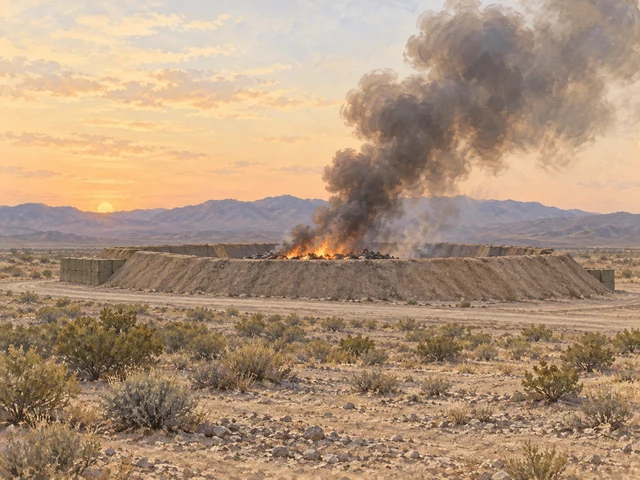
How the presumption works
The PACT Act presumption has the same two-part structure as other VA presumptions:
- Exposure presumption. A veteran with qualifying service is presumed to have been exposed to airborne hazards (including burn-pit emissions, particulate matter, and other airborne toxins) during that service.
- Disease presumption. If the veteran later develops one of the listed diseases, that disease is presumed to be service-connected, even without proof of a direct nexus to a specific exposure event.
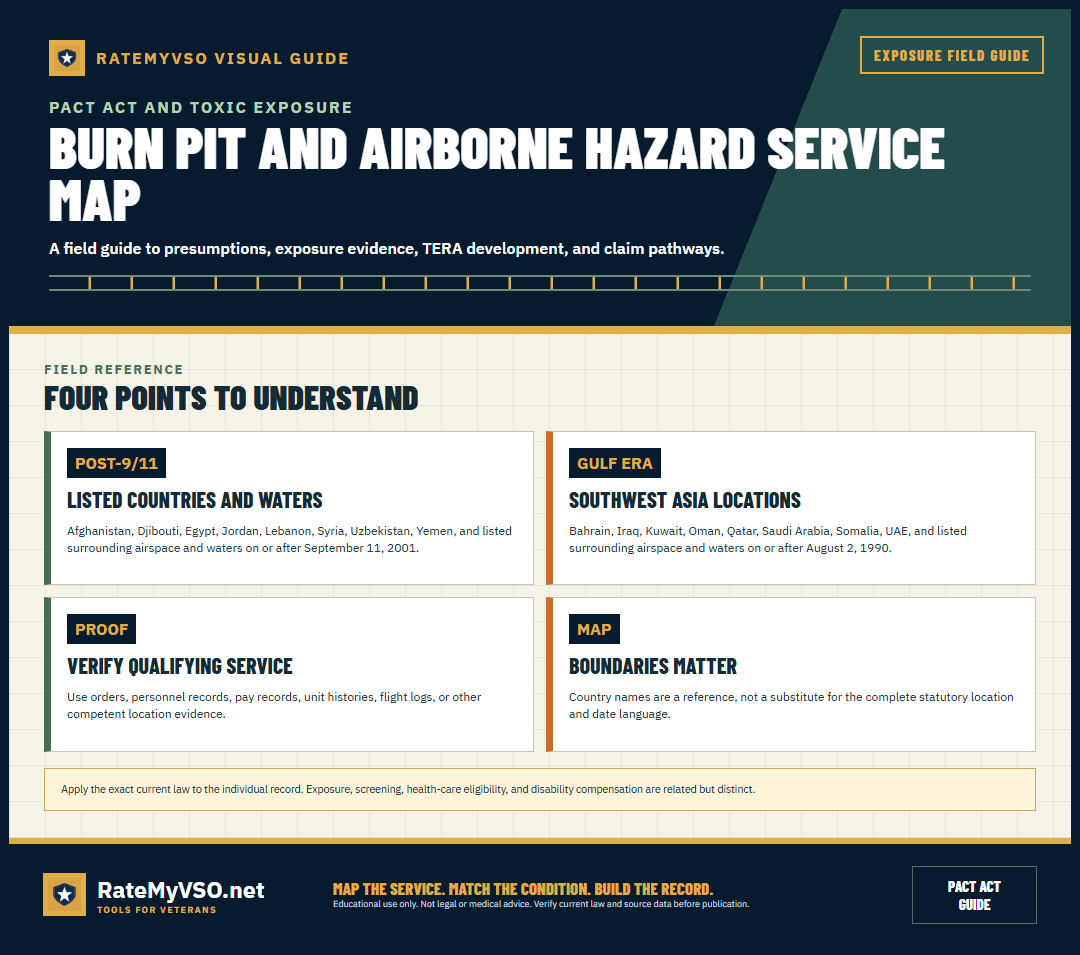
Qualifying service (38 USC 1119(a))
Southwest Asia theater of operations
Active service on or after August 2, 1990 in any of the following:
- Bahrain
- Iraq
- Kuwait
- Oman
- Qatar
- Saudi Arabia
- Somalia
- The United Arab Emirates
- The airspace above any of these locations
Other covered locations
Active service on or after September 11, 2001 in any of the following:
- Afghanistan
- Djibouti
- Egypt
- Jordan
- Lebanon
- Syria
- Yemen
- Uzbekistan
- The airspace above any of these locations
The Secretary of Veterans Affairs may add additional covered locations and periods by regulation; the current covered list is in 38 CFR 3.320.
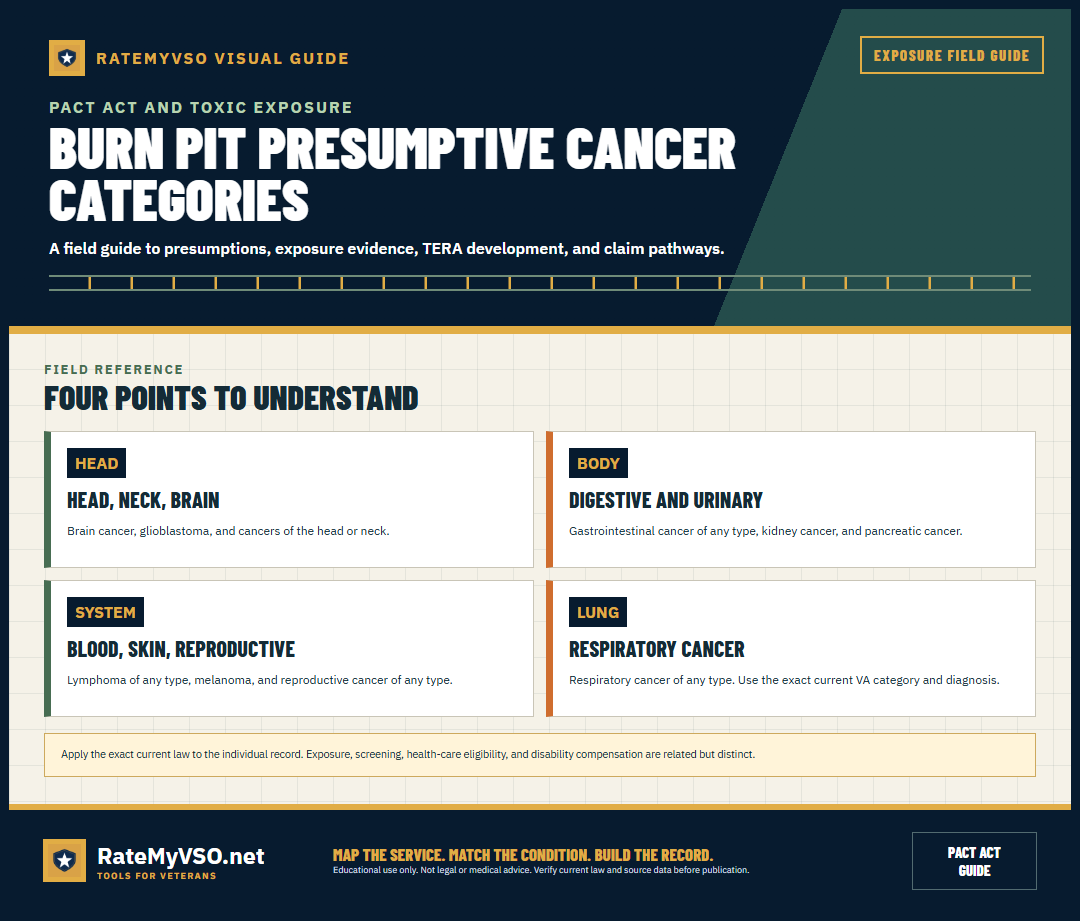
Presumptive cancers (38 USC 1119(b))
- Brain cancer (including glioblastoma)
- Gastrointestinal cancer of any type
- Head cancer of any type
- Kidney cancer
- Lymphatic cancer of any type
- Lymphoma of any type
- Melanoma
- Neck cancer of any type
- Pancreatic cancer
- Reproductive cancer of any type
- Respiratory (breathing-related) cancer of any type
- Squamous cell carcinoma of the larynx
- Squamous cell carcinoma of the trachea
- Adenocarcinoma of the trachea
- Salivary gland-type tumors of the trachea
- Adenosquamous carcinoma of the lung
- Large cell carcinoma of the lung
- Salivary gland-type tumors of the lung
- Sarcomatoid carcinoma of the lung
- Typical and atypical carcinoid of the lung
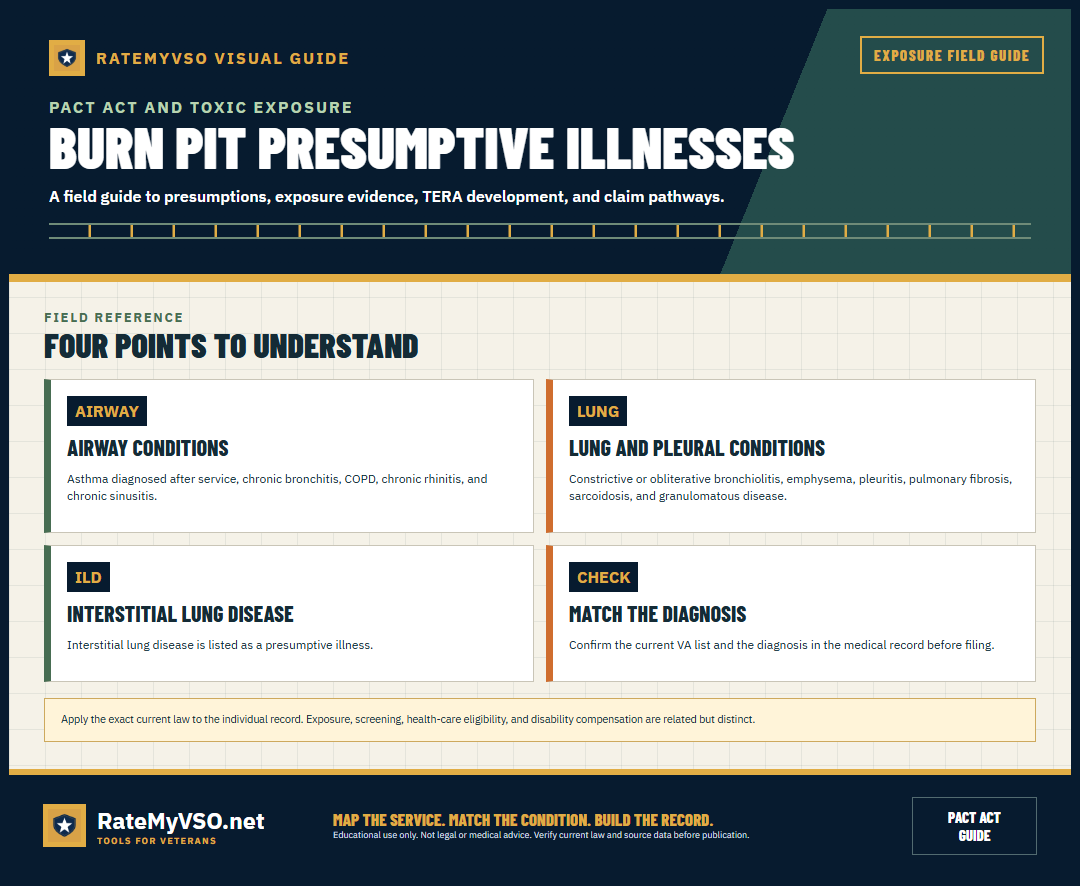
Presumptive respiratory and other conditions
- Asthma diagnosed after service
- Chronic bronchitis
- Chronic obstructive pulmonary disease (COPD)
- Chronic obliterative bronchiolitis
- Chronic sinusitis
- Chronic rhinitis
- Chronic laryngitis
- Constrictive bronchiolitis (also called obliterative bronchiolitis)
- Emphysema
- Granulomatous disease
- Interstitial lung disease (ILD)
- Pleuritis
- Pulmonary fibrosis
- Sarcoidosis
Manifestation rules
No general time limit
Unlike some other presumptions (Agent Orange has a 1-year manifestation rule for chloracne and porphyria cutanea tarda), the PACT Act burn-pit presumption generally imposes no time limit. A presumptive cancer or respiratory disease can manifest decades after service and still qualify, provided qualifying service is established.
Survivors and dependents
The PACT Act also provides eligibility for survivors of veterans who died from a covered condition. DIC (Dependency and Indemnity Compensation) eligibility under 38 USC 1310 uses the same presumptive list when the cause of death is a presumptive disease and qualifying service is established.
Effective dates
The PACT Act took effect August 10, 2022. Special effective-date rules in section 406 of Pub. L. 117-168 allow earlier effective dates for claims filed within one year of enactment for veterans who had previously been denied service connection for one of the now-presumptive conditions.
Limitations
The presumption can be rebutted under 38 USC 1113 by:
- Affirmative evidence that the veteran was not exposed to airborne hazards during the covered service.
- Affirmative evidence that the disease was not incurred during such service or did not result from such exposure.
- Evidence that the disease is the result of the veteran's own willful misconduct or the abuse of alcohol or drugs.
Veterans whose conditions are not on the presumptive list, or who do not have qualifying service, may still establish service connection on a direct, non-presumptive basis using the "toxic exposure risk activity" (TERA) framework codified at 38 USC 1168 and 38 CFR 3.320(d). See TERA exceptions reference for details.
Source and currency
Authority: 38 U.S.C. 1119 (added by Pub. L. 117-168, the Sergeant First Class Heath Robinson Honoring our Promise to Address Comprehensive Toxics Act of 2022).
Statute text: PACT Act of 2022 (Pub. L. 117-168) on govinfo.gov.
Regulation text: 38 CFR 3.320 on eCFR.gov implements the presumption.
VA reference: VA.gov / Hazardous materials exposure.
Scope and limitations
Not the exclusive pathway. This page describes one specific presumption. Direct service connection (proving exposure and a medical nexus) remains available for conditions or service periods not covered, and other regulations may apply for other toxic exposures.
Not legal advice, not a claim filing. This page provides factual reference only. It is not legal advice, does not establish representation, and does not constitute the filing of any claim. For case-specific guidance, find an accredited VSO representative.
Data vintage. Statutory and regulatory text reproduced from authoritative sources. Always verify against the eCFR / govinfo links above; the law continues to be implemented and the covered-locations list has been expanded by regulation since enactment.
Current diagnosis and qualifying service still required. The presumption relieves the burden of proving the exposure-to-disease link. It does not eliminate the need for a current medical diagnosis and proof of qualifying service.