Asthma Visual Guide Library
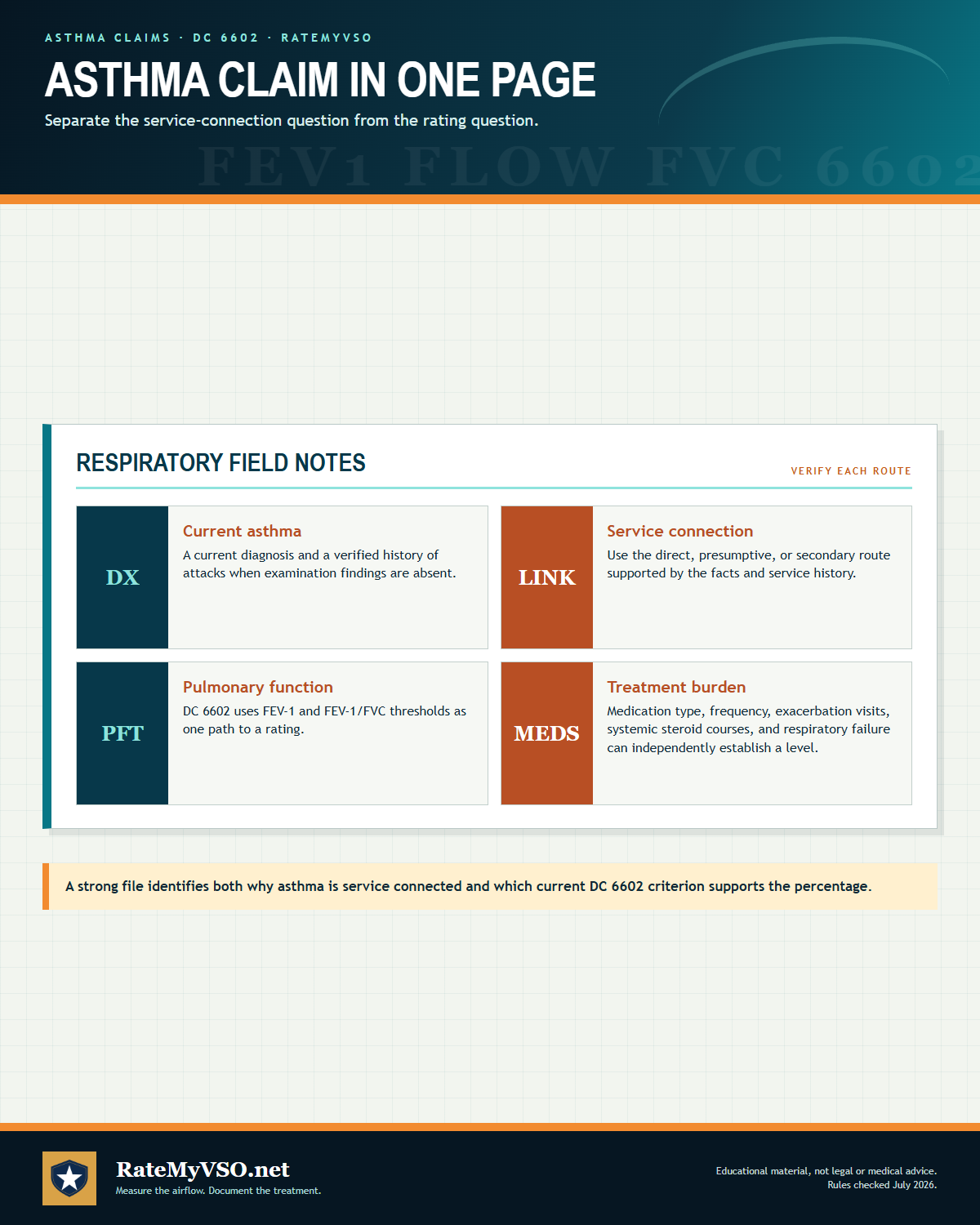
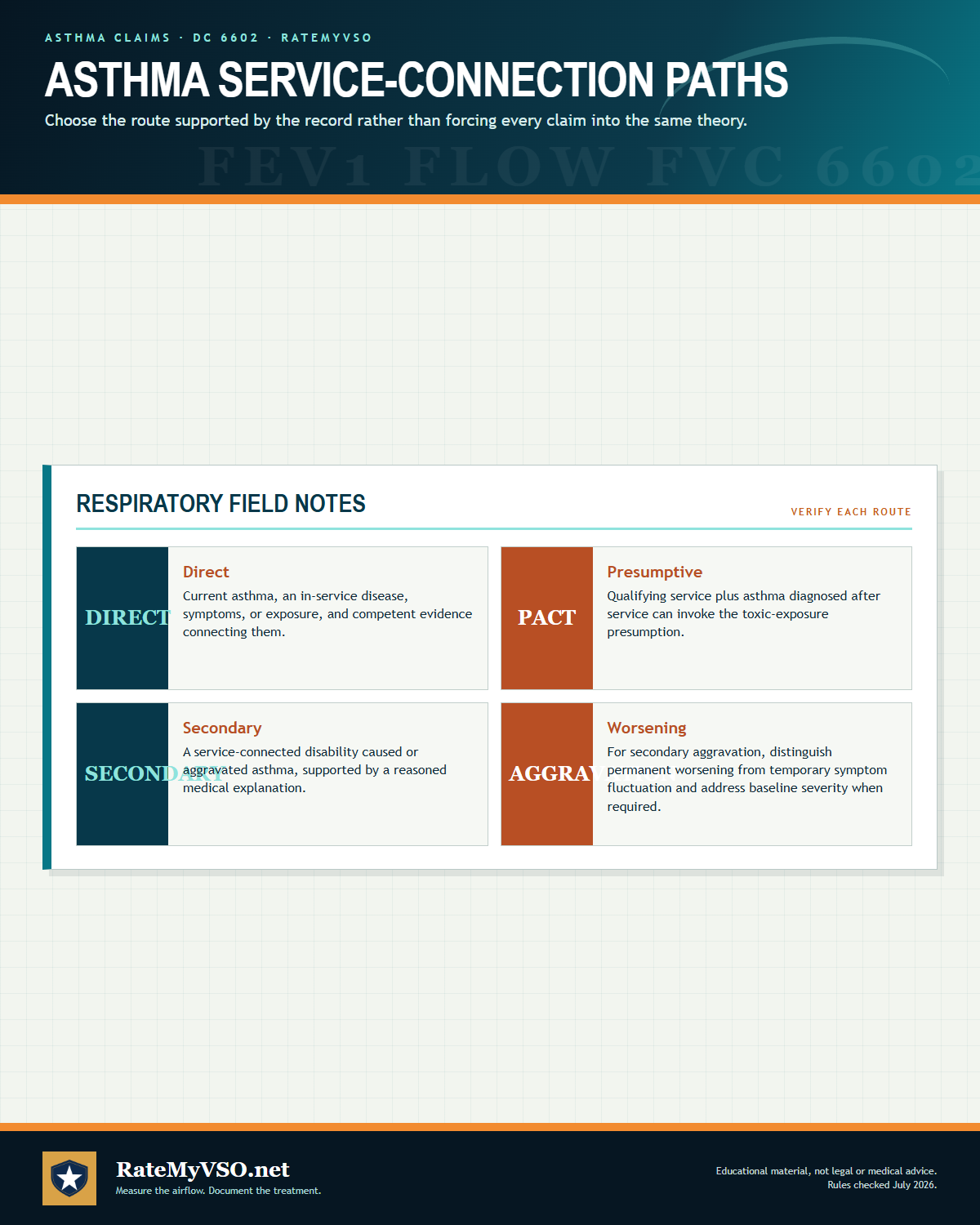
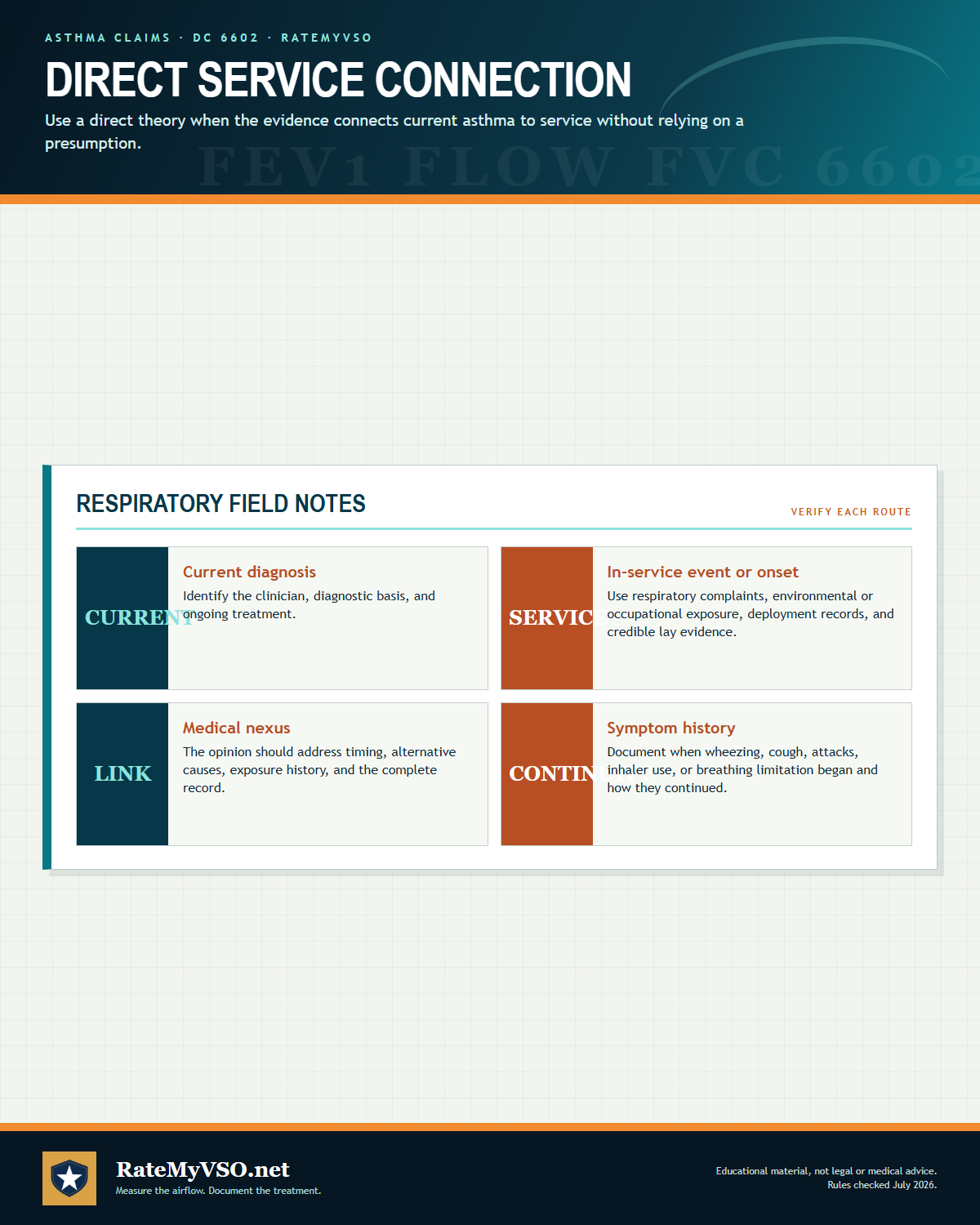
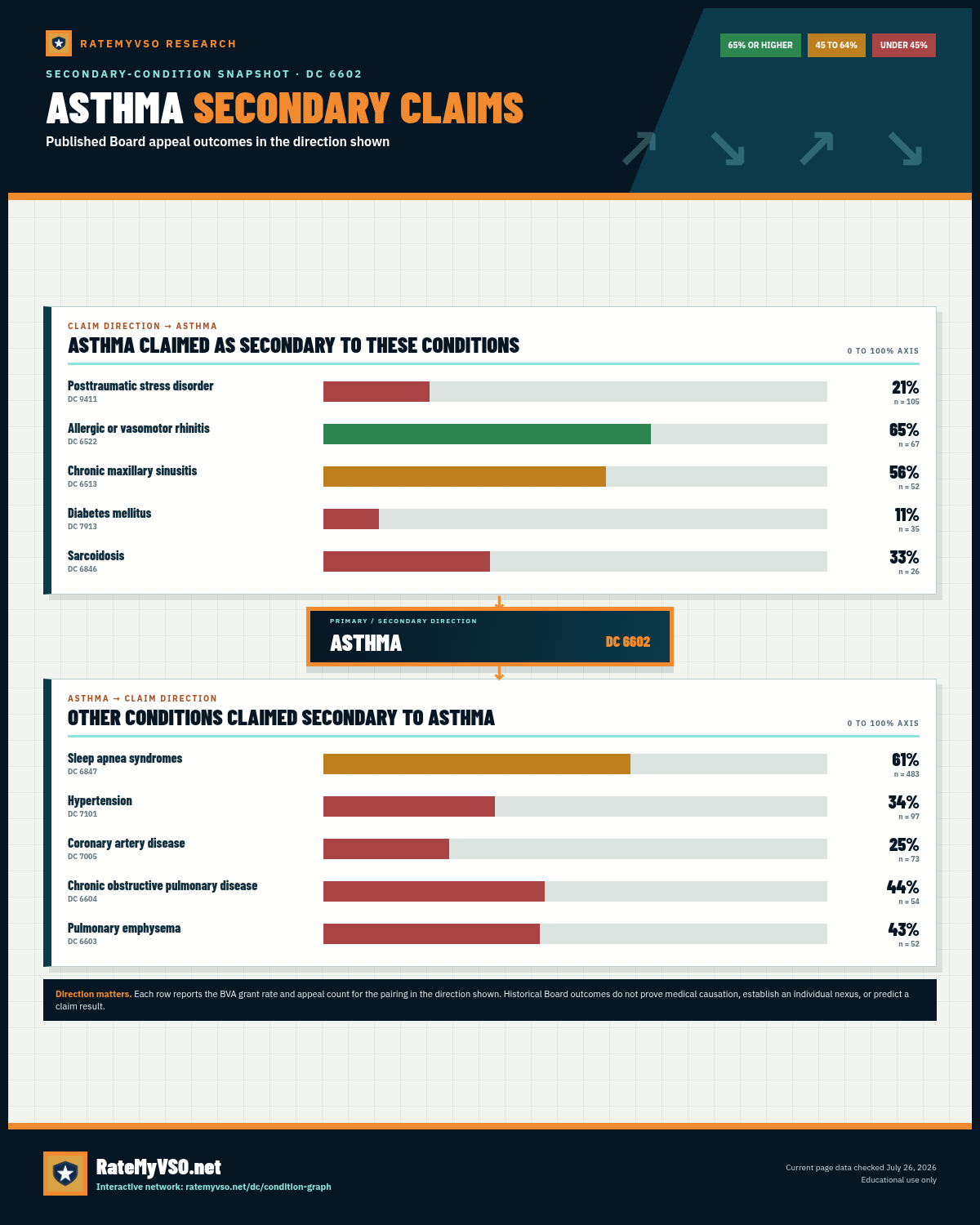
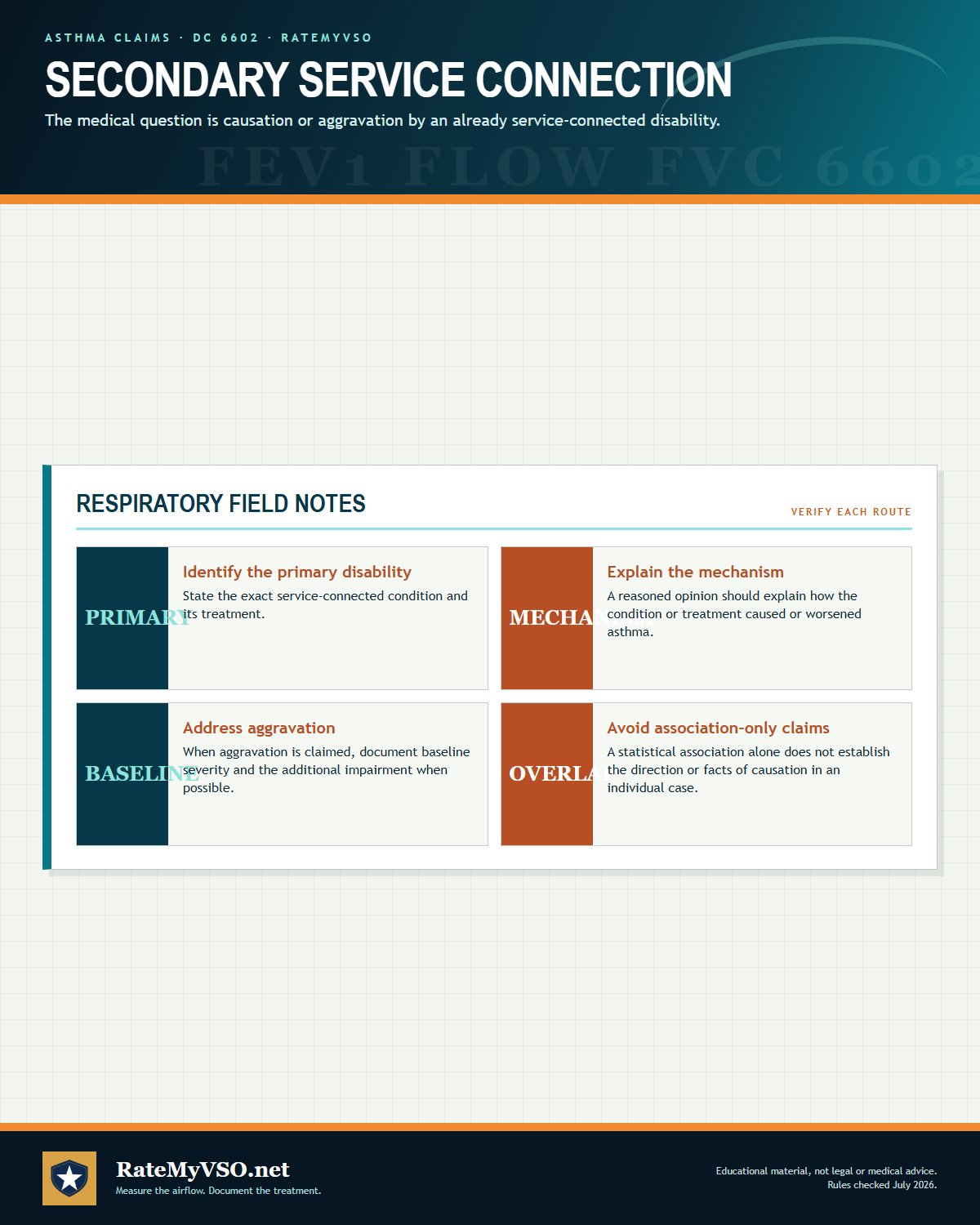
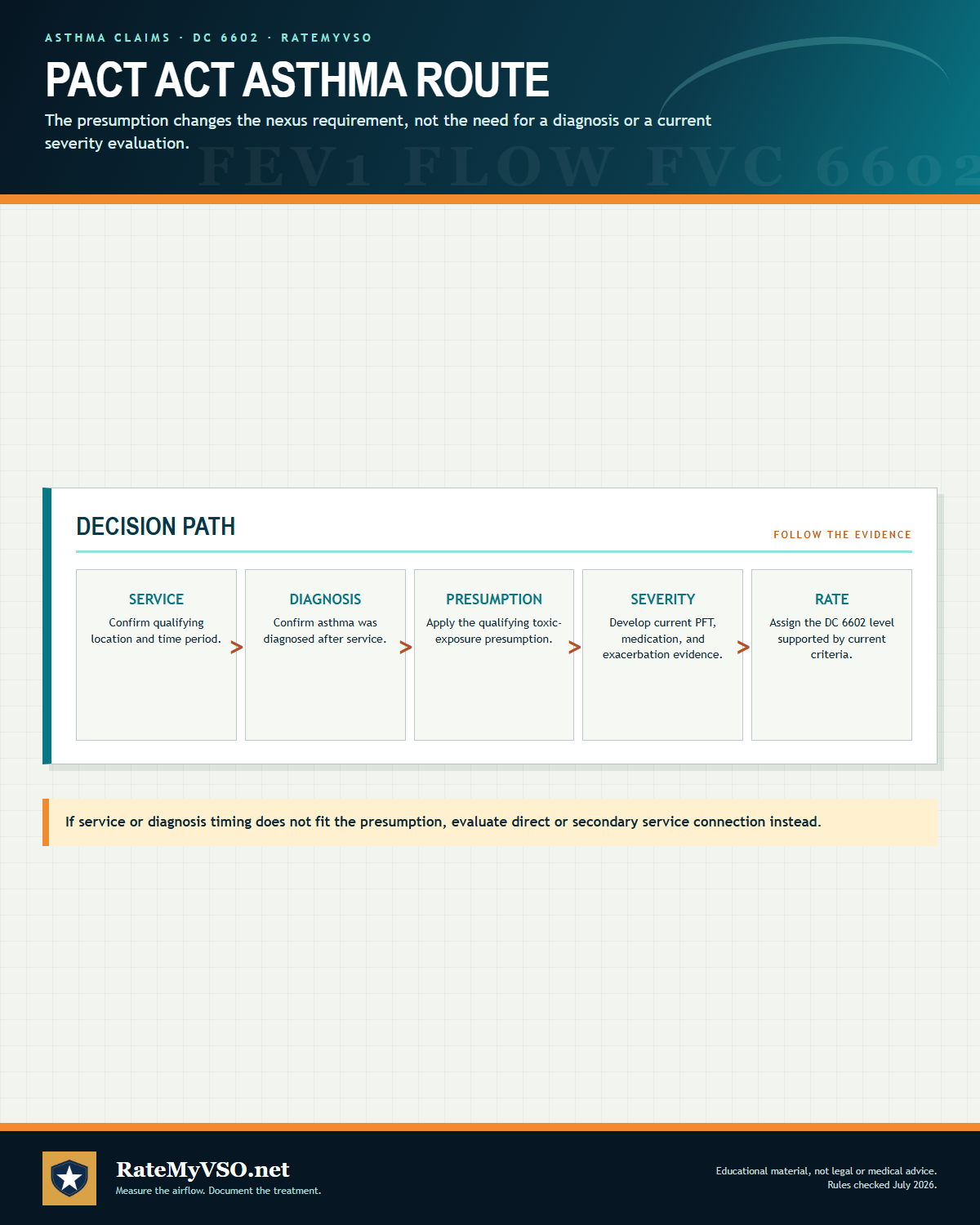
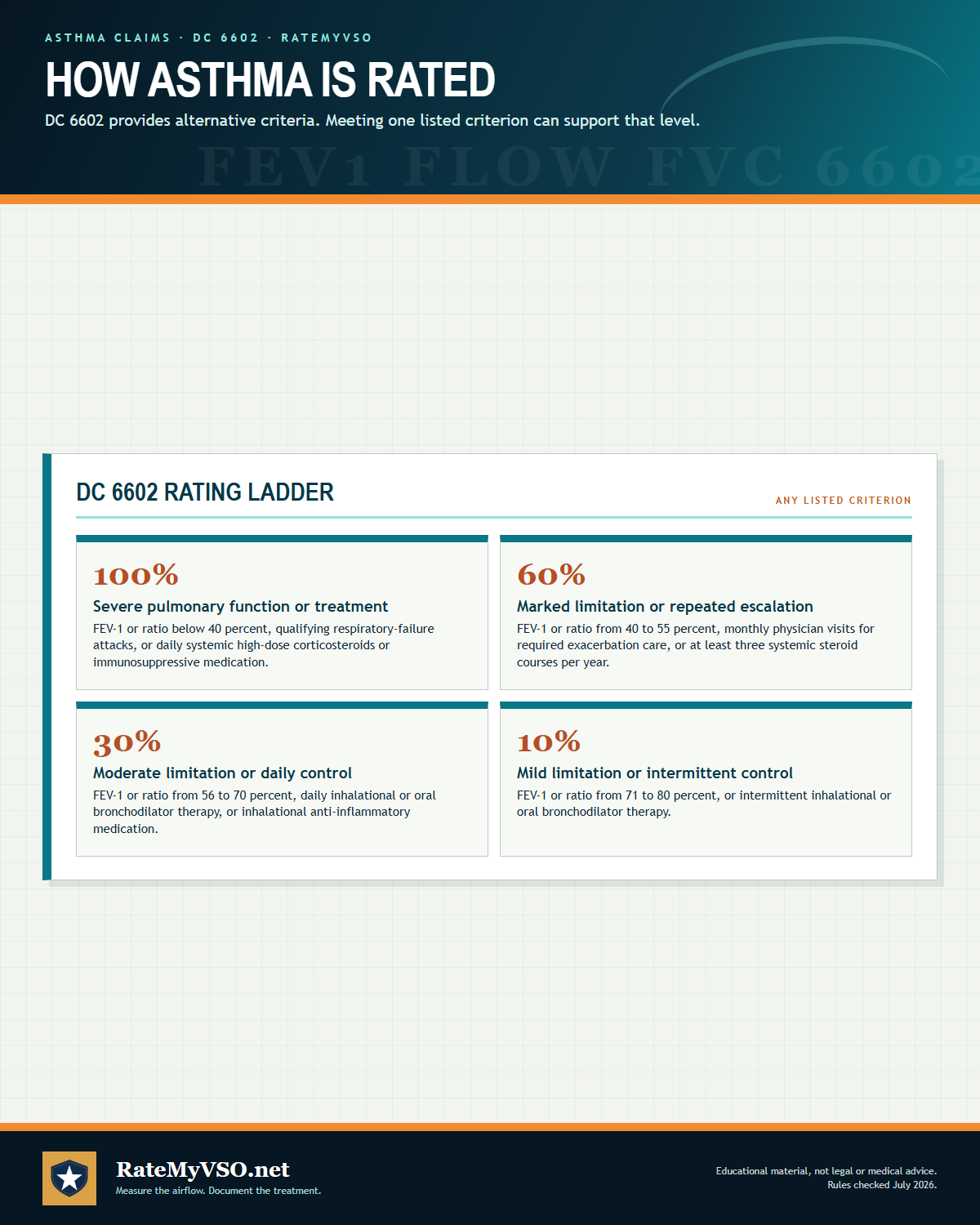
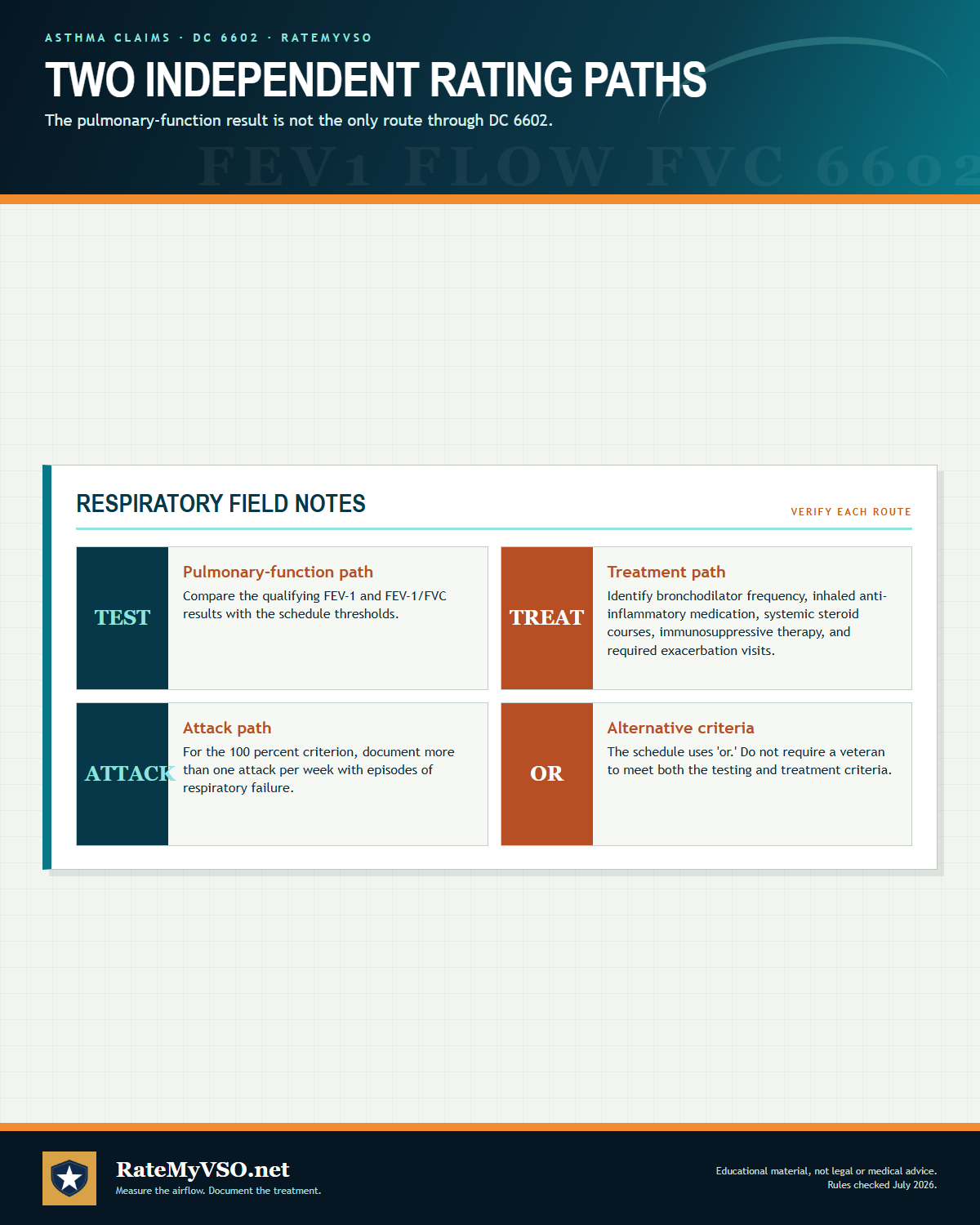
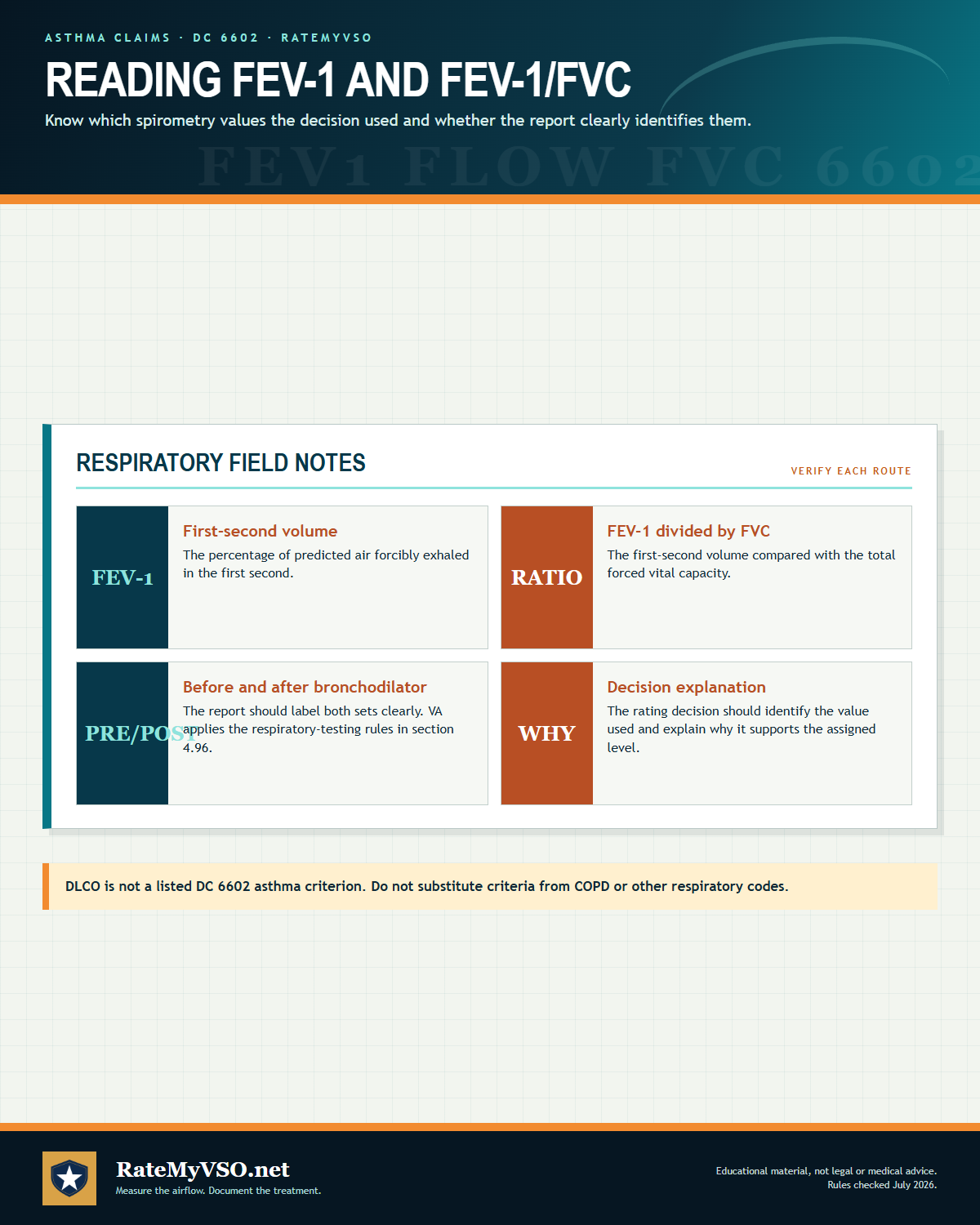
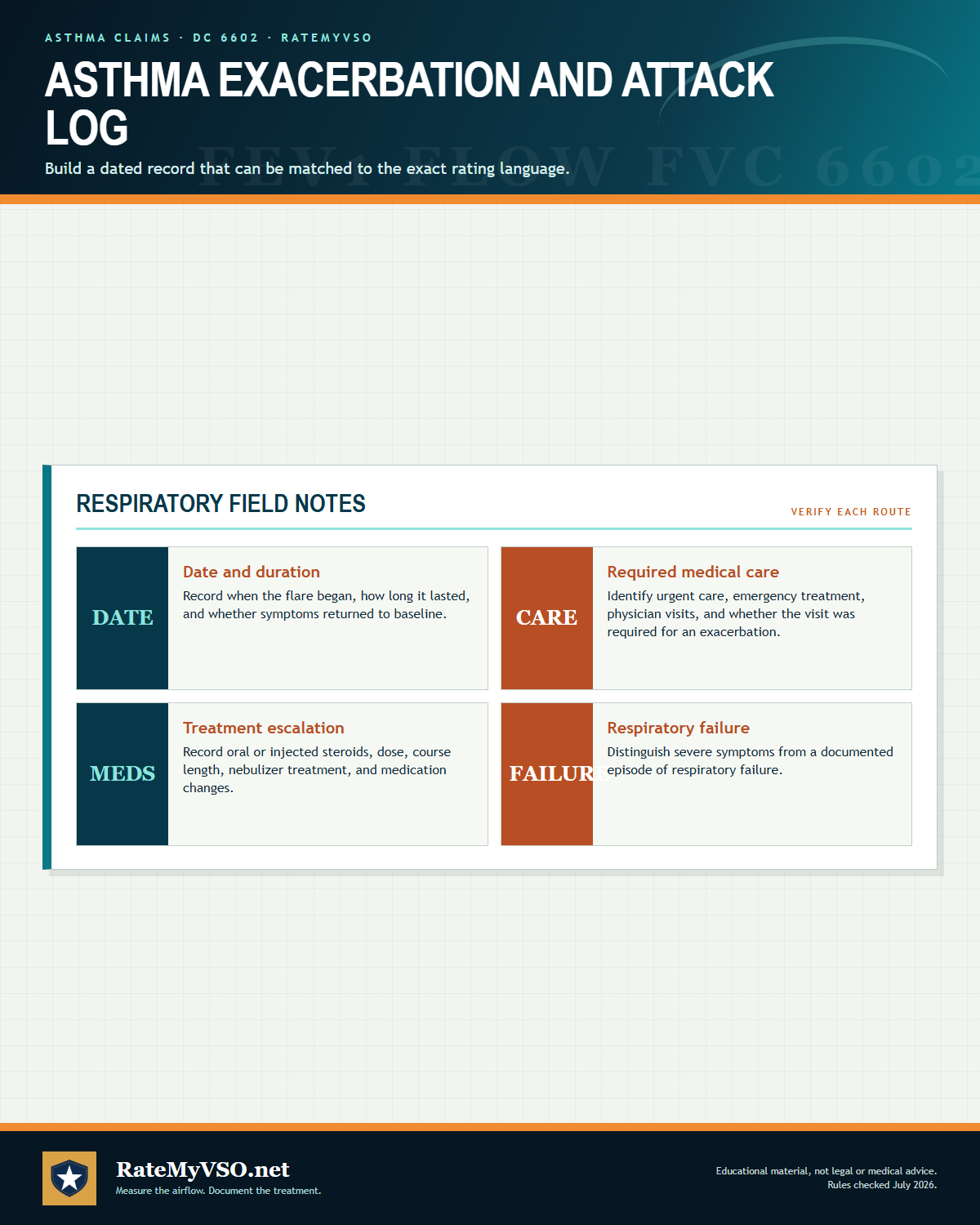
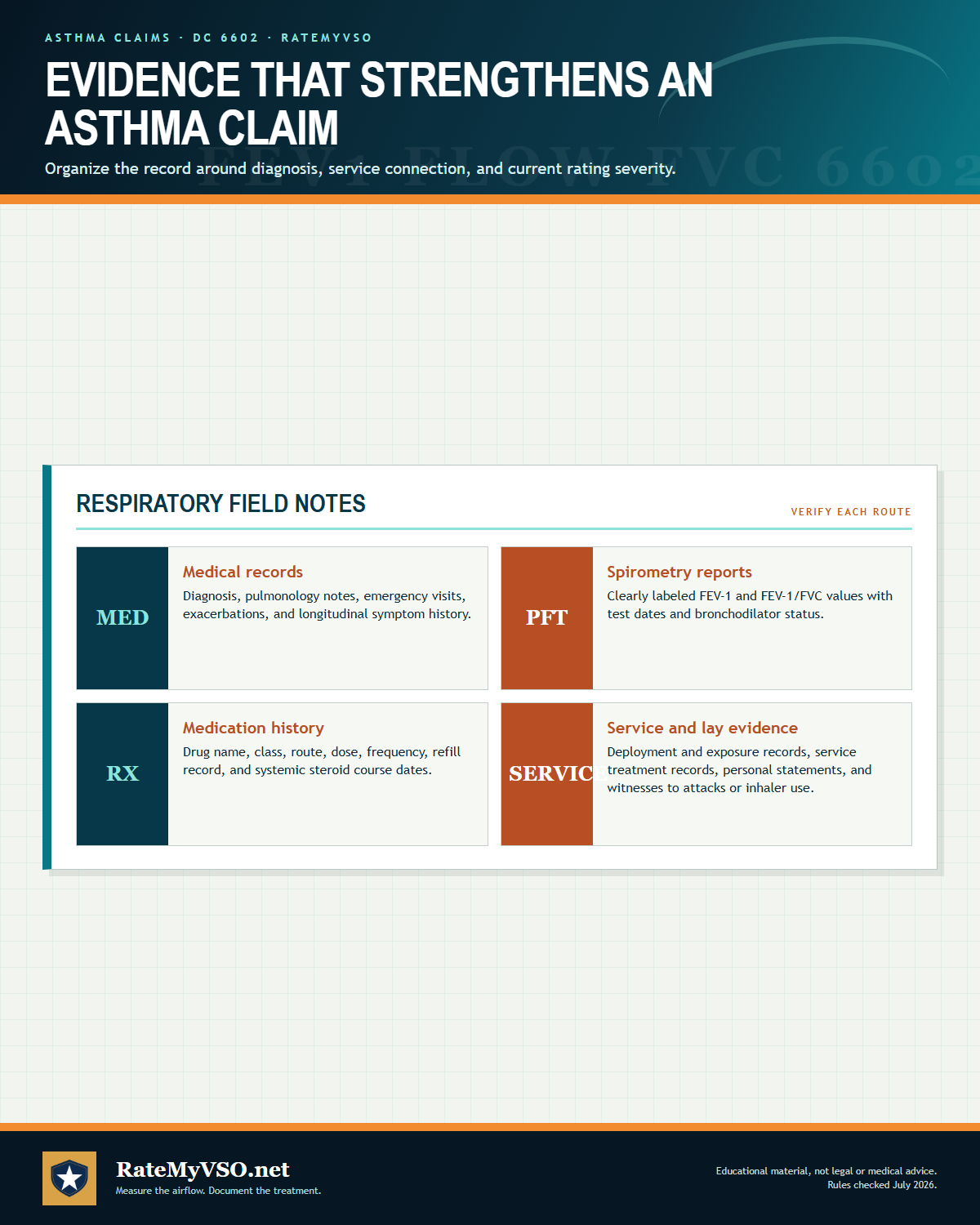
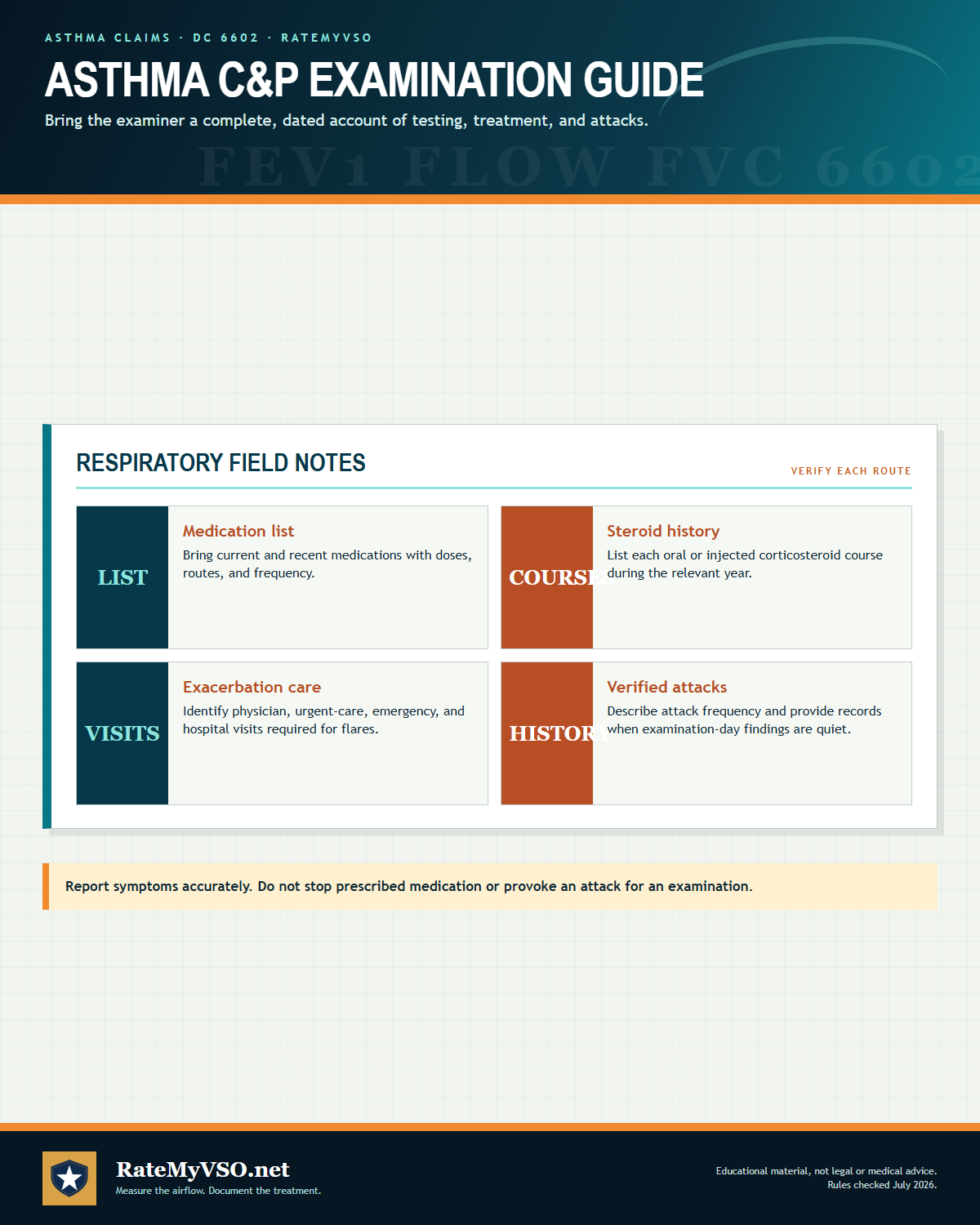
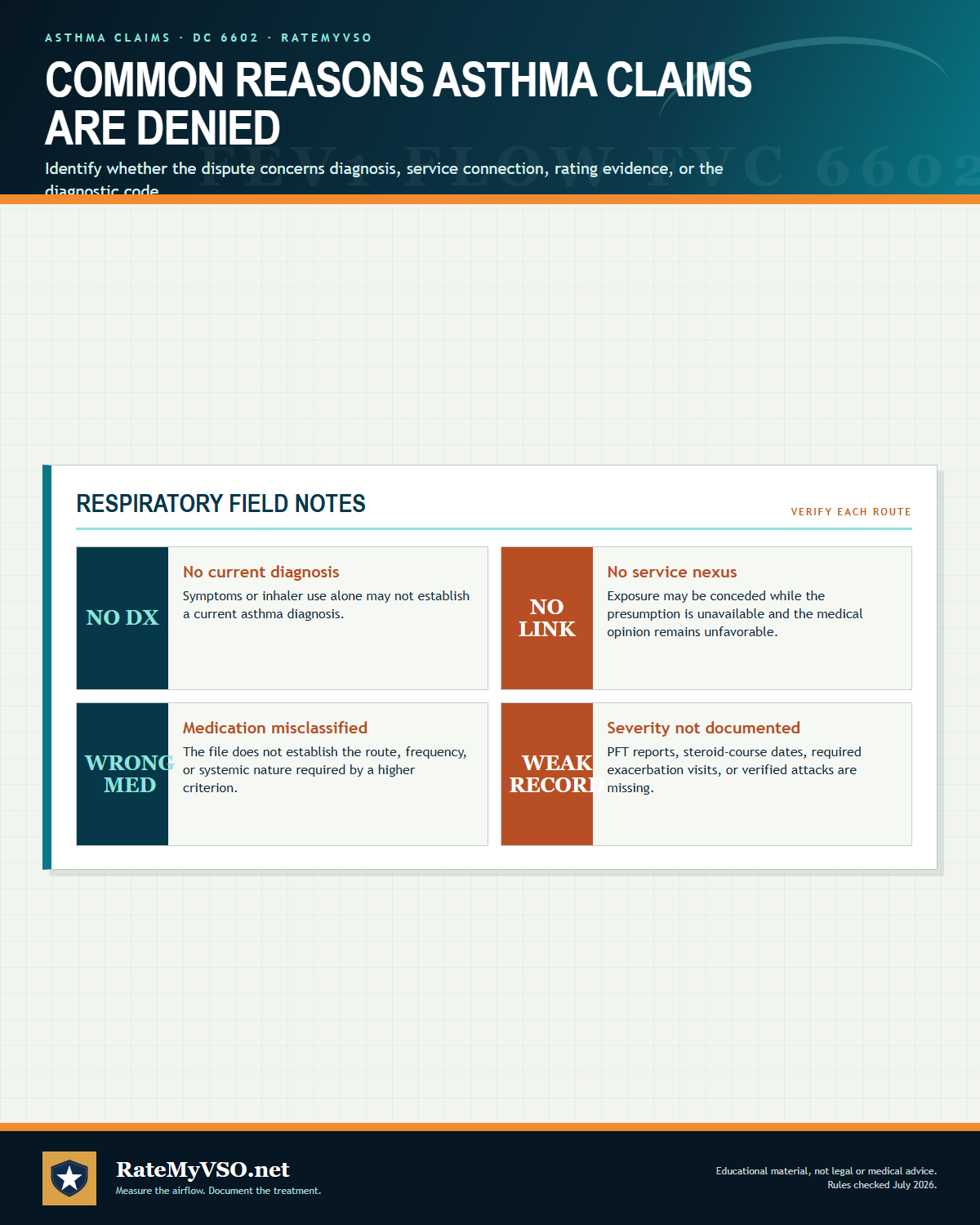
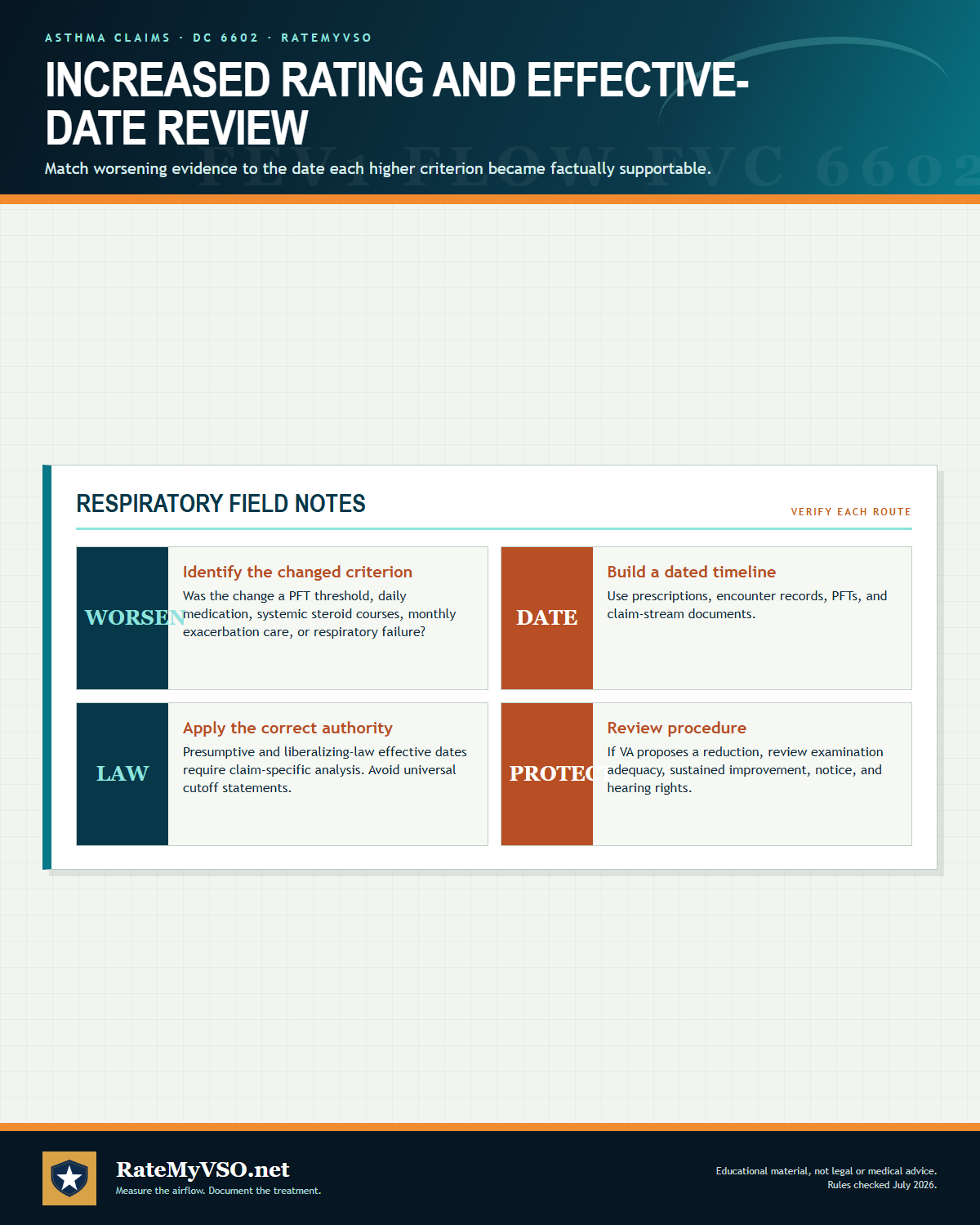
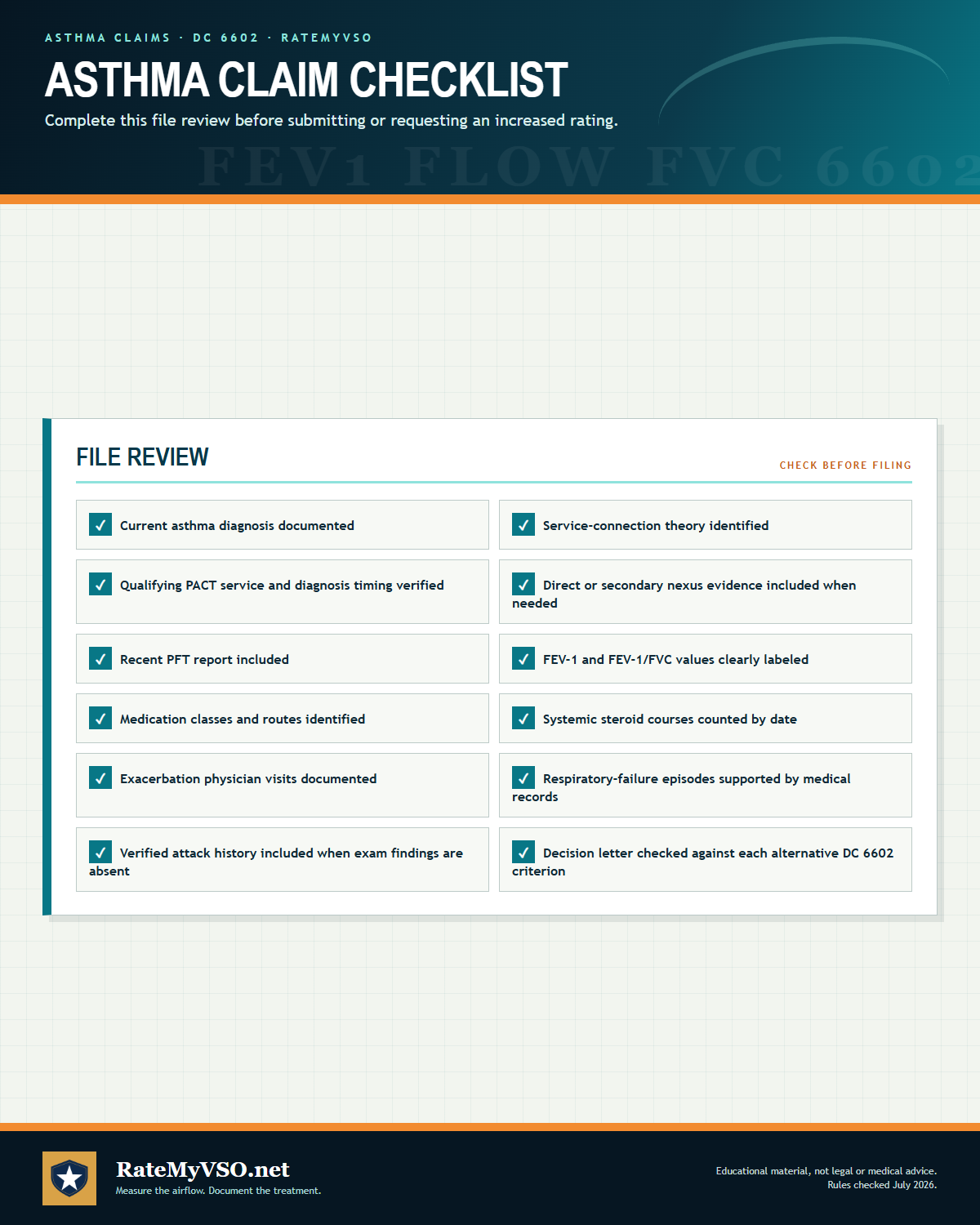
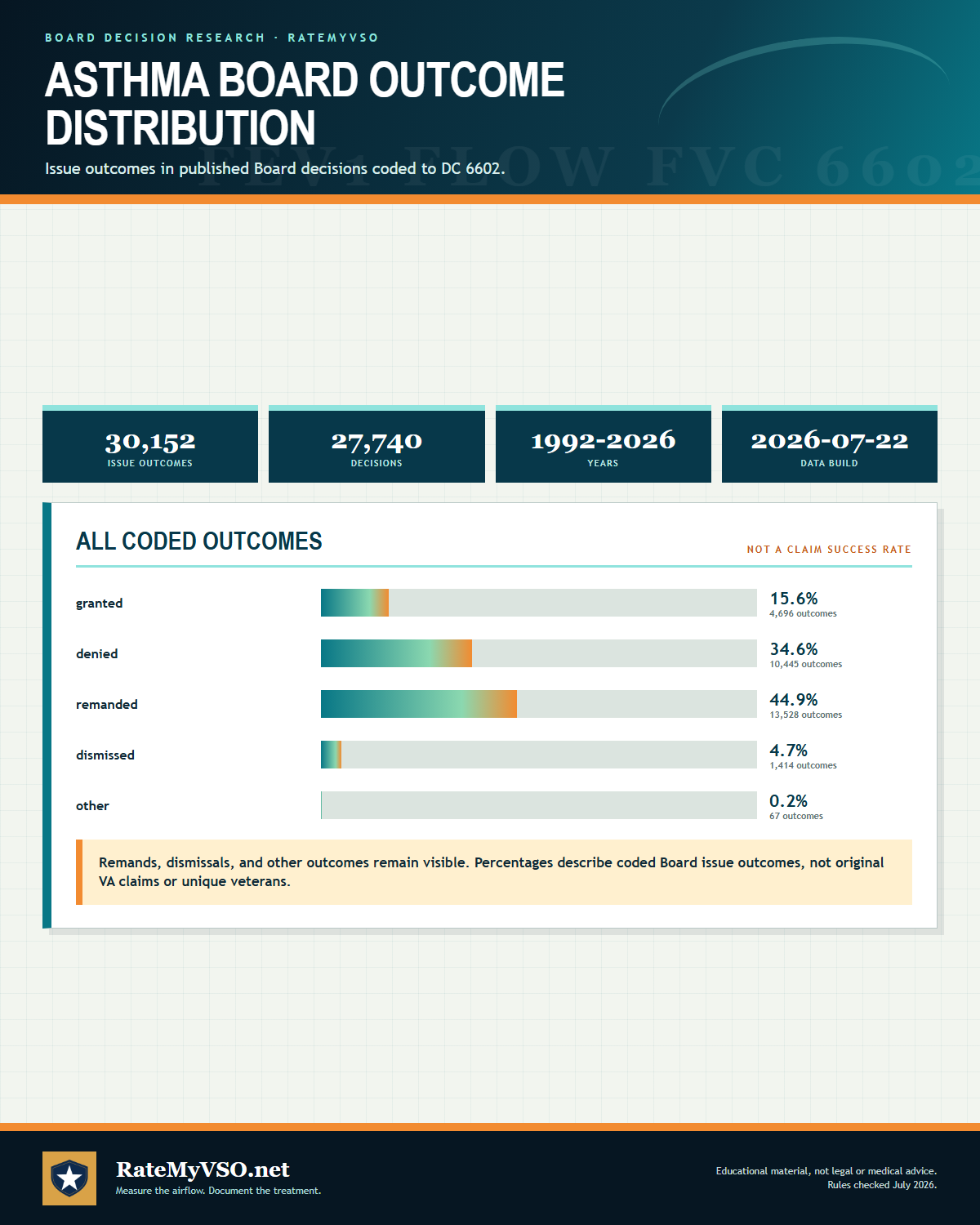
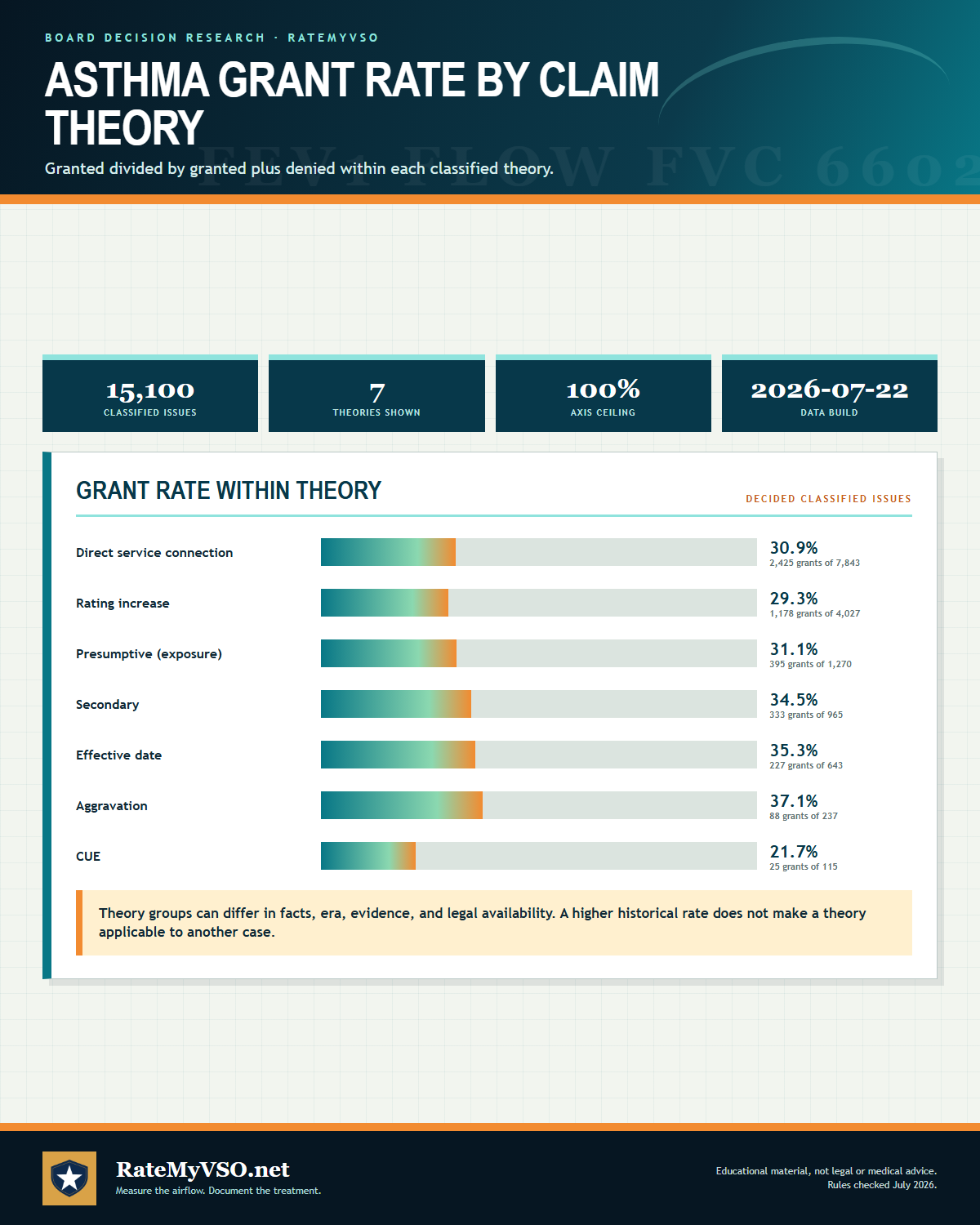
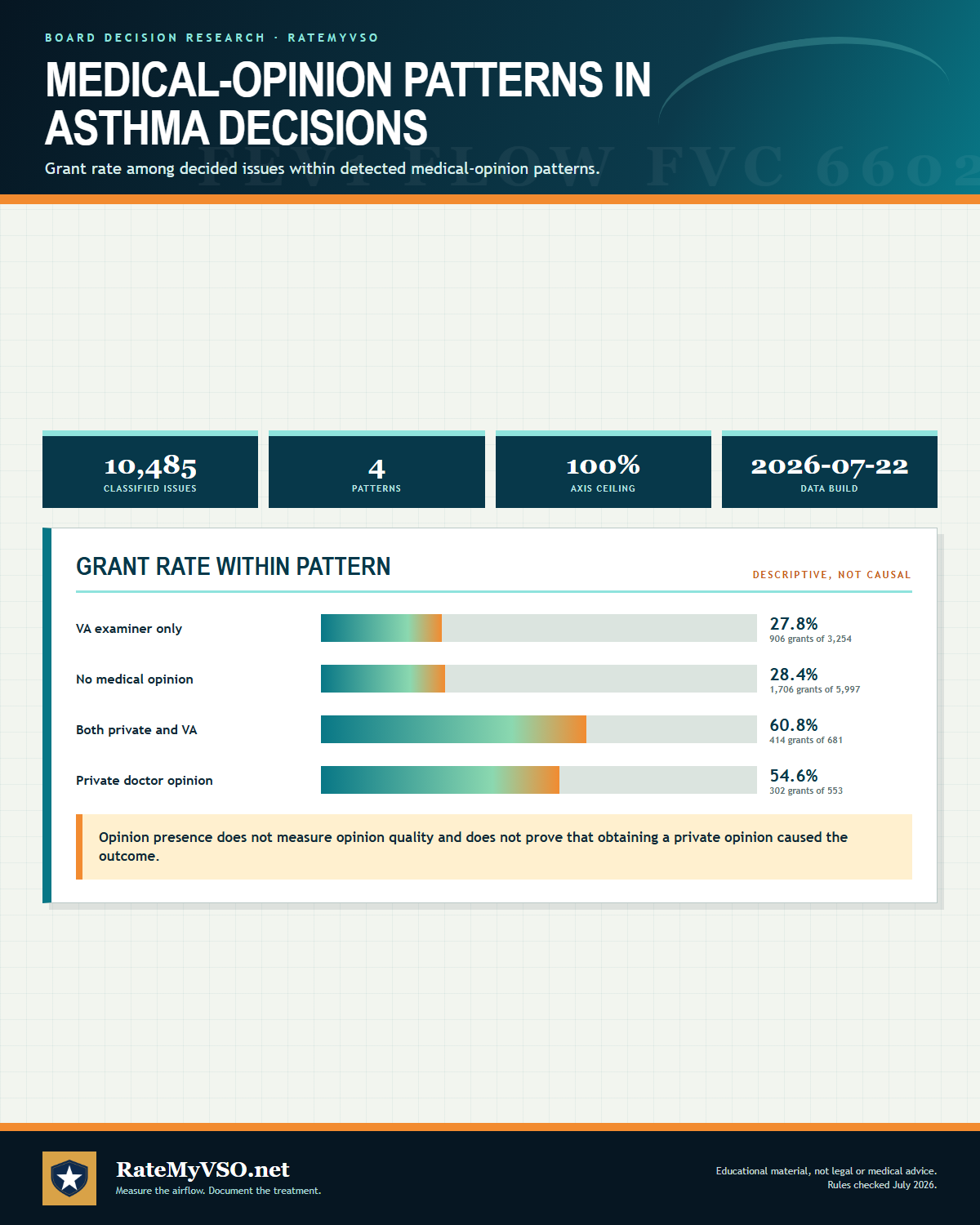
24 printable one-page charts covering VA asthma claims from end to end: how a claim is built, the direct, secondary and PACT Act routes to service connection, how diagnostic code 6602 is rated and why it has two independent paths that are read separately, how to read FEV-1 and FEV-1/FVC results, where inhaled and systemic corticosteroids sit in the rating criteria and why that distinction decides so many claims, how to keep an attack and exacerbation log, the rule in 38 CFR 4.96(a) that stops most respiratory codes being combined, the evidence and the C&P exam, the increased-rating and effective-date questions, and research on what published Board decisions actually record.
All 24 visual guides
How to use this library
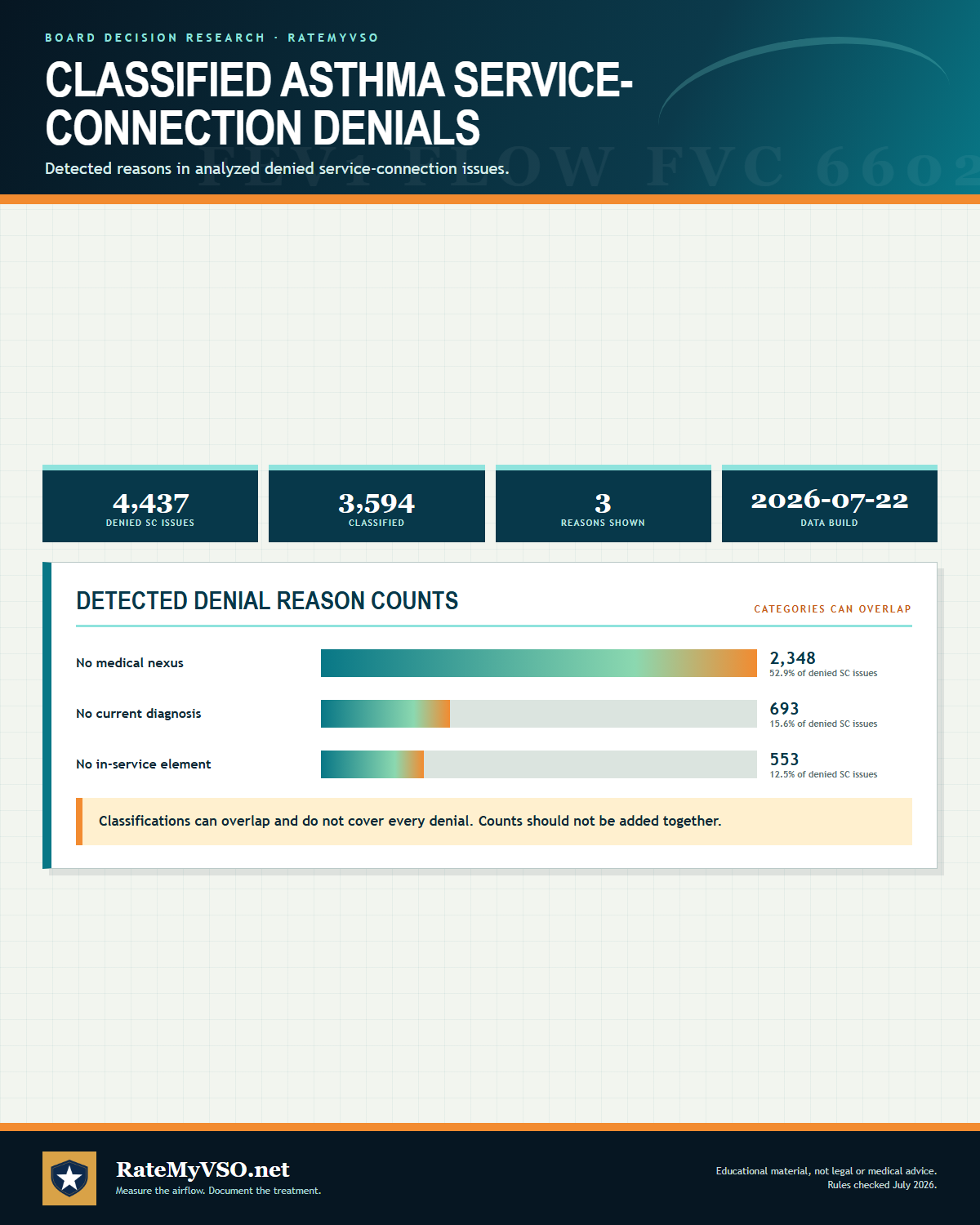
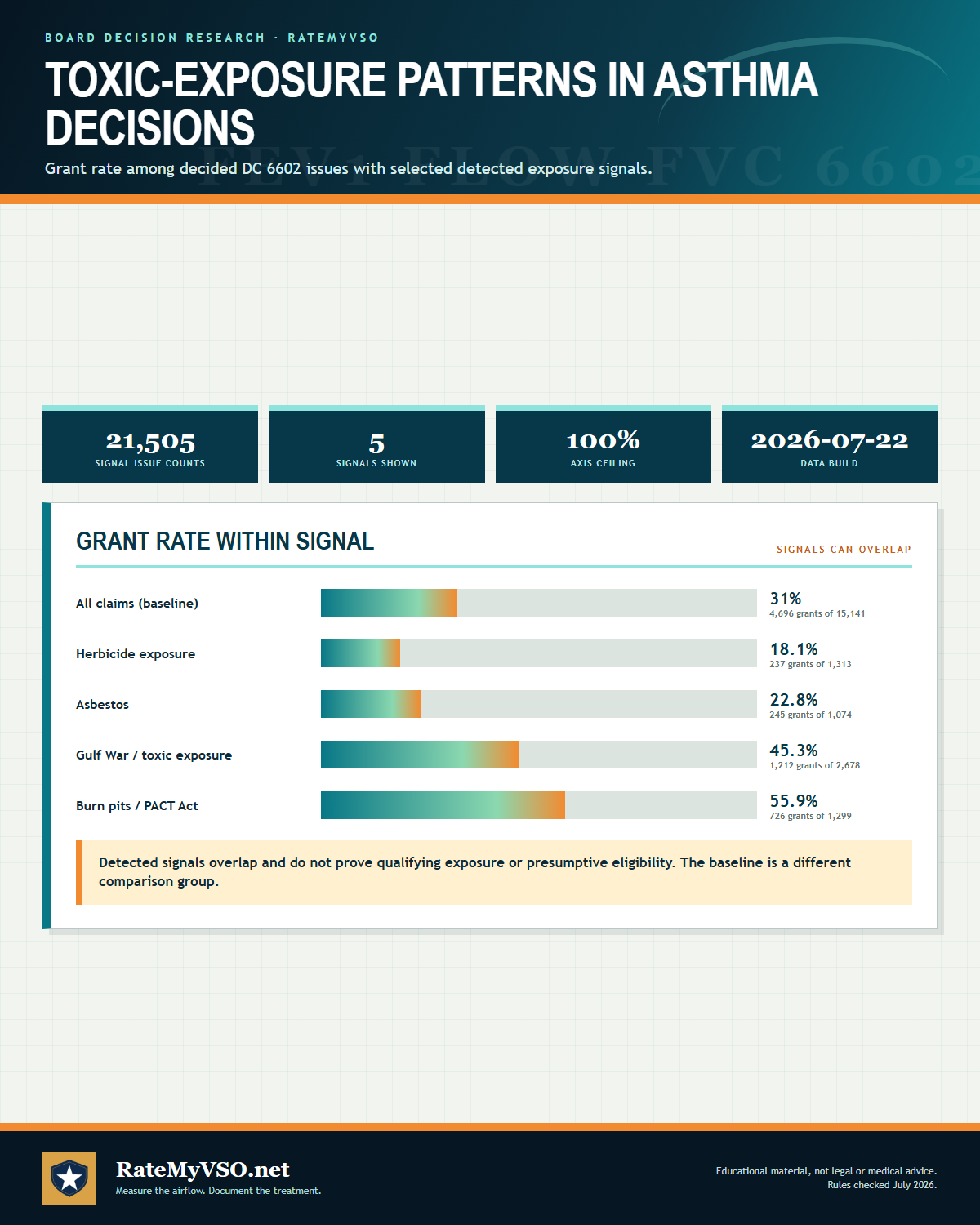
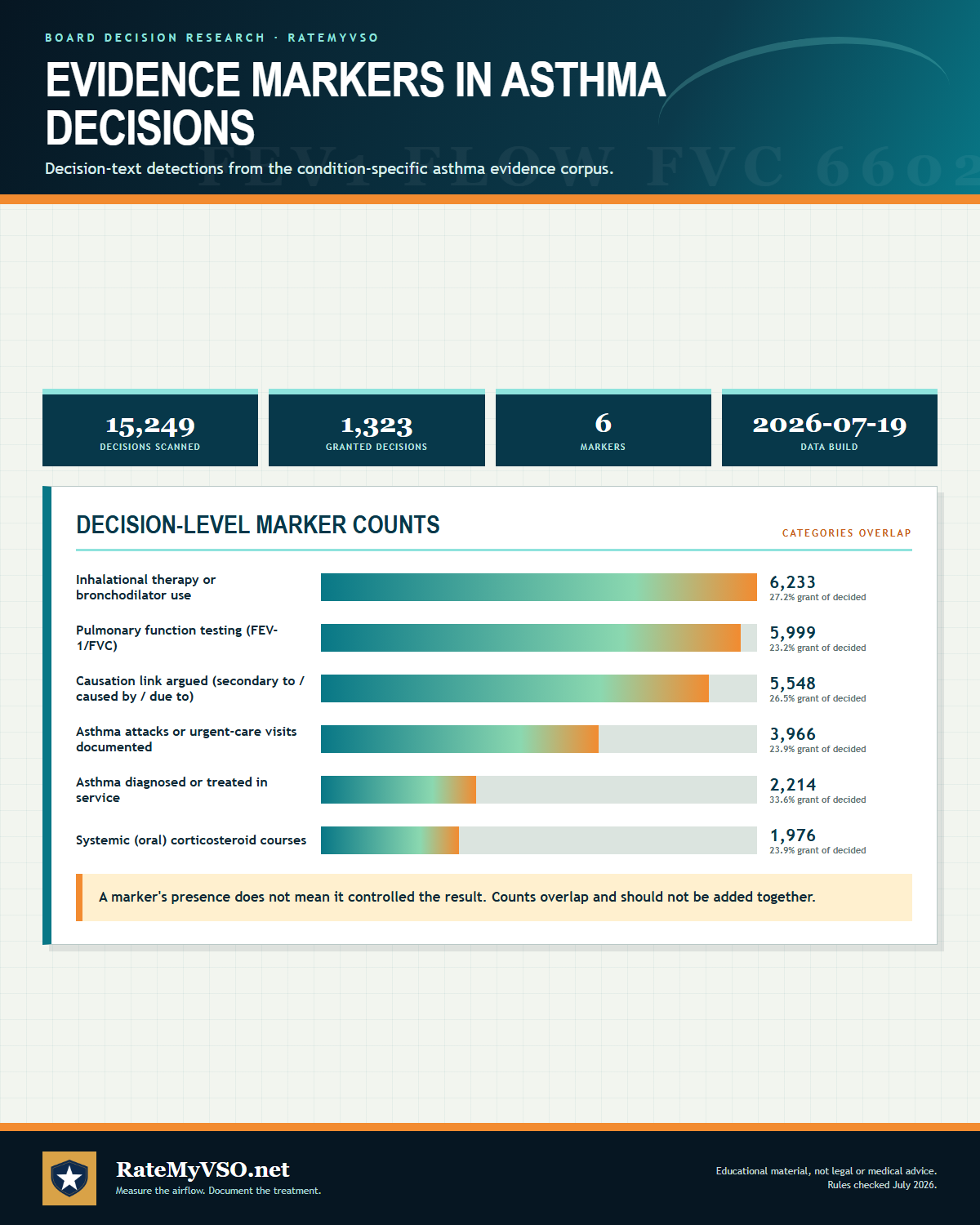
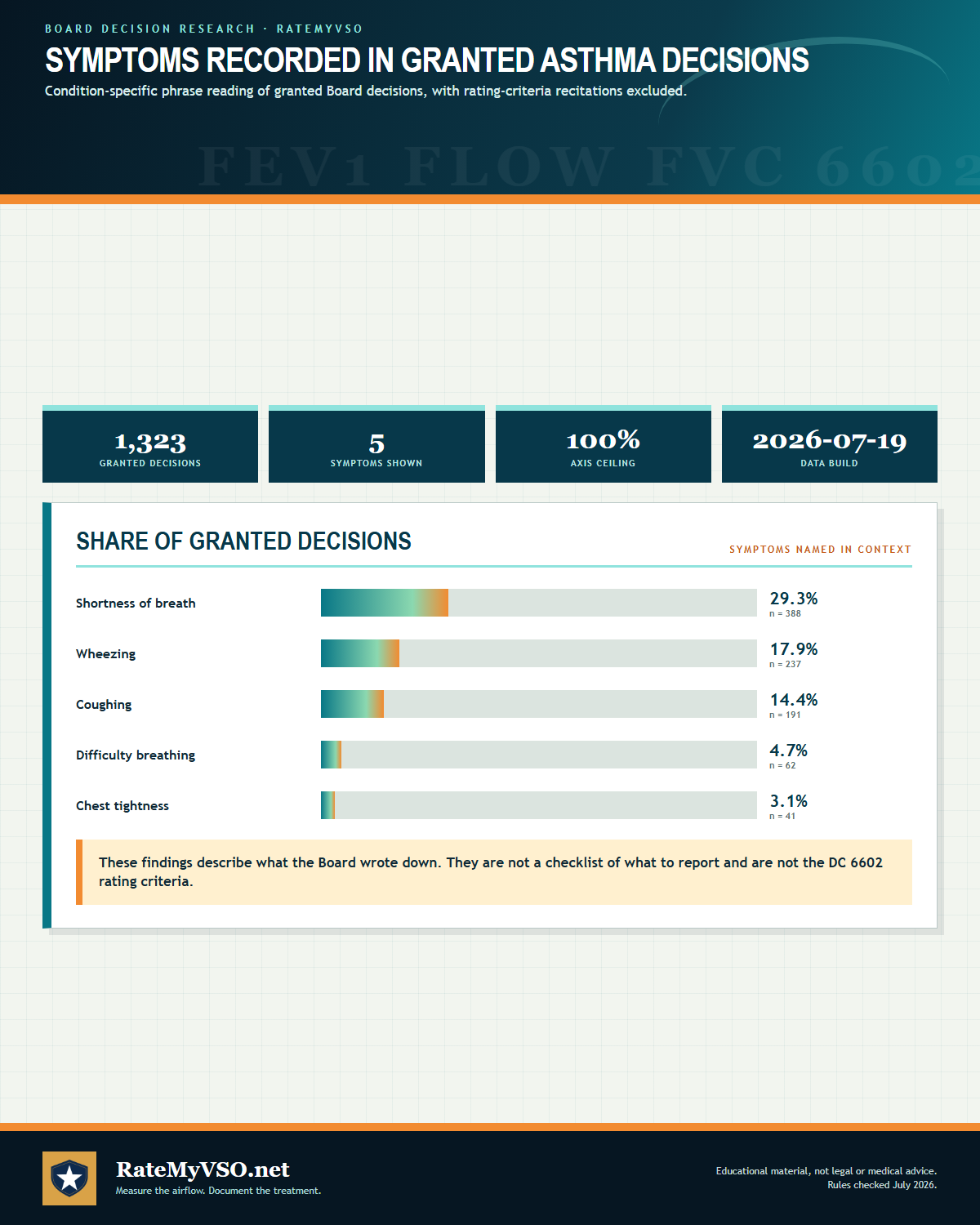
Every guide is a single tall image sized for printing or saving to your phone. Select any card to open the full-resolution image, or use the download link under it. Use the filter to narrow to one part of the question. The rating and evidence charts summarize the published rules; the research charts report what RateMyVSO measured in published Board decisions, with the denominator printed on the chart itself.
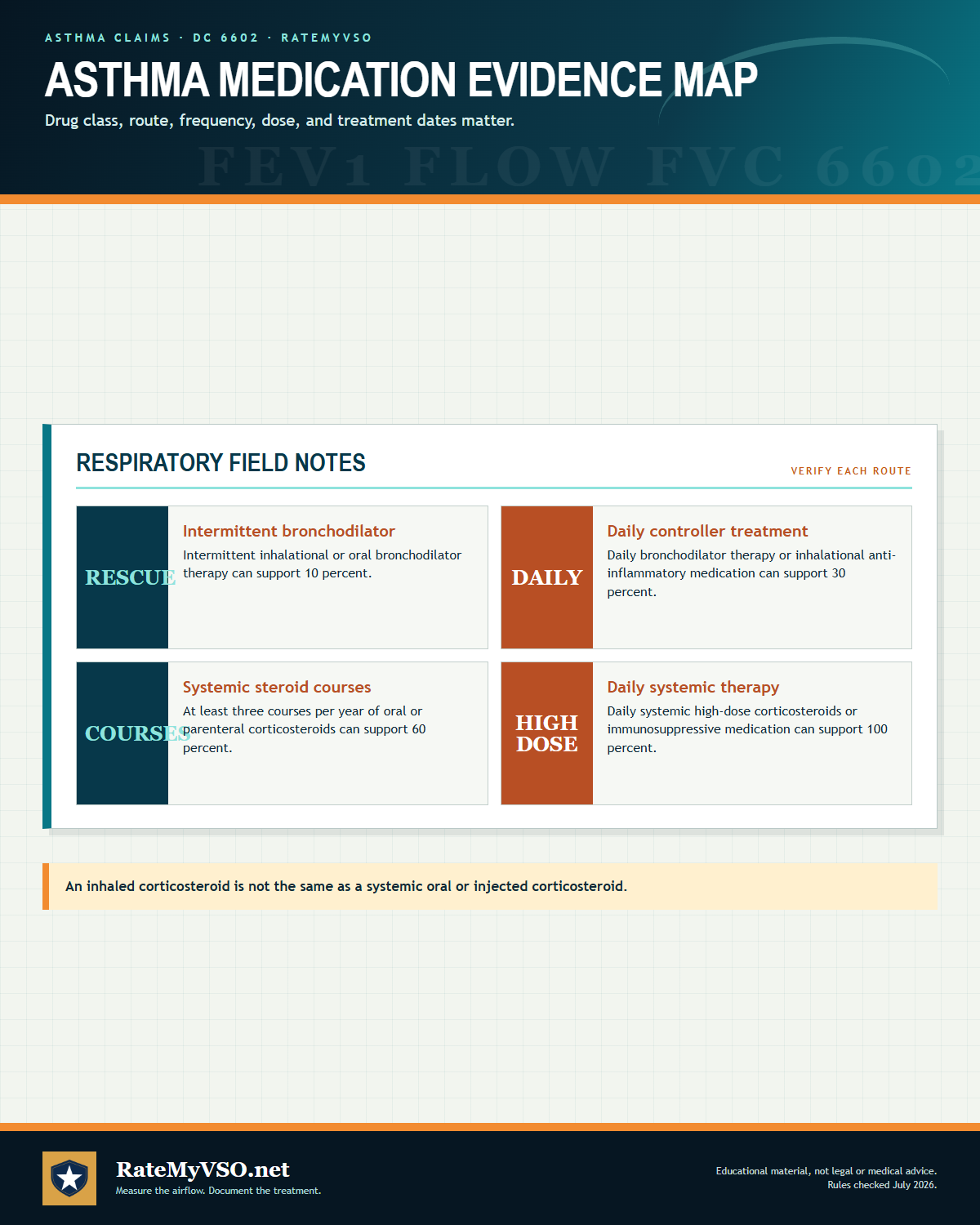
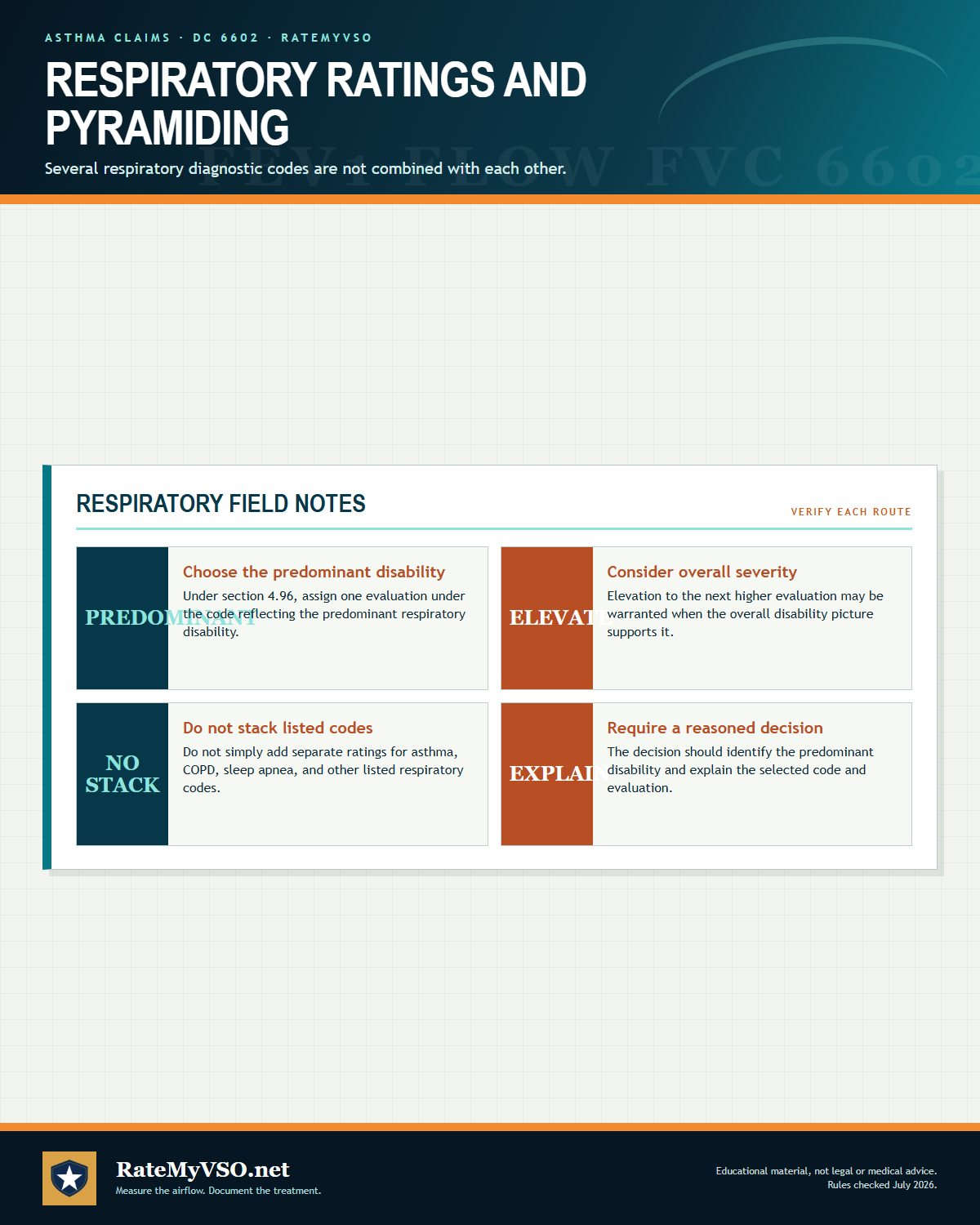
These charts catalogue the published rules and what appears in published Board decisions. Diagnostic code 6602 has two independent rating paths, pulmonary function testing and treatment, and the higher of the two applies, so a normal breathing test does not by itself settle the rating. The medication distinction is the line most asthma claims turn on: daily inhaled anti-inflammatory medication sits at 30 percent, while intermittent courses of systemic oral or parenteral corticosteroids sit at 60 percent and daily use at 100 percent. Under 38 CFR 4.96(a), asthma cannot be combined with most other respiratory ratings; a single evaluation is assigned under the code that reflects the predominant disability, elevated one level if the others are of compensable degree. In the research charts, a coded issue outcome is not a claim or a veteran, a grant rate counts granted against granted plus denied so remands are excluded, denial categories overlap and cannot be added, and a symptom share describes what the Board wrote down rather than what to report. These charts are not legal or medical advice. For the full written guidance, start with the asthma claims guide.