Free VA Disability Claim Charts and Visual Guides
Browse 481 free, printable VA disability claim charts covering PTSD, sleep apnea, migraines, mental health, TDIU, Special Monthly Compensation, the PACT Act, secondary conditions, appeals, rating protections, and other major VA claim topics.
Each one page visual guide explains important VA rating criteria, service-connection requirements, evidence, forms, claim pathways, common denial reasons, or appeal rules. Many collections also include original RateMyVSO research based on our analysis of more than 1.9 million published Board of Veterans' Appeals decisions.
Choose a topic below to view and download the charts as full-size PNG or PDF files. Research charts are refreshed as new Board decisions are published and display their sample size and data date.
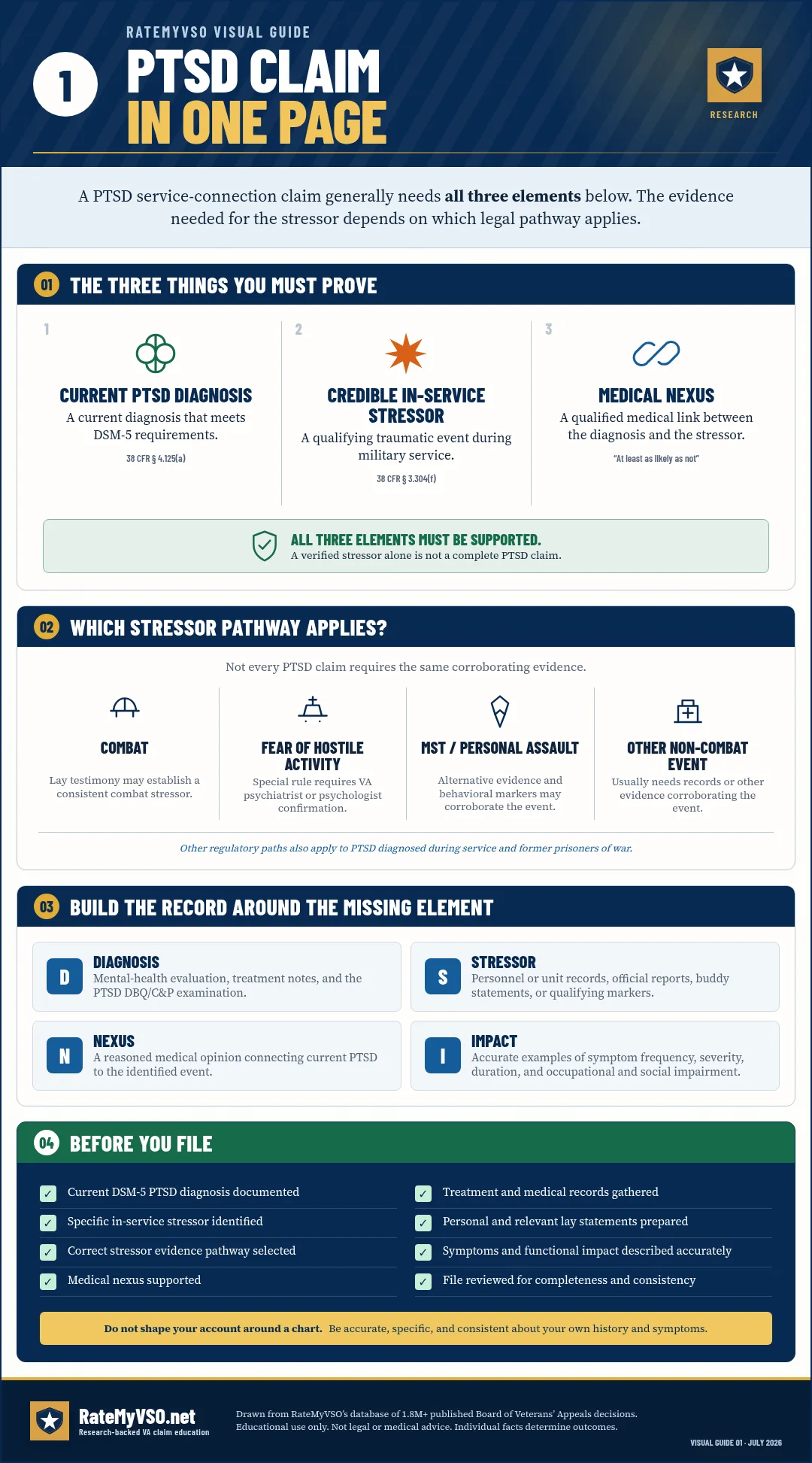
Process, evidence, stressor verification, ratings, and Board-decision research.
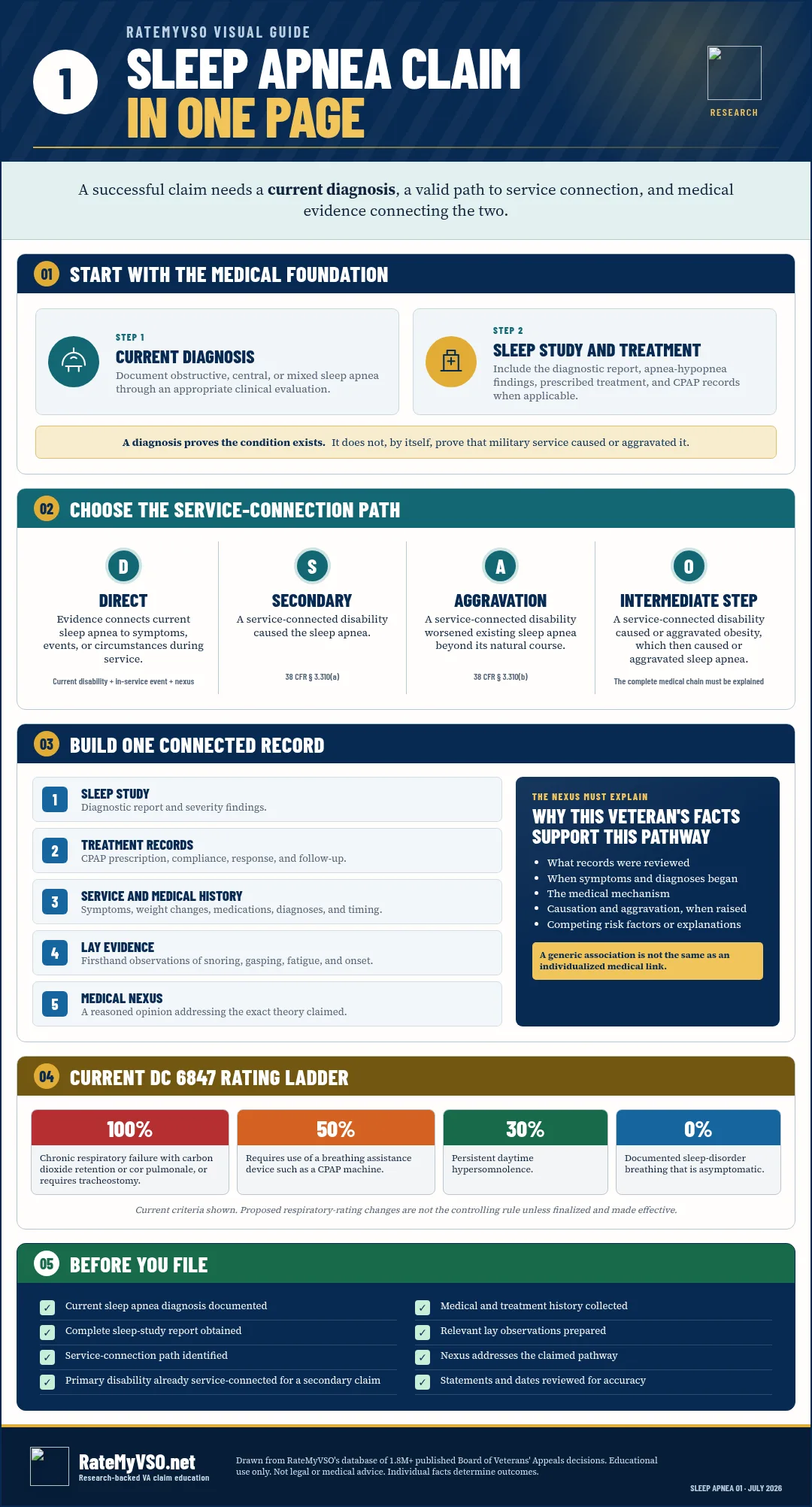
Rating criteria, Board evidence and denial research, and the secondary-condition pathways.
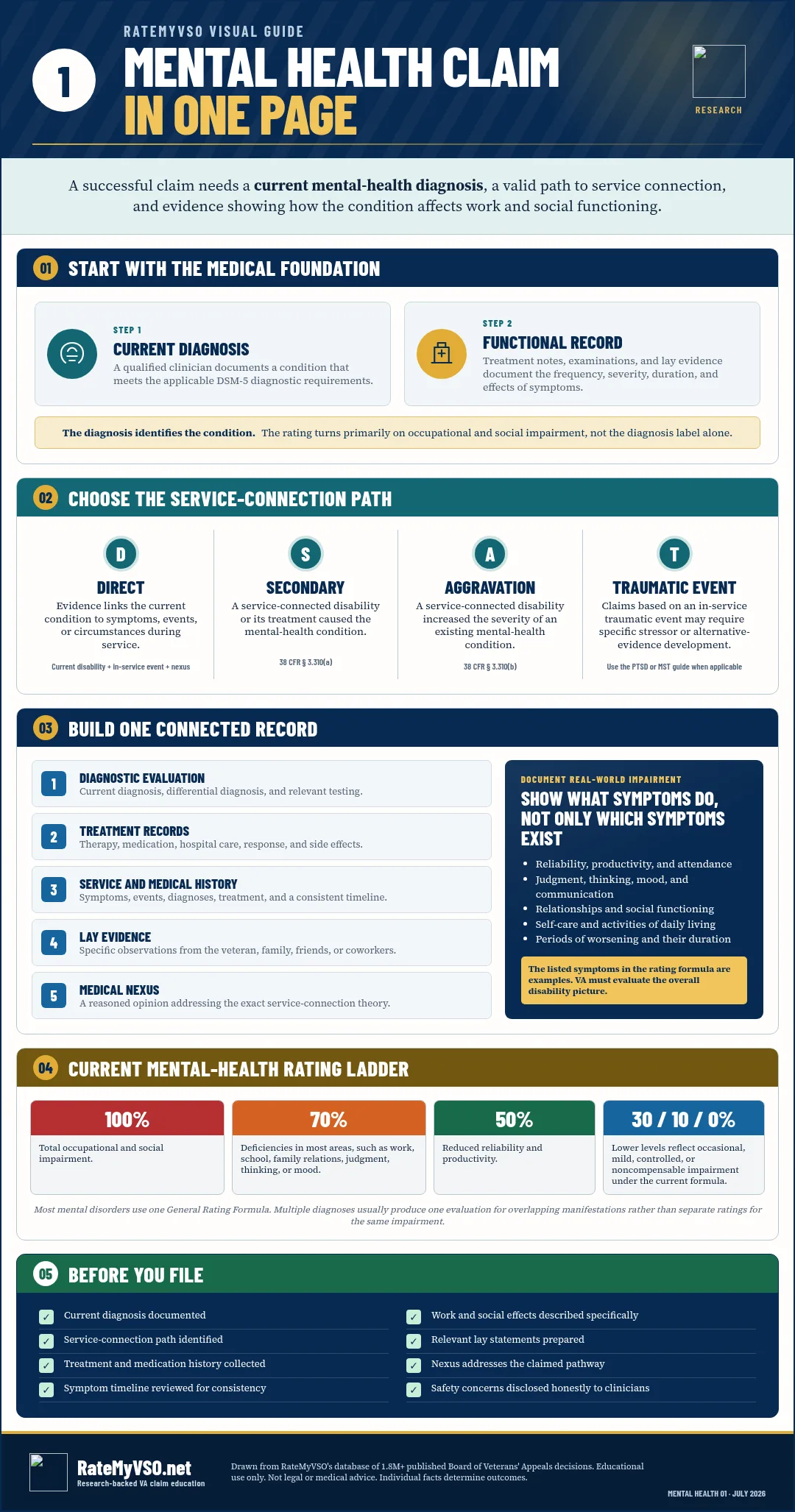
The rating formula, impairment levels, service-connection pathways, and Board research.
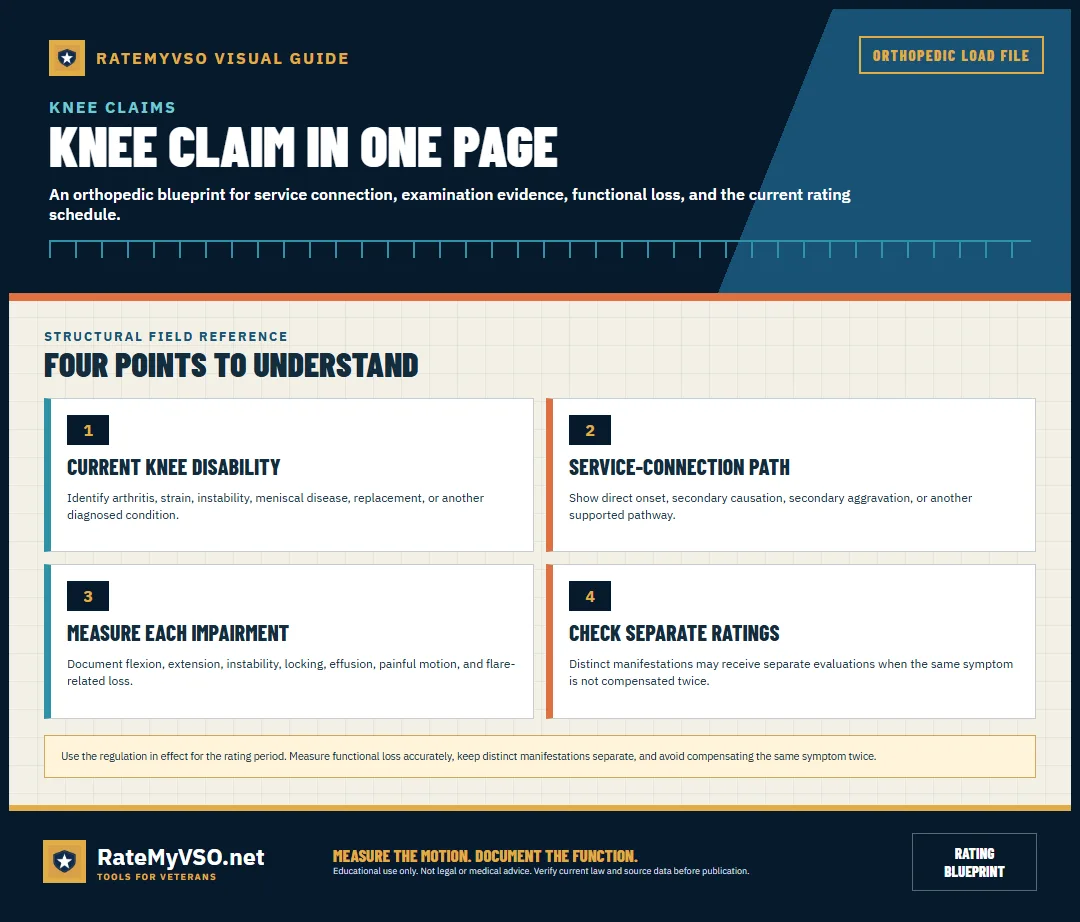
Instability criteria, motion thresholds, IVDS, flatfoot, and Board research.
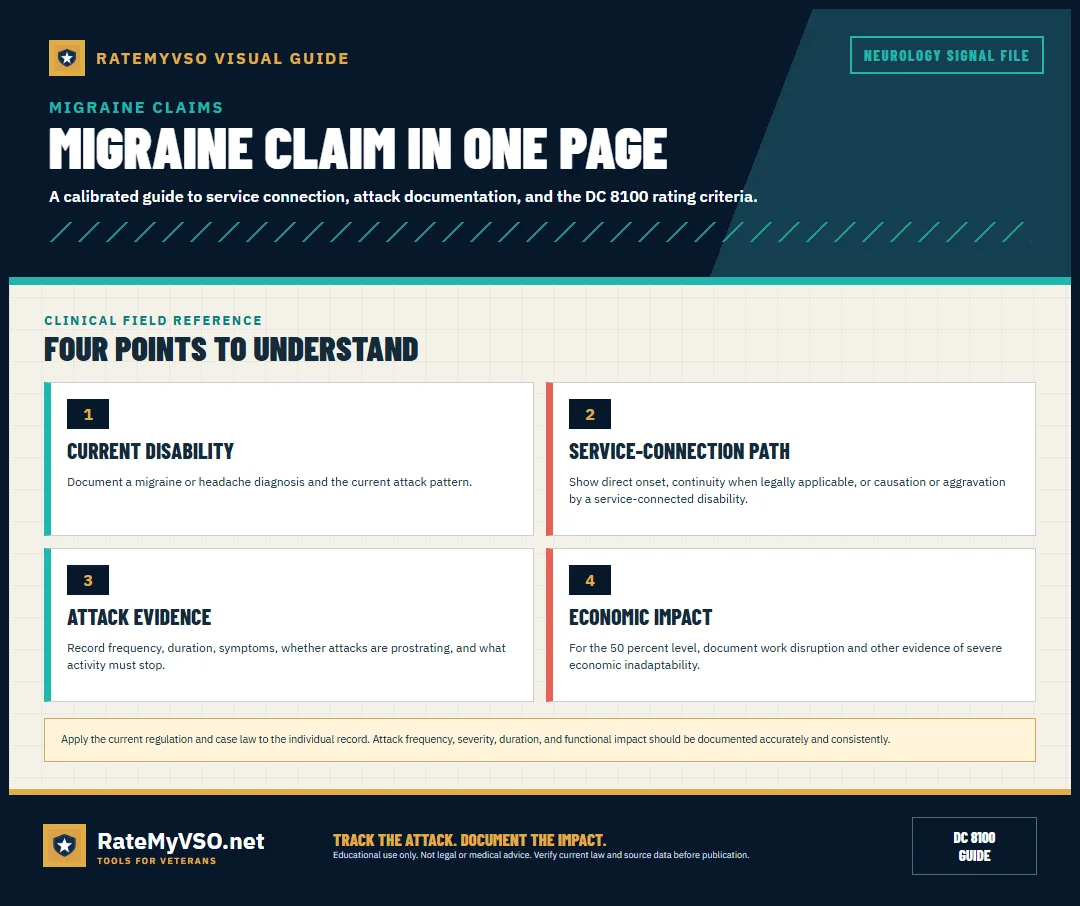
DC 8100 rating levels, prostrating attacks, evidence, secondary pathways, and Board research.
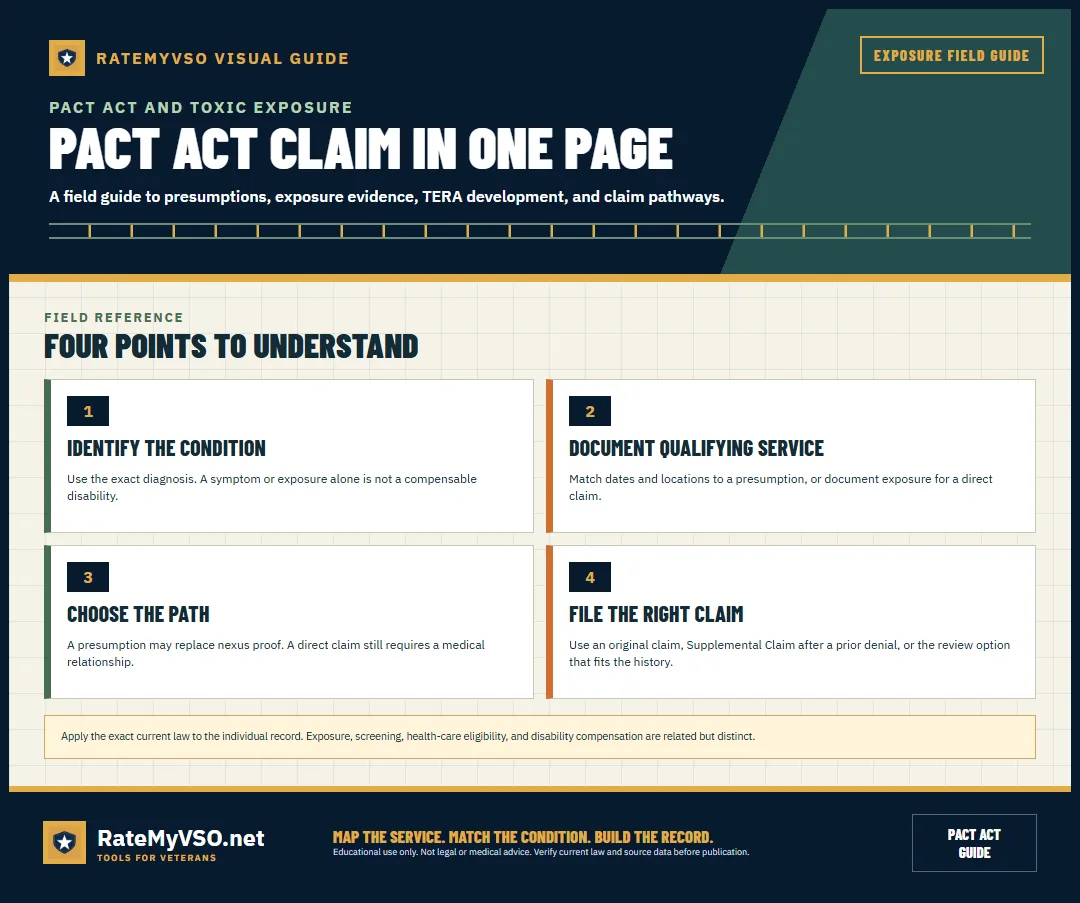
Presumptions, qualifying service and dates, TERA, and Board research.
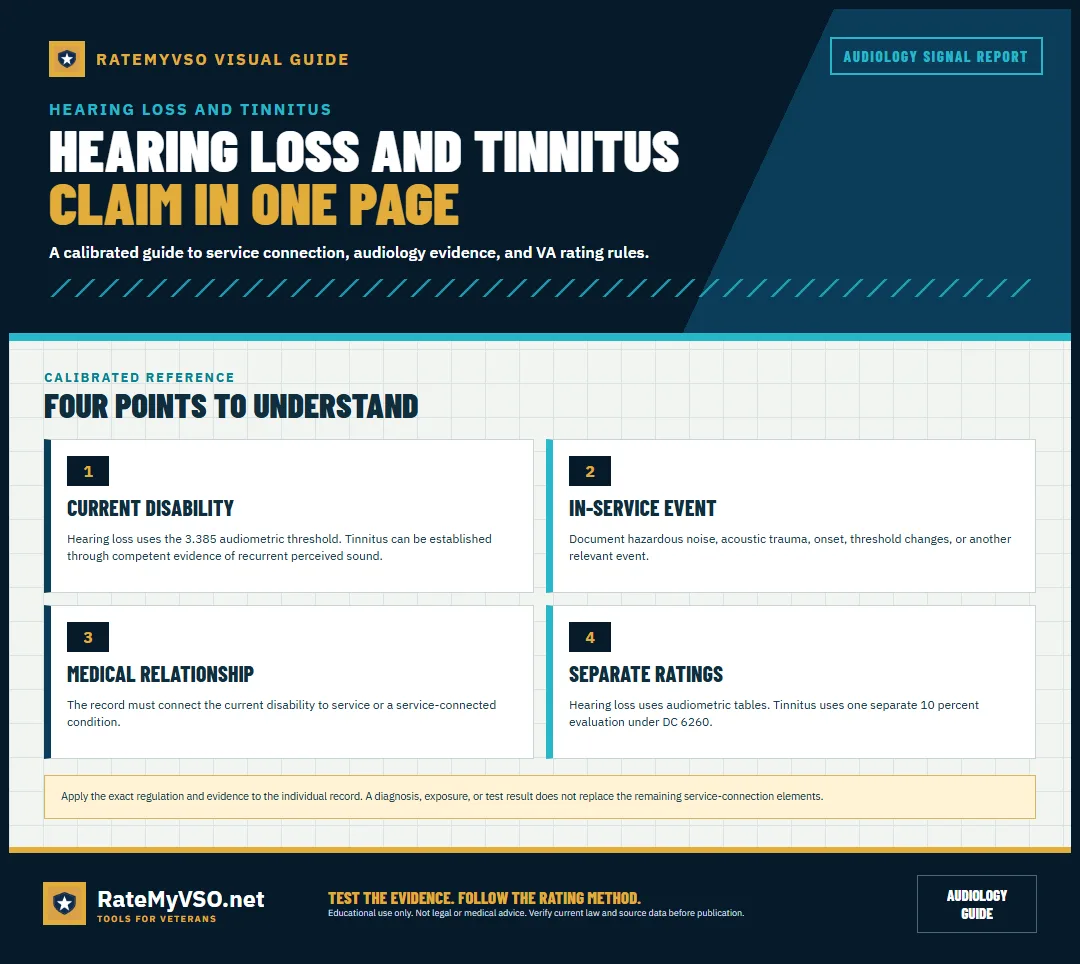
The disability threshold, the required tests, the rating tables, and Board research.
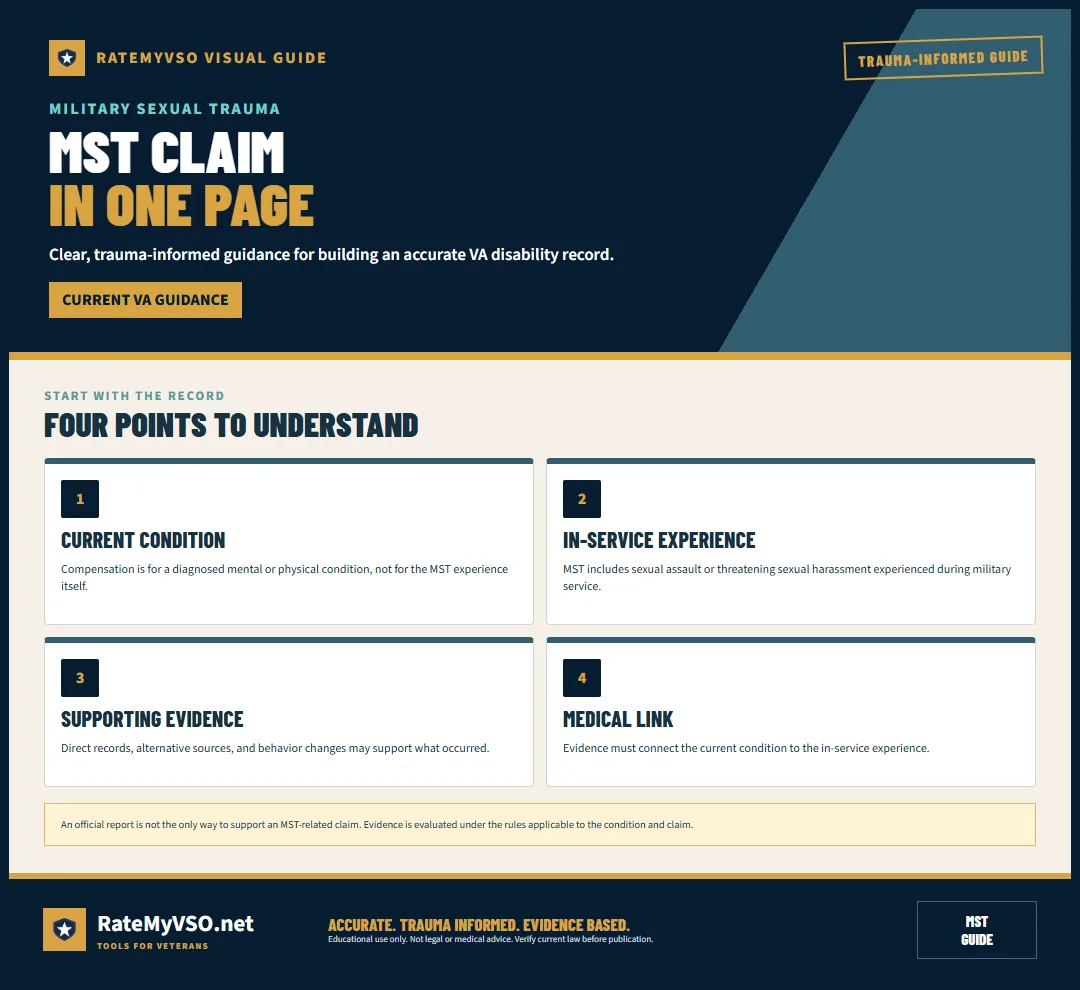
The relaxed evidence standard, marker evidence, the forms, treatment, and Board research.
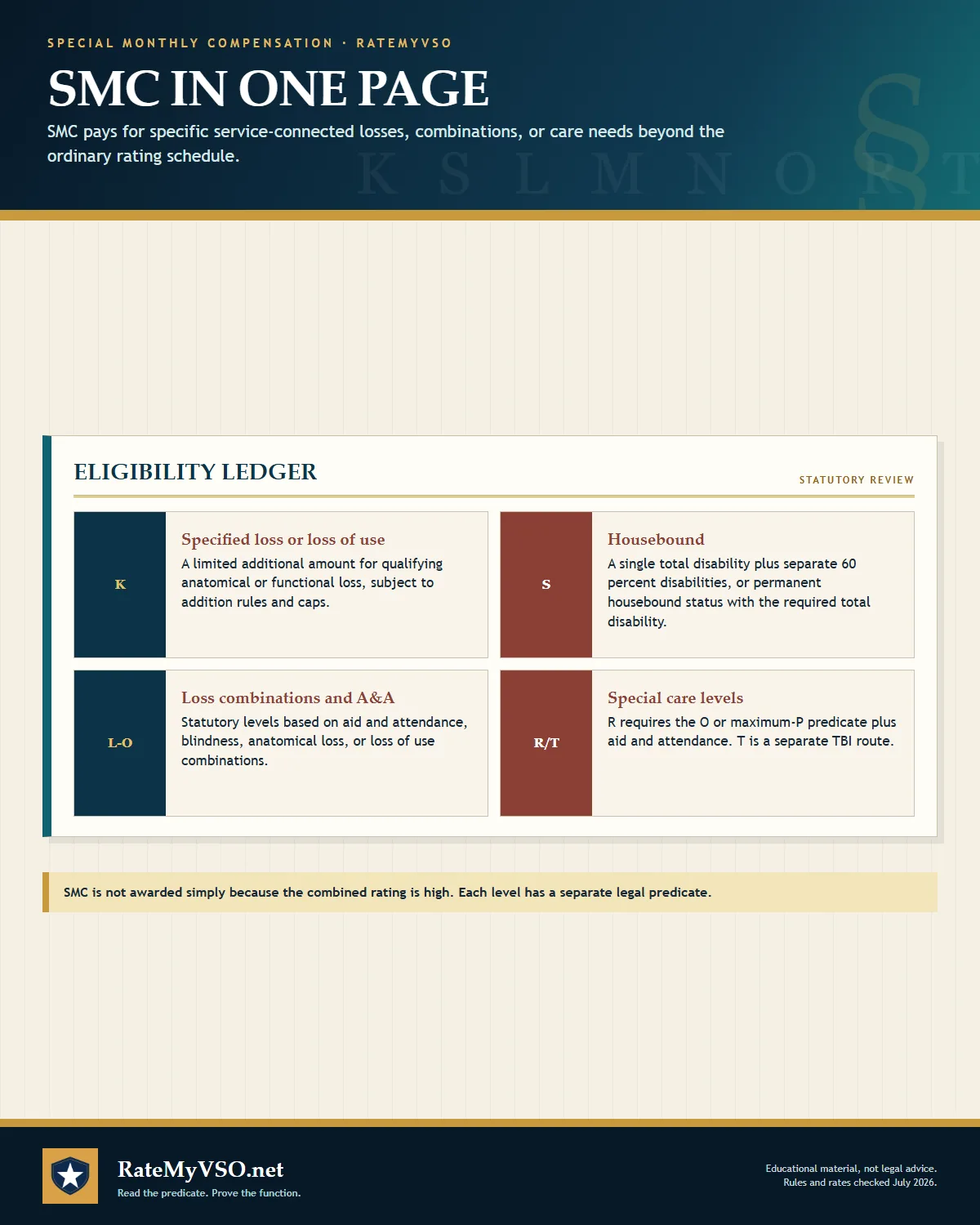
Every level and its legal predicate, the evidence, the 2026 rates, and Board research.
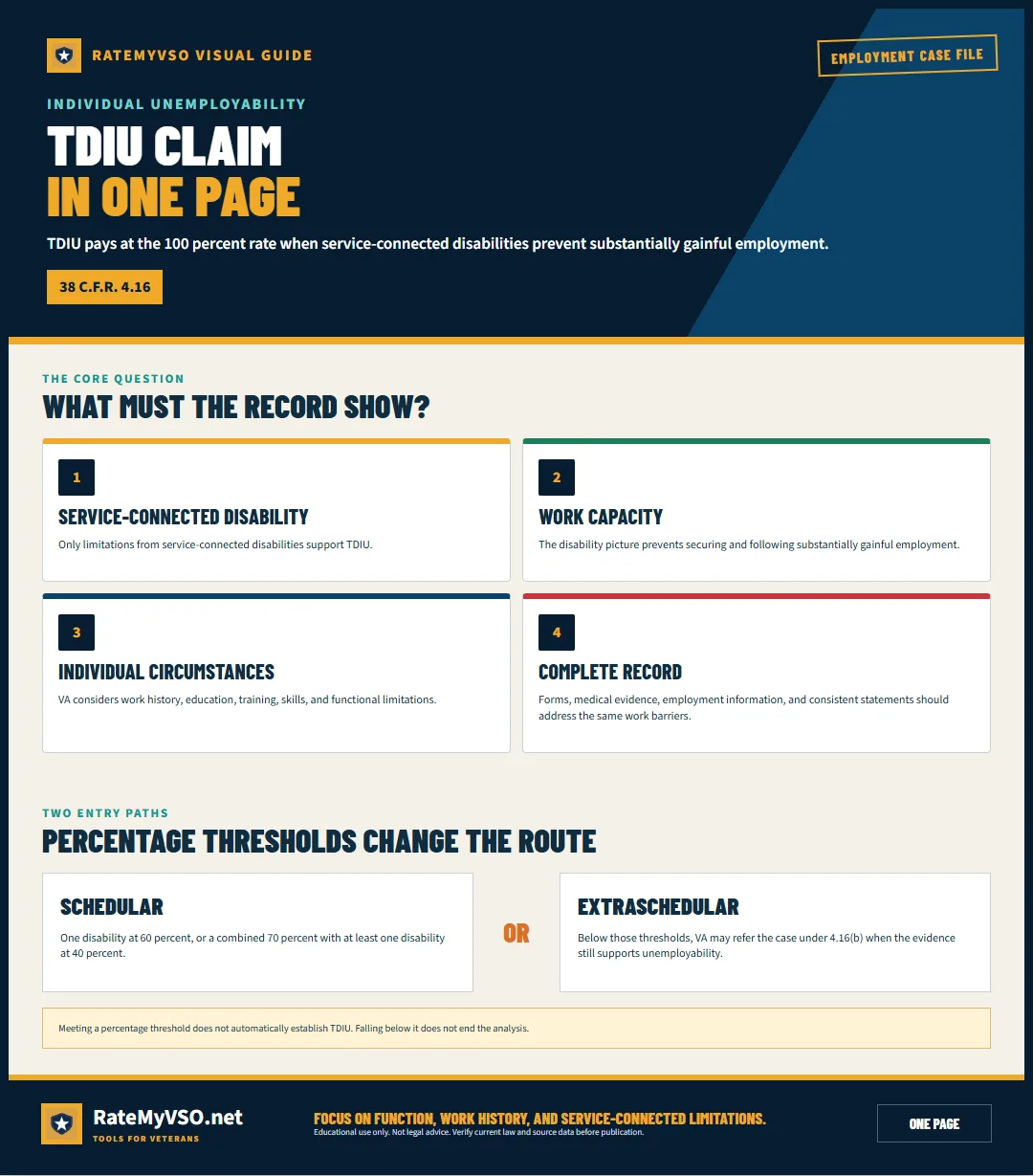
The unemployability threshold, the two regulatory routes, marginal employment, and Board research.
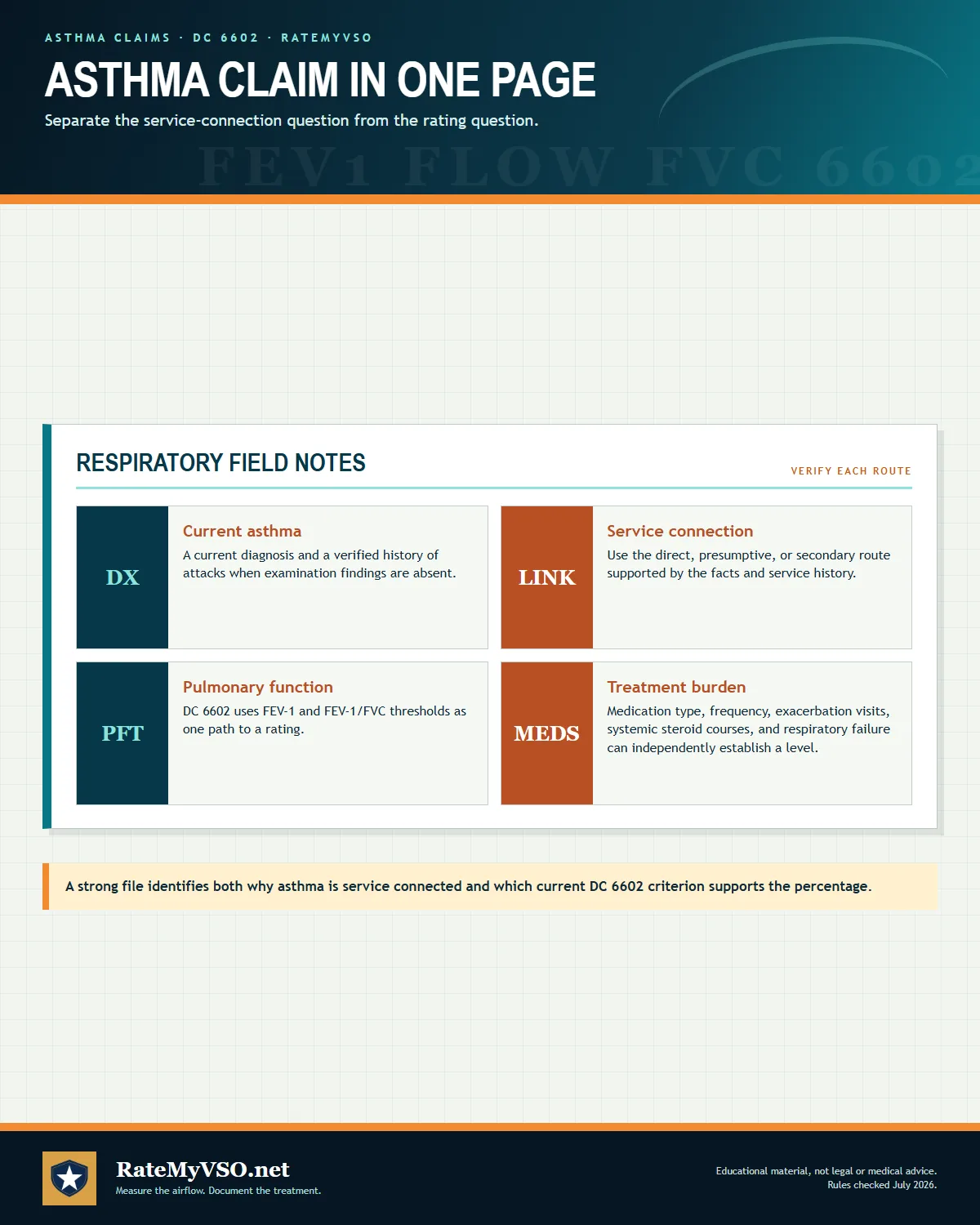
The two rating paths, the medication evidence, the PACT Act route, and Board research.
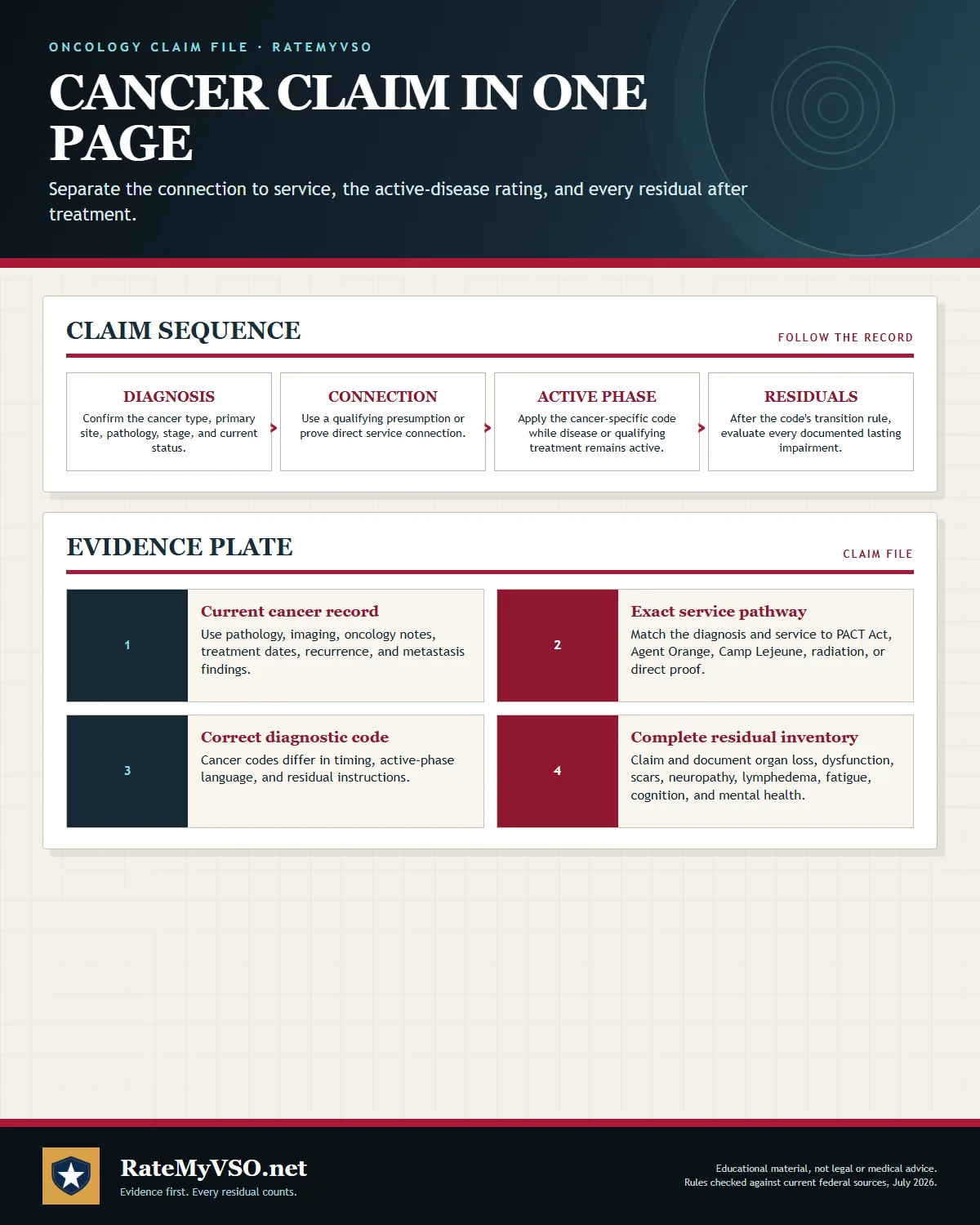
Presumptive pathways, the 100 percent rating, the review exam, residuals by cancer type, and Board research.
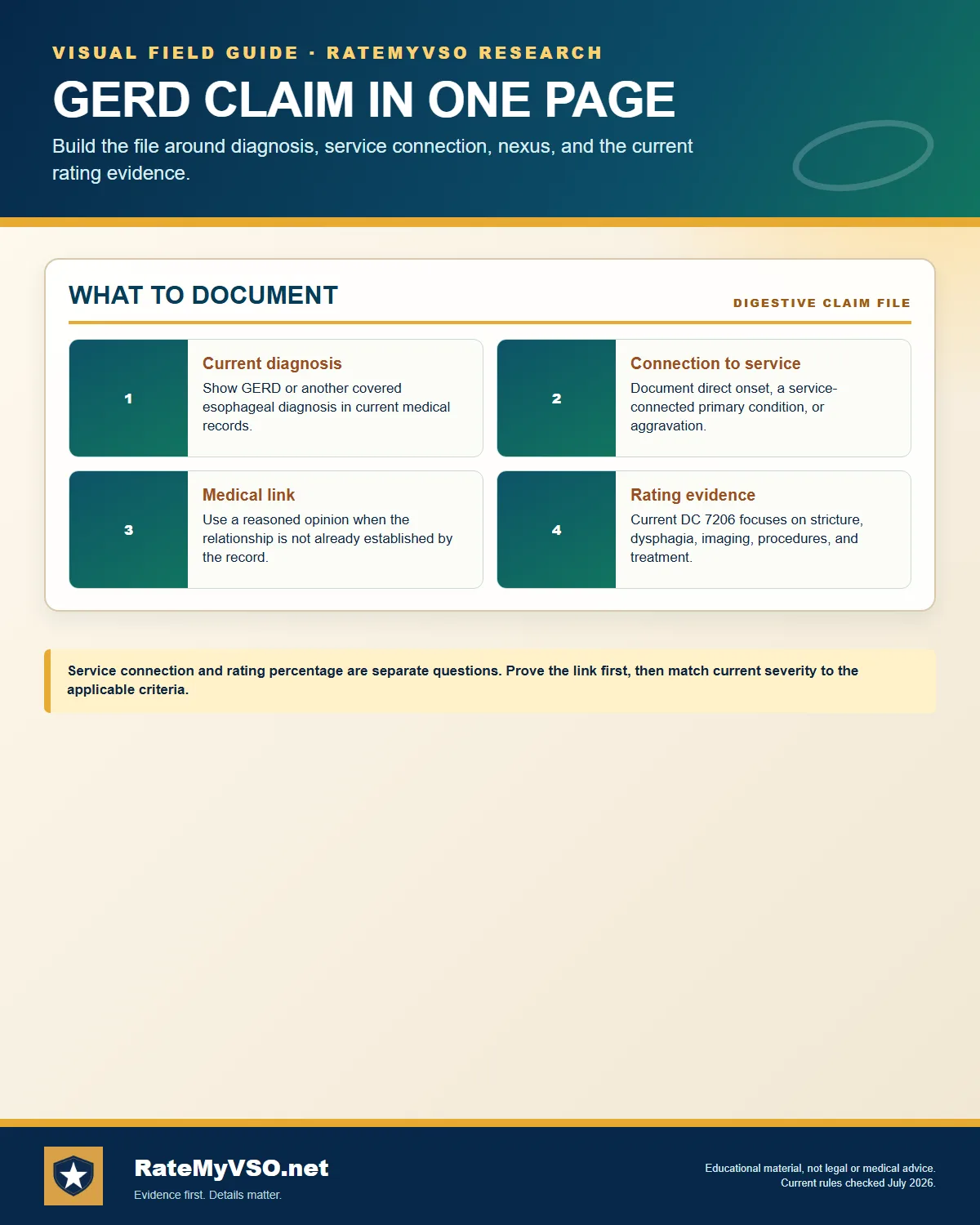
The current DC 7206 and DC 7355 criteria, evidence, and Board research.
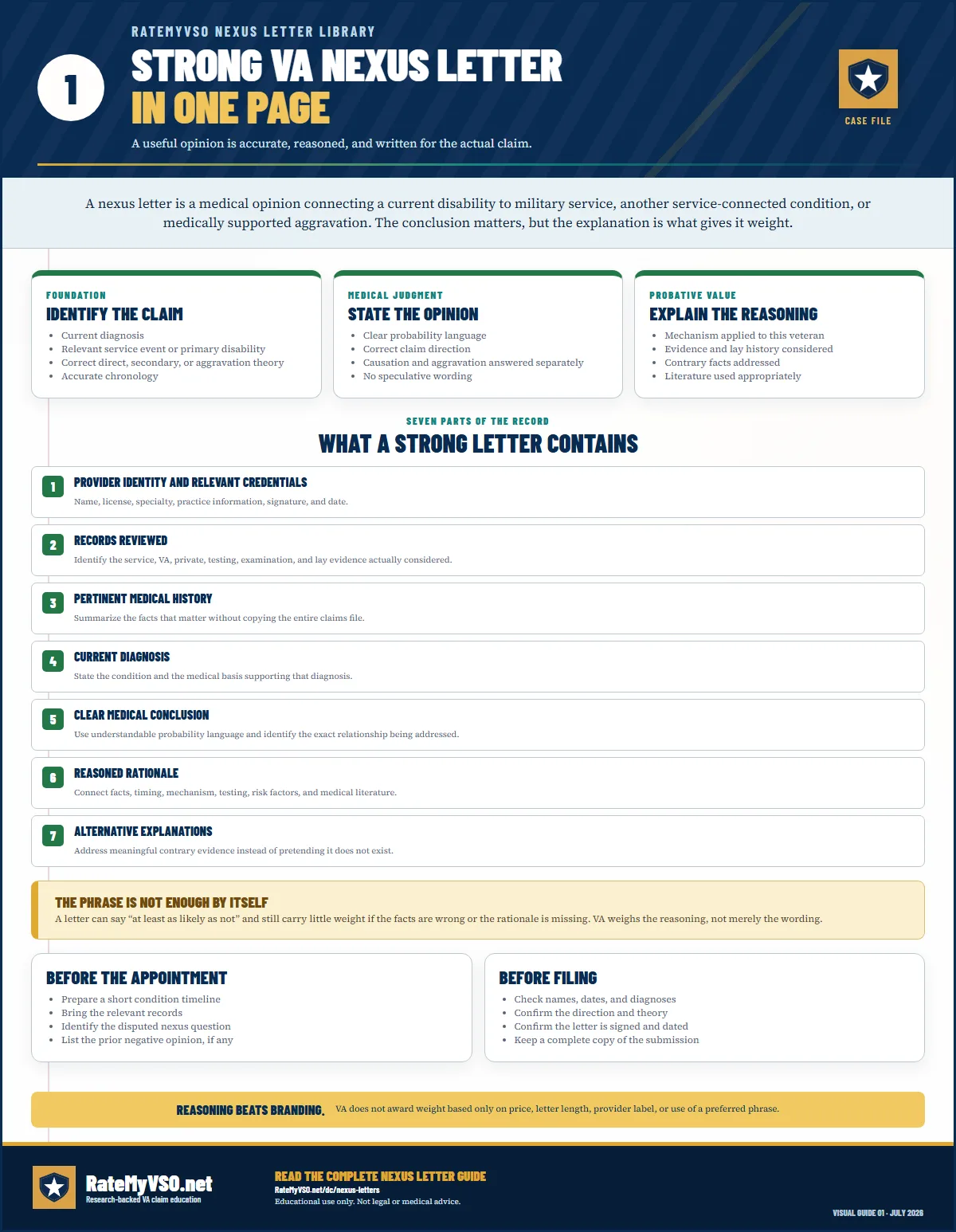
The anatomy of a strong opinion, direct and secondary roadmaps, red flags, and Board research.
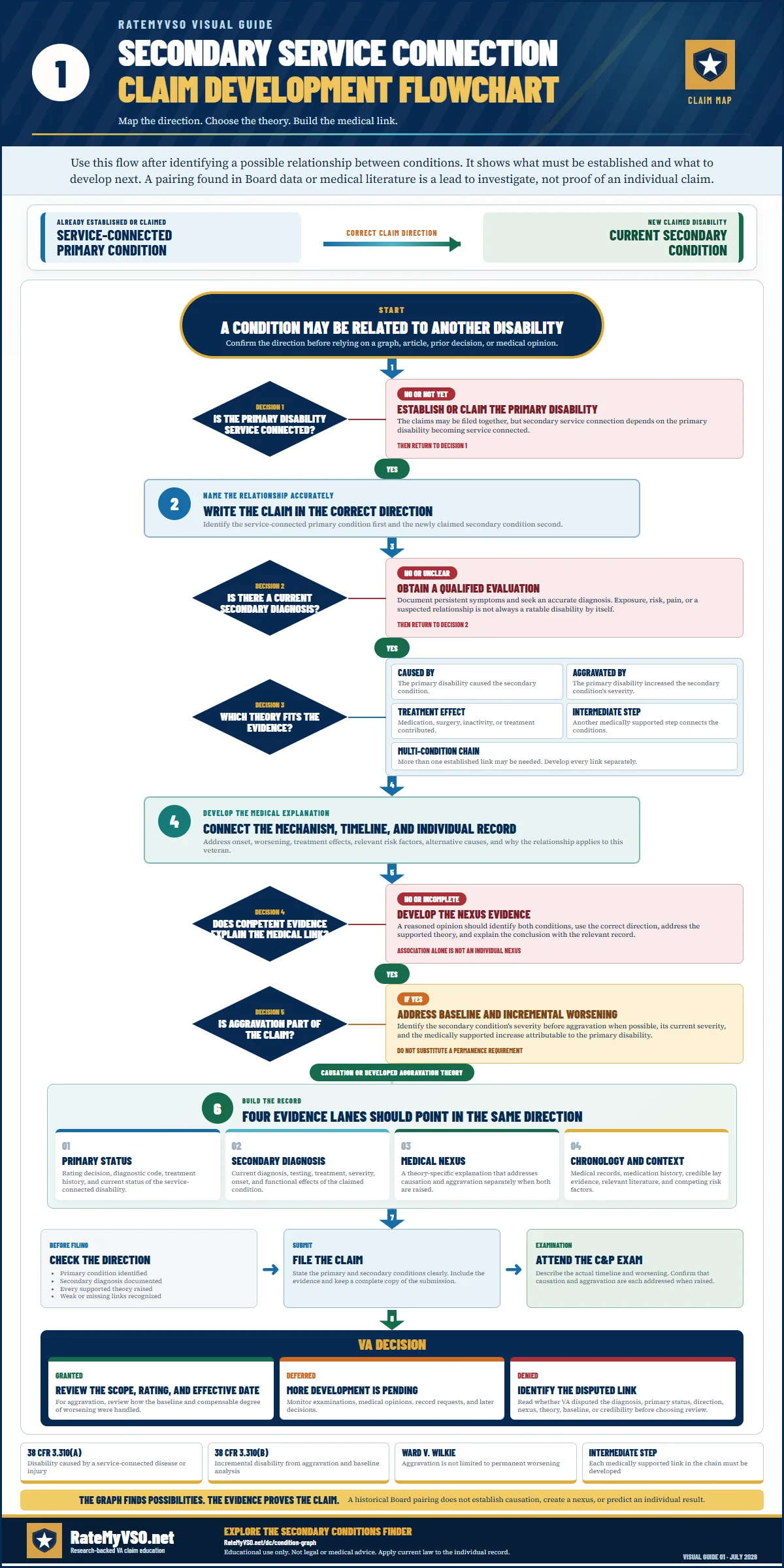
The development flowchart, which direction a secondary claim runs, and caused versus aggravated.
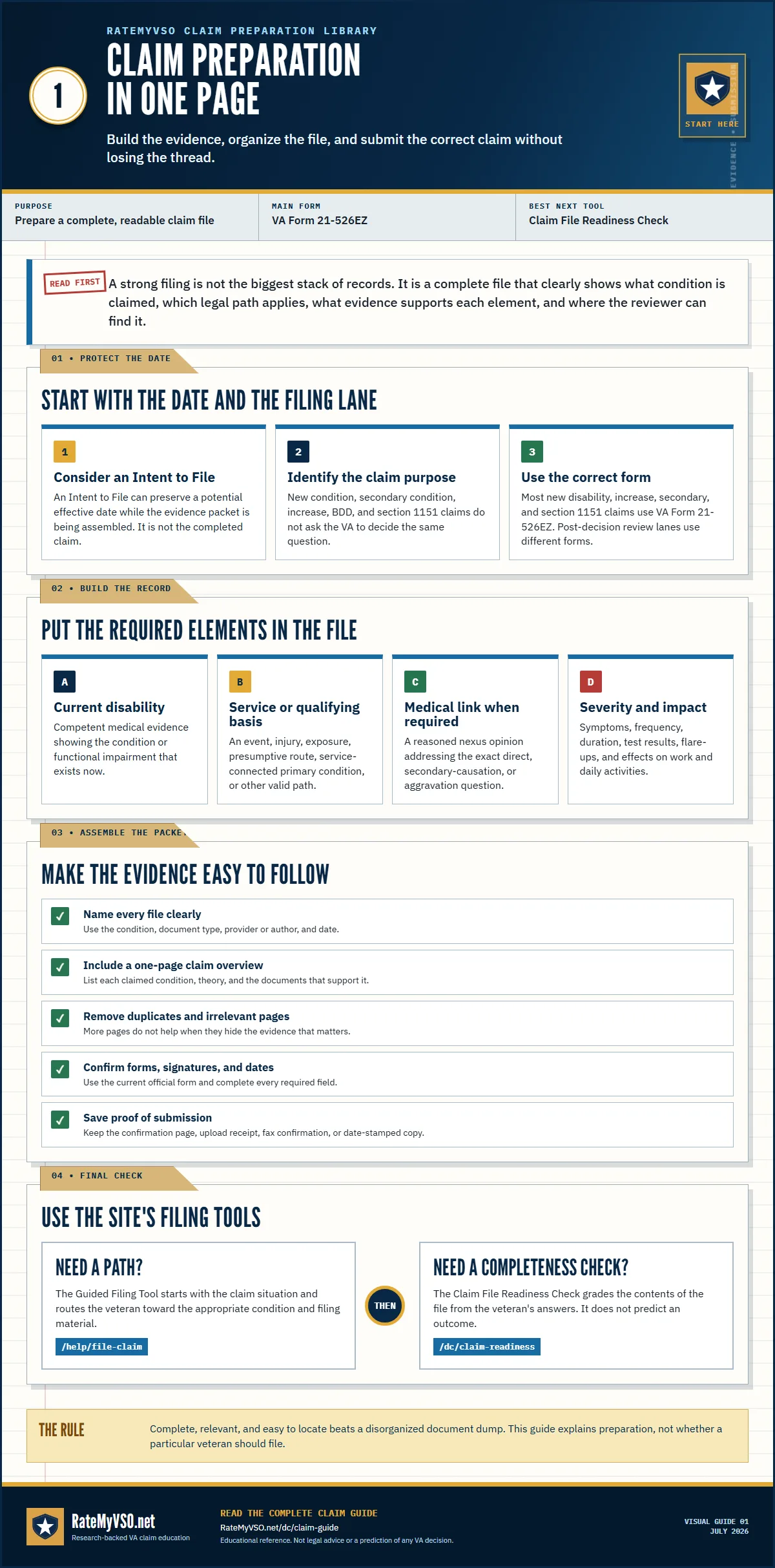
Filing paths, Intent to File, the complete claim file, evidence and records, the forms, and Board lay-evidence research.
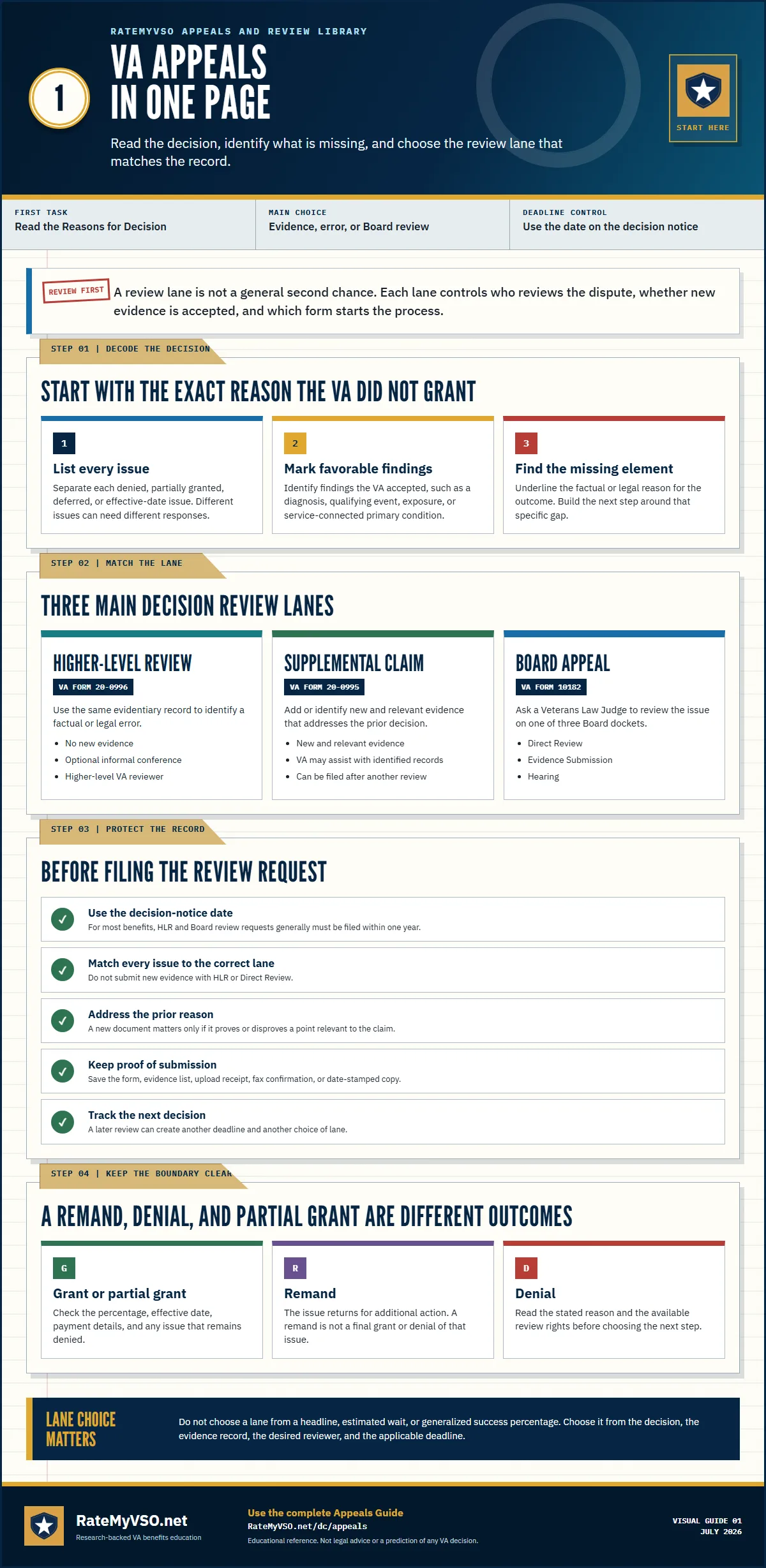
Read a VA decision, pick a review lane, and file HLR, Supplemental Claim, or Board Appeal forms on time.
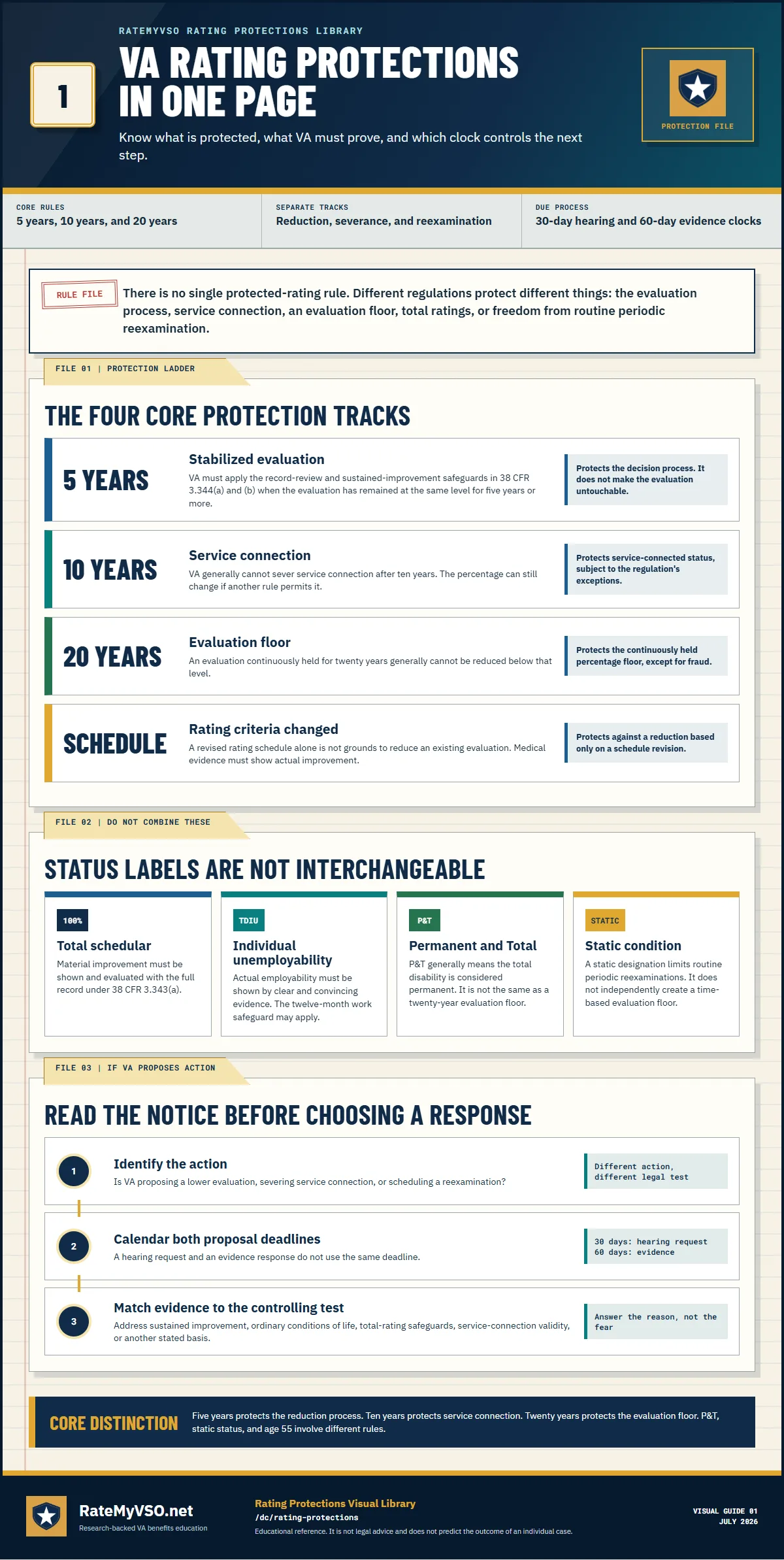
The five, ten, and twenty-year protection clocks, reduction and severance procedure, TDIU and P&T, and future reexaminations.
Standalone One-Page Guides
Twenty-one additional references on rating math, filing status, family and health-care benefits, and specific conditions. Each is a static chart, not part of the weekly research refresh, so it changes only when the underlying rule or form does. Every card opens the full-size chart directly, except the five VA data field guides, which open on the VA Quick Check page beside the instructions they explain.
Rating and compensation mechanics
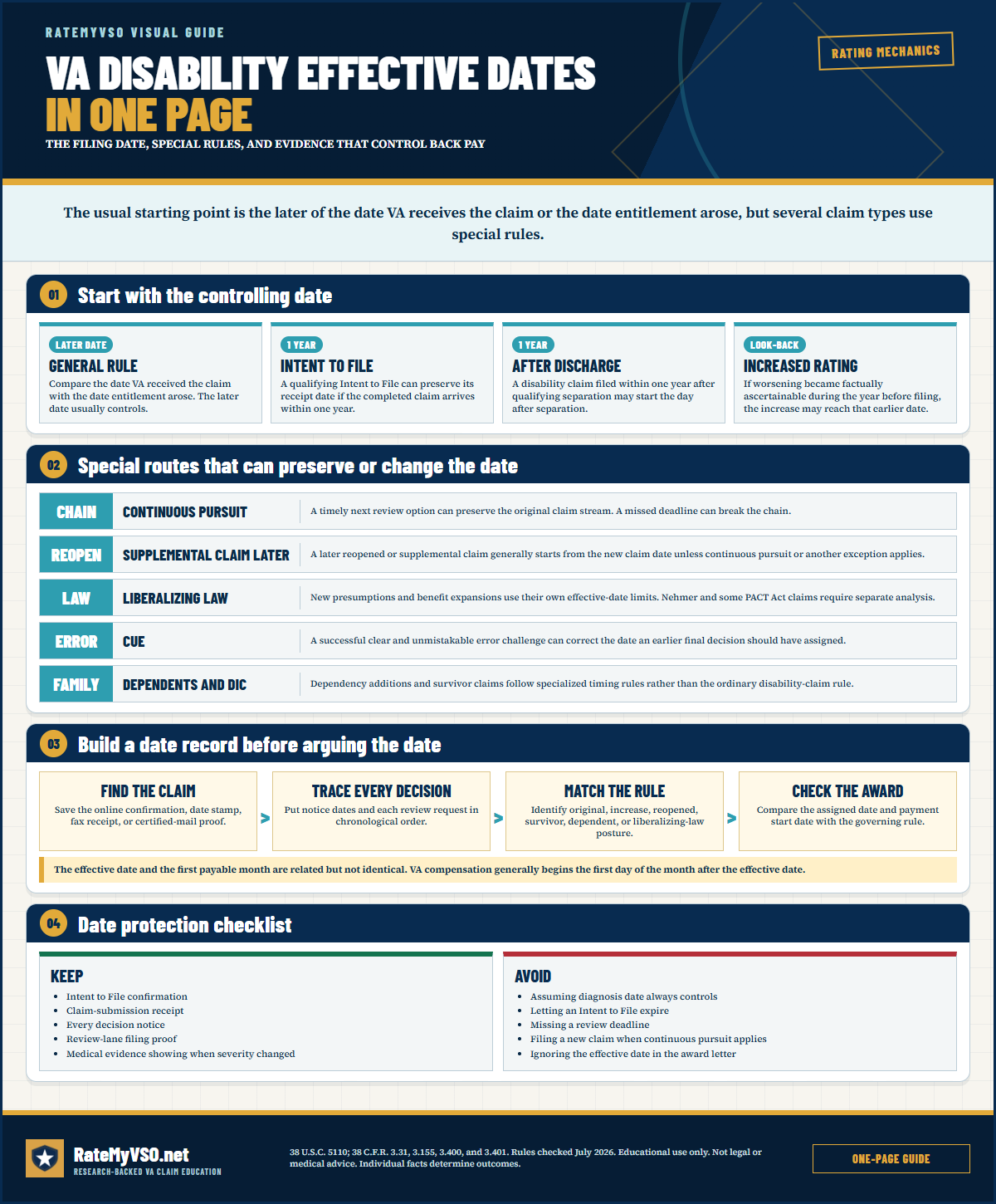
The filing-date rules, special exceptions, and evidence that set your back-pay date.
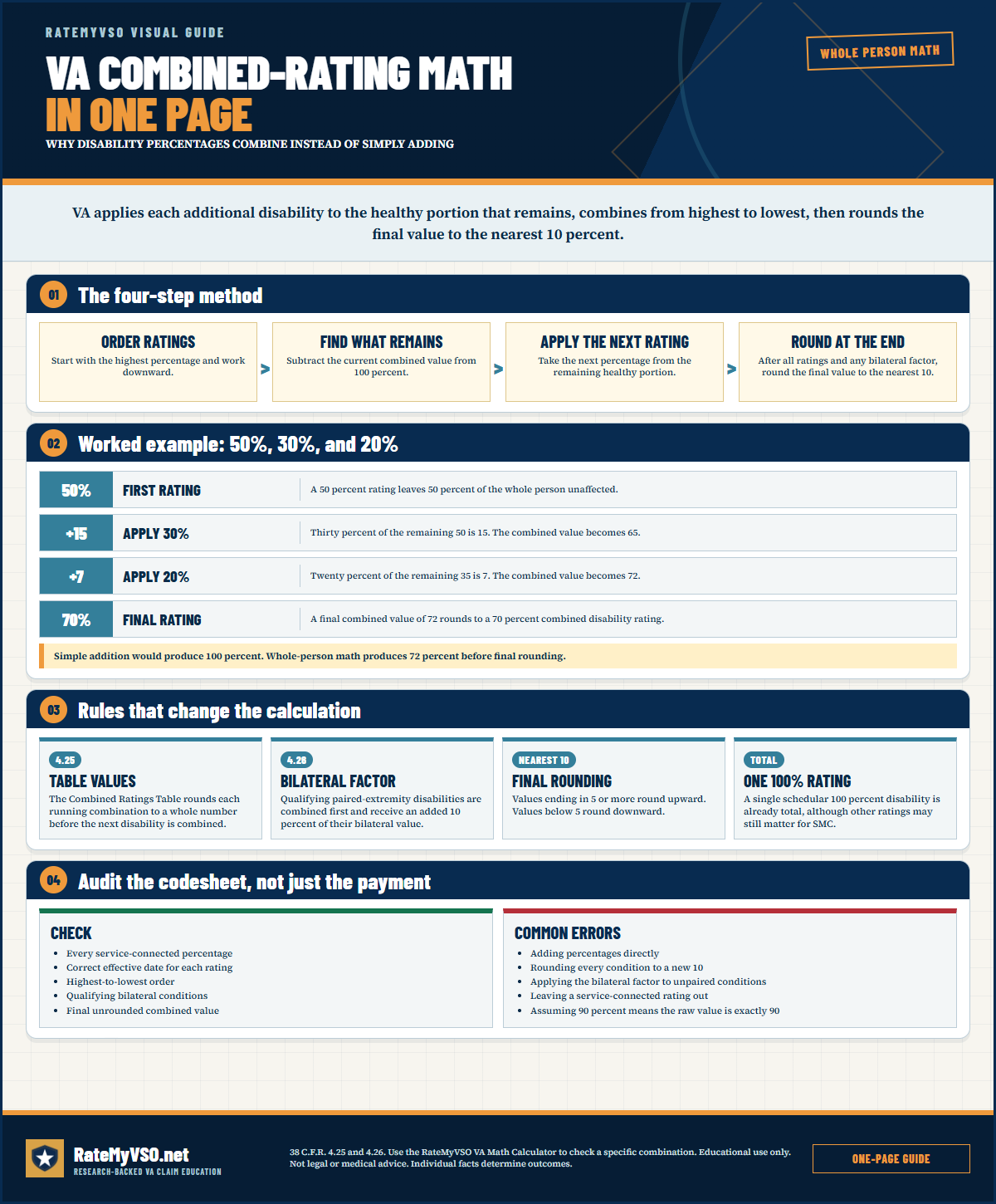
Why disability percentages combine instead of simply adding, worked step by step.
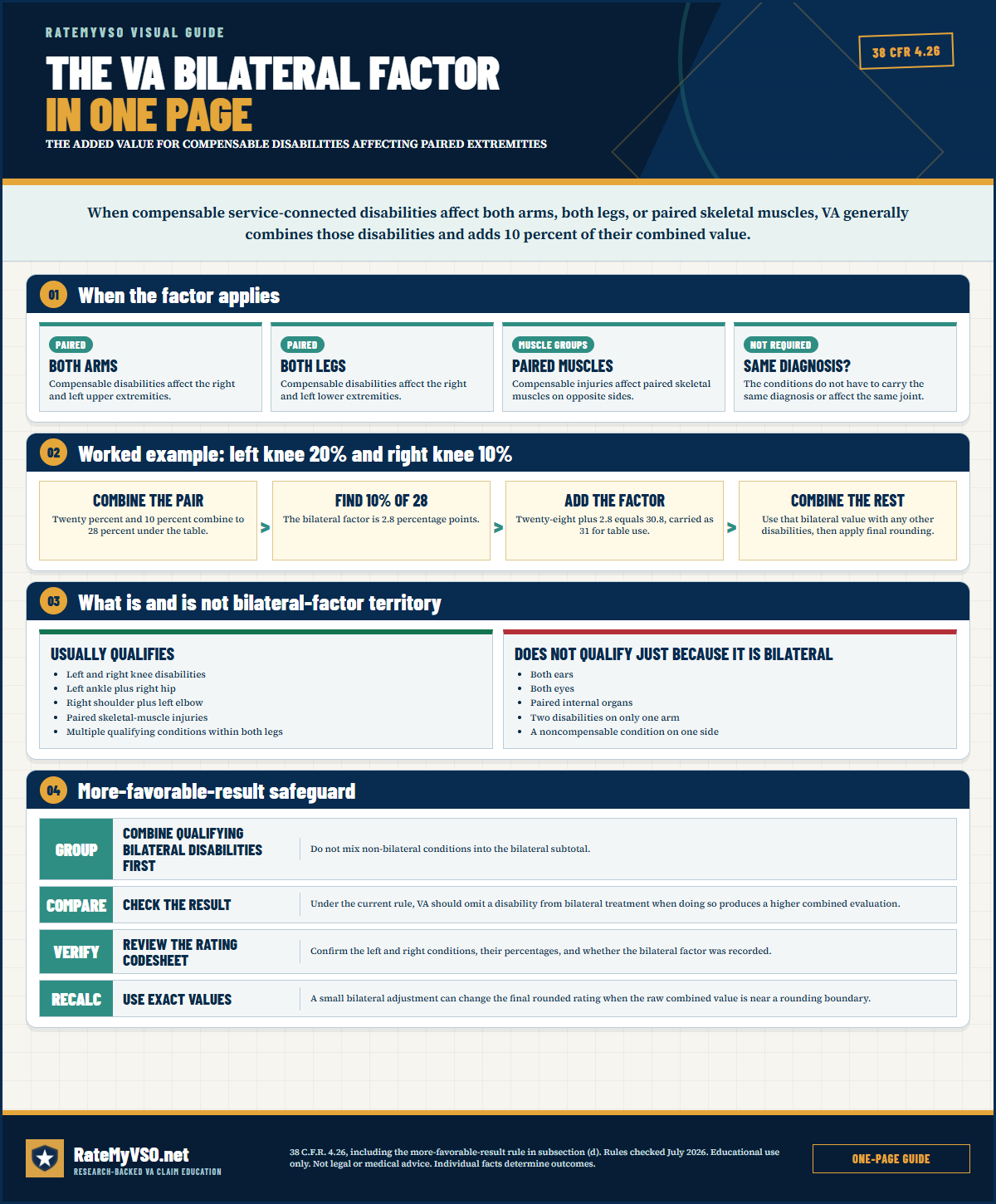
The added value VA math gives to paired-extremity disabilities, and which conditions qualify.
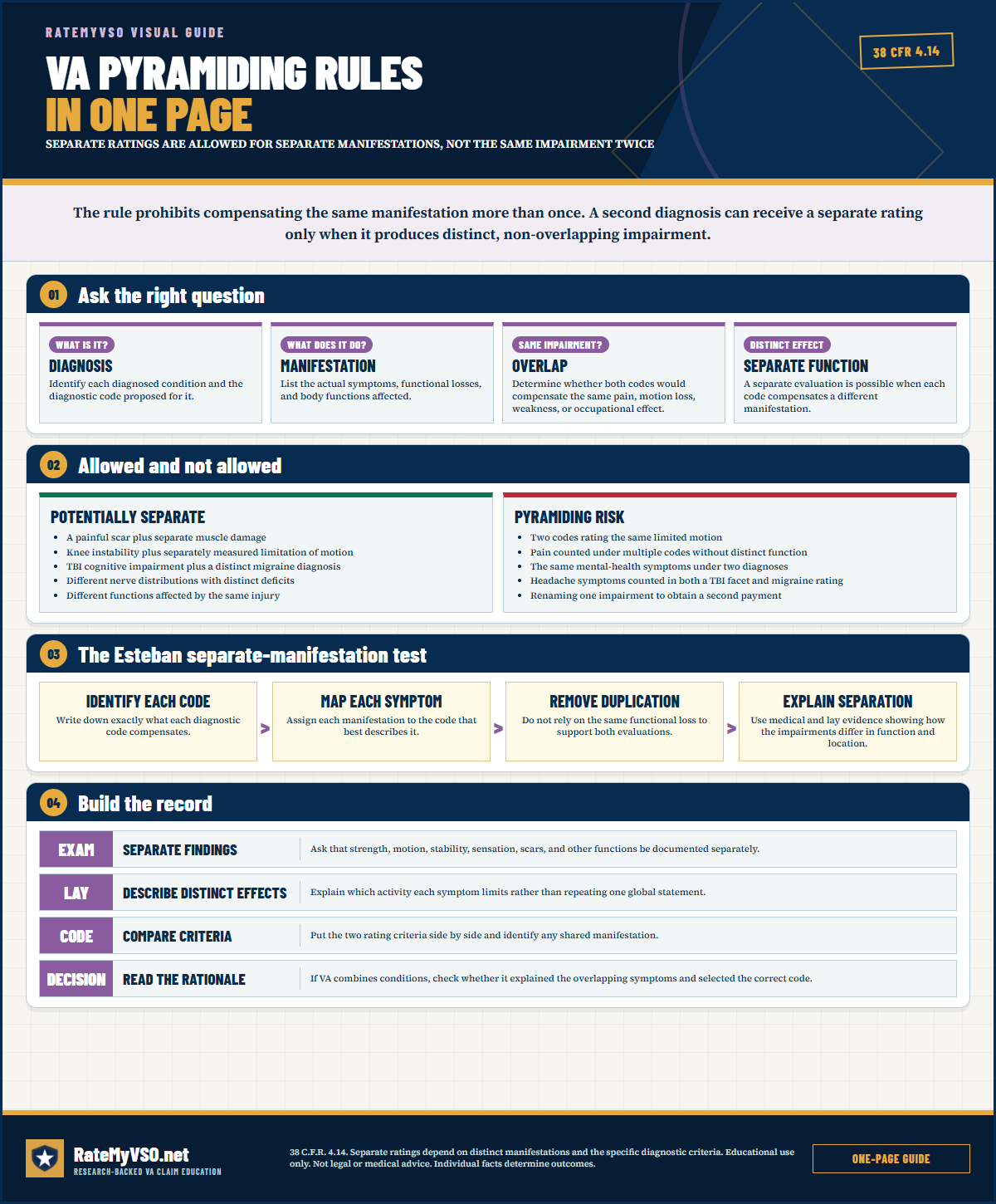
How separate ratings for separate manifestations differ from rating the same impairment twice.
Work, status, and filing
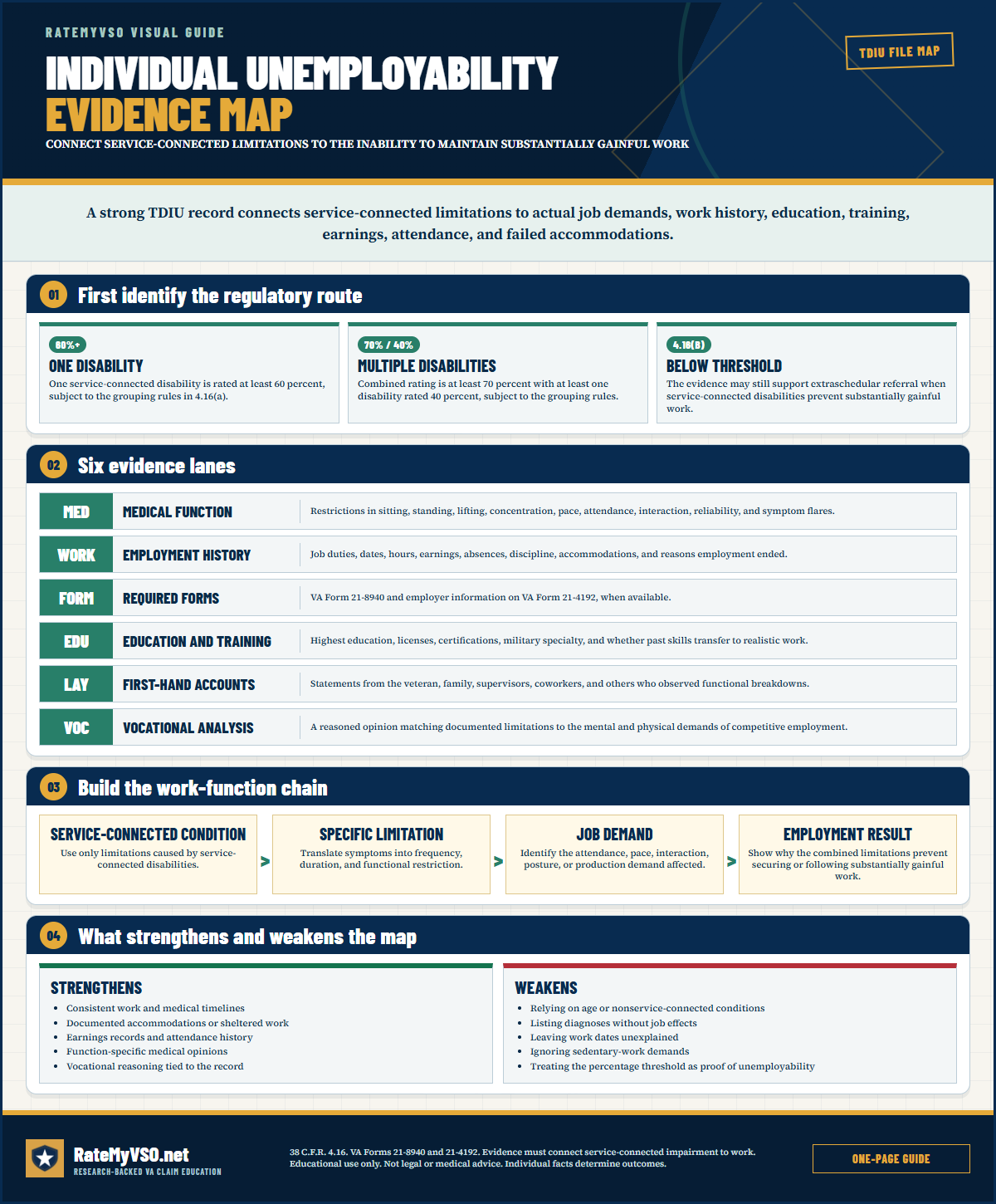
Maps medical, work, and vocational evidence to the TDIU work-function question.
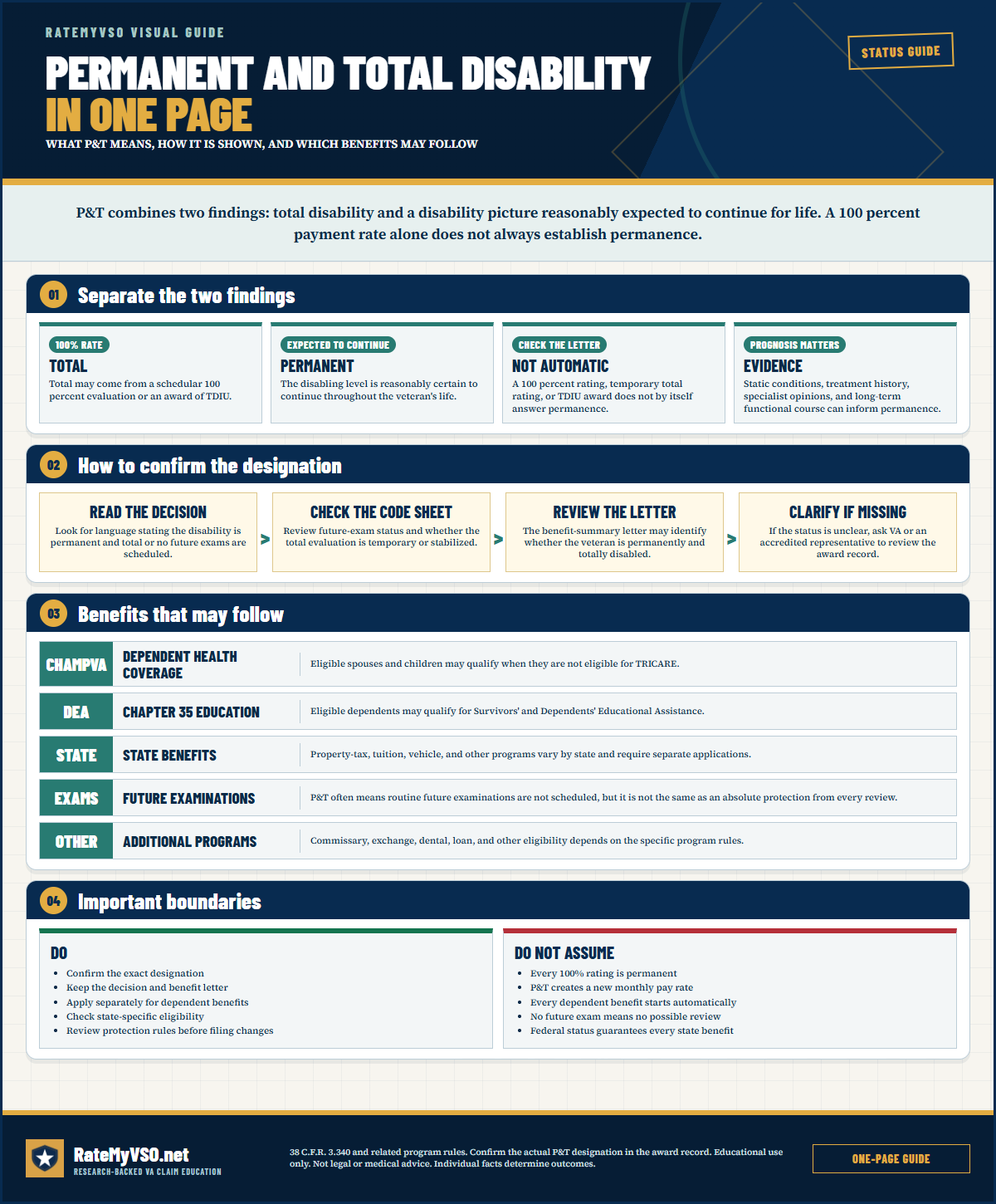
What P&T means, how it is confirmed, and the benefits that may follow.
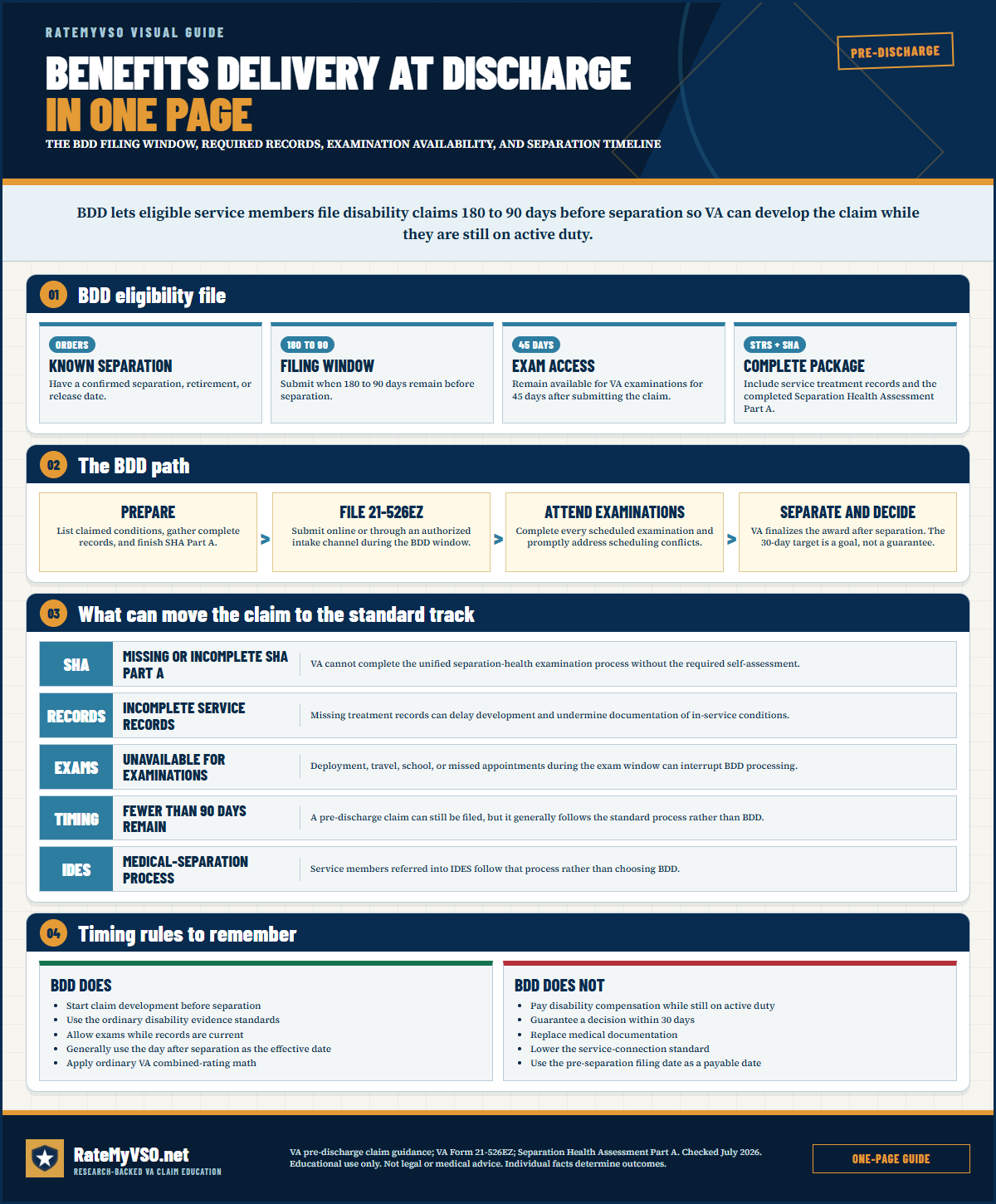
The BDD filing window, required records, and exam availability before separation.
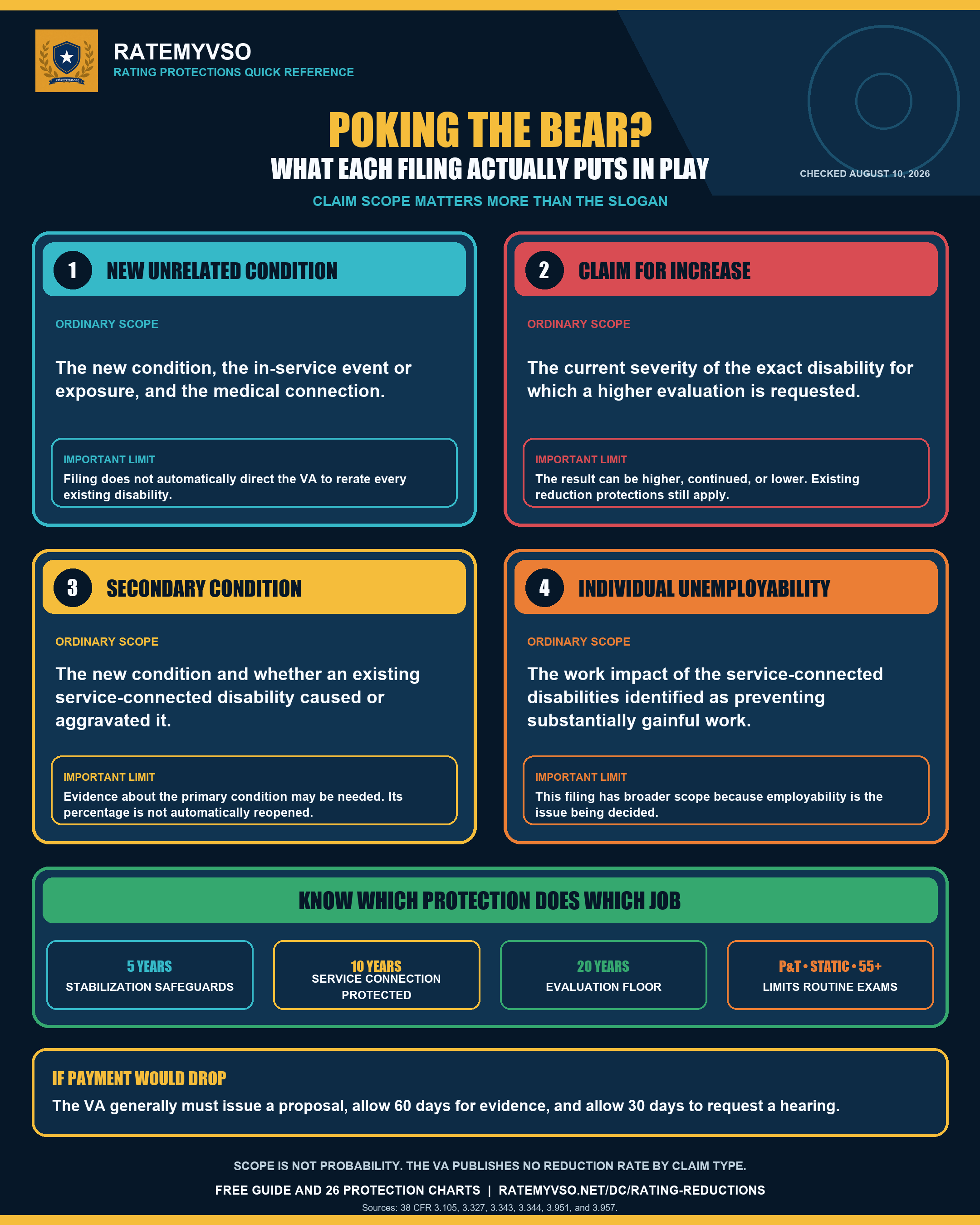
Shows what a new filing is likely to place at issue and which unrelated ratings ordinarily stay outside that claim's scope.
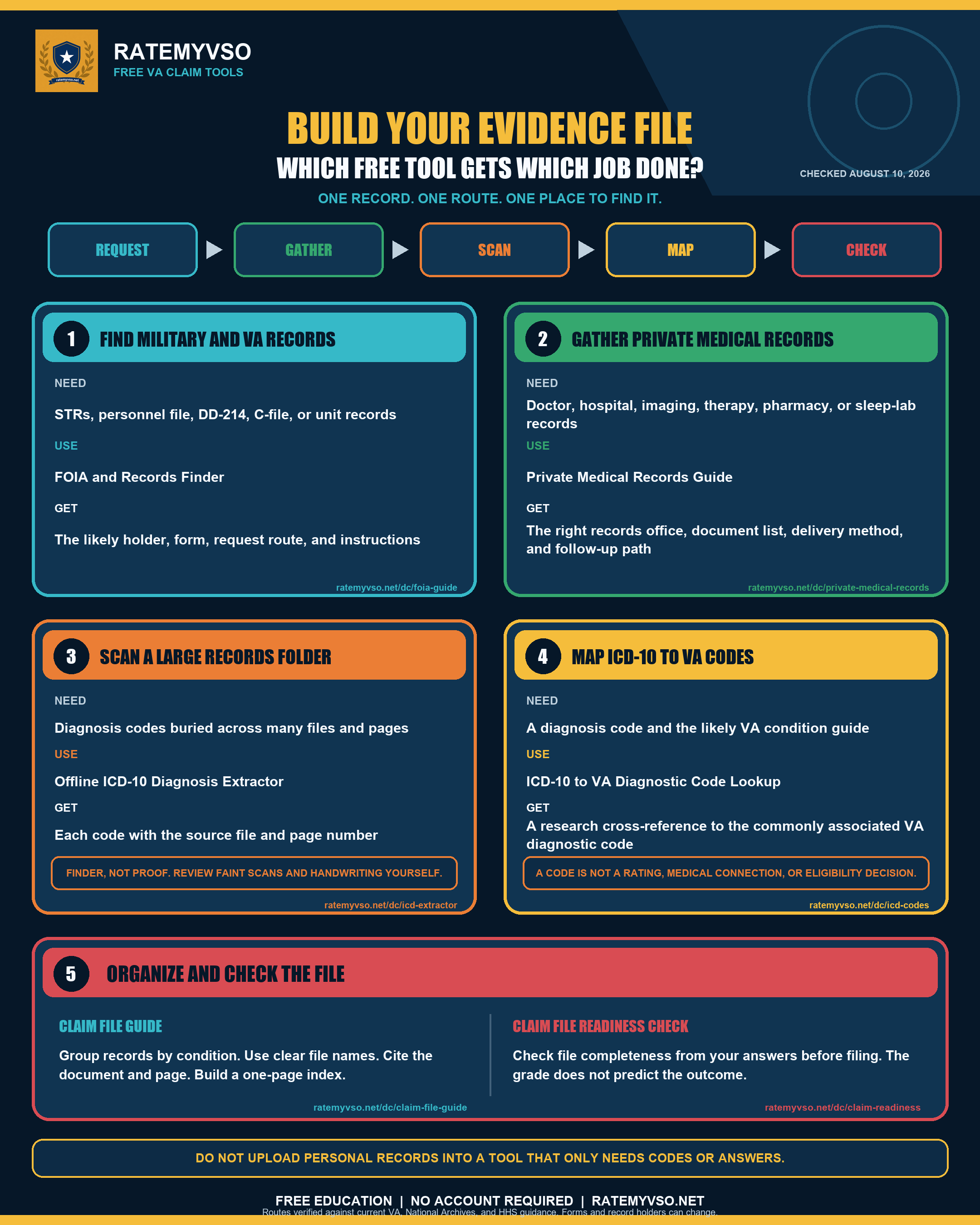
Routes military, private, and VA records to the correct request path and free evidence tools.
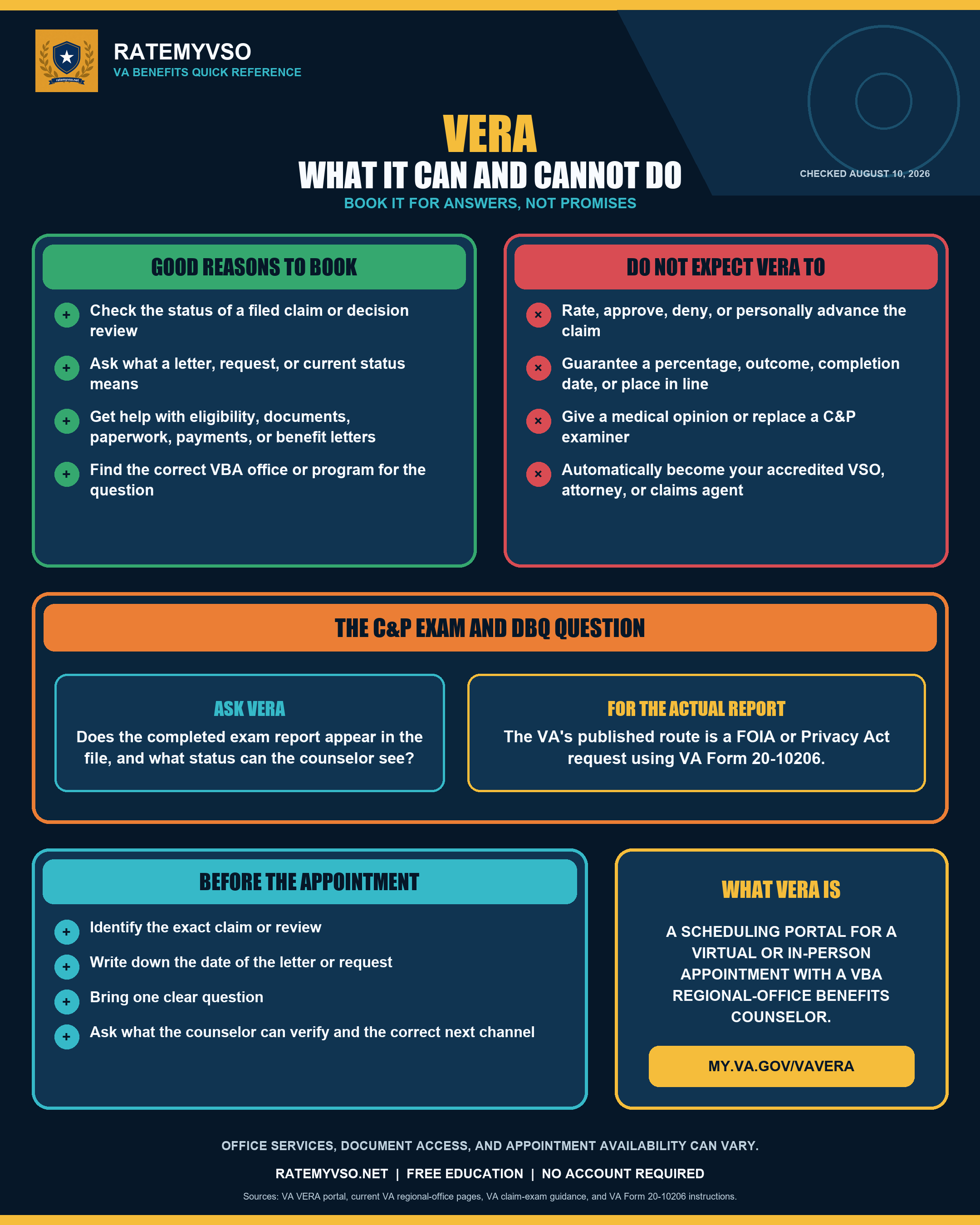
Explains what a VERA counselor can check, what VERA cannot decide, and how to ask a useful question.
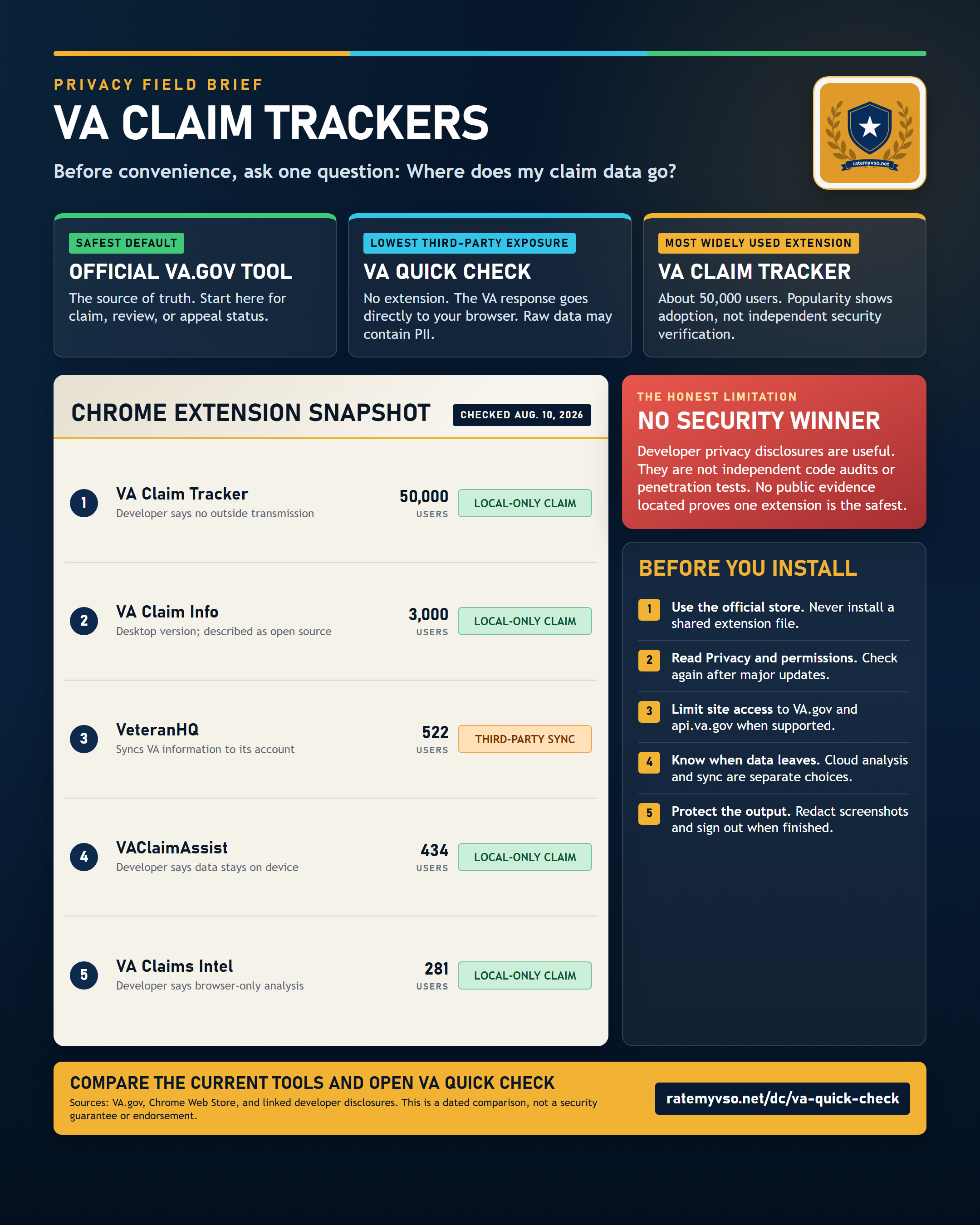
Compares the official VA status tool, VA Quick Check, and third-party browser extensions by where claim data is processed.
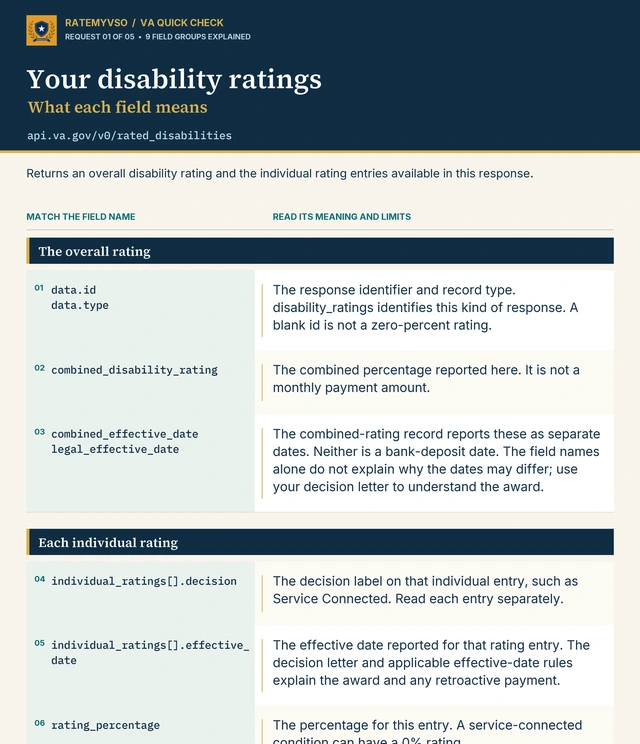
Plain-English explanations of your ratings, profile, claims, claim details, and appeals.
Family, survivors, health care, and state benefits
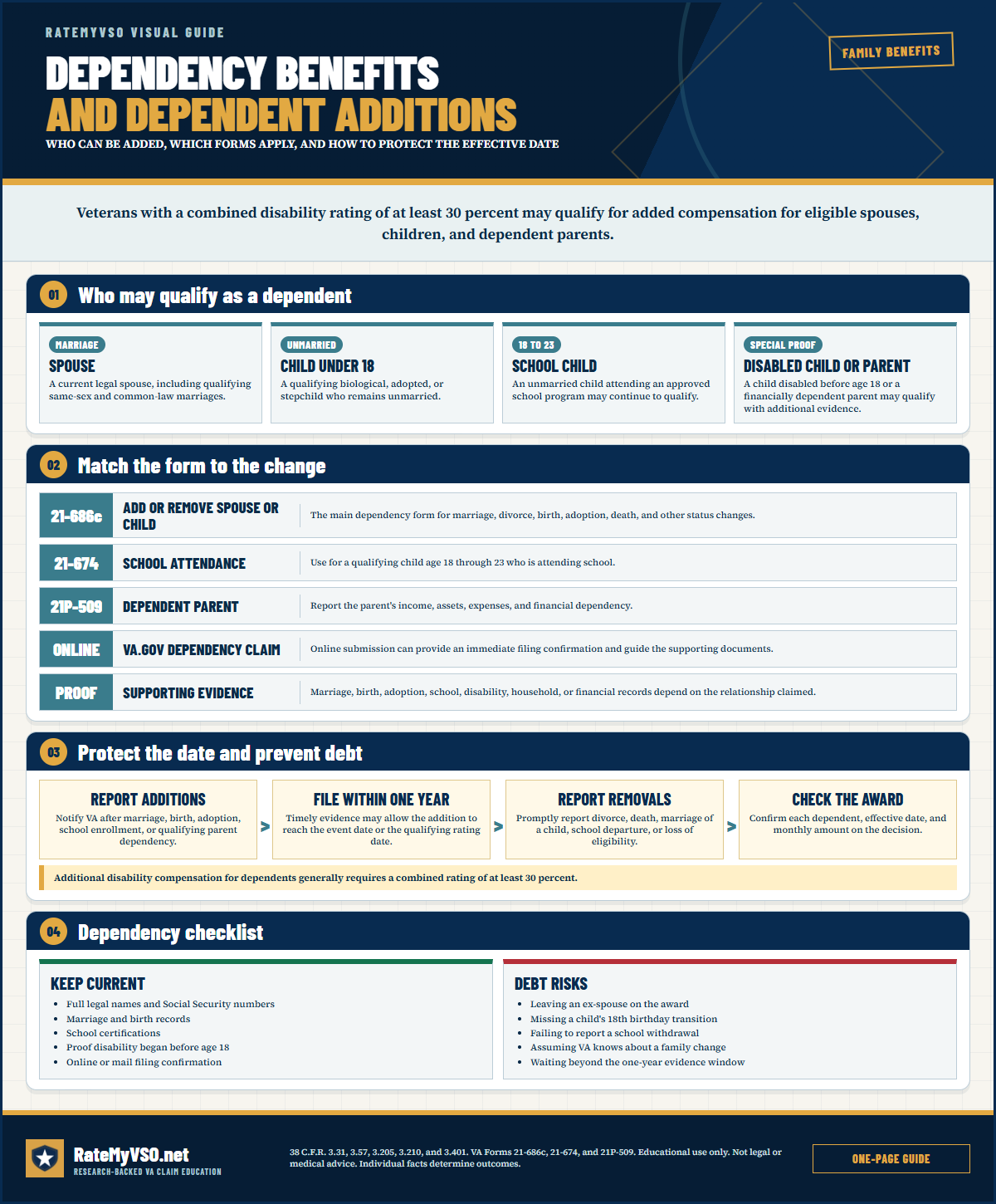
Which dependents qualify, the forms to use, and how to protect the effective date.
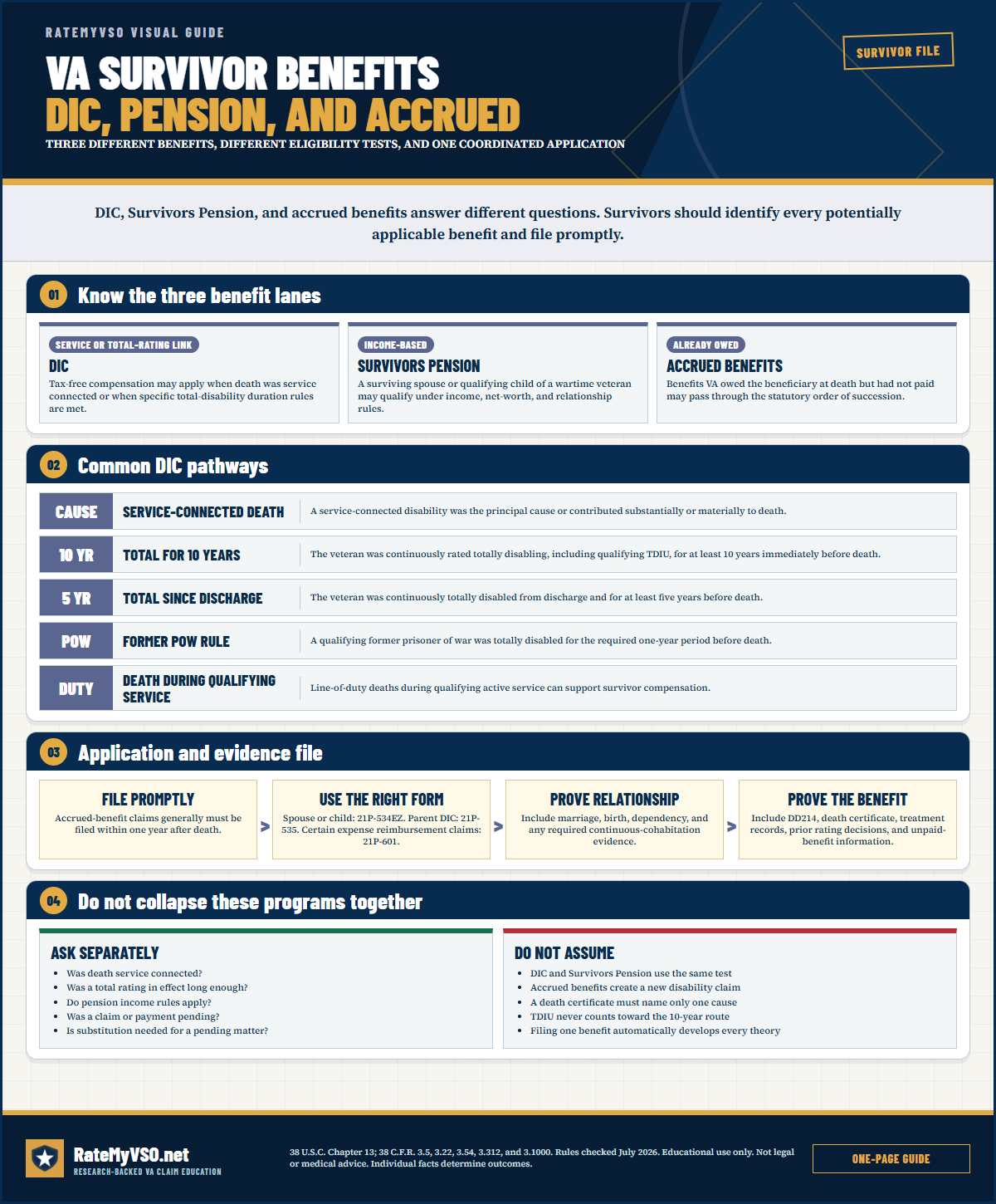
Separates DIC, Survivors Pension, and accrued benefits and their different eligibility tests.
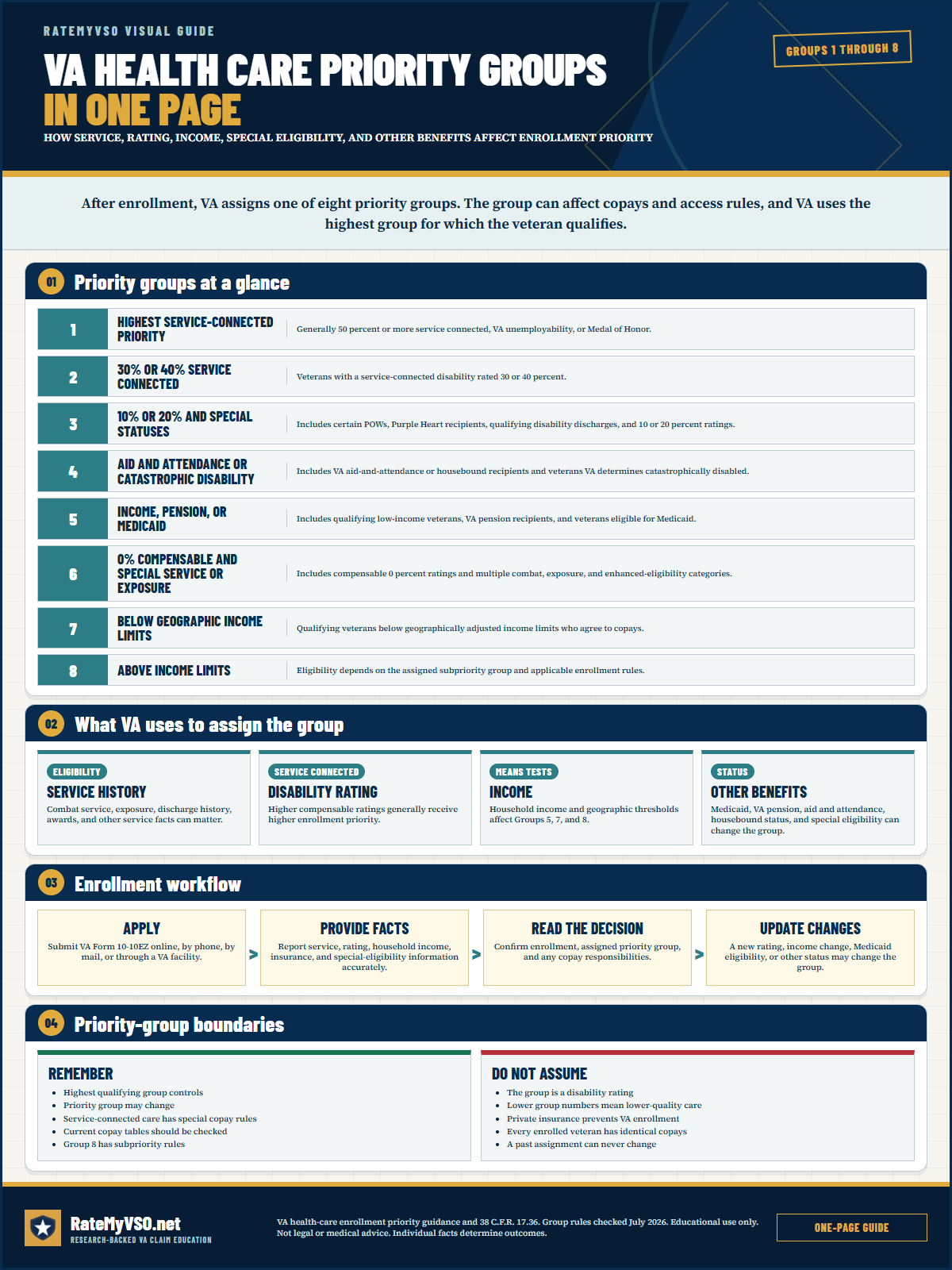
How service, rating, and income place a veteran into Priority Groups 1 through 8.
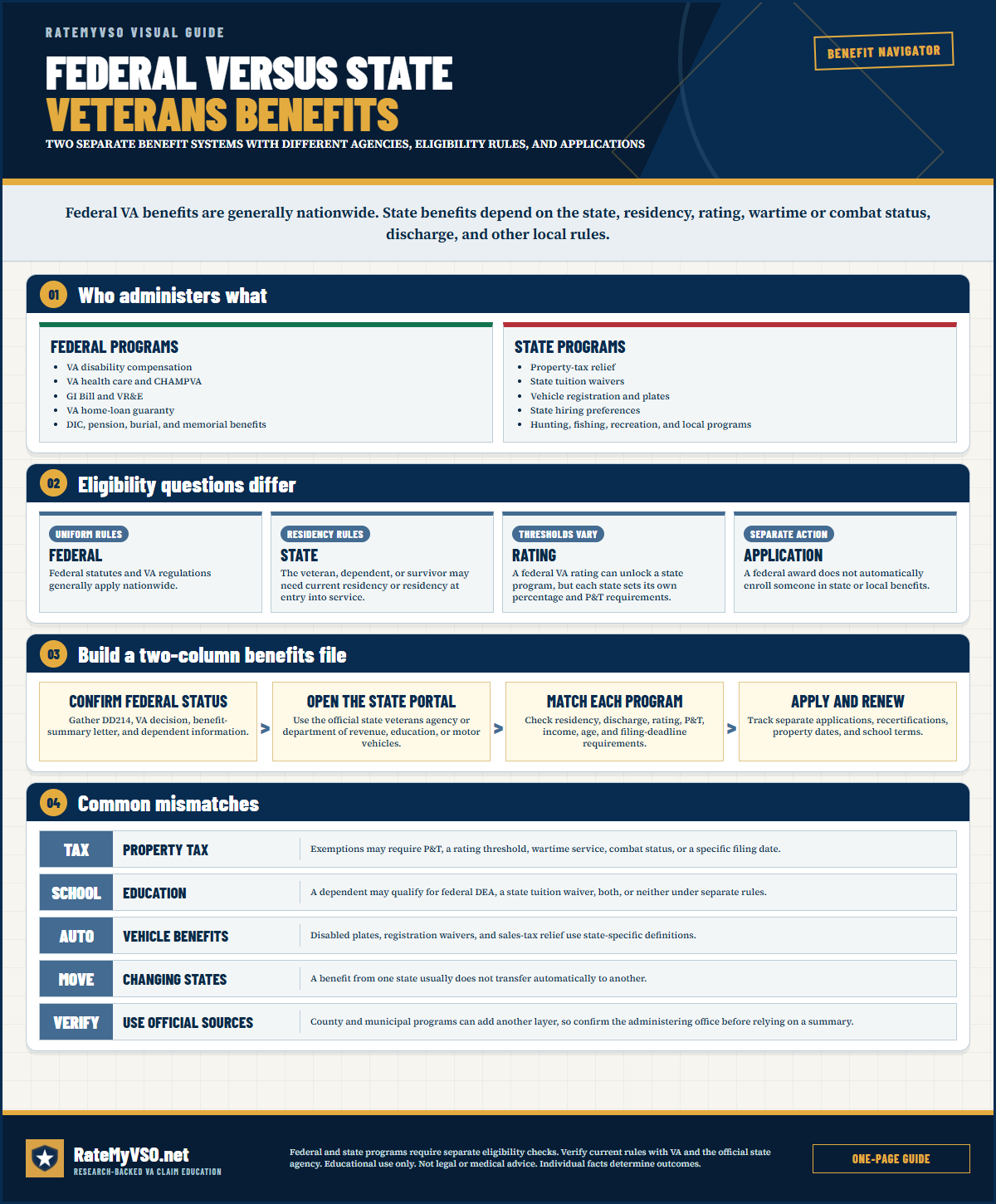
Compares nationwide federal programs with separately administered state benefits.
Condition-specific claim guides
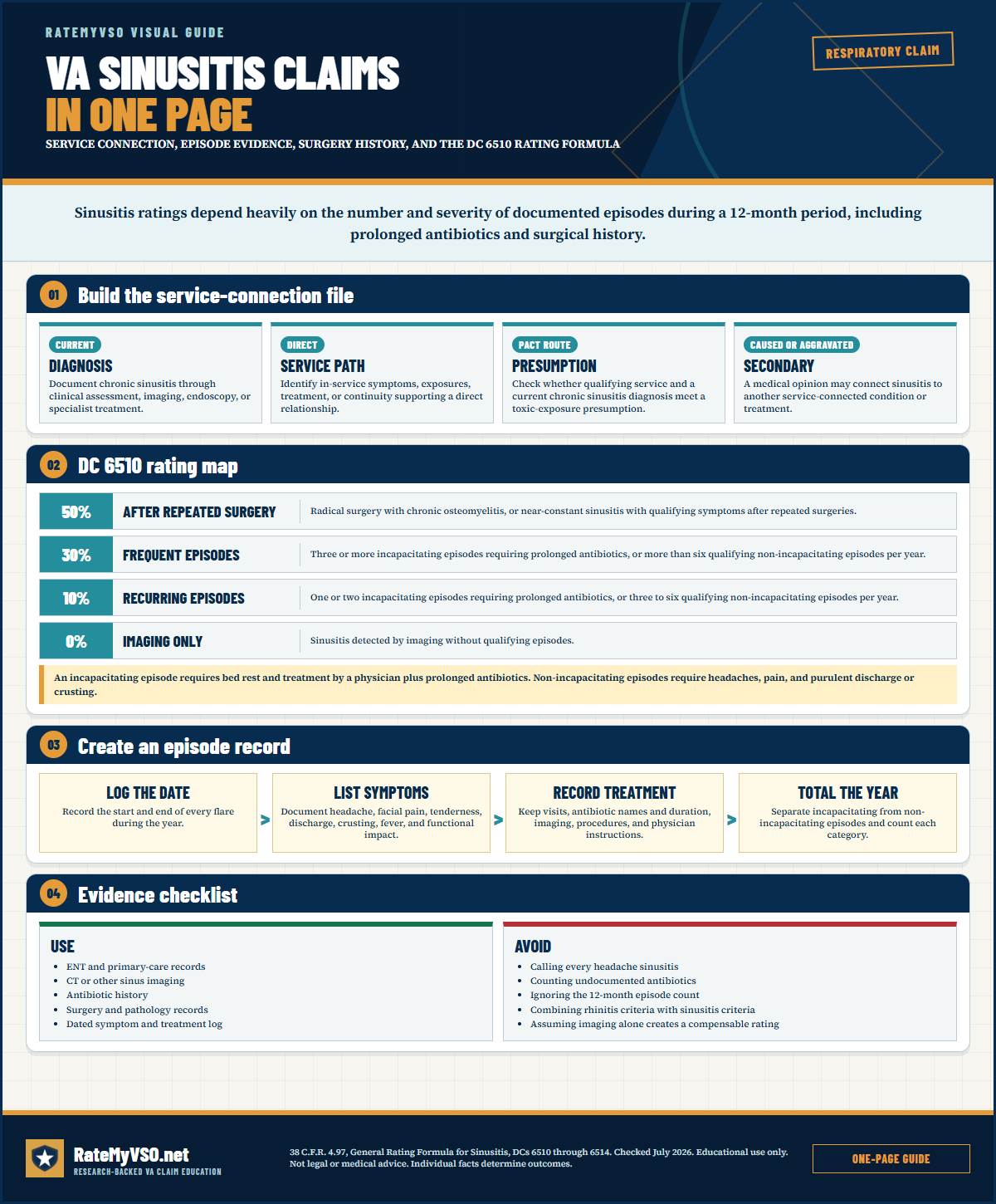
Service connection, episode evidence, and the DC 6510 rating tiers for sinusitis.
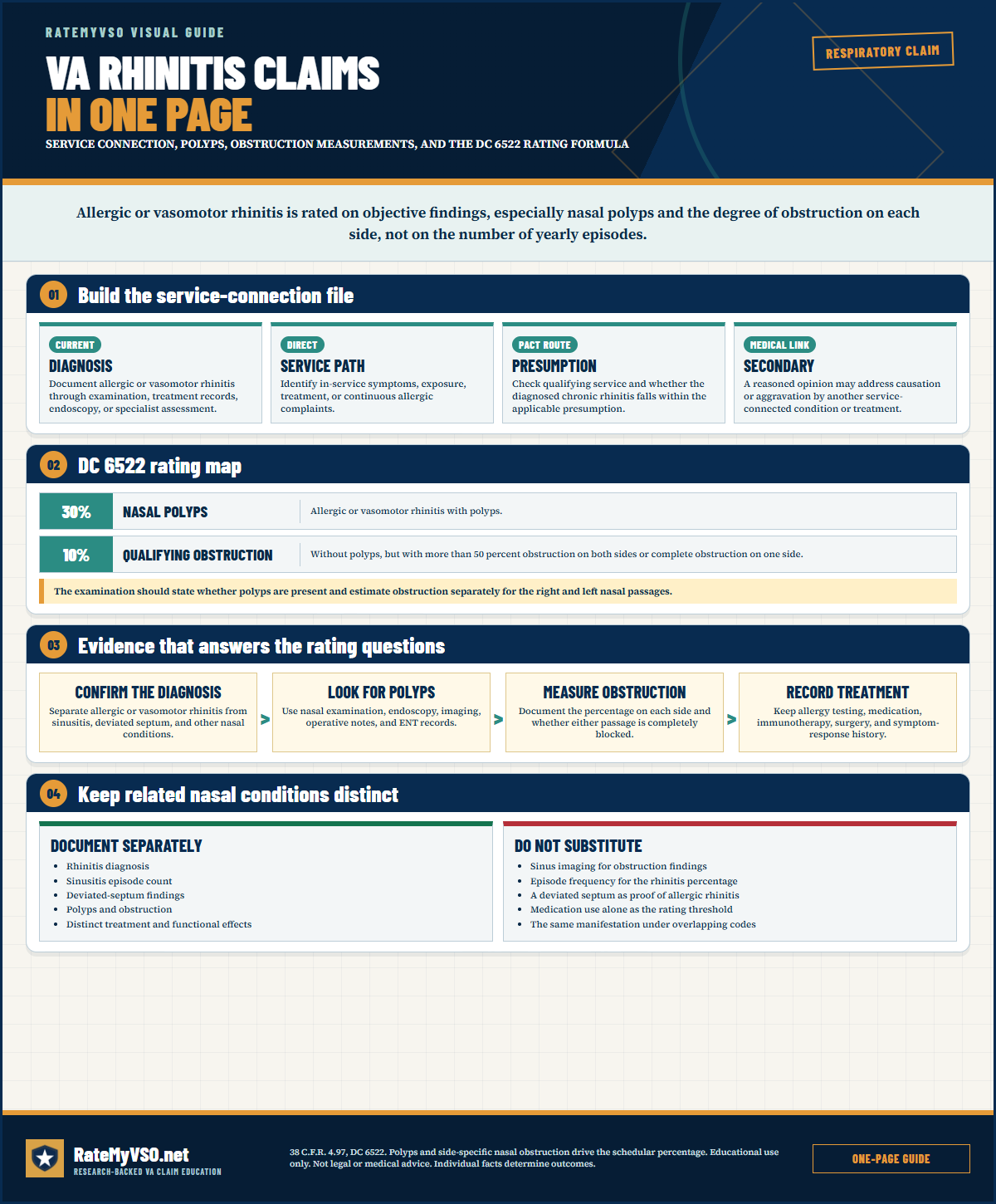
Service connection, polyp findings, and the DC 6522 rating tiers for rhinitis.
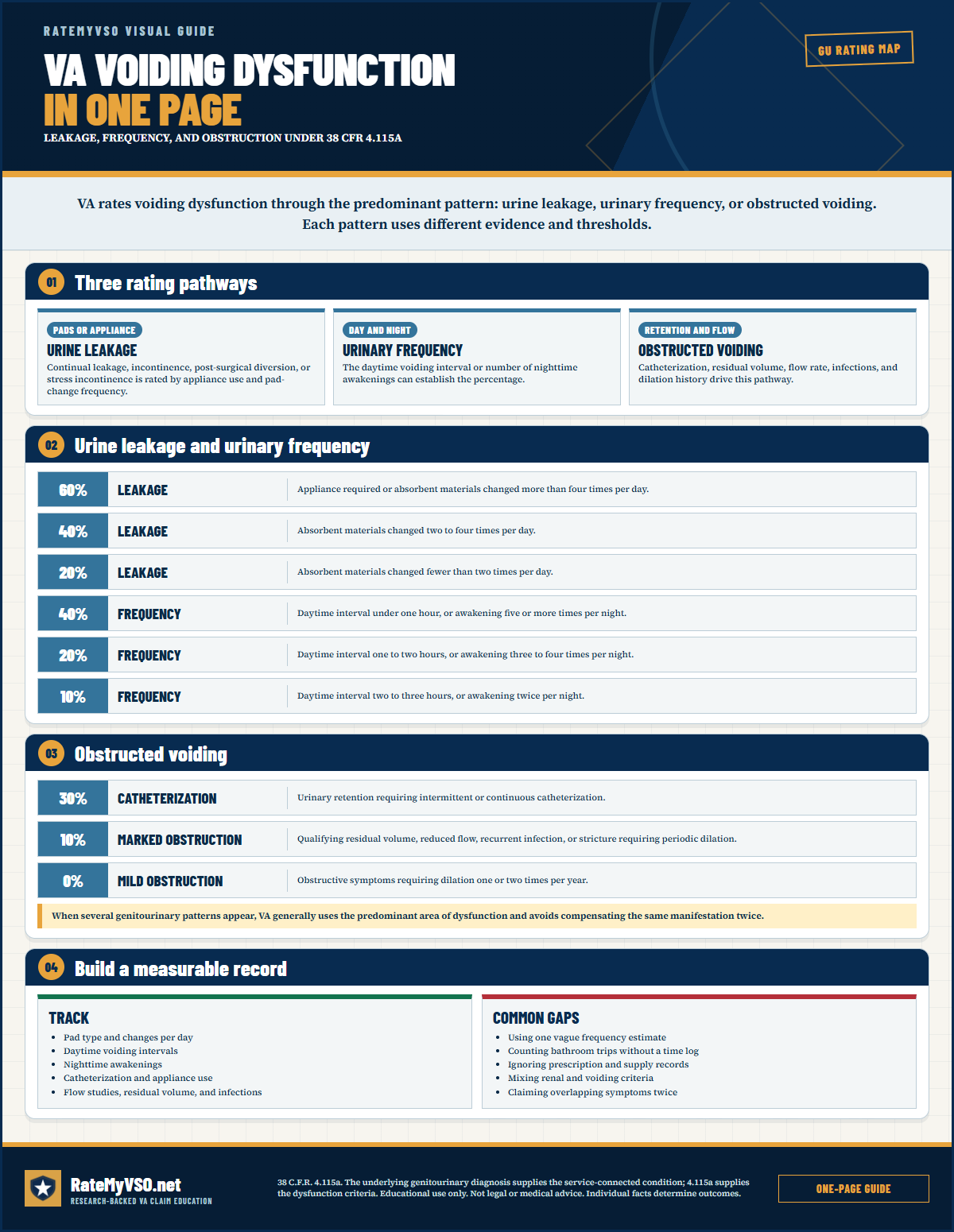
Compares leakage, frequency, and obstruction ratings under 38 CFR 4.115a.
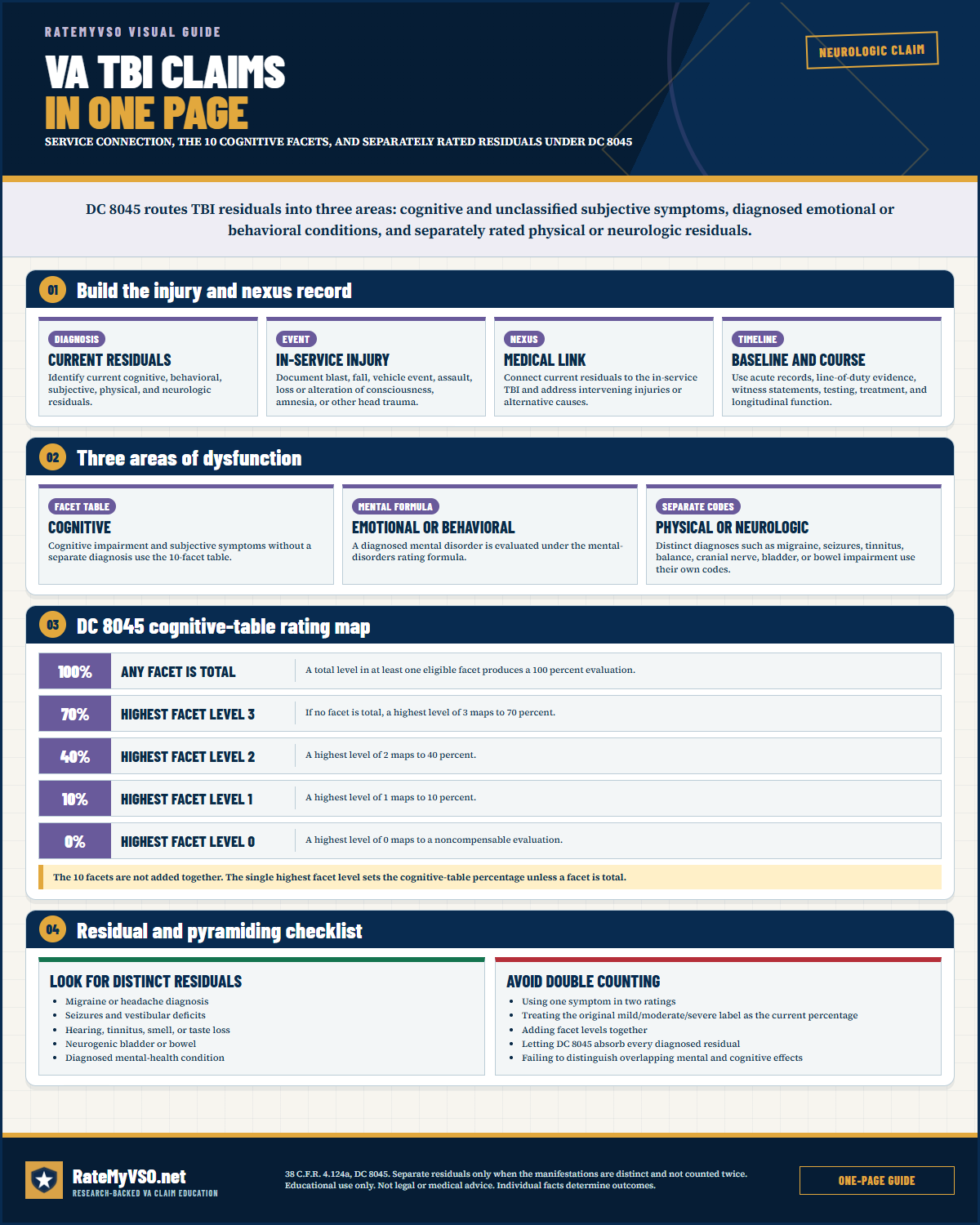
The three residual areas and the DC 8045 cognitive-facet rating conversion.
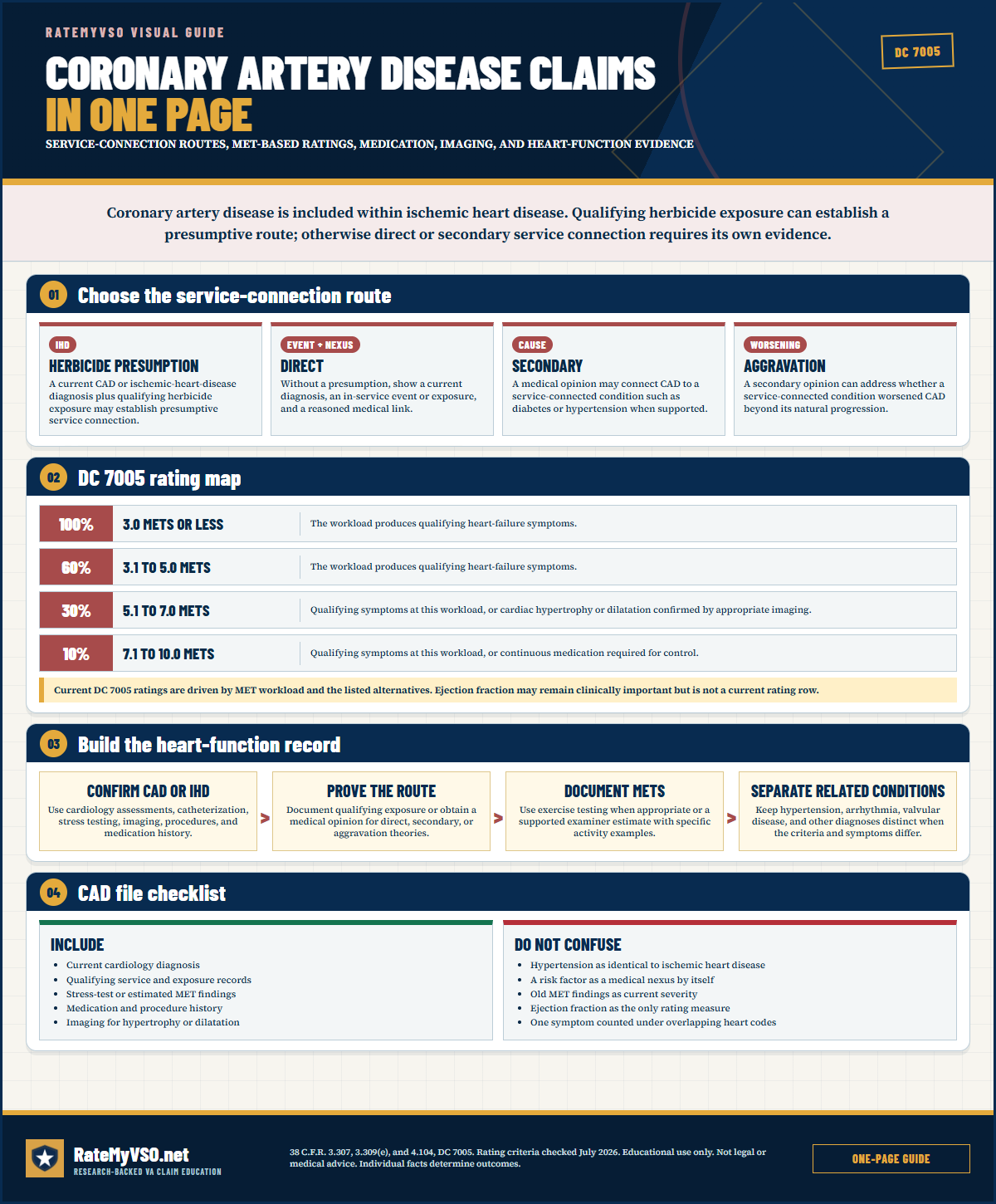
Presumptive, direct, secondary, and aggravation routes plus the MET-based DC 7005 tiers.
Condition Claim One-Page Guides
Printable one-page claim guides, one per condition guide: service-connection paths, symptoms drawn from official medical sources, the records cited in published Board decisions, and common claim gaps. Each is a static chart built from a frozen August 10, 2026 Board-data snapshot with no weekly numbers, so it changes only when the underlying rules do. The collection covers the digestive, musculoskeletal, respiratory, cardiovascular, endocrine, genitourinary, gynecological, neurological, sensory, skin, blood, immune, and dental conditions. Every guide can be viewed full size and downloaded as a PNG image or a print-ready PDF.
Digestive conditions
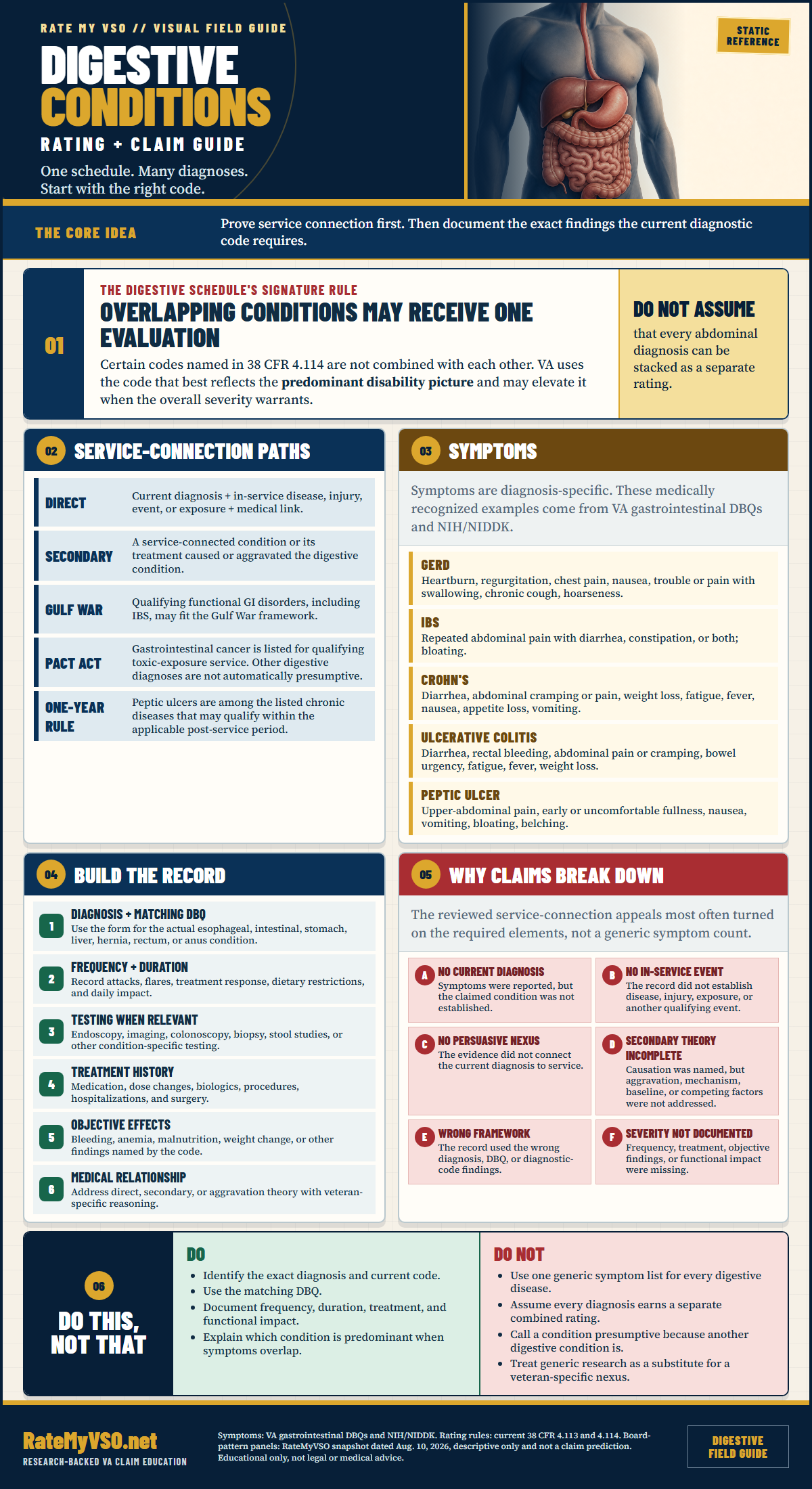
Digestive system overview covering the predominant-disability rule, service-connection paths, diagnosis-specific symptoms, evidence, and common claim gaps.
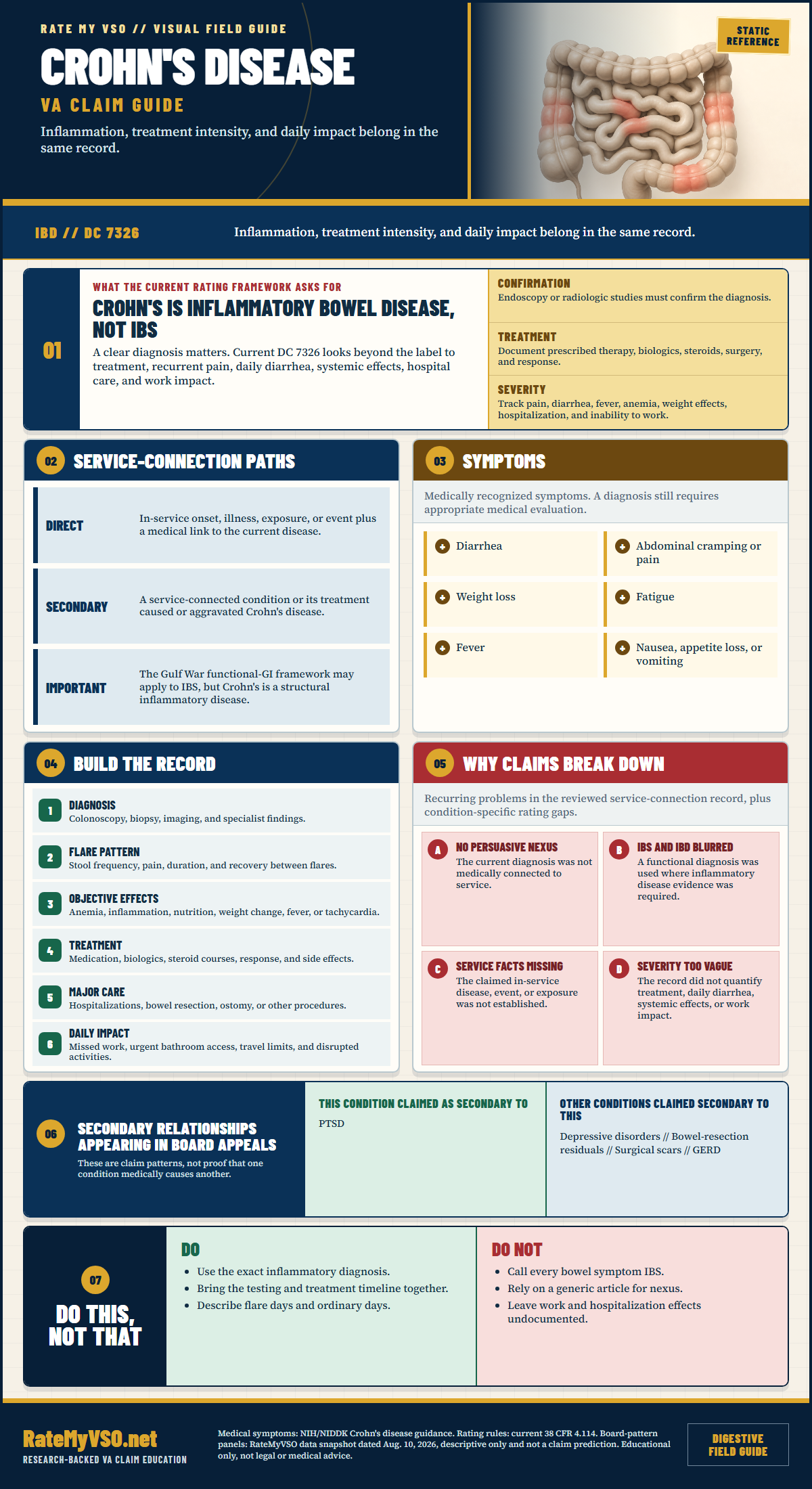
Crohn's disease guide covering DC 7326, diagnosis confirmation, service-connection paths, symptoms, treatment records, claim gaps, and secondary-appeal patterns.
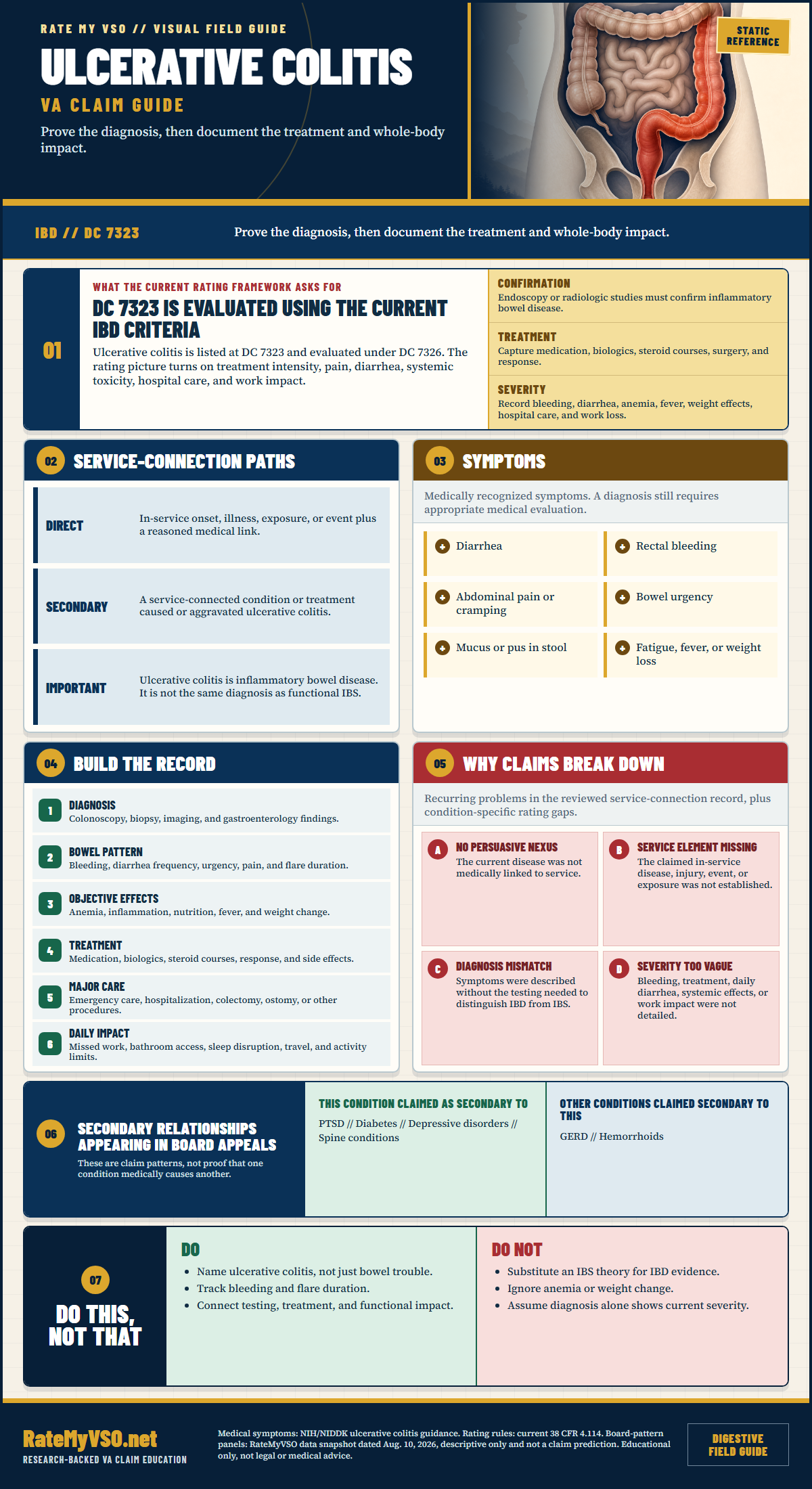
Ulcerative colitis guide covering DC 7323 and 7326, diagnosis confirmation, symptoms, treatment evidence, claim gaps, and secondary-appeal patterns.
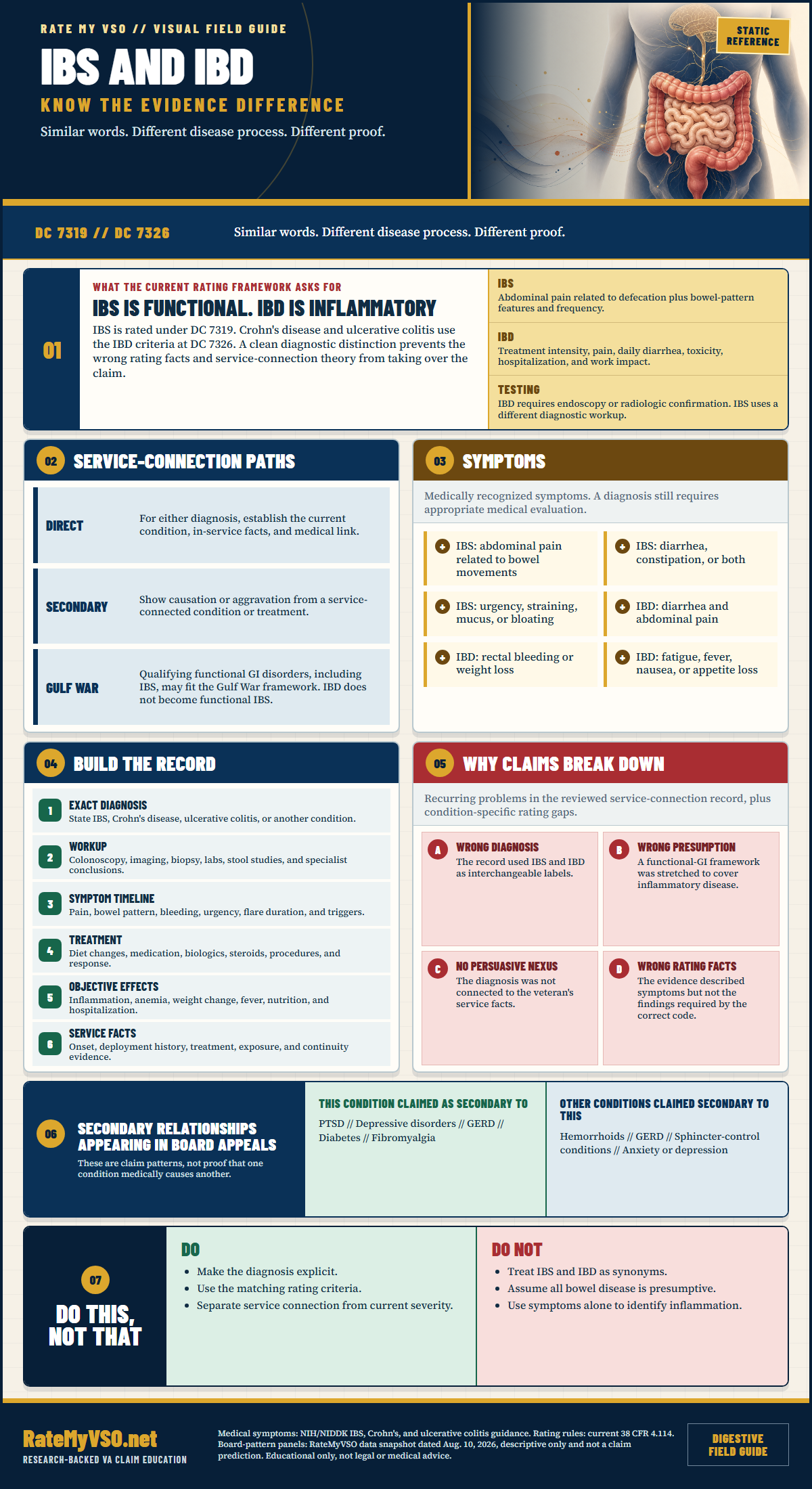
IBS and inflammatory bowel disease comparison covering the diagnosis, rating criteria, Gulf War distinction, symptoms, records, and common claim gaps.
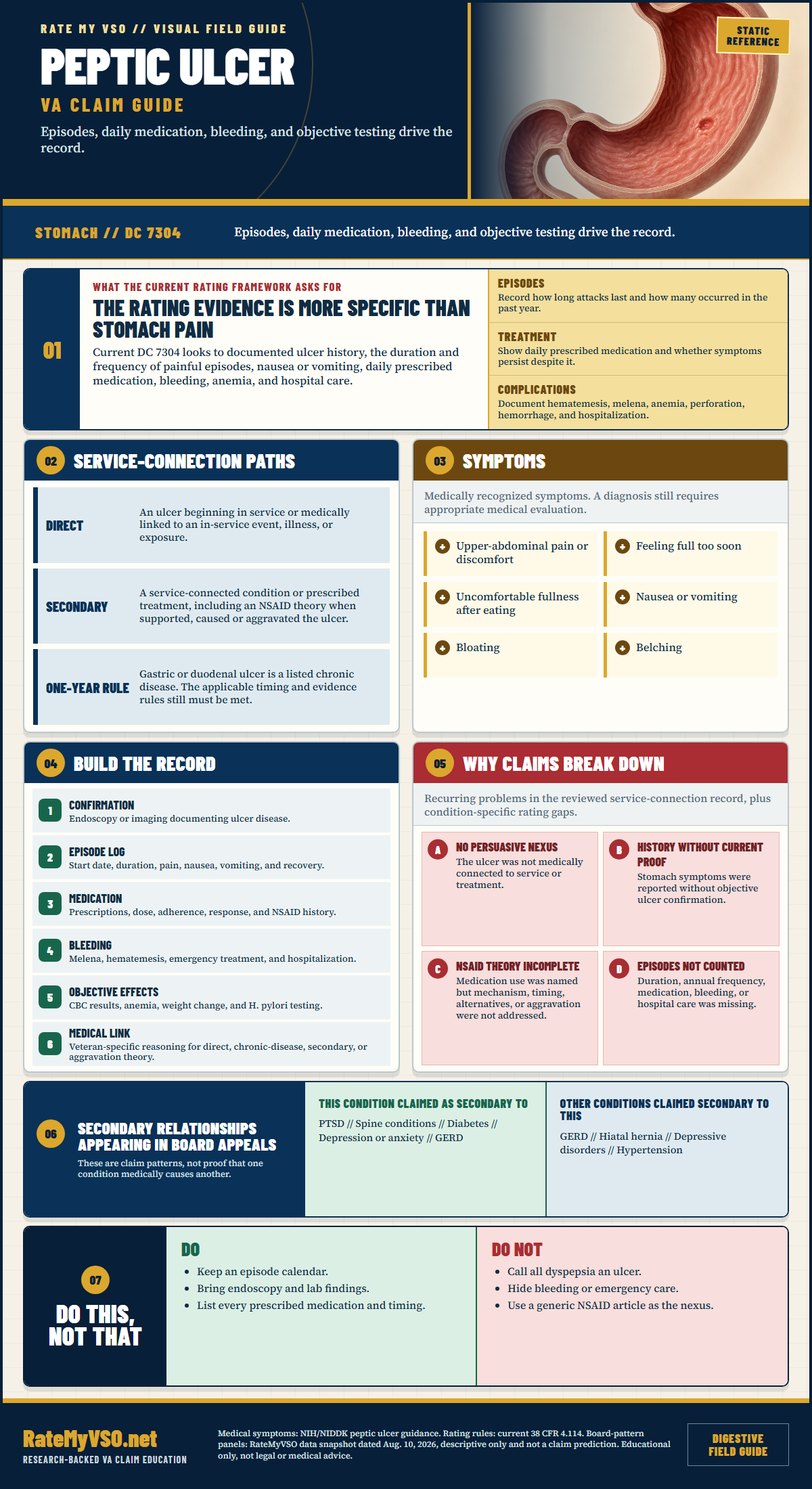
Peptic ulcer guide covering DC 7304, episode evidence, daily medication, bleeding and anemia, service-connection paths, and common claim gaps.
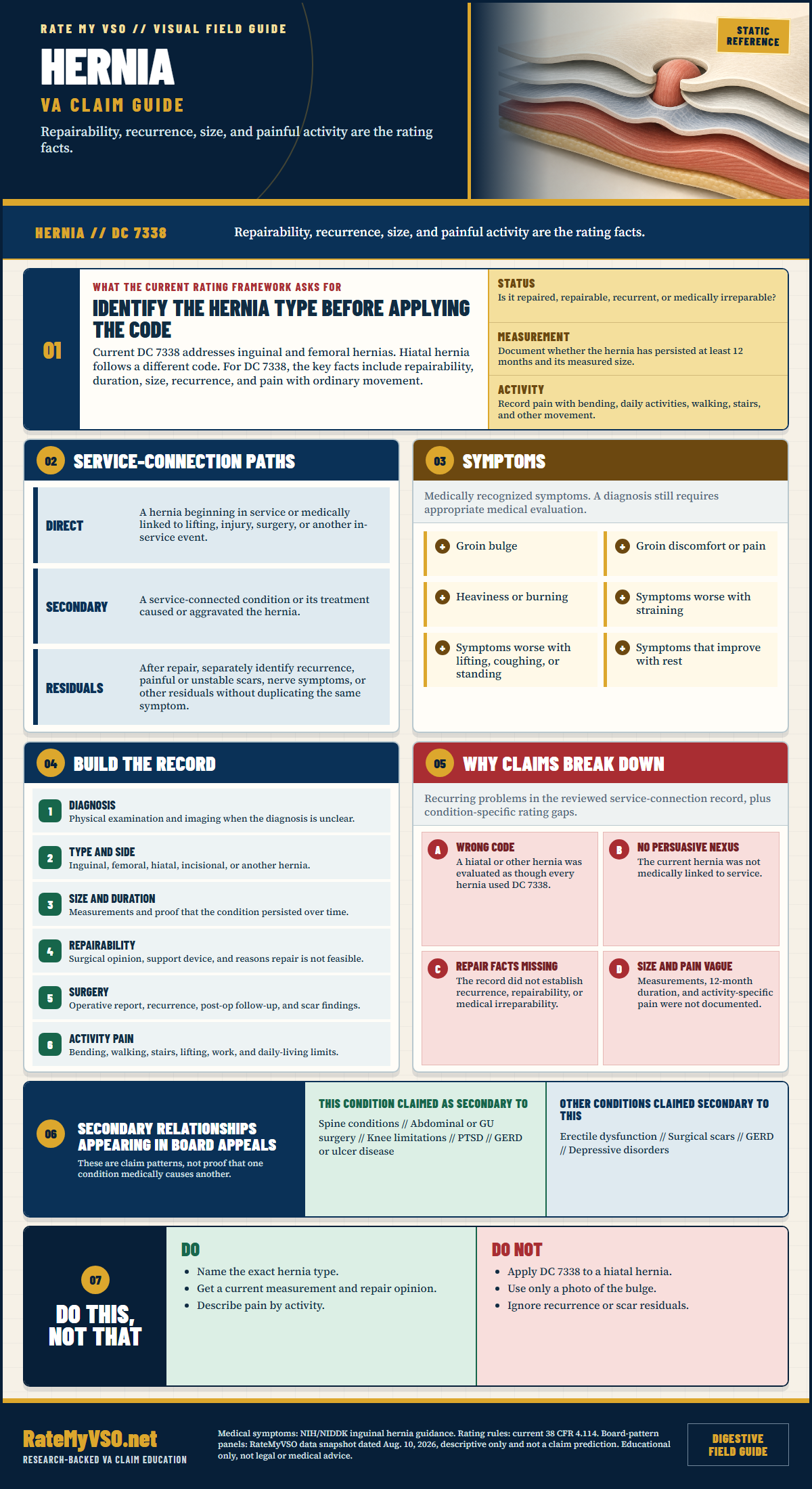
Hernia guide covering DC 7338, hernia type, repairability, size, recurrence, activity-related pain, records, and common claim gaps.
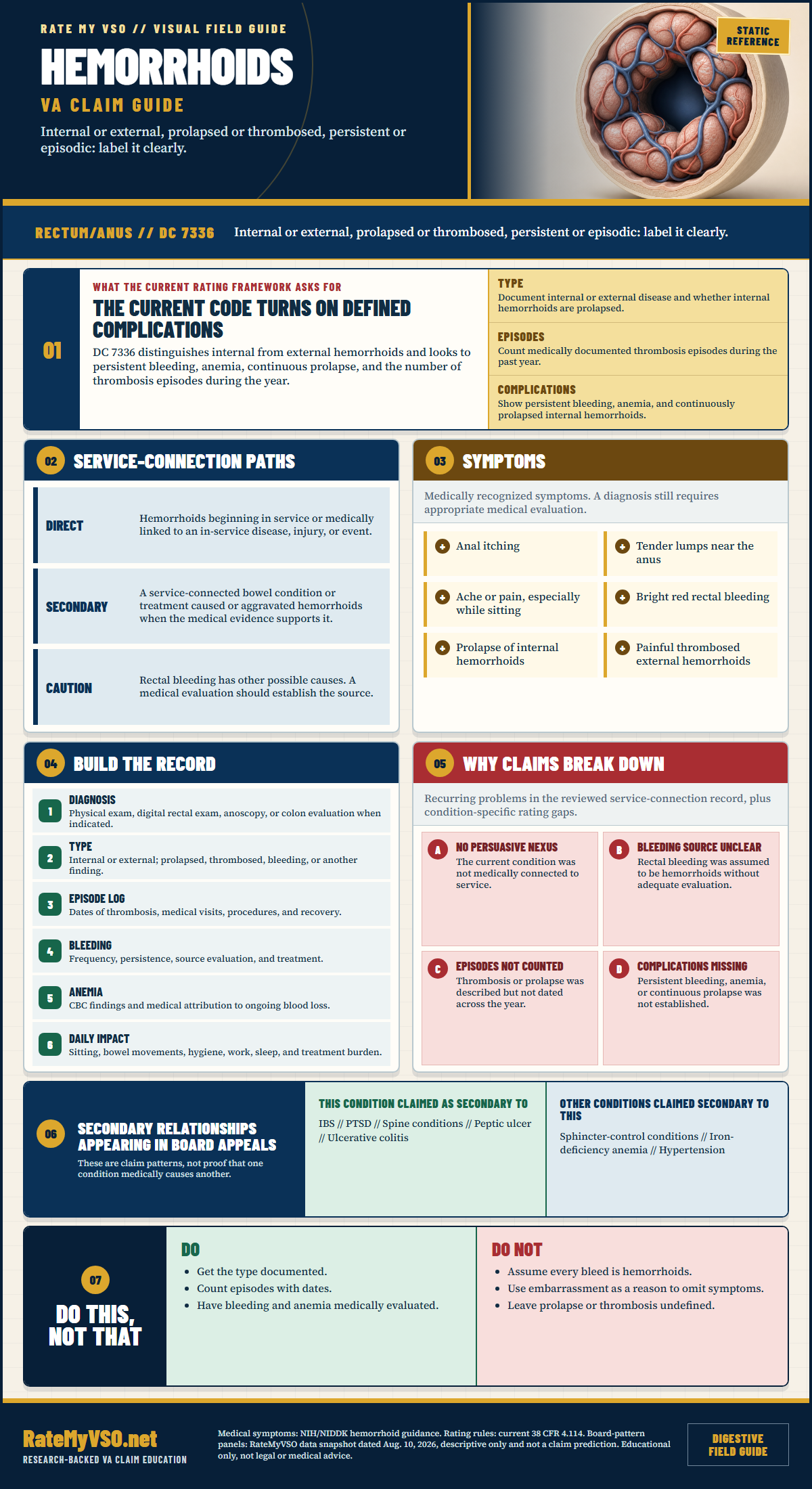
Hemorrhoids guide covering DC 7336, internal and external findings, thrombosis episodes, prolapse, bleeding, anemia, evidence, and common claim gaps.
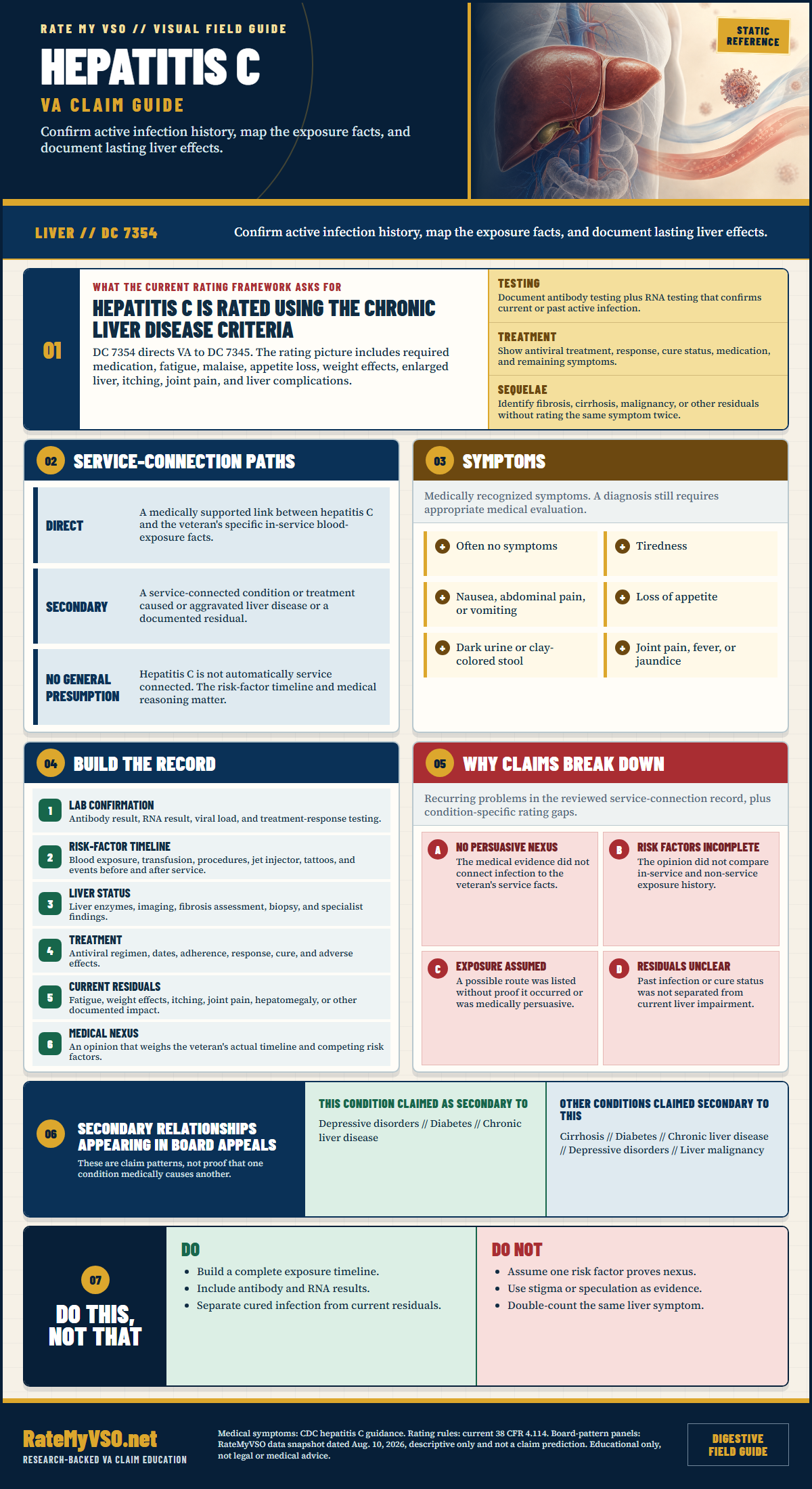
Hepatitis C guide covering DC 7354 and 7345, test confirmation, exposure history, treatment, liver residuals, evidence, and common claim gaps.
Musculoskeletal conditions
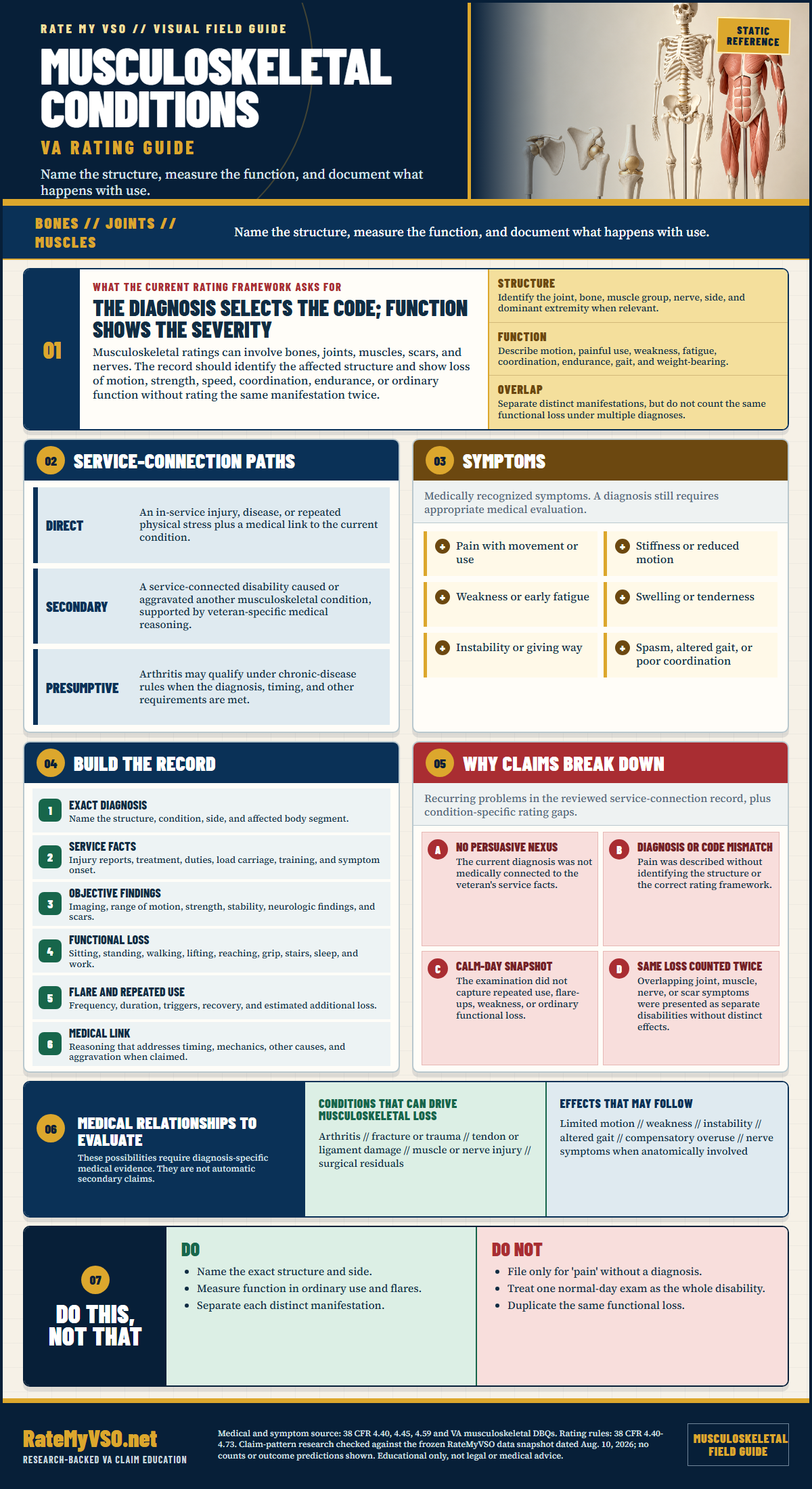
Musculoskeletal system overview covering diagnosis and code selection, functional loss, service-connection paths, symptoms, record building, claim gaps, and medical relationships to evaluate.
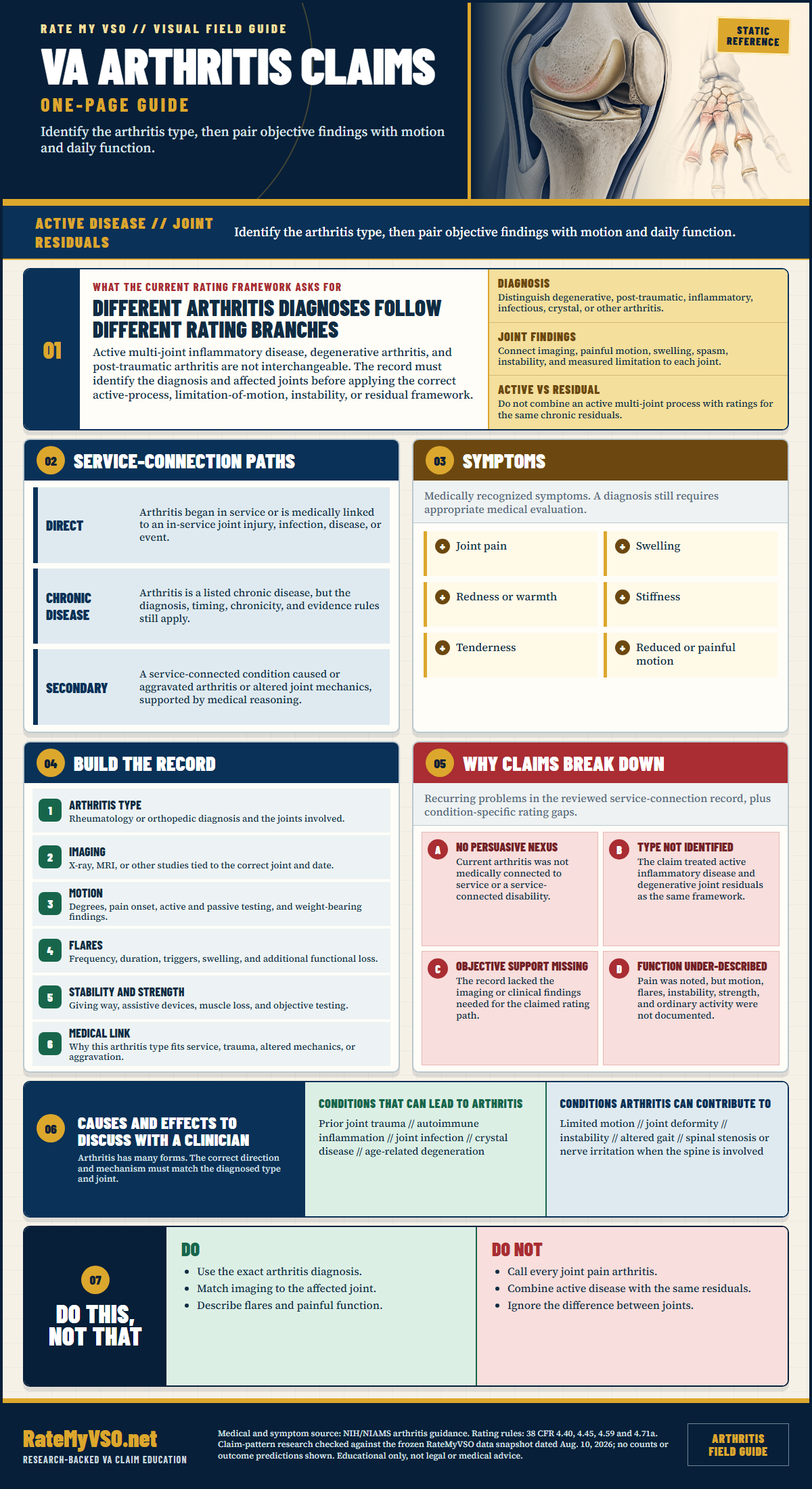
Arthritis guide covering diagnosis-specific rating branches, direct and secondary paths, chronic-disease rules, symptoms, imaging, motion evidence, and common claim gaps.
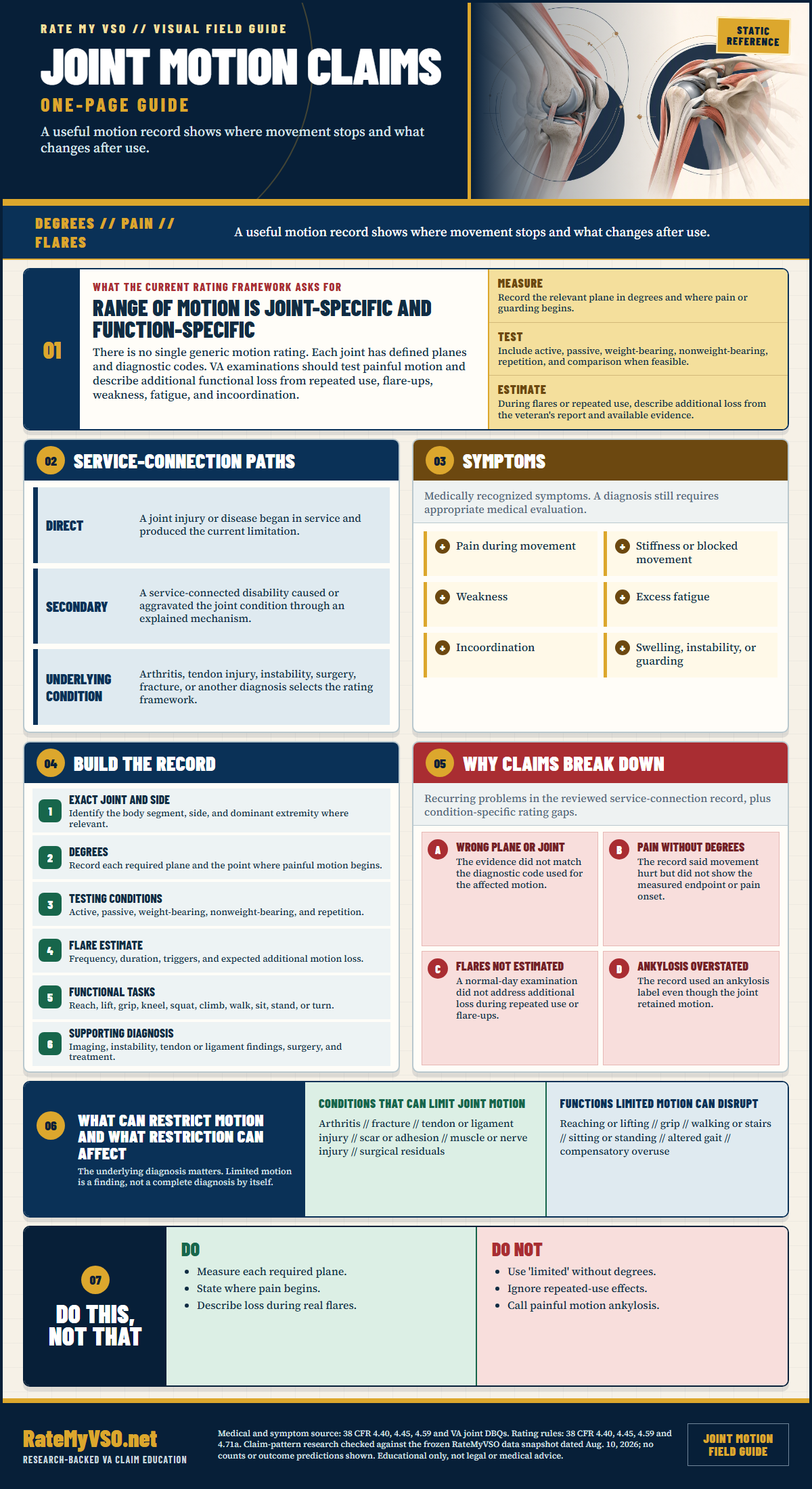
Joint-motion guide covering measurement in degrees, painful motion, repeated use, flare estimates, functional tasks, supporting diagnoses, and common examination gaps.
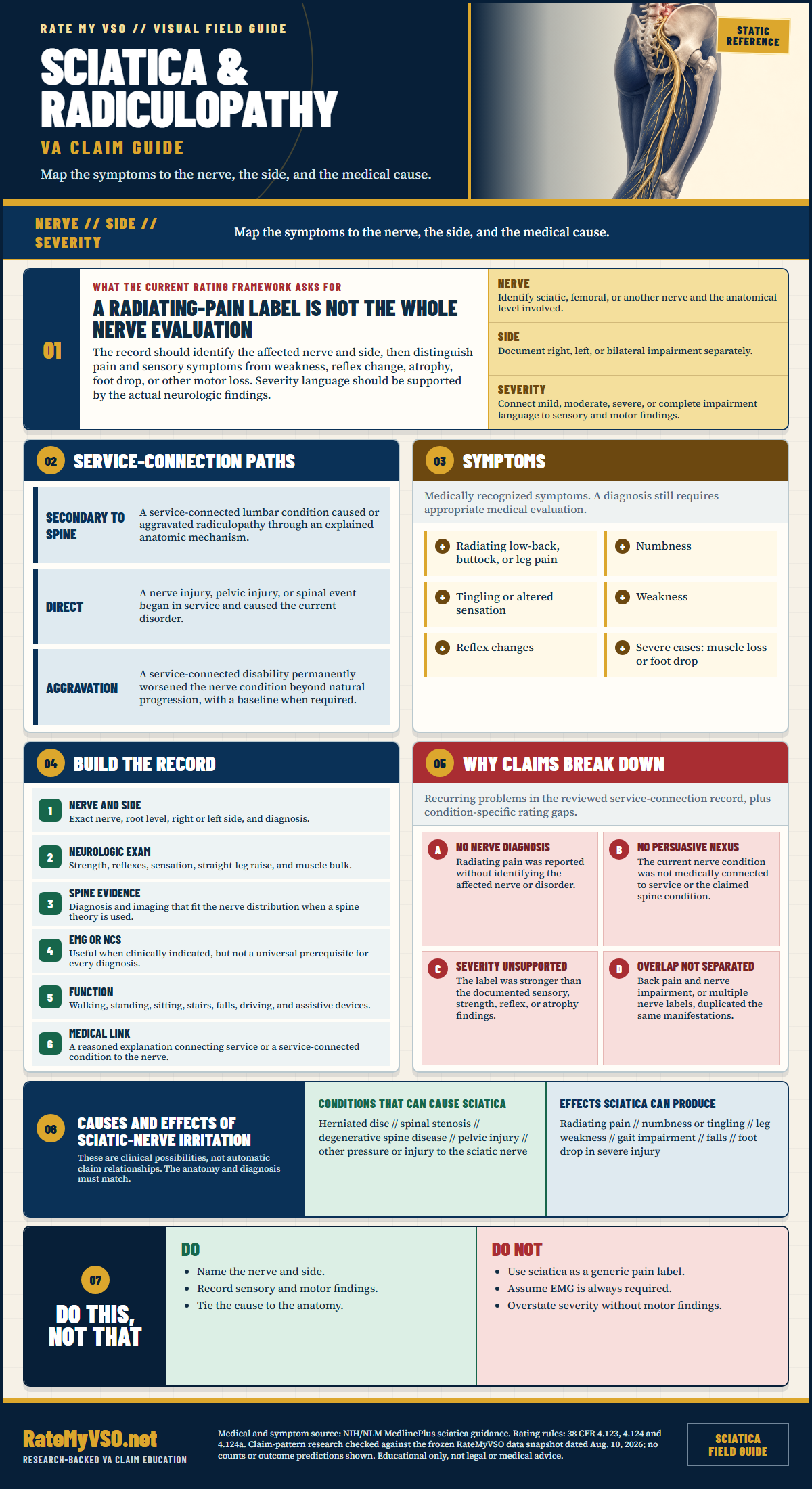
Sciatica and radiculopathy guide covering the affected nerve and side, sensory and motor findings, spine relationships, service-connection paths, causes, effects, and common claim gaps.
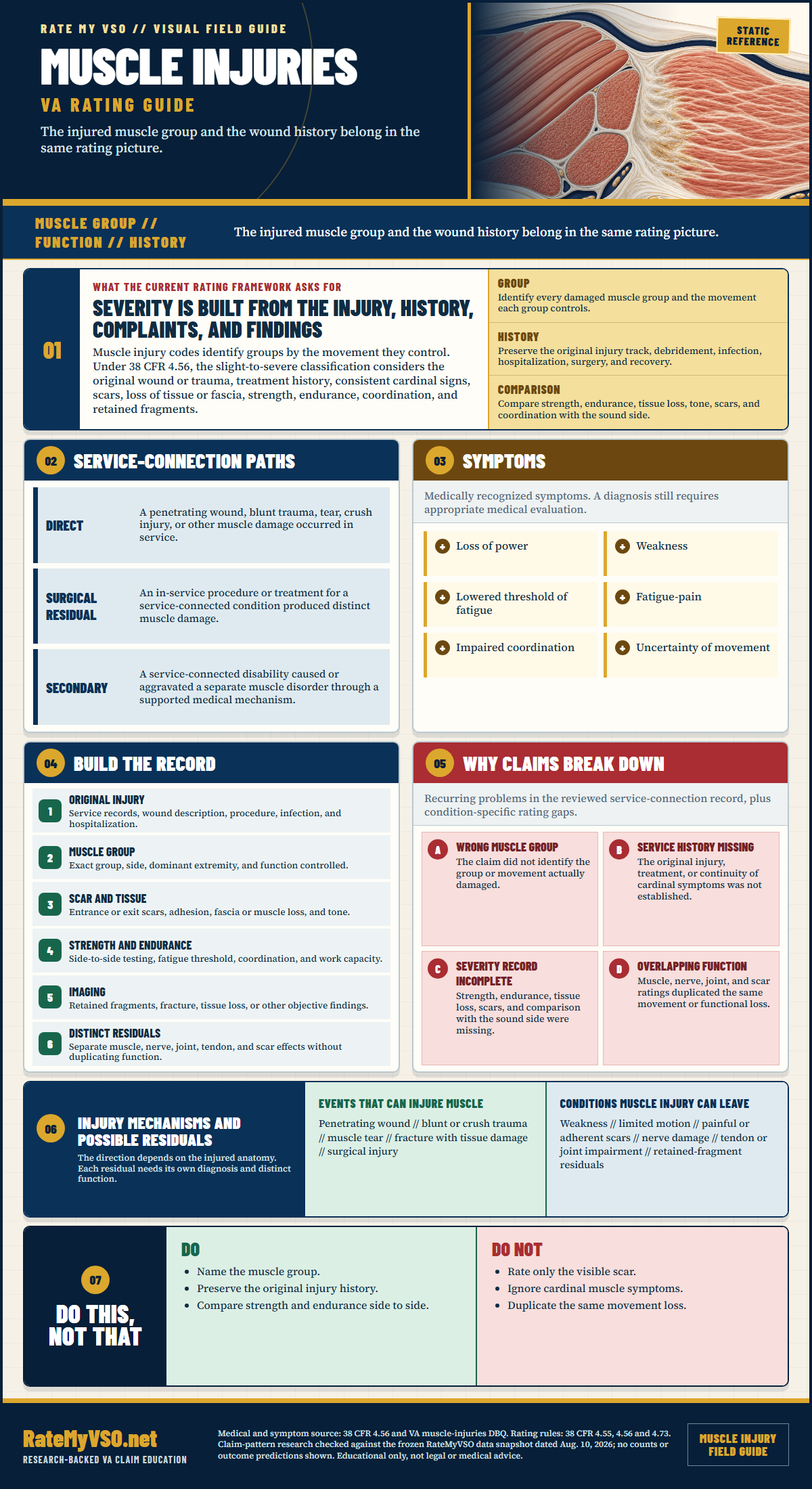
Muscle-injury guide covering the damaged muscle group, original injury history, cardinal symptoms, tissue and scar findings, strength and endurance, residuals, and common claim gaps.
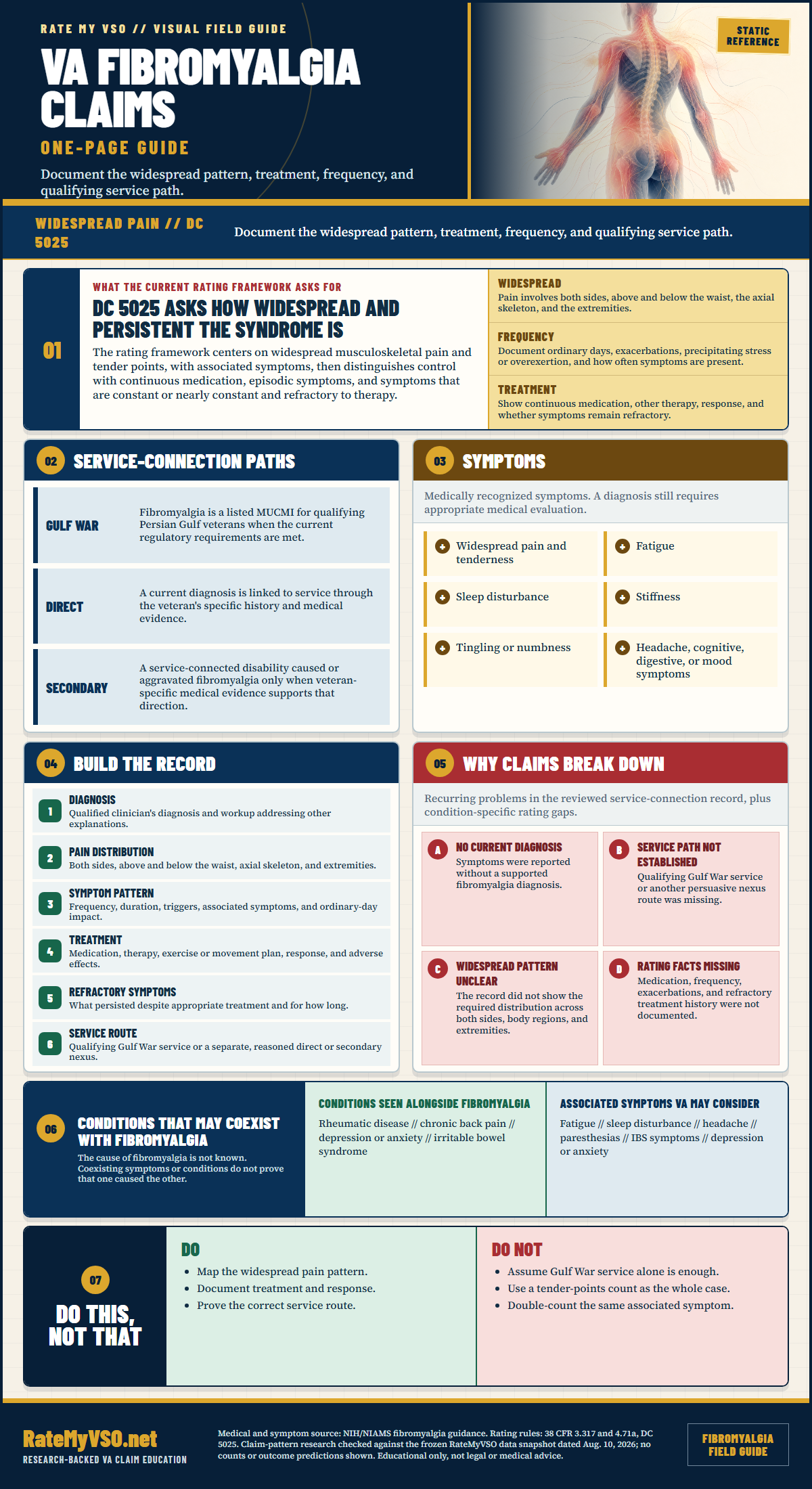
Fibromyalgia guide covering the widespread-pain definition, symptom frequency, treatment response, Gulf War and other service paths, associated symptoms, evidence, and common claim gaps.
Respiratory and cardiovascular conditions
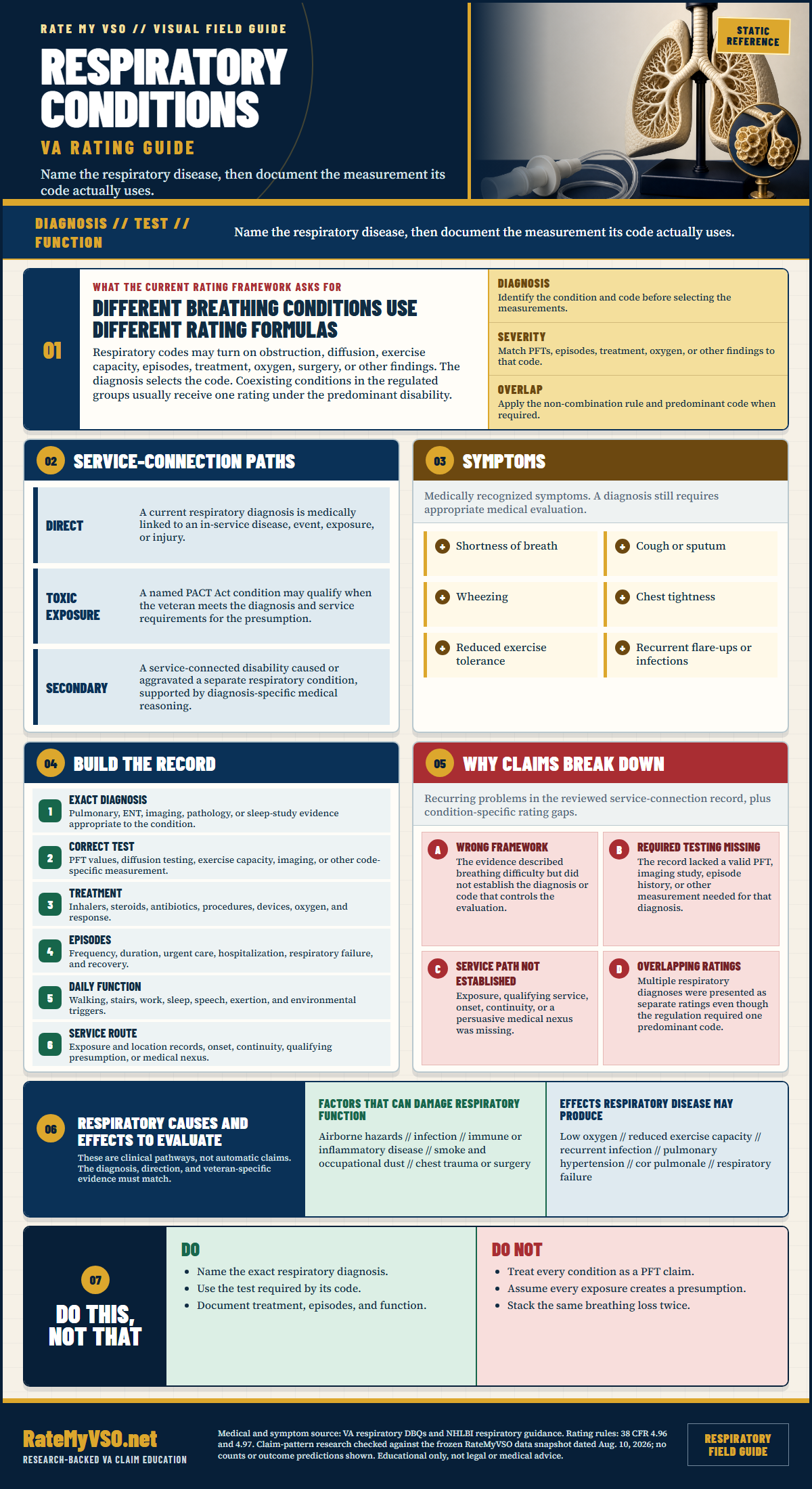
Respiratory-system guide covering diagnosis-specific rating methods, service-connection paths, symptoms, required testing, treatment and episode evidence, claim gaps, and medical relationships to evaluate.
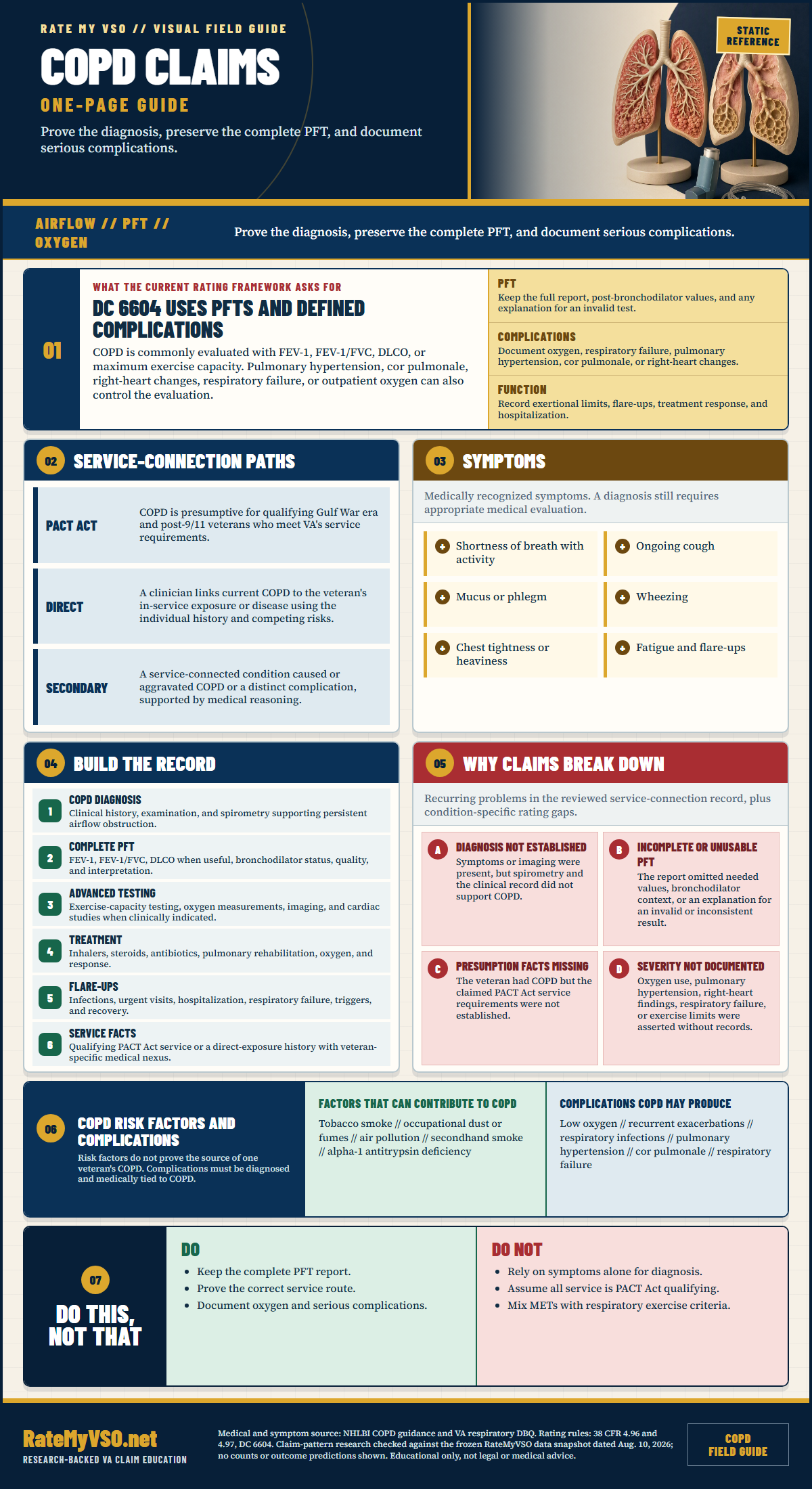
COPD guide covering DC 6604, complete pulmonary-function testing, PACT Act and other service paths, symptoms, oxygen and serious complications, evidence, and common claim gaps.
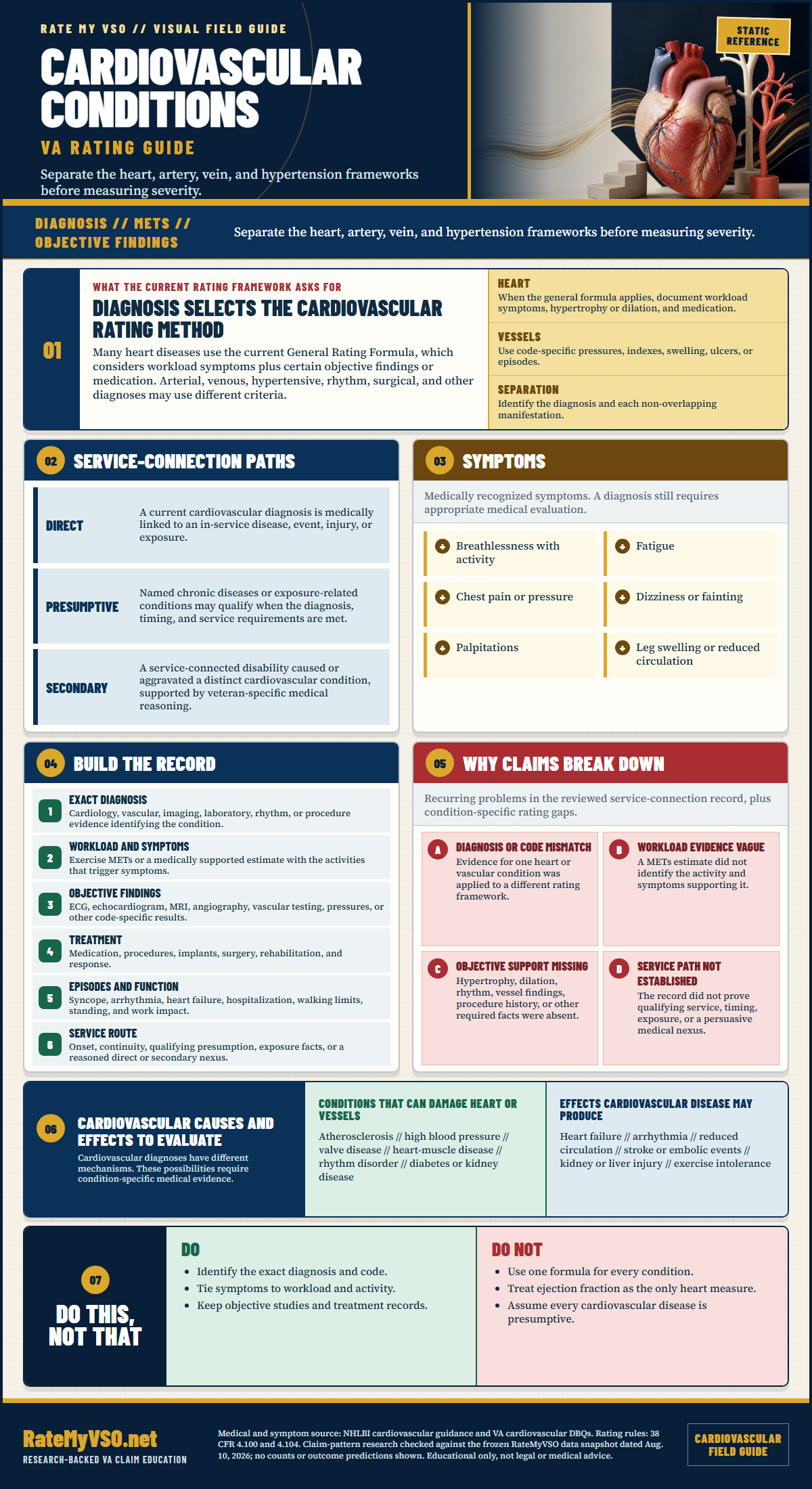
Cardiovascular-system guide separating heart, artery, vein, rhythm, hypertension, and other rating methods, with symptoms, METs and objective evidence, service paths, and common claim gaps.
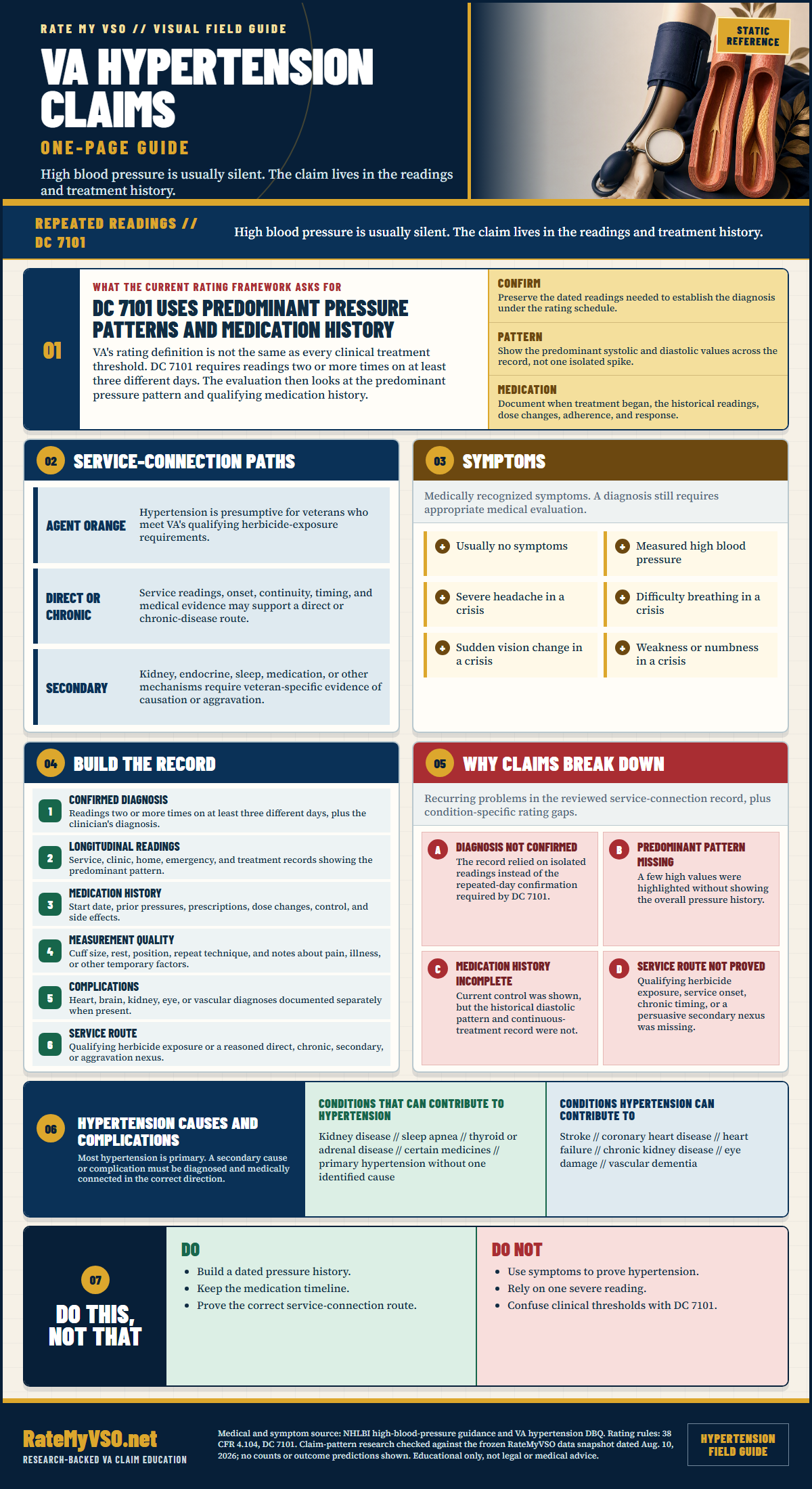
Hypertension guide covering repeated-day confirmation, predominant pressure patterns, medication history, Agent Orange and other service paths, crisis warning signs, evidence, and common claim gaps.
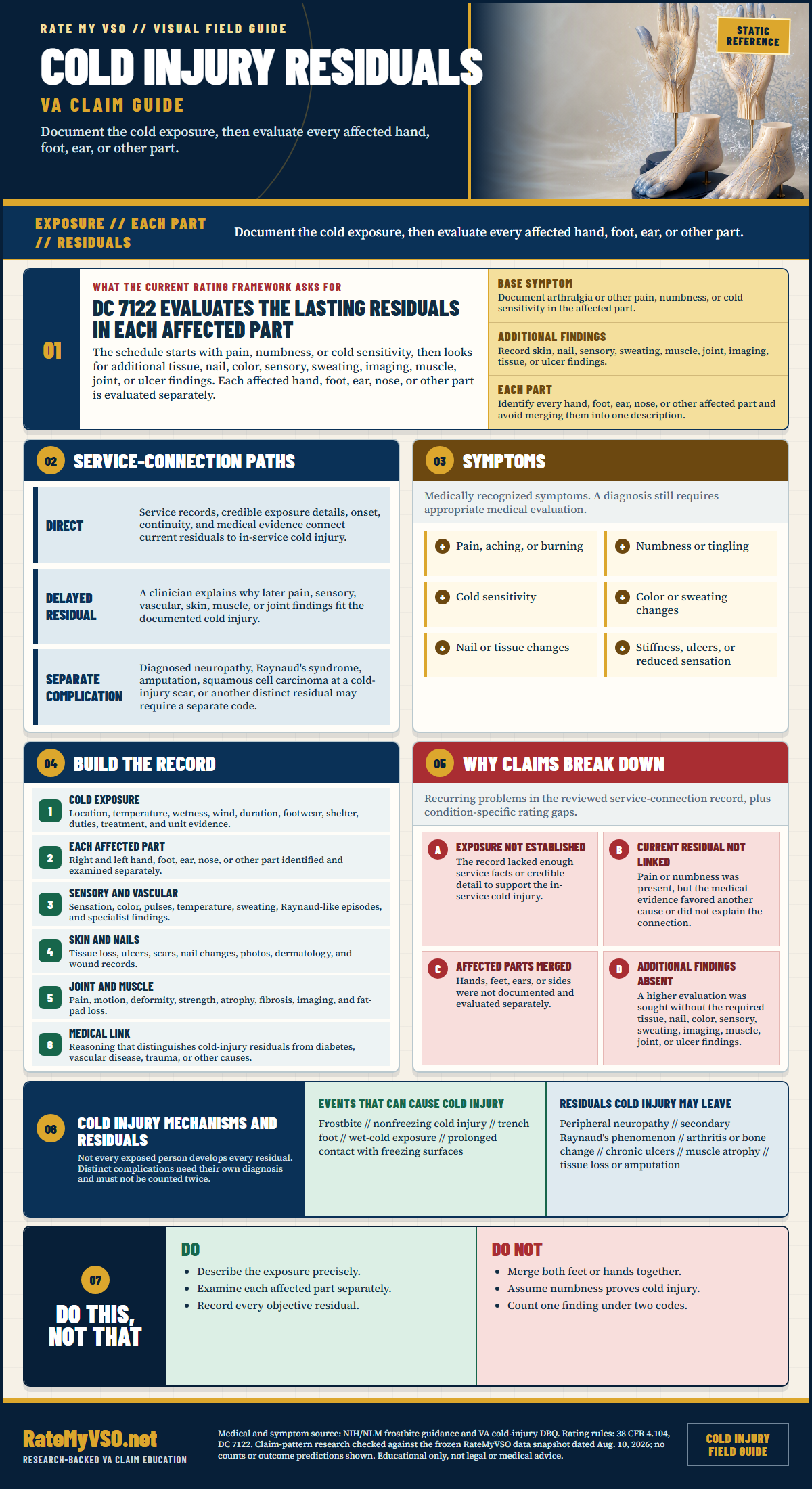
Cold-injury guide covering DC 7122, exposure evidence, separate evaluation of each affected part, symptoms and objective residuals, distinct complications, and common claim gaps.
Endocrine, genitourinary, and gynecological conditions
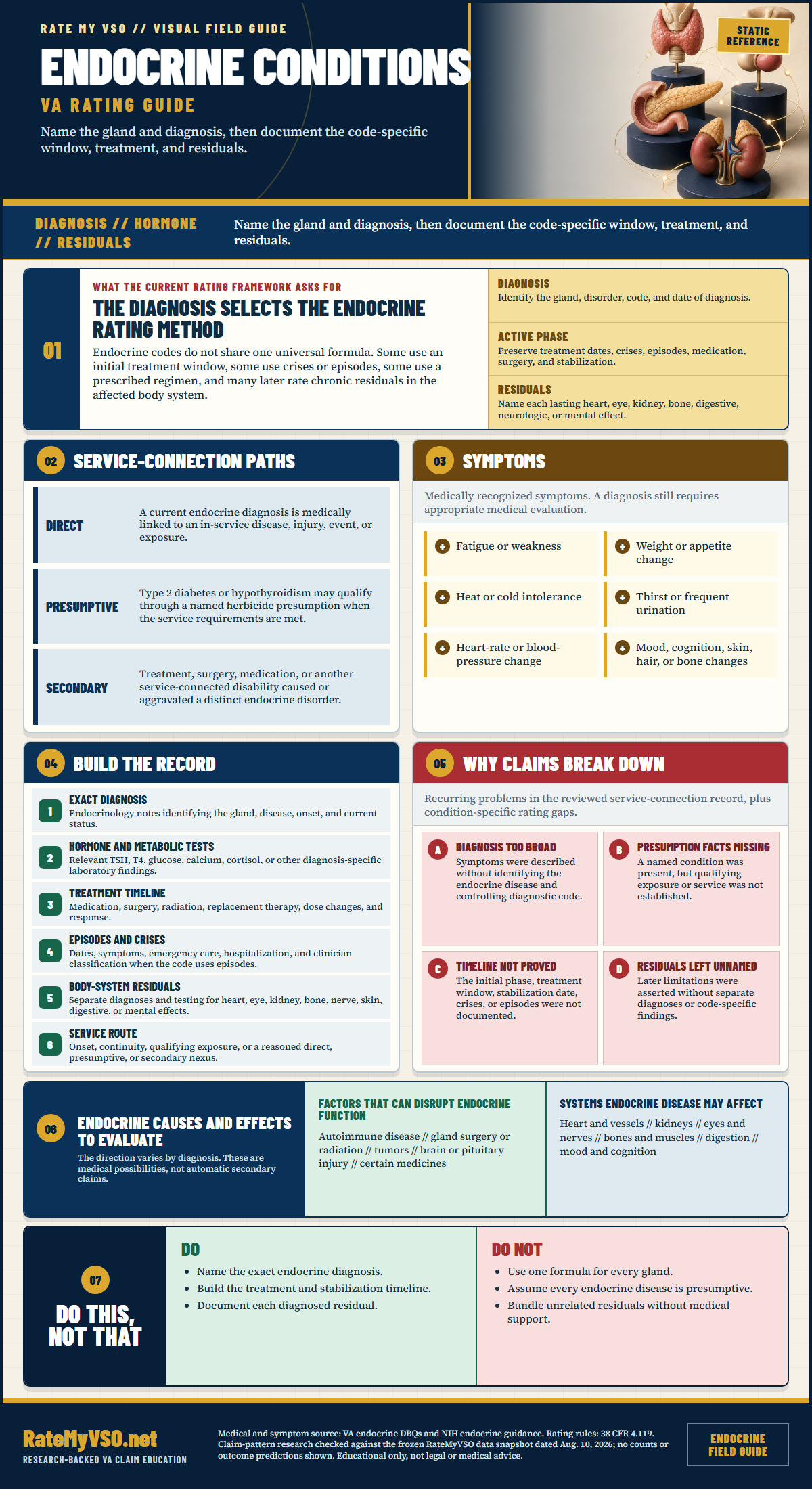
Endocrine-system guide covering diagnosis-specific rating methods, hormone testing, active phases, treatment, residuals, service-connection paths, symptoms, evidence, and common claim gaps.
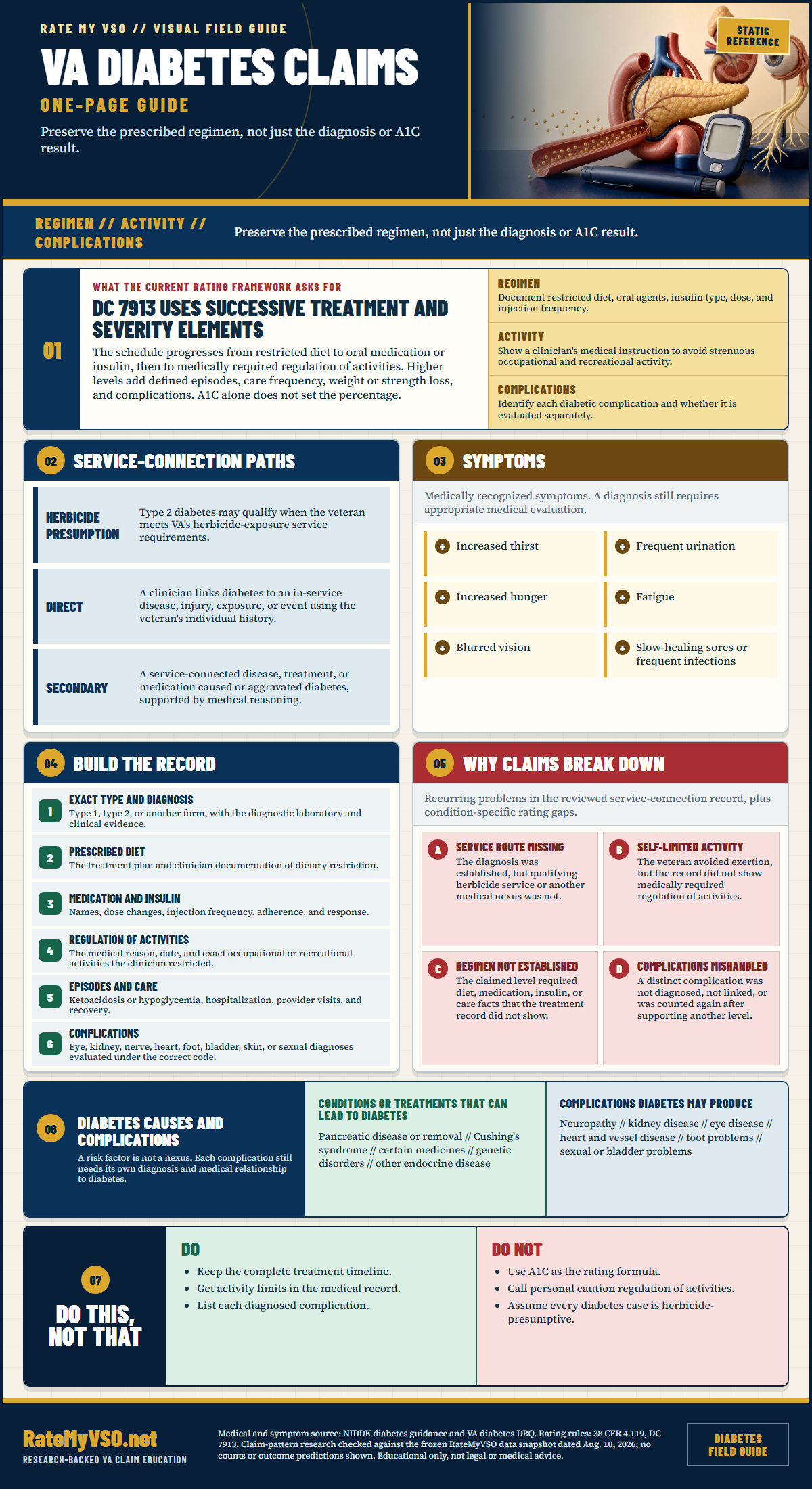
Diabetes guide covering DC 7913, the prescribed treatment regimen, medically required regulation of activities, herbicide and other service paths, symptoms, complications, evidence, and common claim gaps.
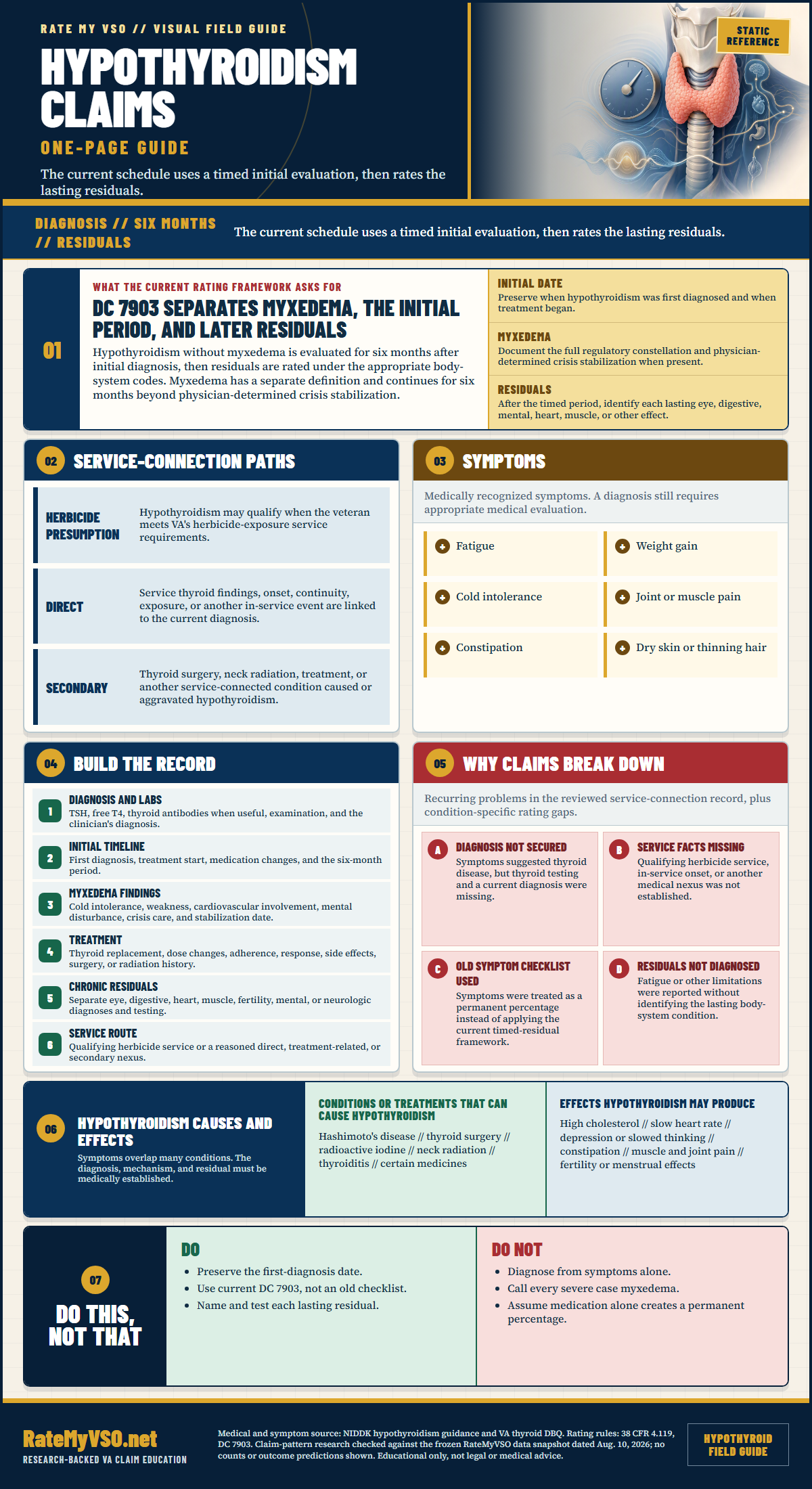
Hypothyroidism guide covering current DC 7903, myxedema, the timed initial evaluation, later residuals, herbicide and other service paths, symptoms, thyroid testing, evidence, and common claim gaps.
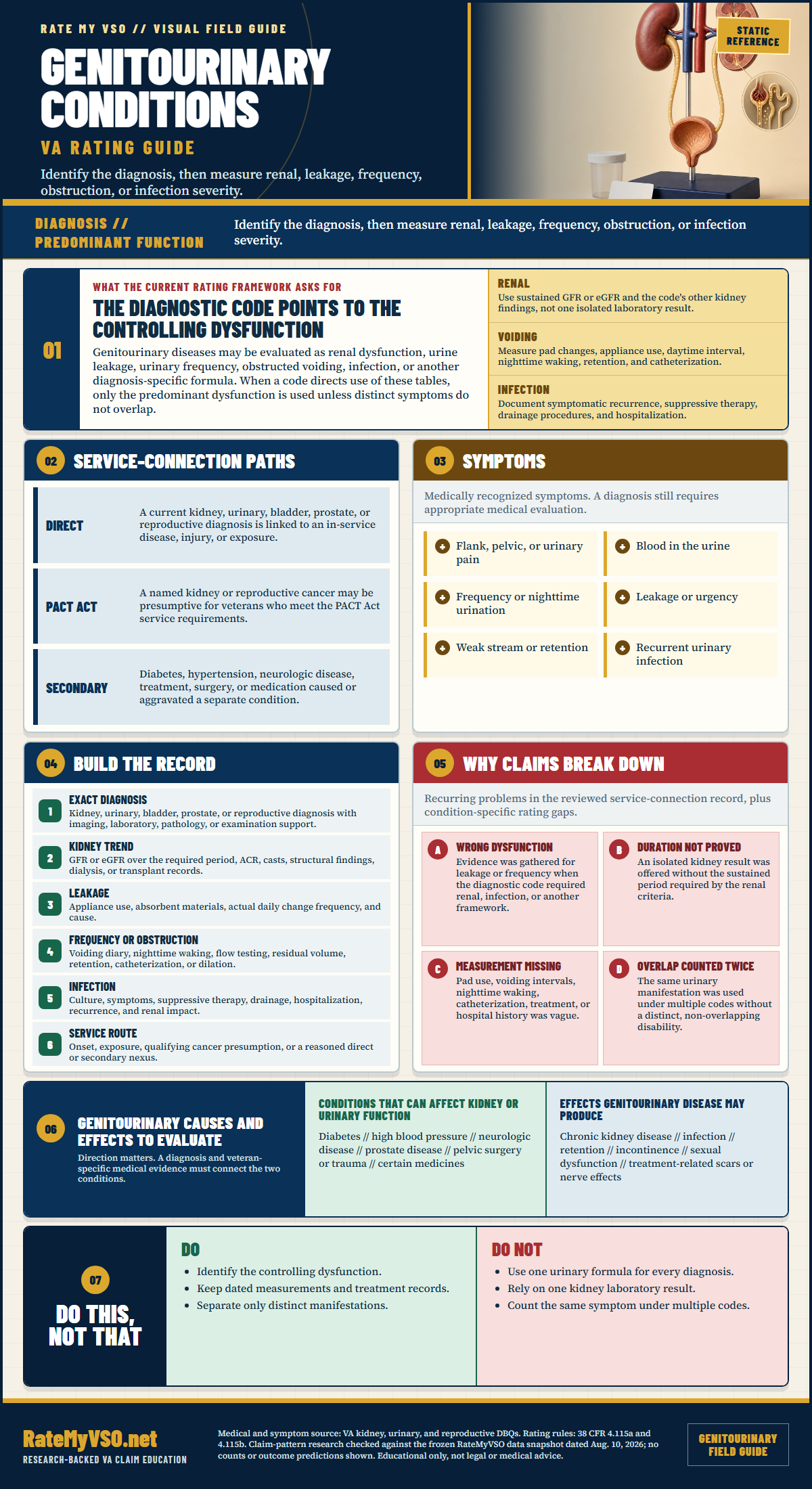
Genitourinary-system guide separating renal, leakage, frequency, obstruction, infection, and diagnosis-specific rating methods, with symptoms, service paths, required measurements, evidence, and common claim gaps.
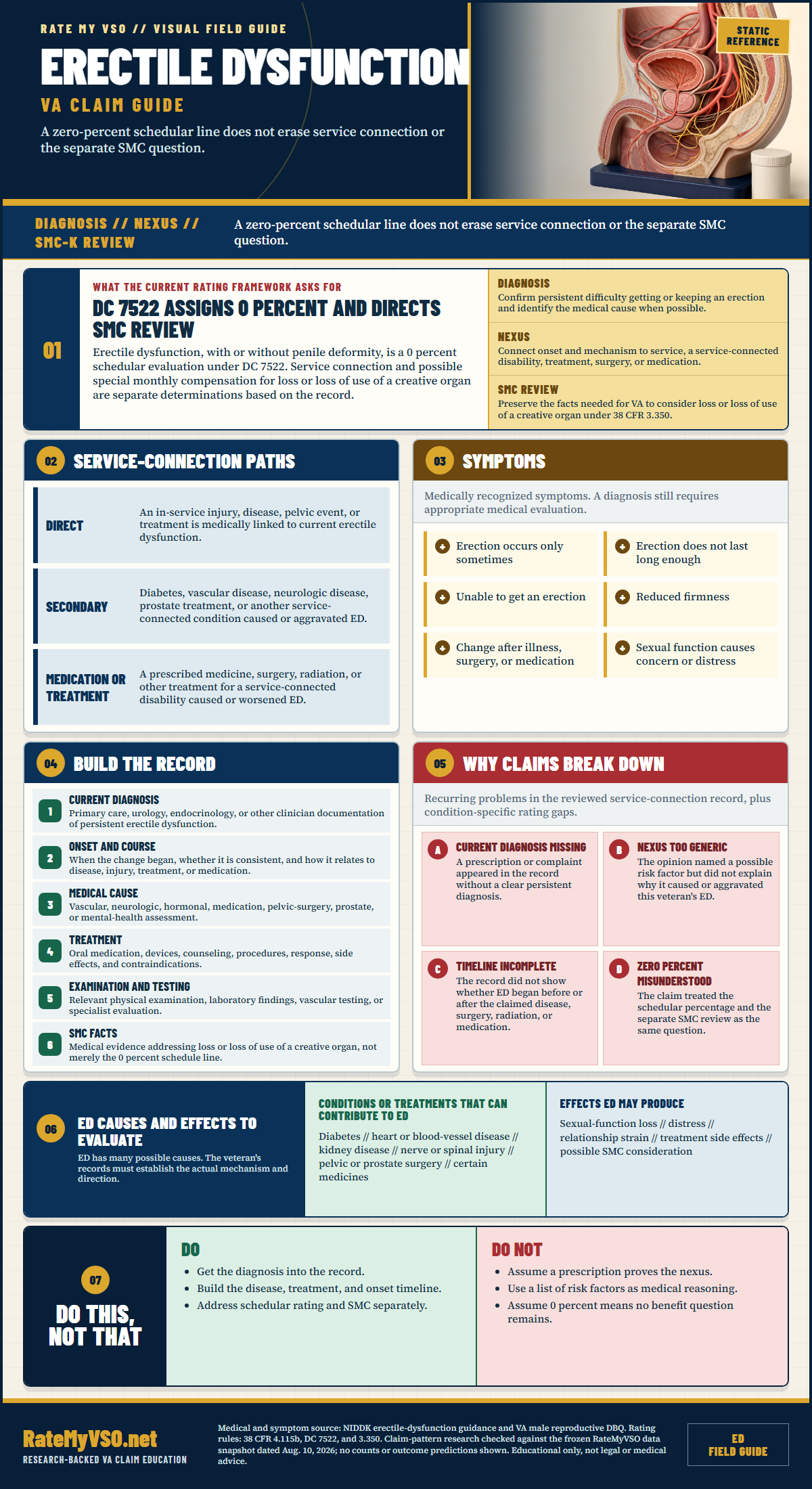
Erectile-dysfunction guide covering DC 7522, the separate SMC review, direct and secondary service paths, symptoms, medical causes, onset and treatment evidence, and common claim gaps.
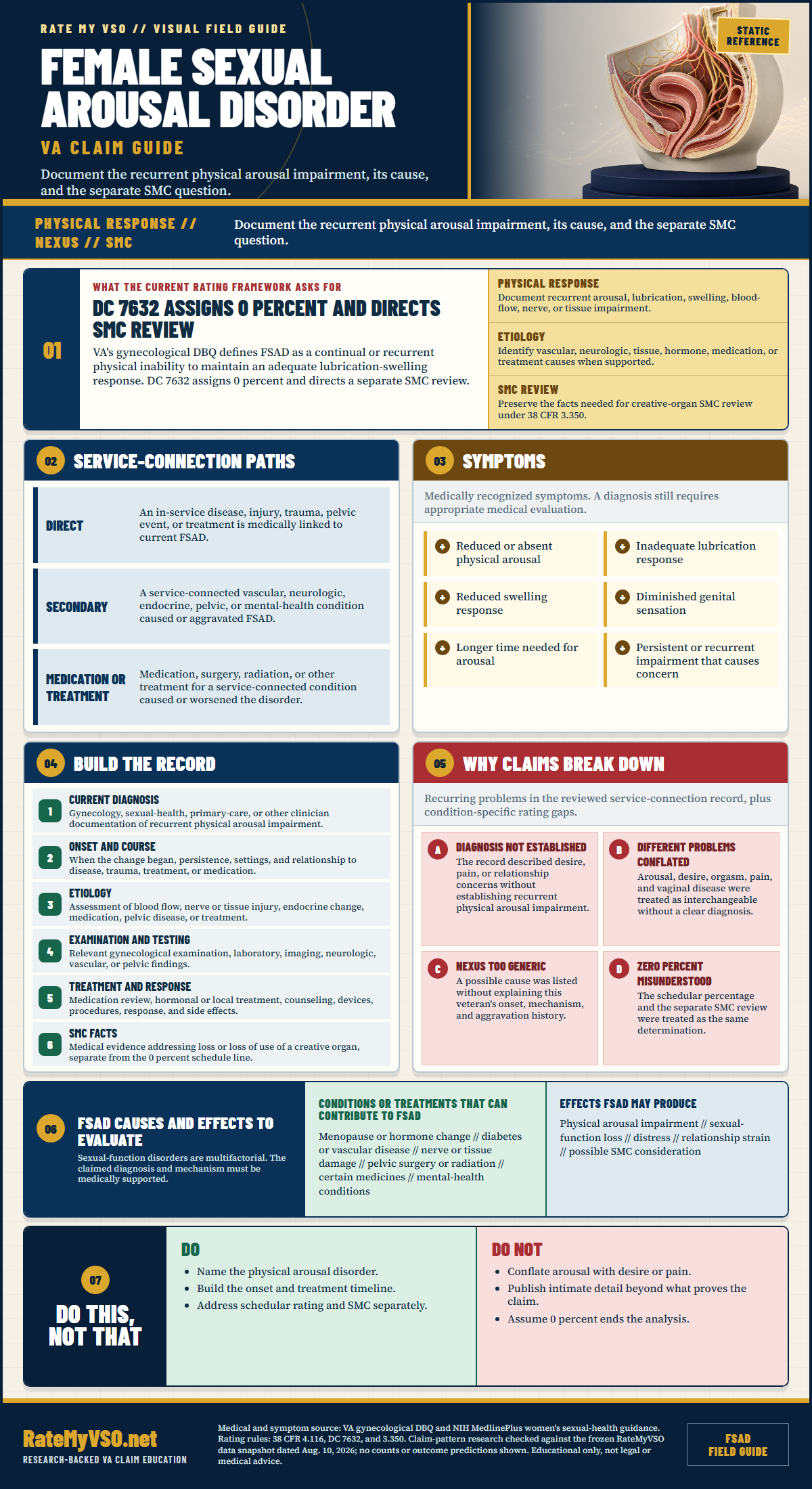
Female sexual arousal disorder guide covering DC 7632, the recurrent physical arousal impairment, the separate SMC review, service paths, possible causes, examination and treatment evidence, and common claim gaps.
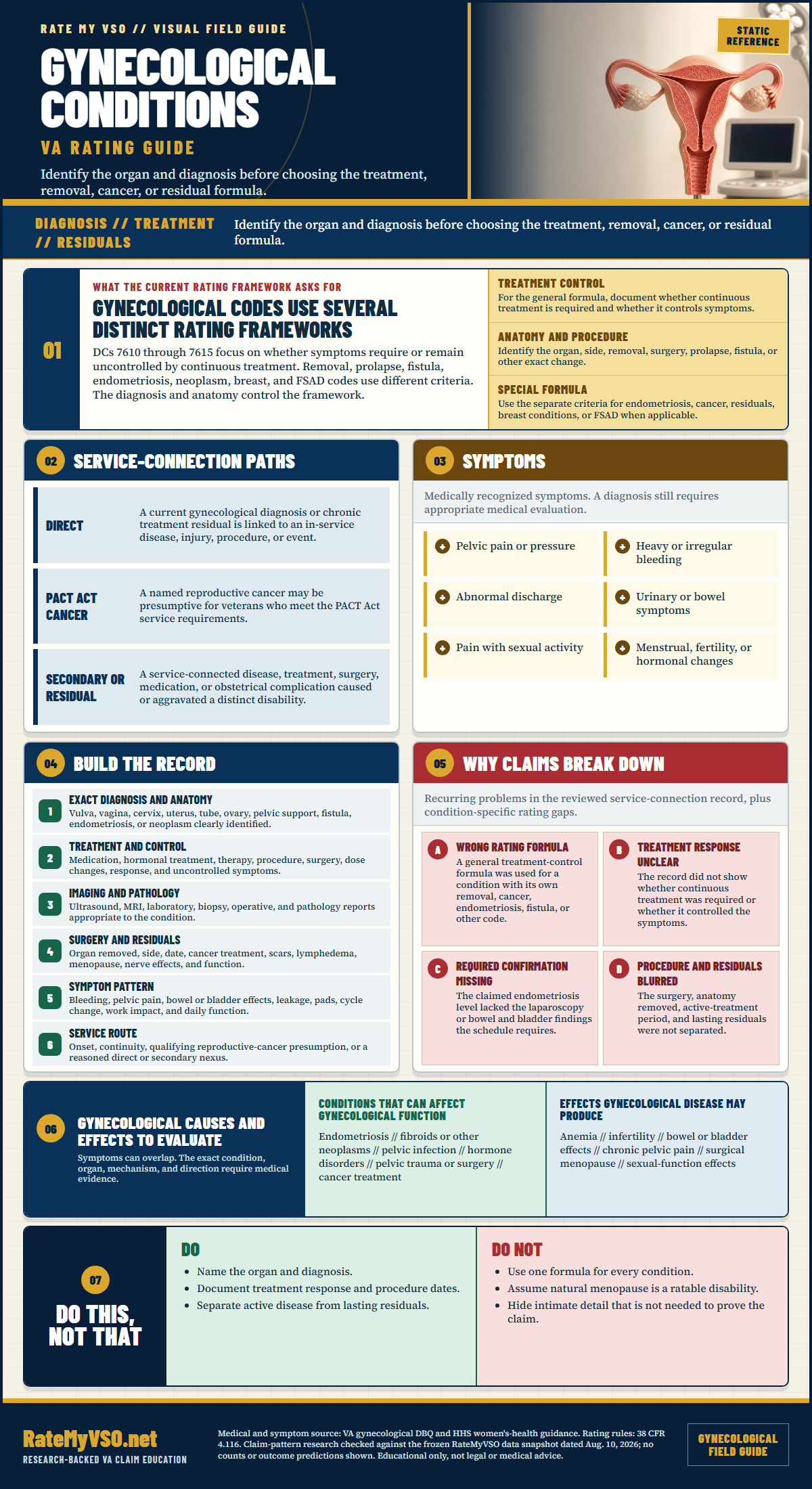
Gynecological-system guide separating treatment-control, removal, prolapse, fistula, endometriosis, cancer, residual, and FSAD frameworks, with symptoms, service paths, evidence, and common claim gaps.
Neurological and sensory conditions
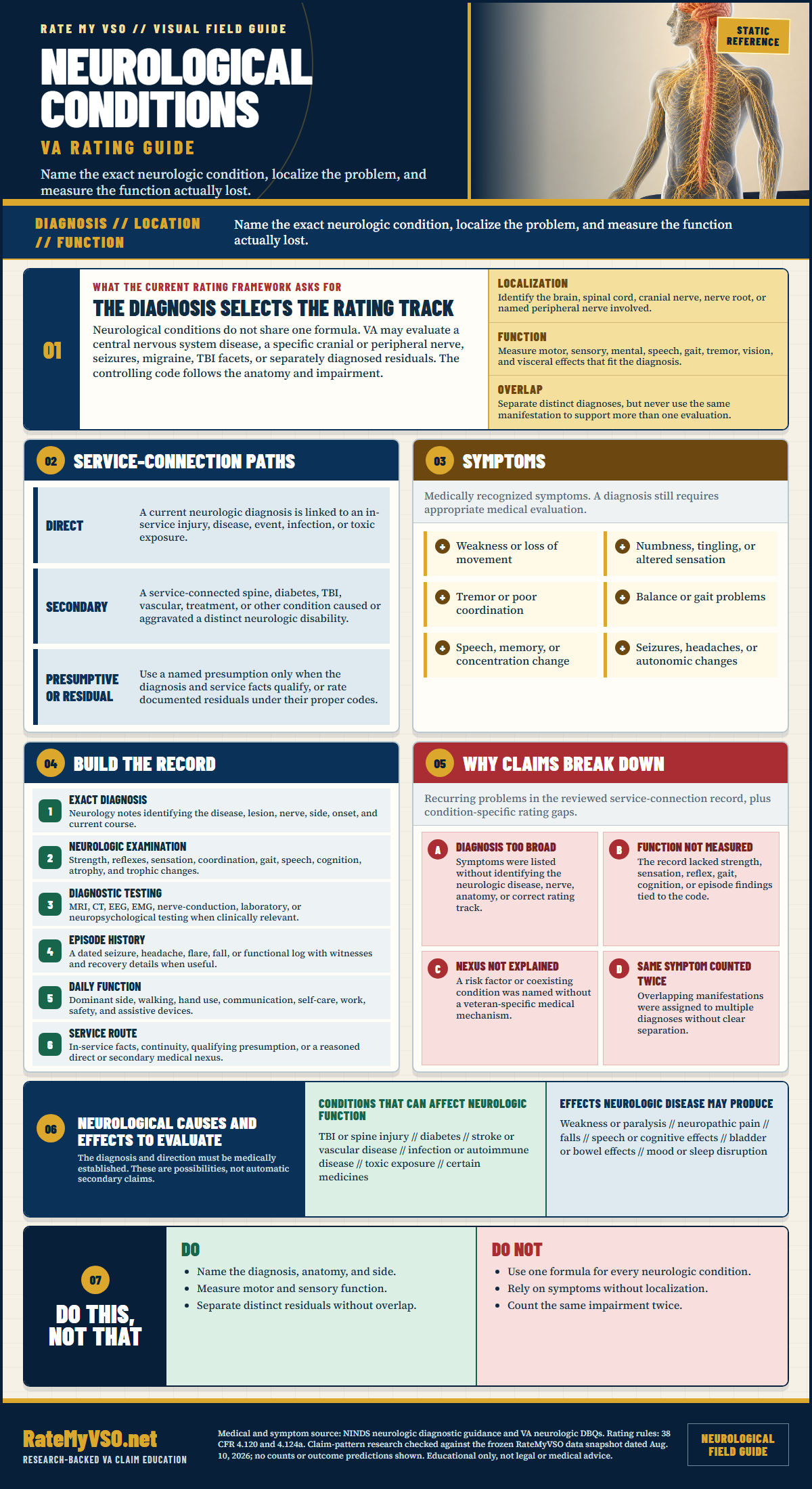
Neurological-system guide covering code selection, localization, motor, sensory and mental function, service-connection paths, symptoms, diagnostic testing, evidence, residuals, and common claim gaps.
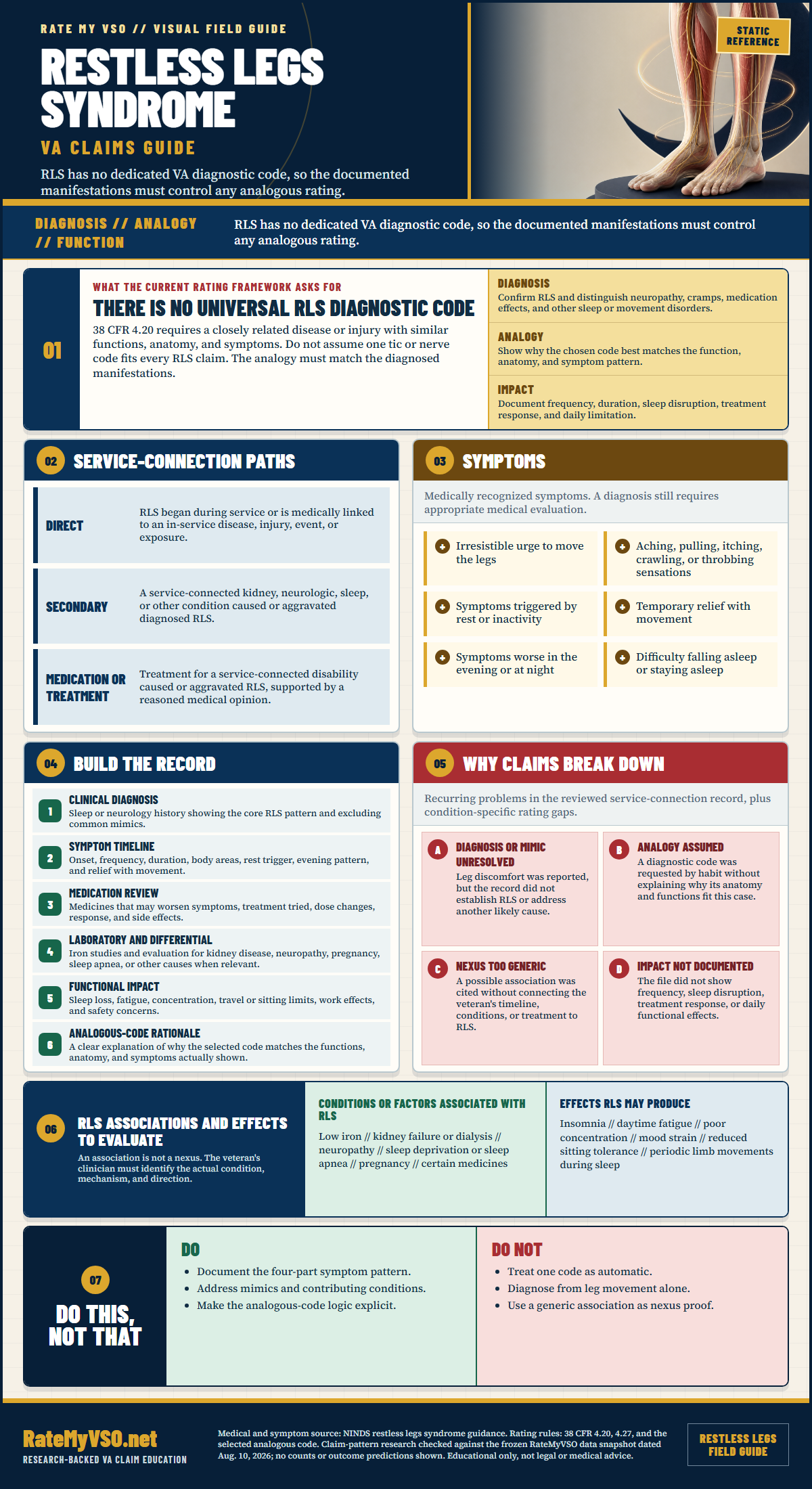
Restless legs syndrome guide covering diagnosis, analogous-code selection, the core symptom pattern, service paths, mimics, testing, treatment response, functional impact, and common claim gaps.
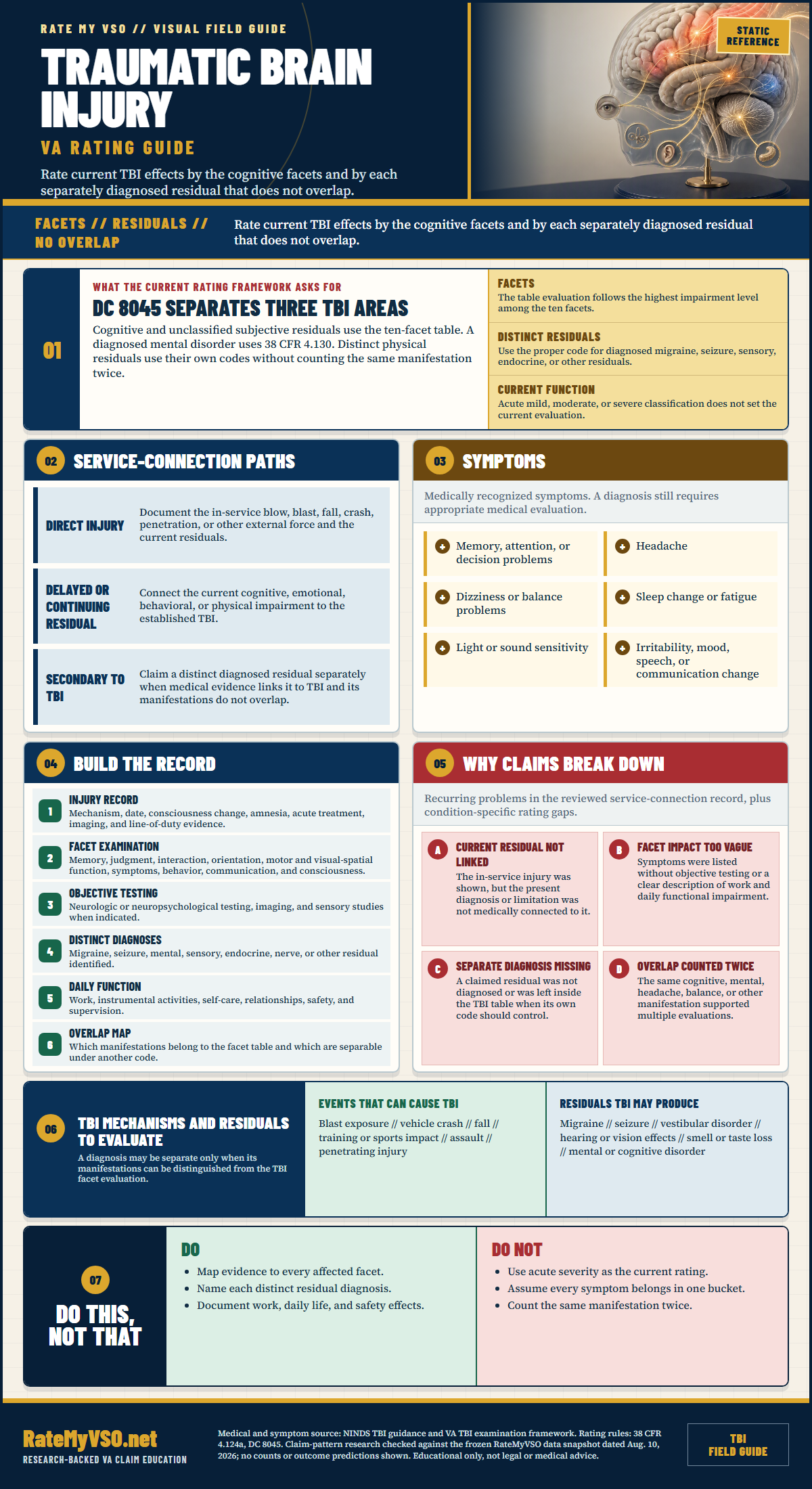
TBI guide covering DC 8045, the ten-facet framework, separate mental and physical residuals, service paths, symptoms, examinations, overlap rules, and common claim gaps.
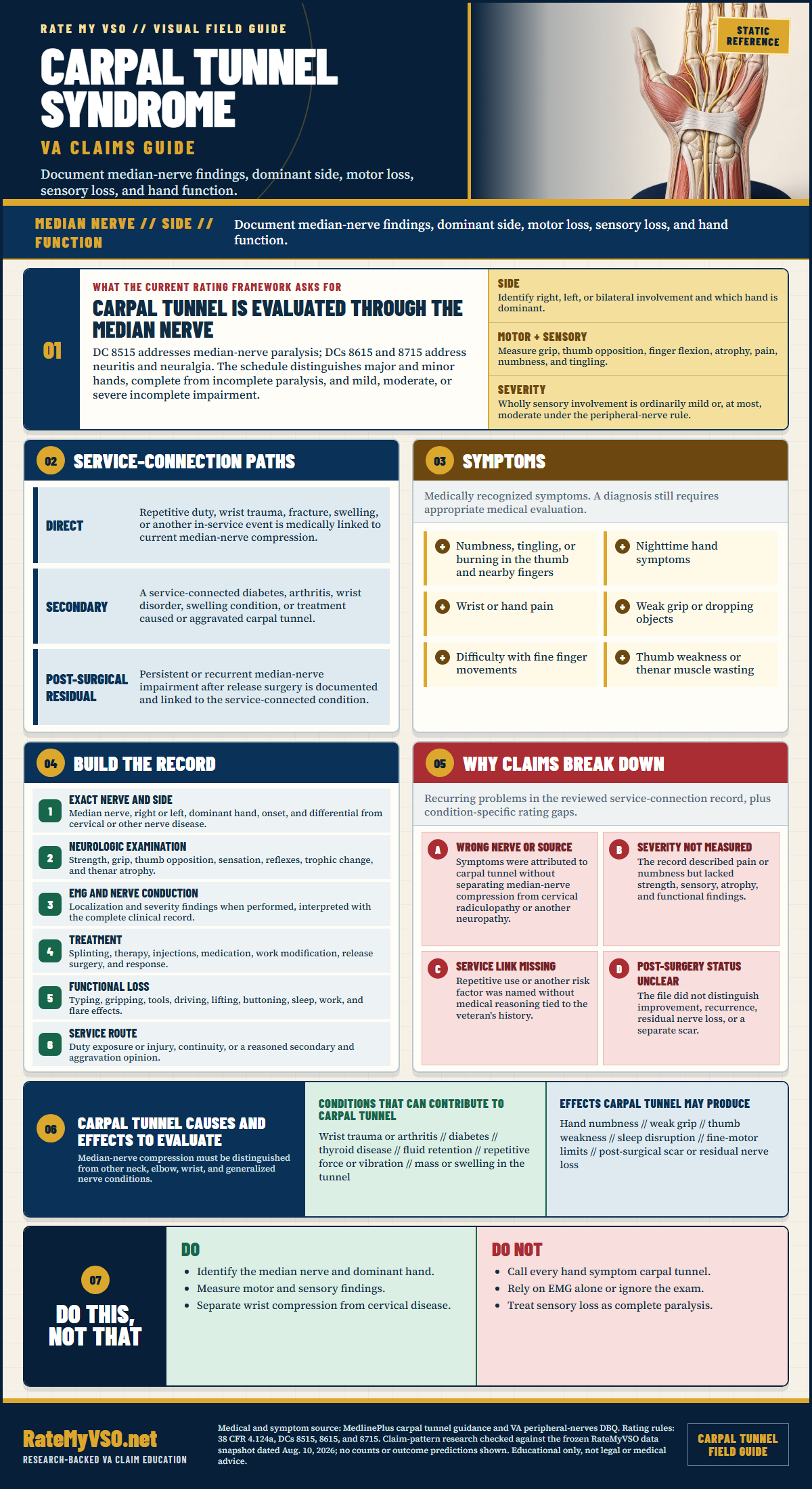
Carpal tunnel guide covering the median nerve, dominant-hand and severity rules, service paths, symptoms, EMG and examination evidence, treatment, function, and common claim gaps.
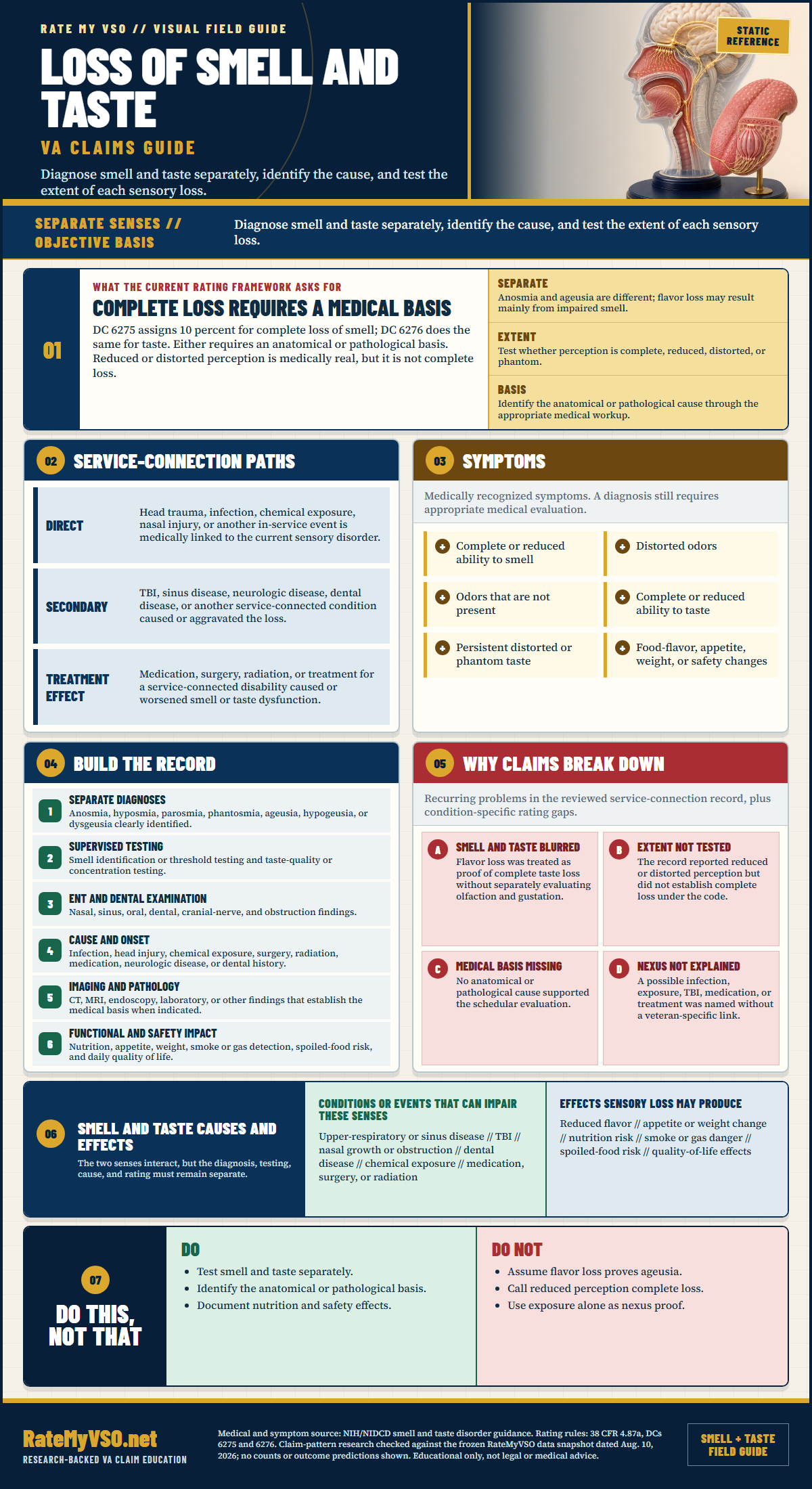
Smell and taste guide covering DCs 6275 and 6276, separate sensory diagnoses, complete-loss and medical-basis rules, service paths, supervised testing, safety effects, and common claim gaps.
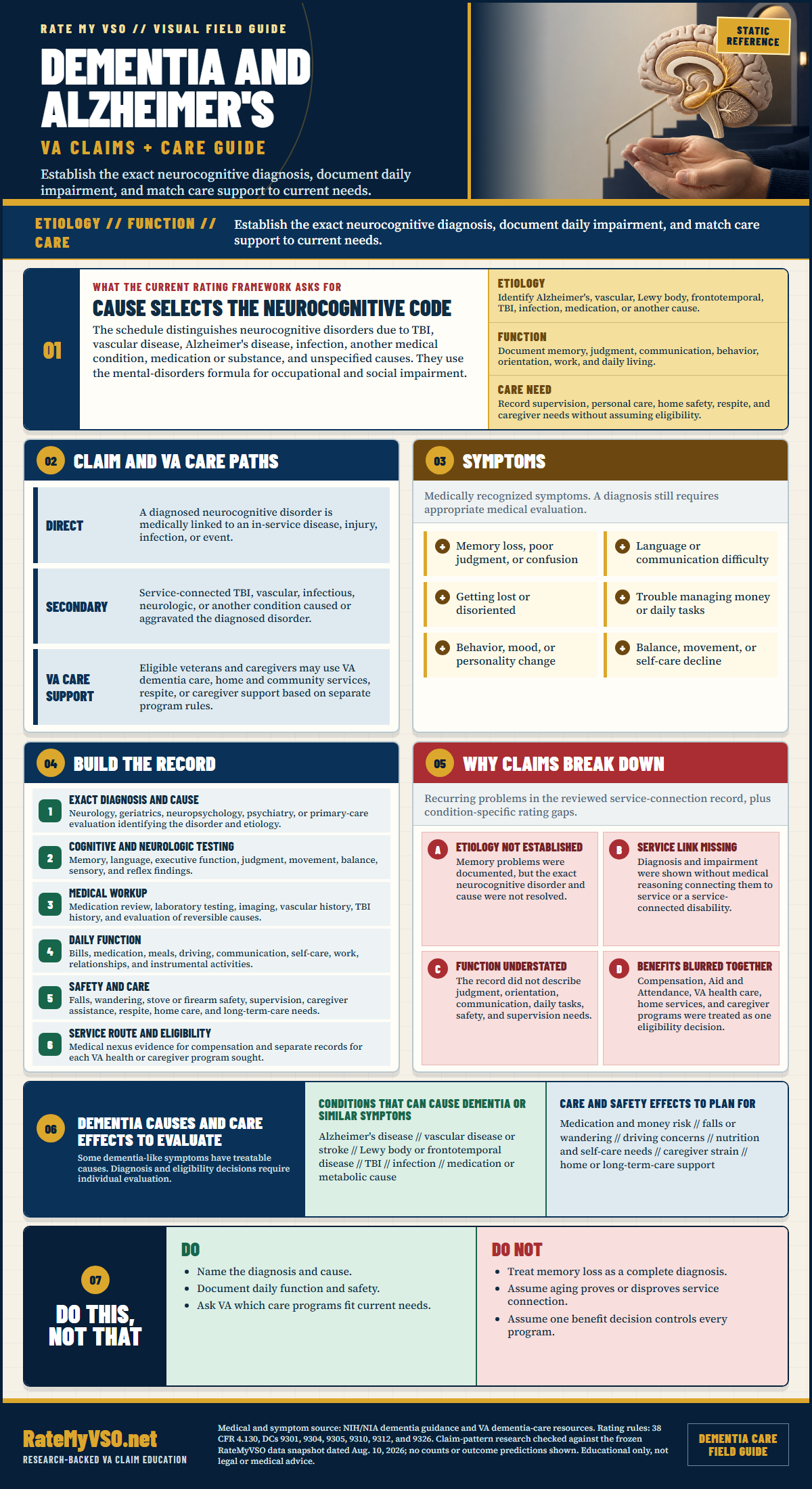
Dementia and Alzheimer's guide covering diagnosis and etiology, neurocognitive rating codes, daily function, service paths, VA care and caregiver support, safety planning, and common claim gaps.
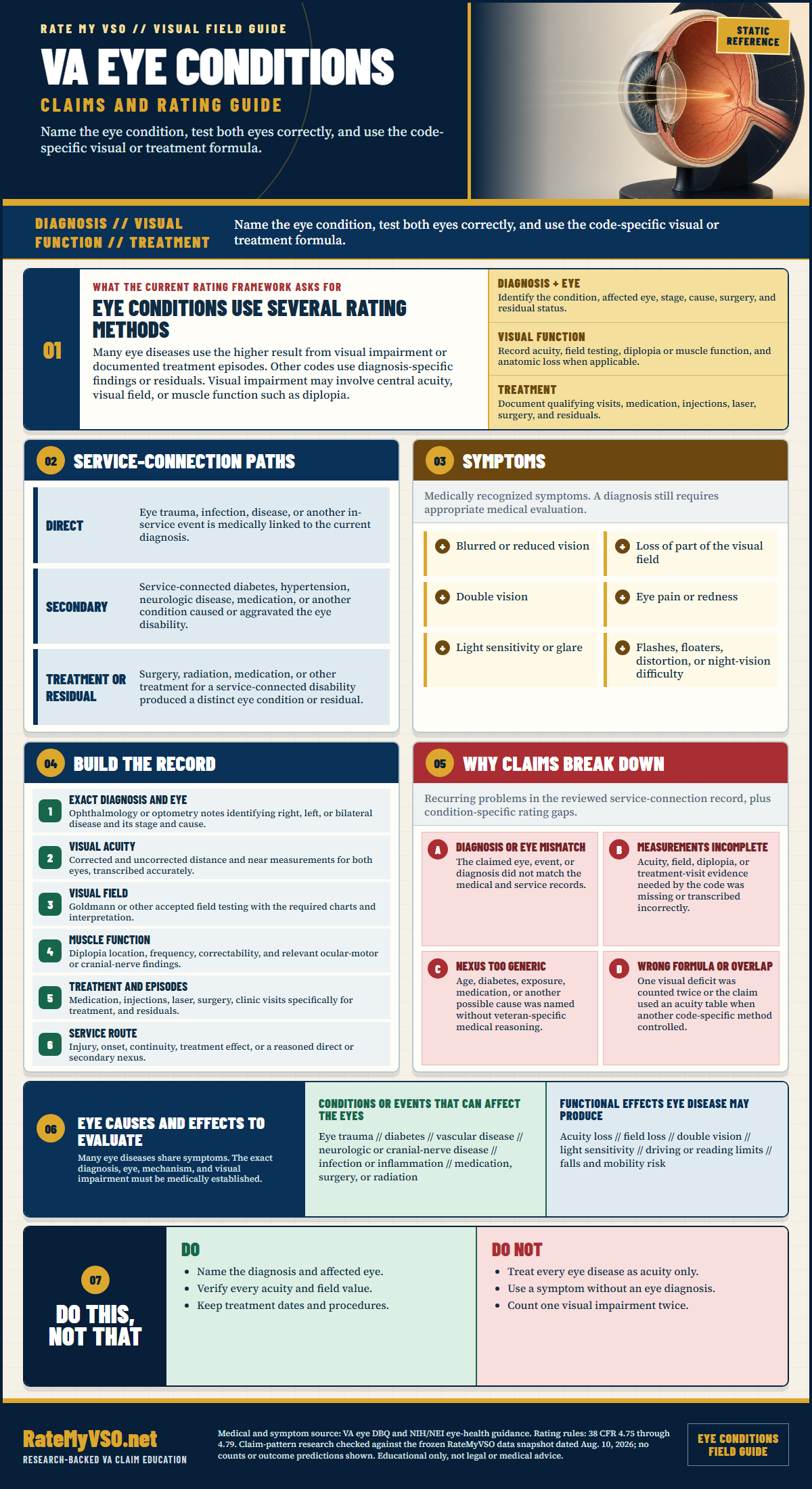
Eye-conditions guide covering diagnosis-specific formulas, acuity, visual field, diplopia, treatment episodes, service paths, symptoms, examination evidence, and common claim gaps.
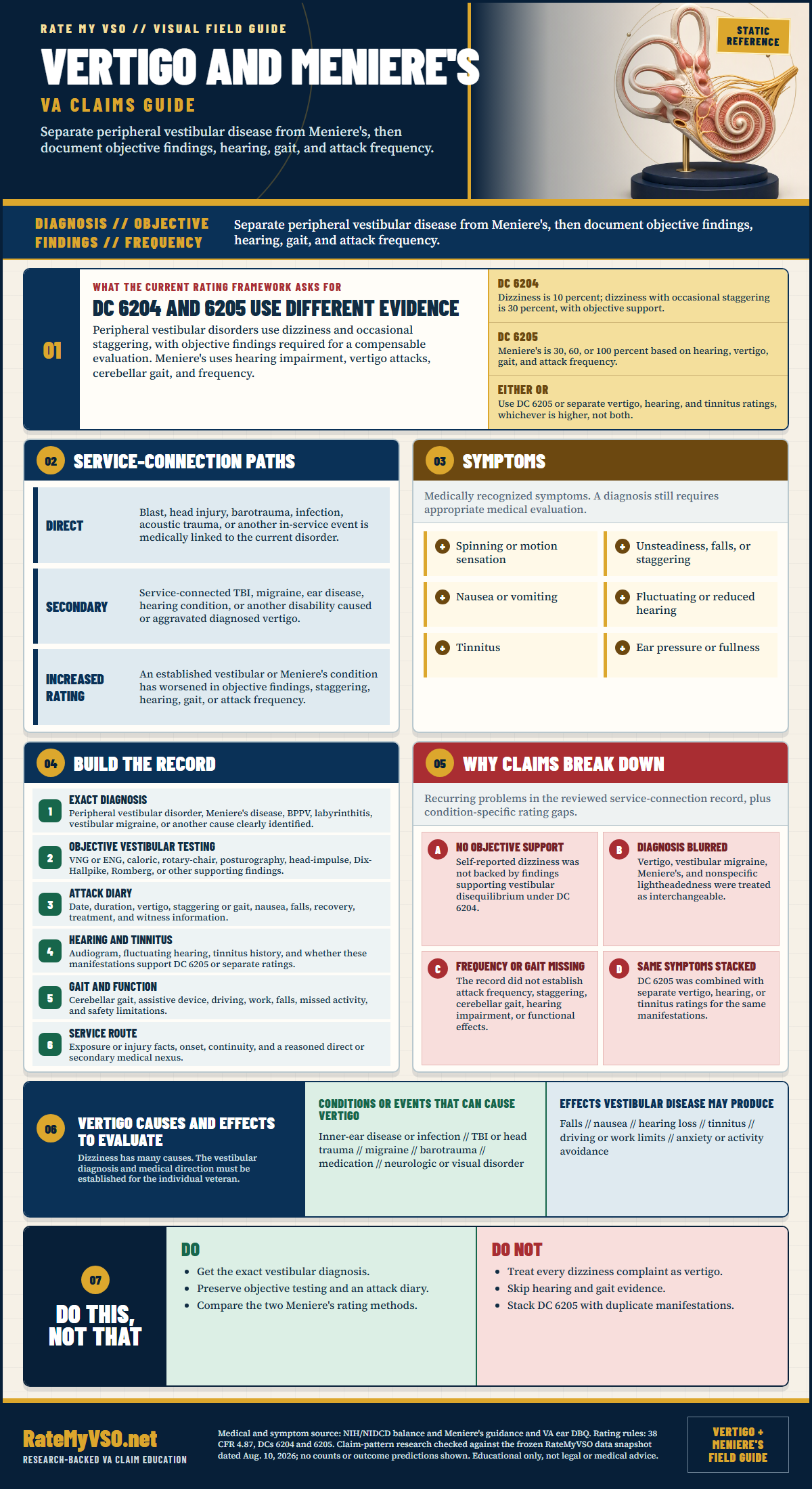
Vertigo and Meniere's guide covering DCs 6204 and 6205, objective vestibular findings, hearing, gait, attack frequency, service paths, testing, the either-or rule, and common claim gaps.
Skin, blood, immune, and dental conditions
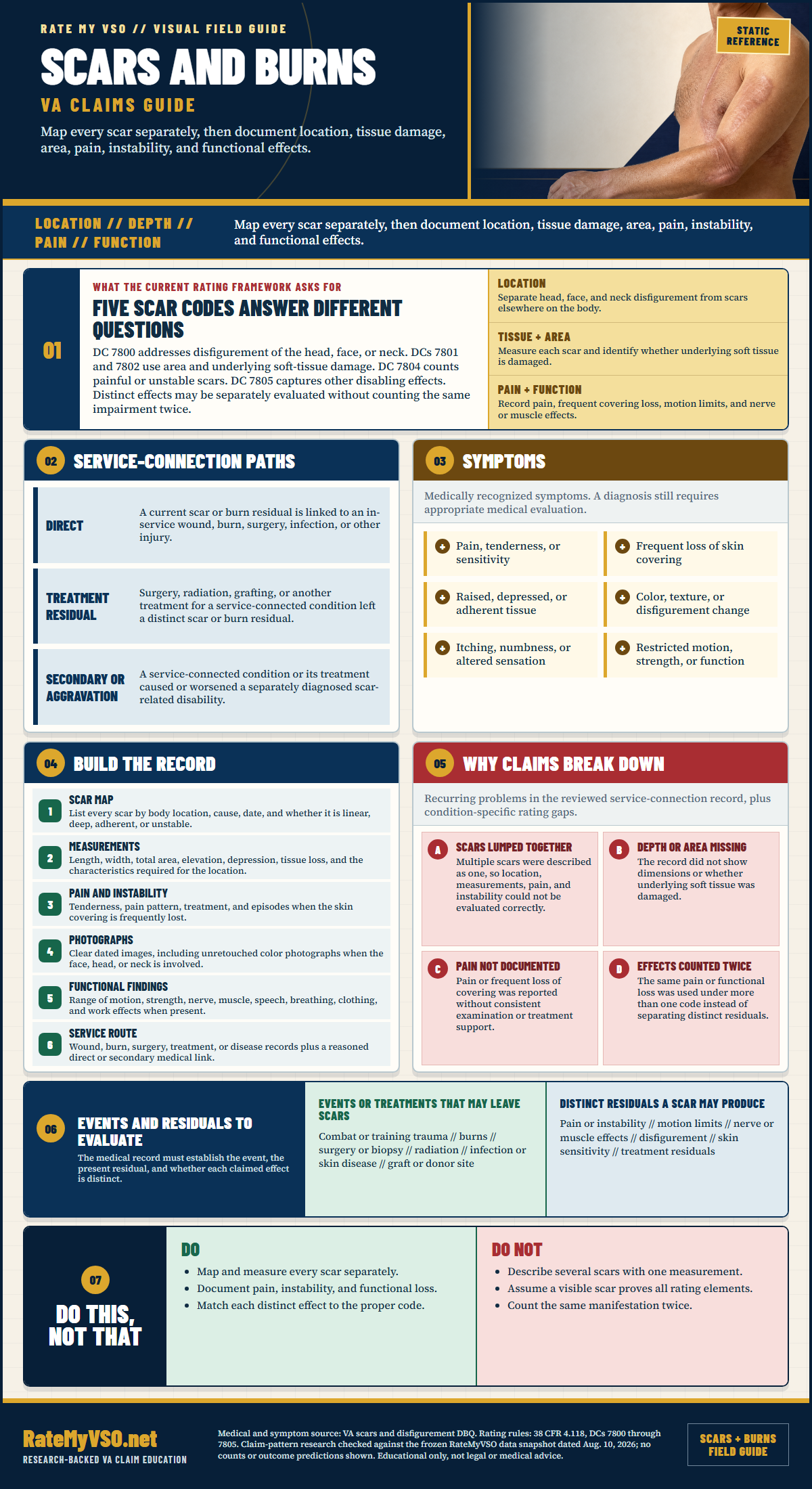
Scars and burns guide covering the five scar codes, location, tissue damage, area, pain, instability, disfigurement, function, service paths, evidence, and common claim gaps.
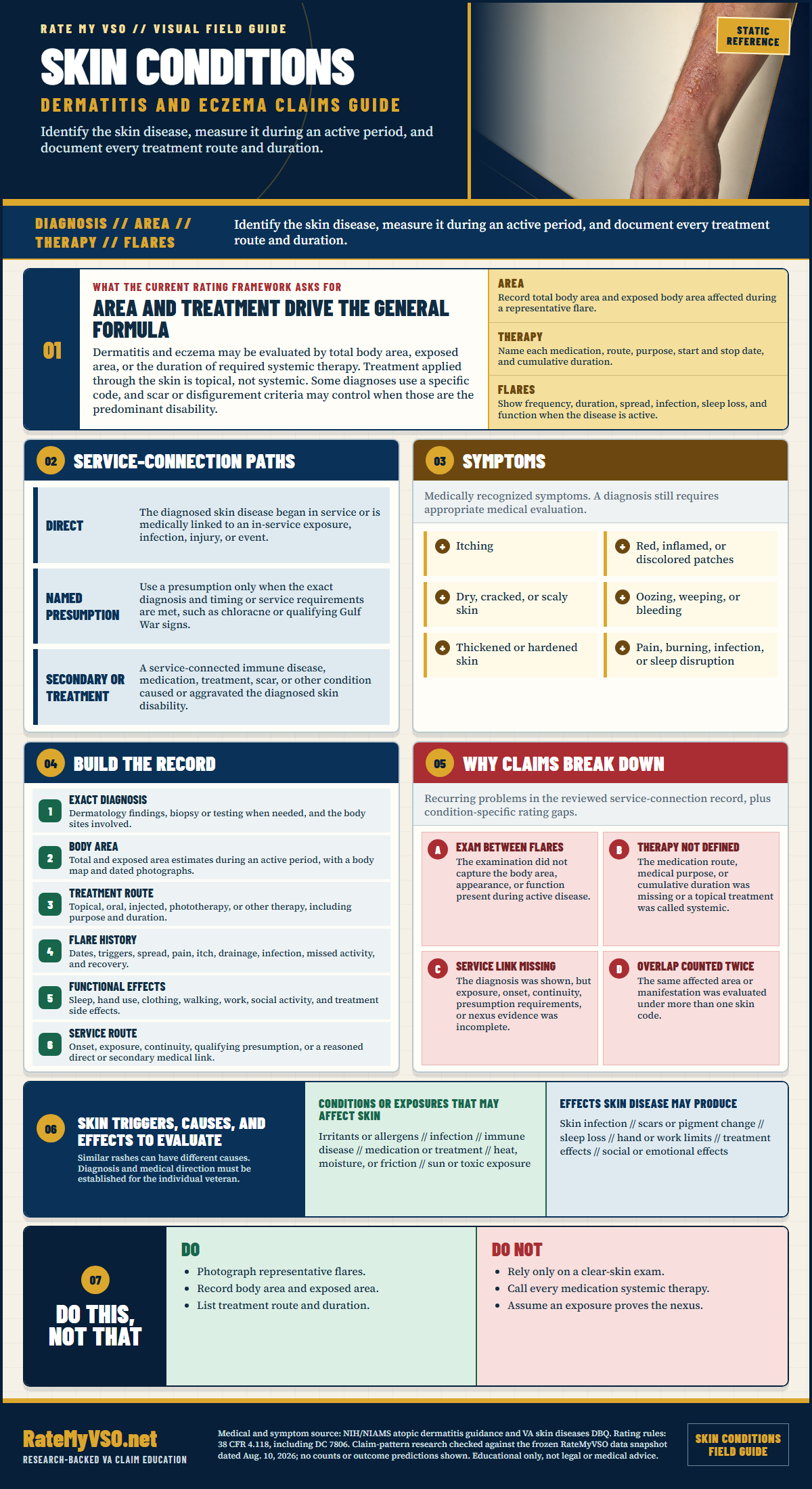
Skin conditions and eczema guide covering diagnosis, body and exposed area, topical and systemic therapy, flares, service paths, symptoms, evidence, overlap rules, and common claim gaps.
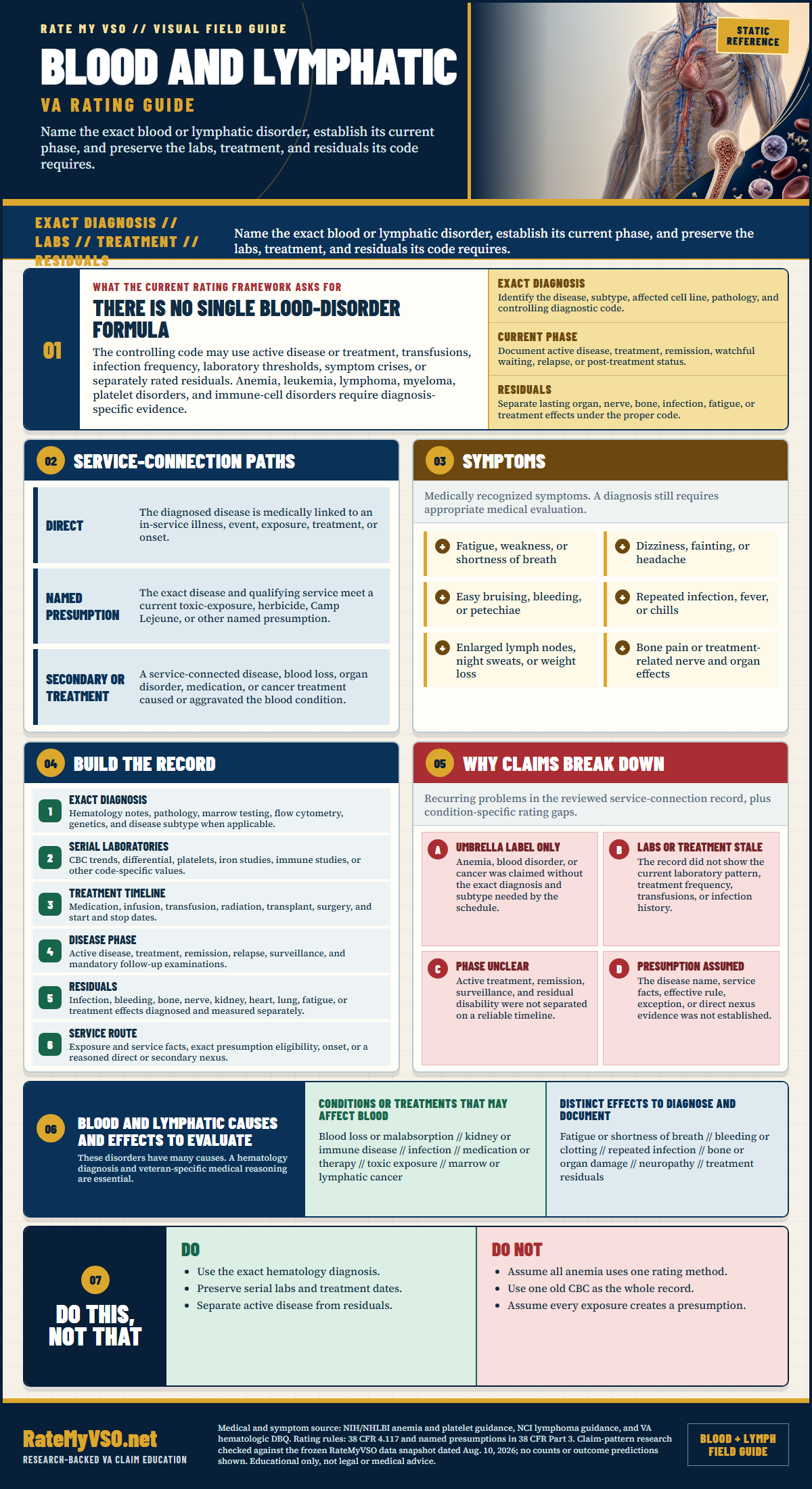
Blood and lymphatic guide covering diagnosis-specific rating methods, disease phase, laboratories, treatment, named presumptions, residuals, symptoms, evidence, and common claim gaps.
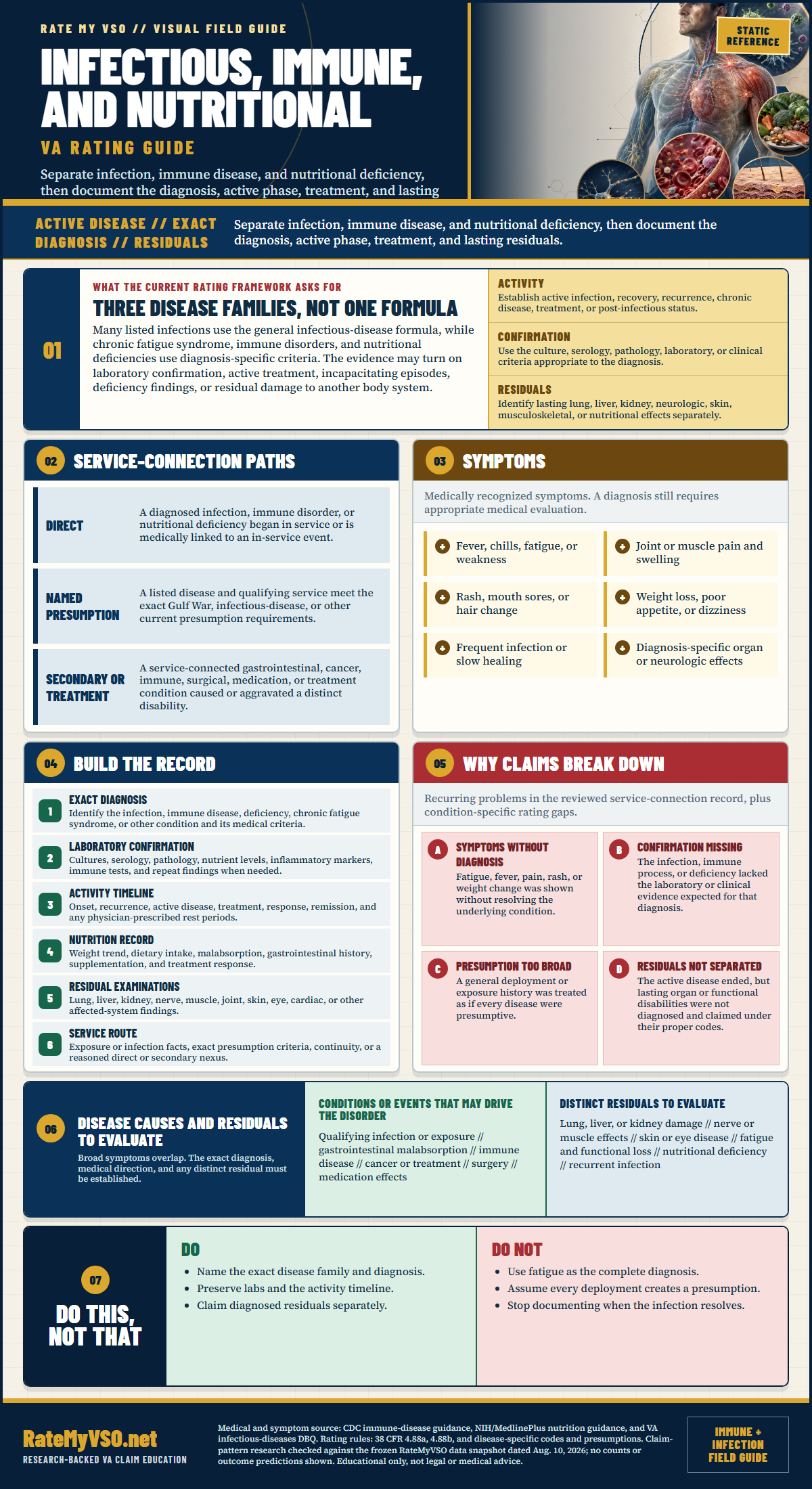
Infectious, immune, and nutritional guide covering exact diagnosis, active disease, laboratory confirmation, treatment, service paths, named presumptions, residuals, symptoms, and common claim gaps.
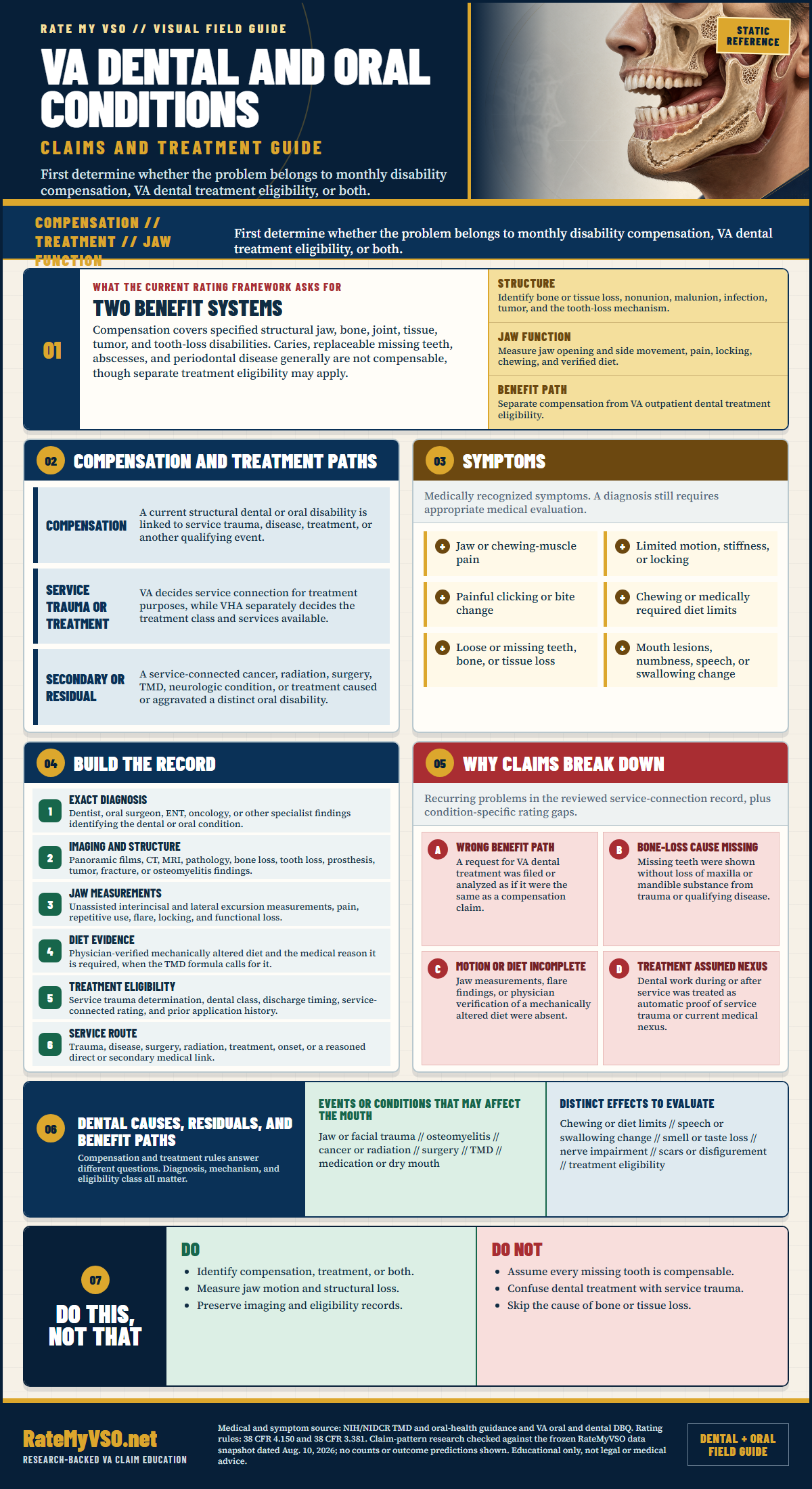
Dental and oral guide separating compensation from VA treatment eligibility, with structural loss, jaw motion, mechanically altered diet, service trauma, symptoms, evidence, and common claim gaps.
Related Tools and Guides
This library is for educational purposes only and is not legal or medical advice. For help with your claim, find a VSO representative near you.