Knee, Back and Foot Visual Guide Library
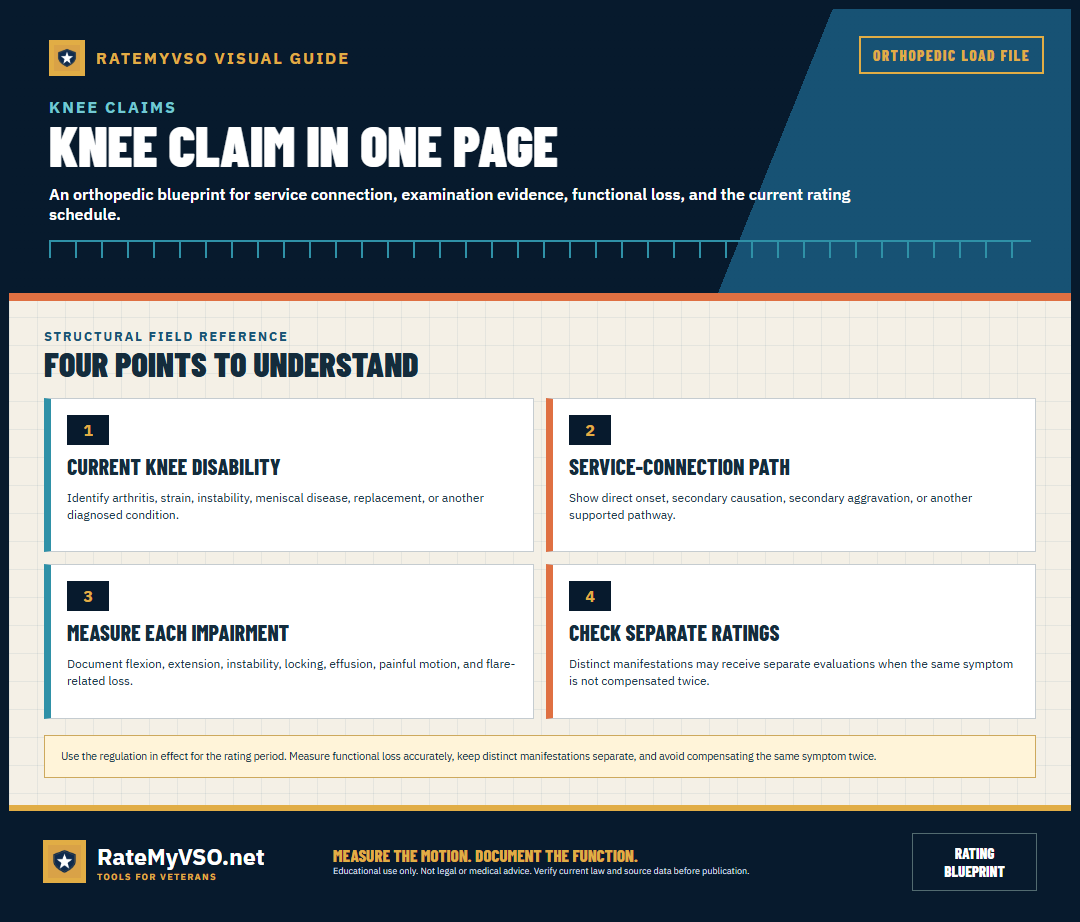
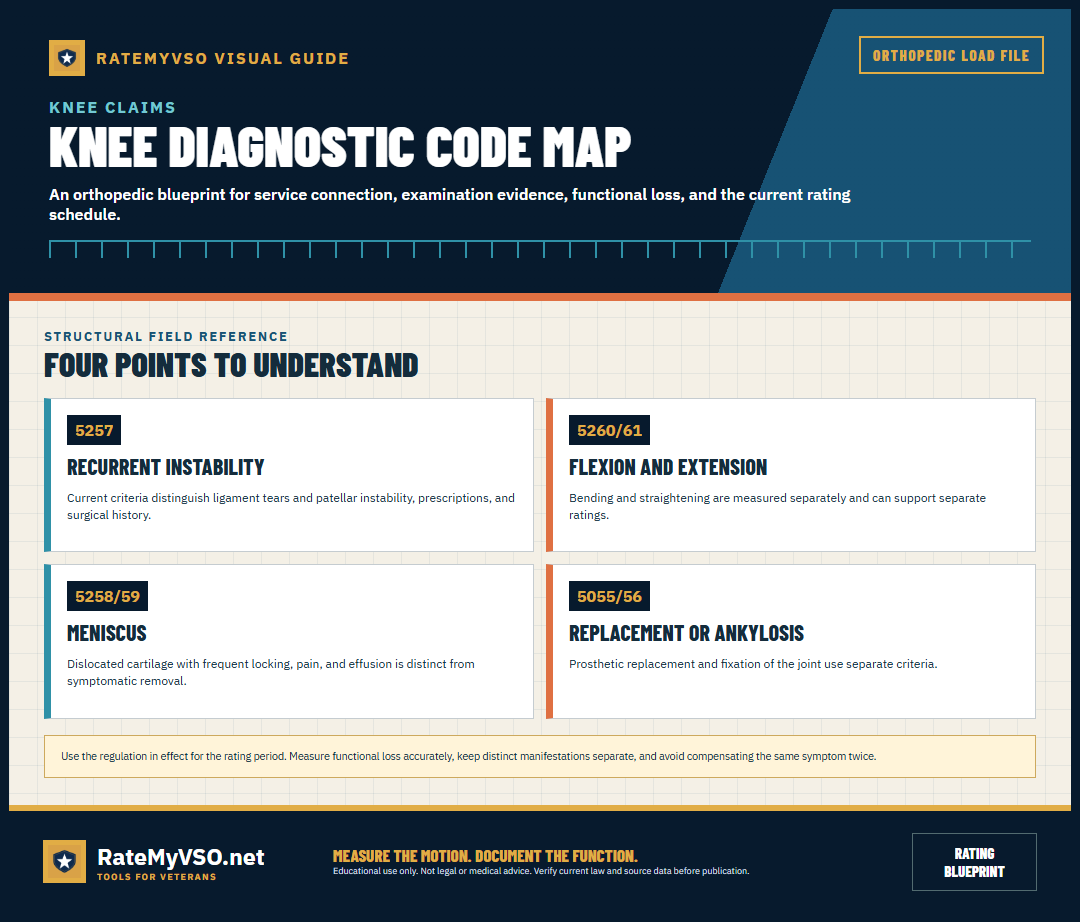
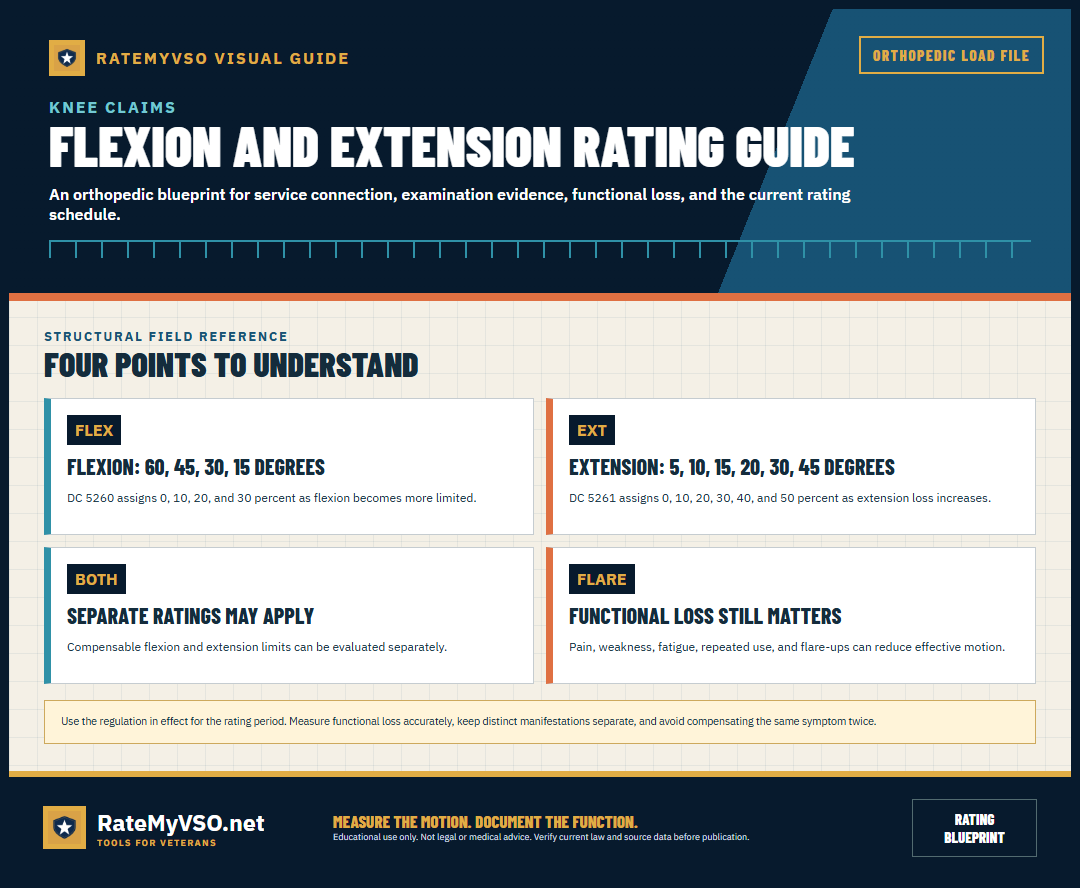
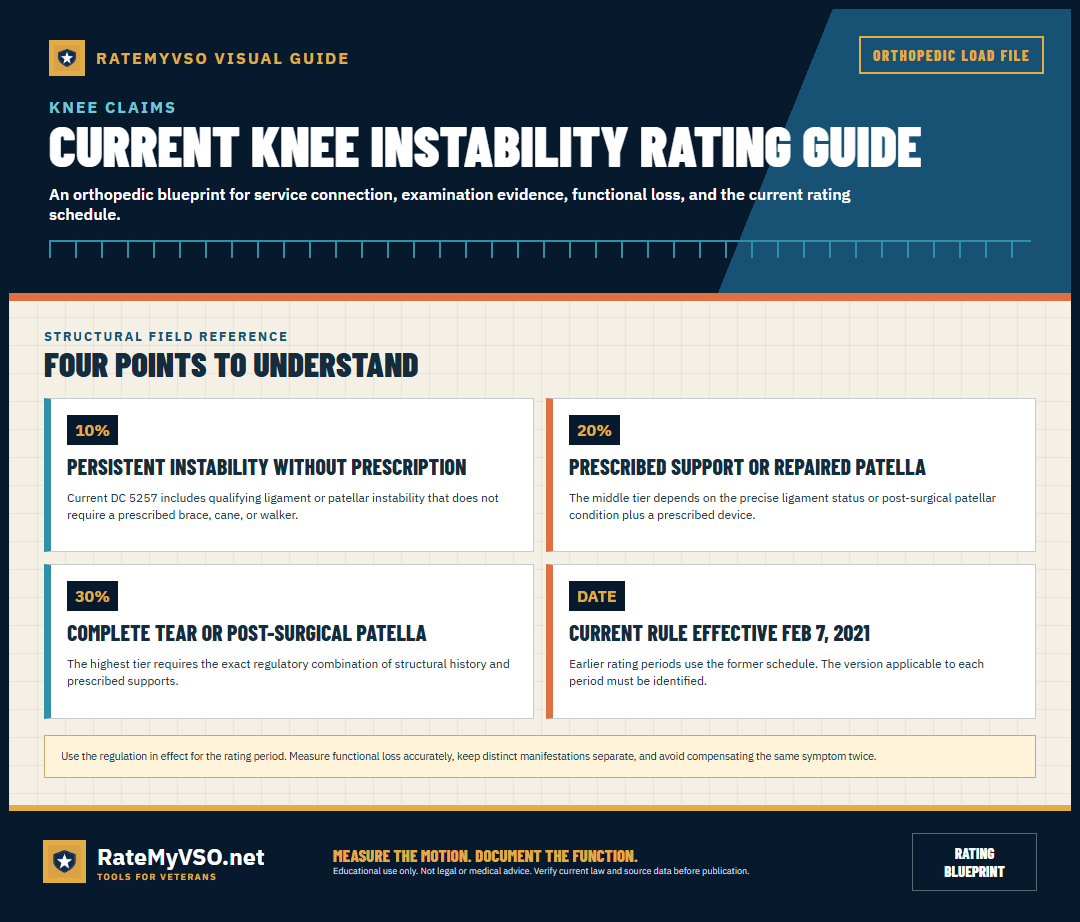
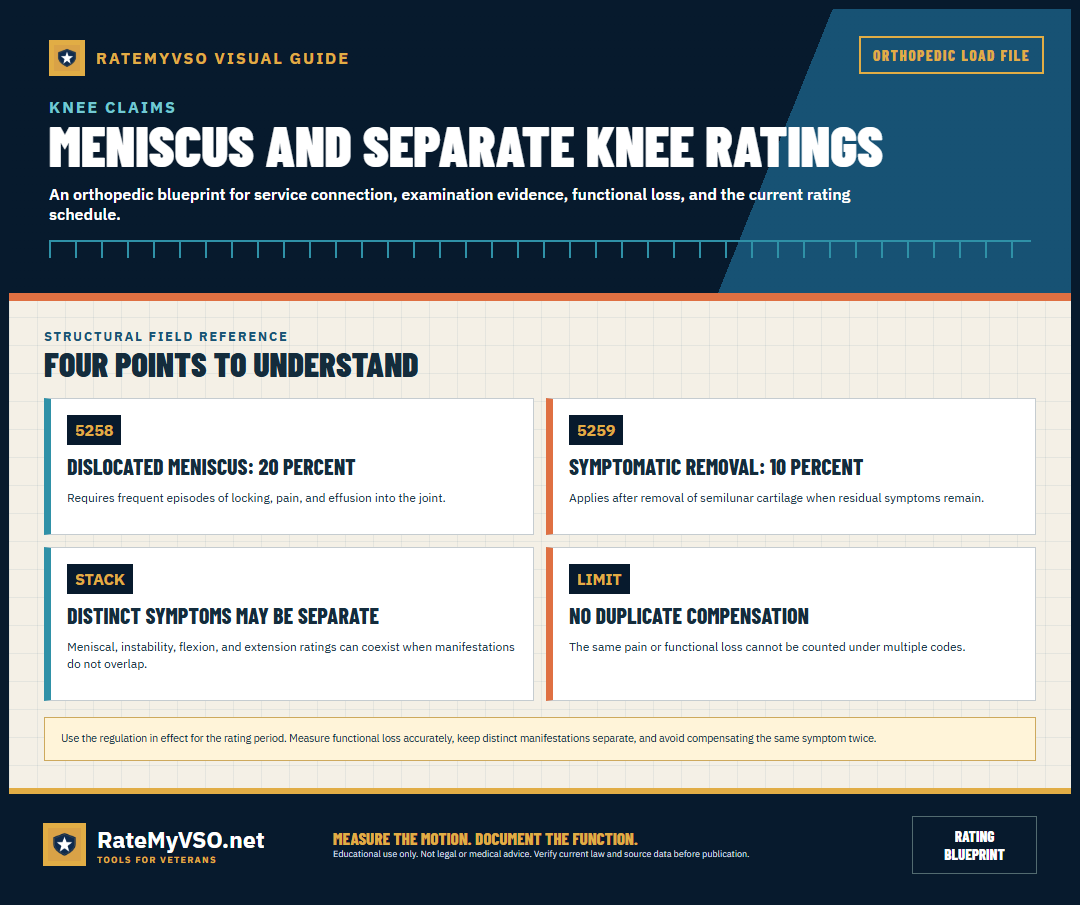
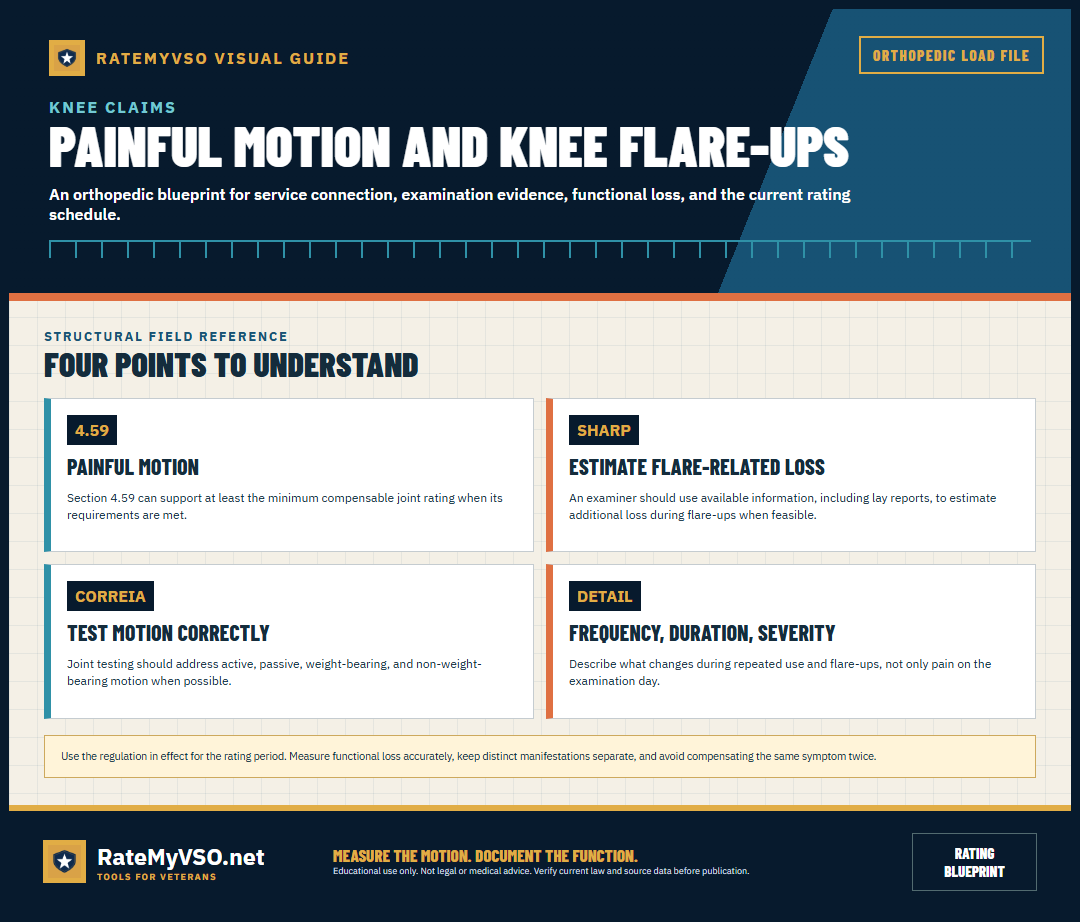
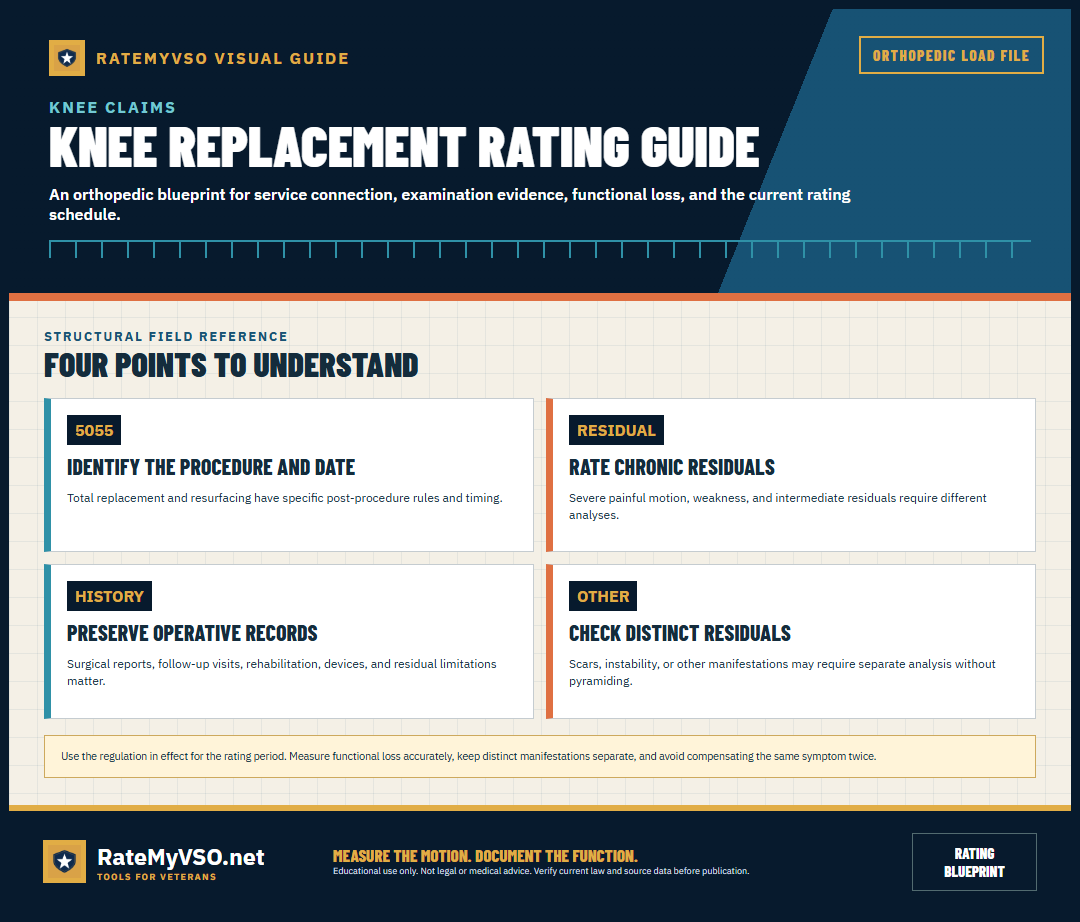
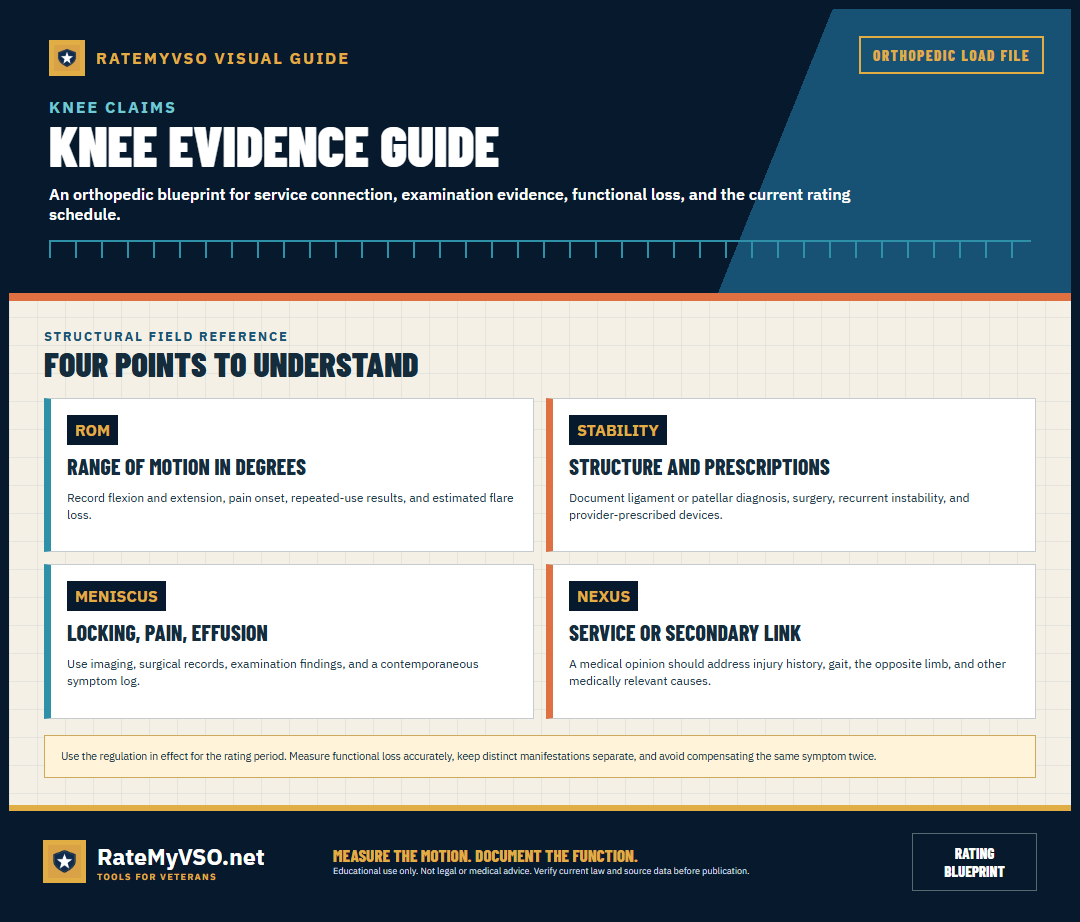
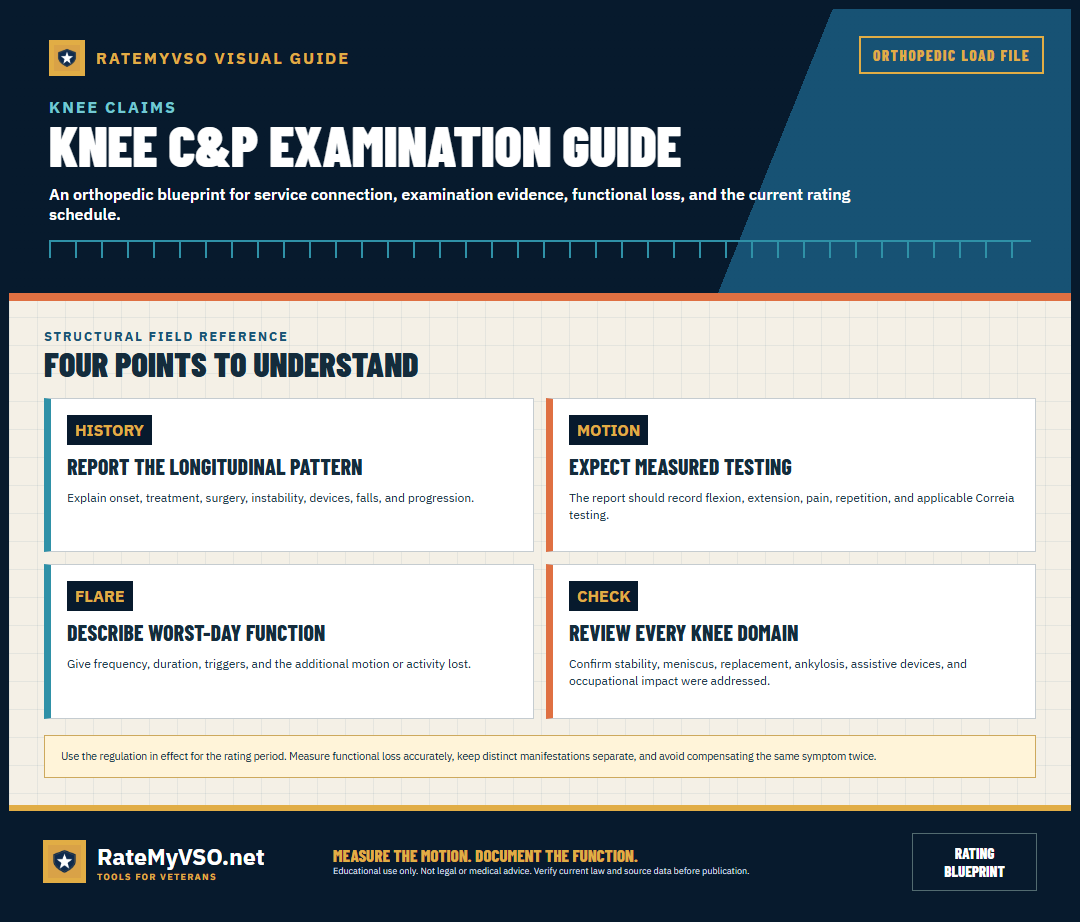
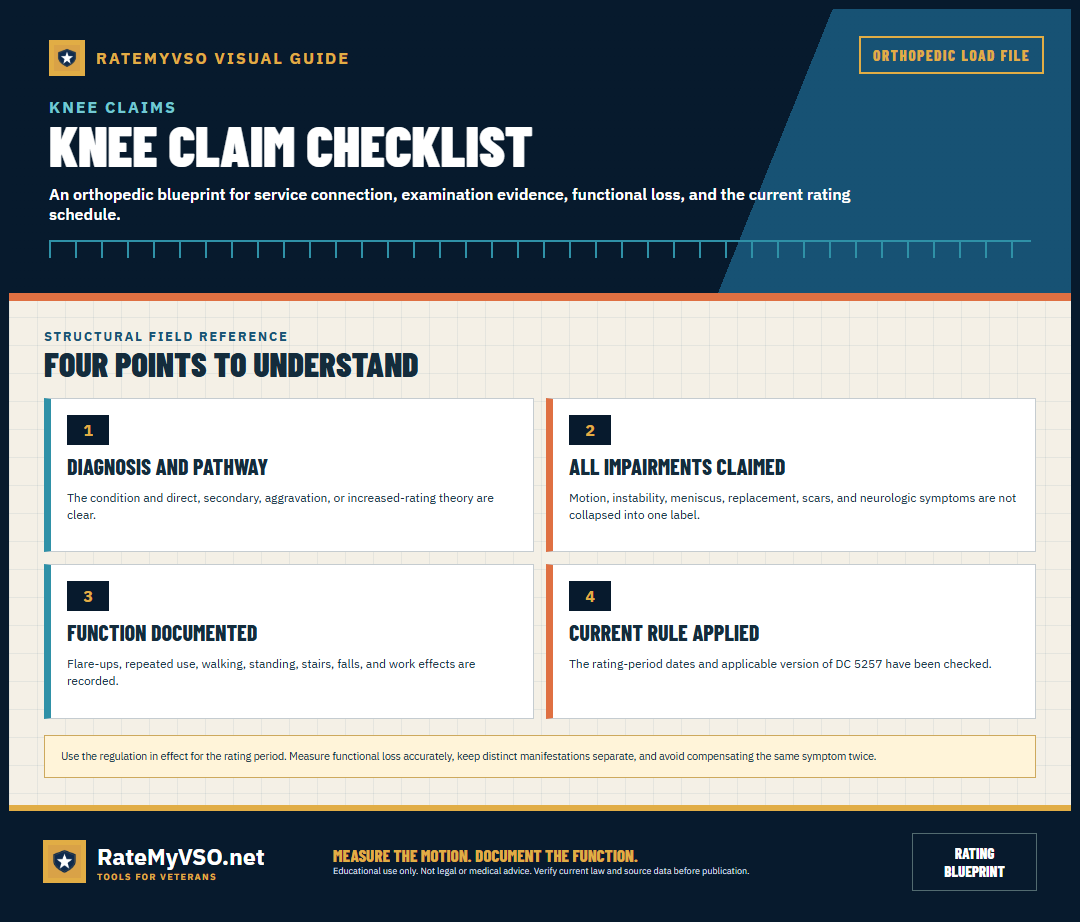
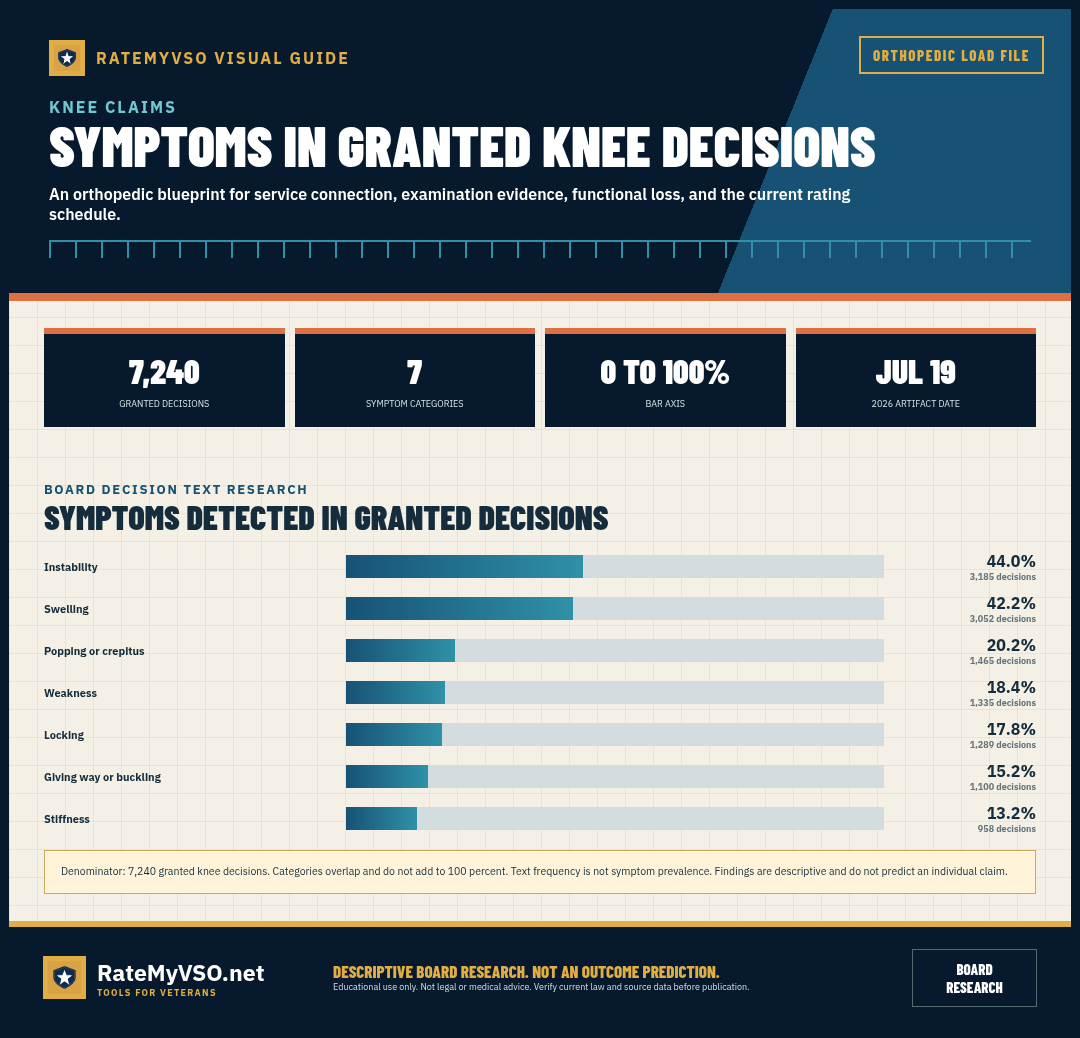
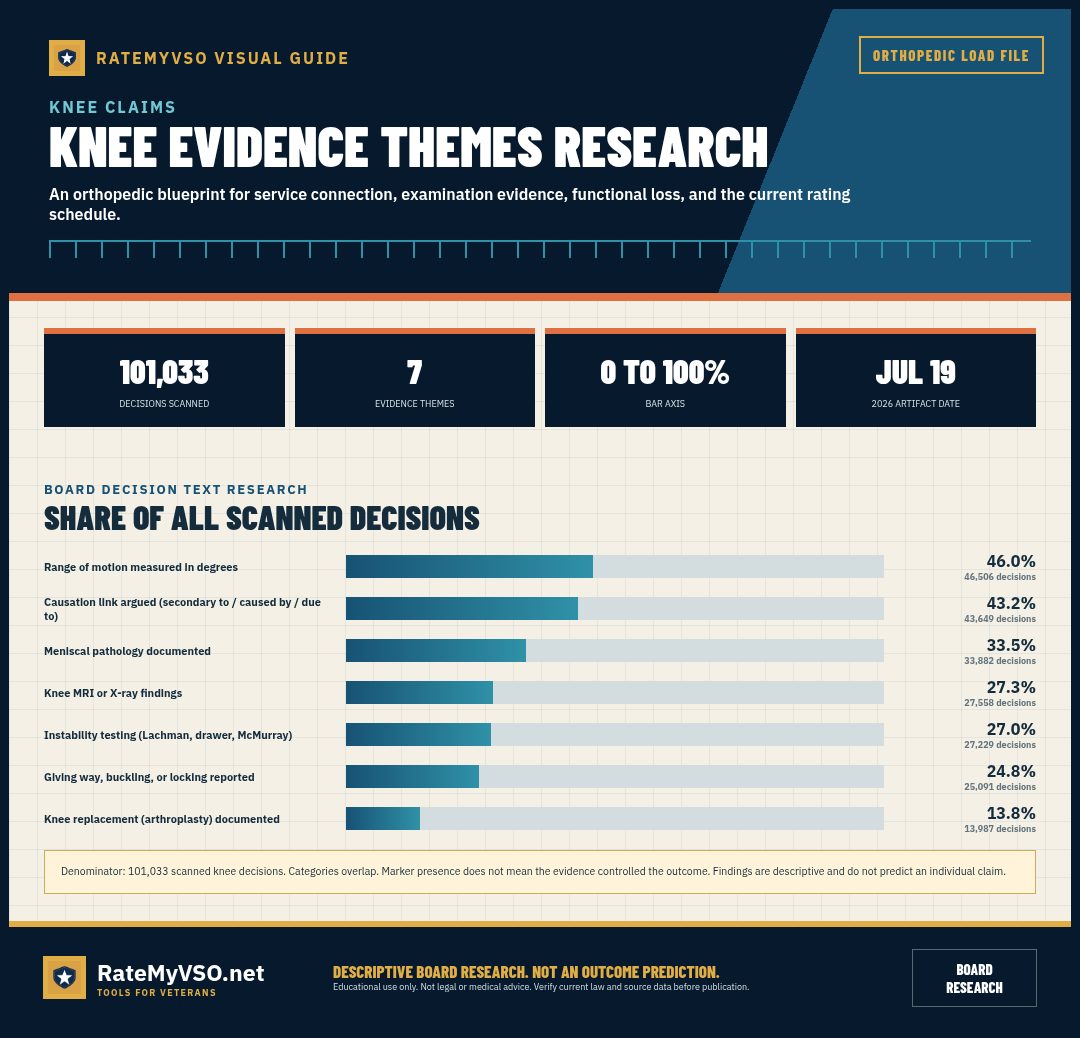
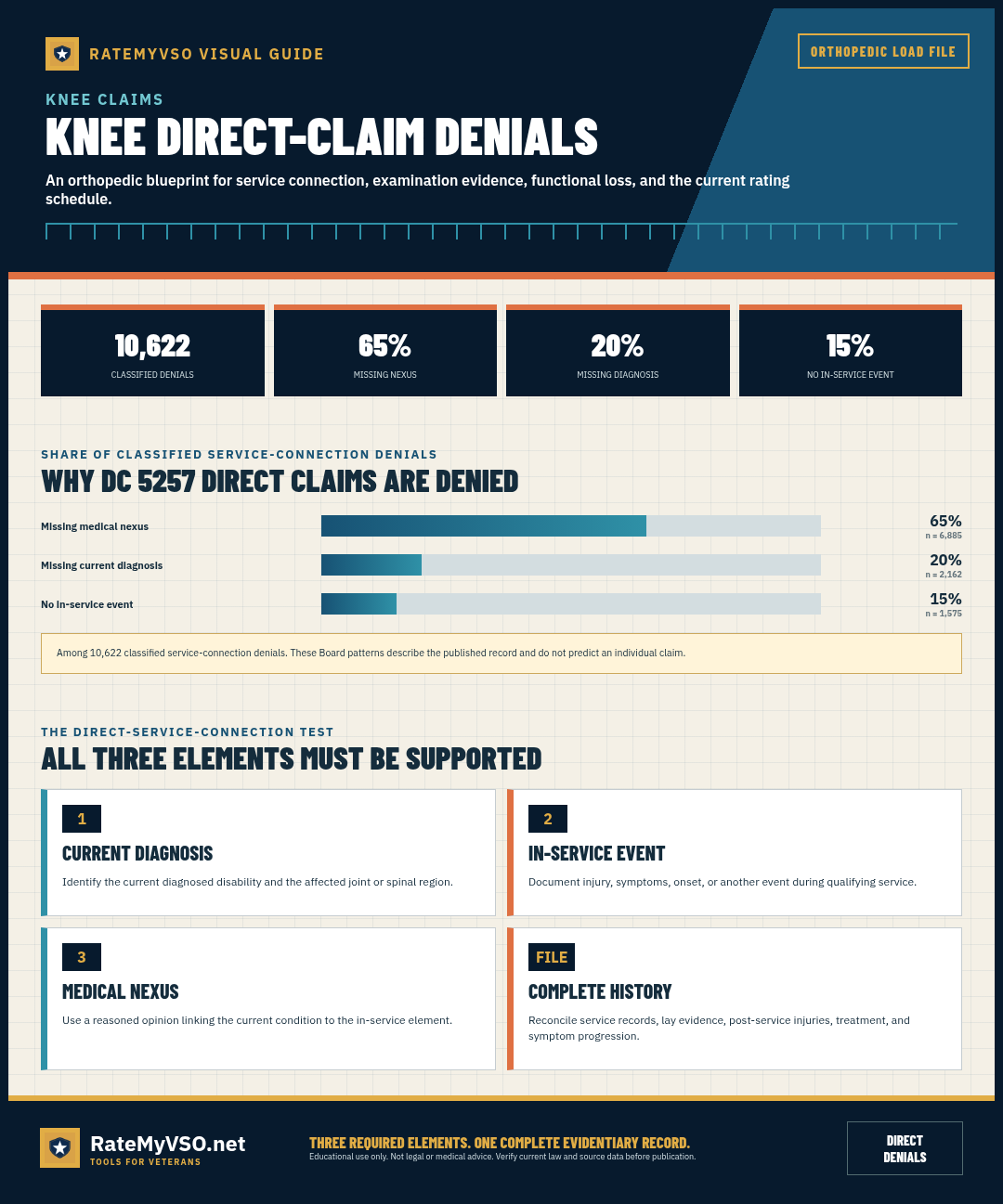
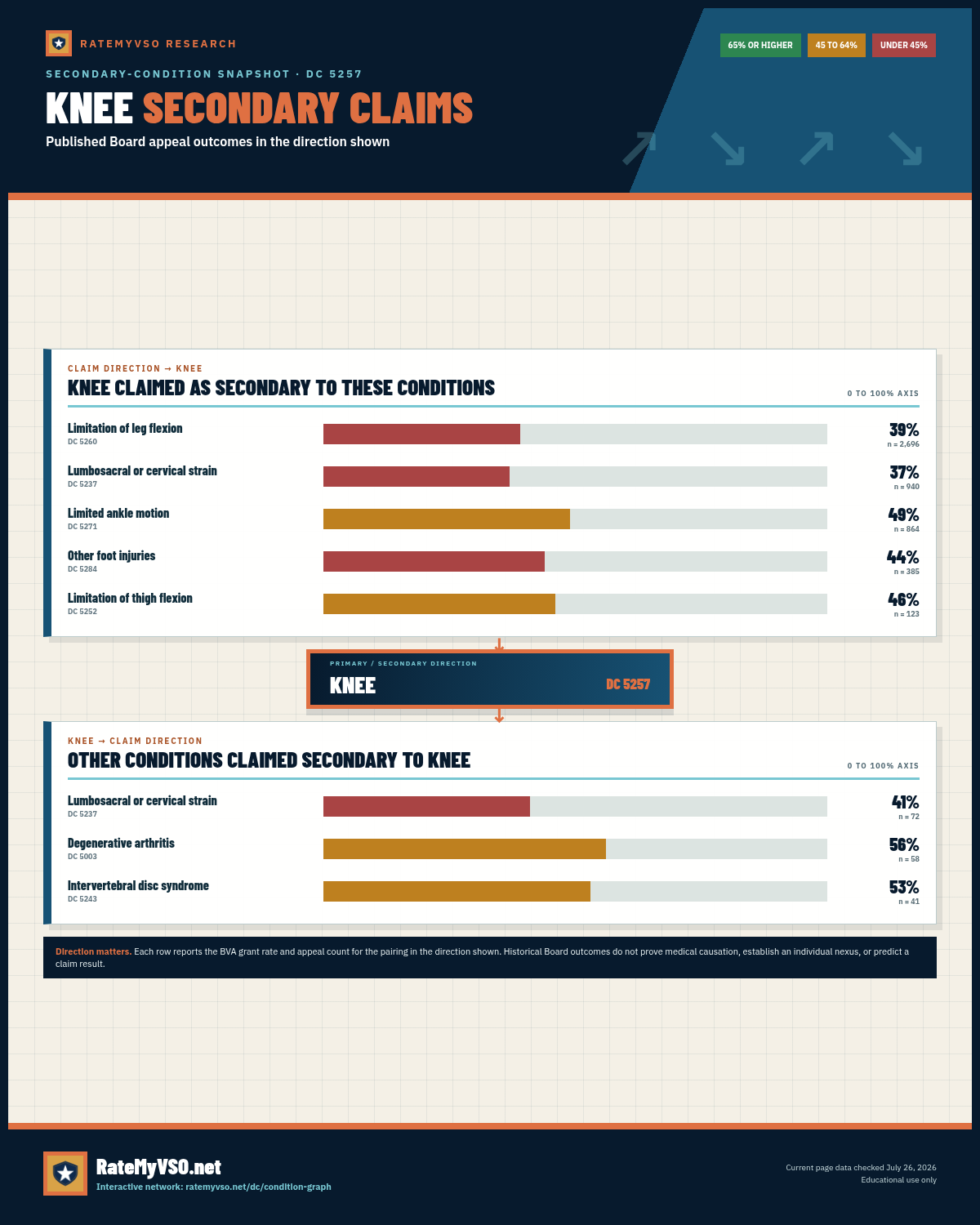
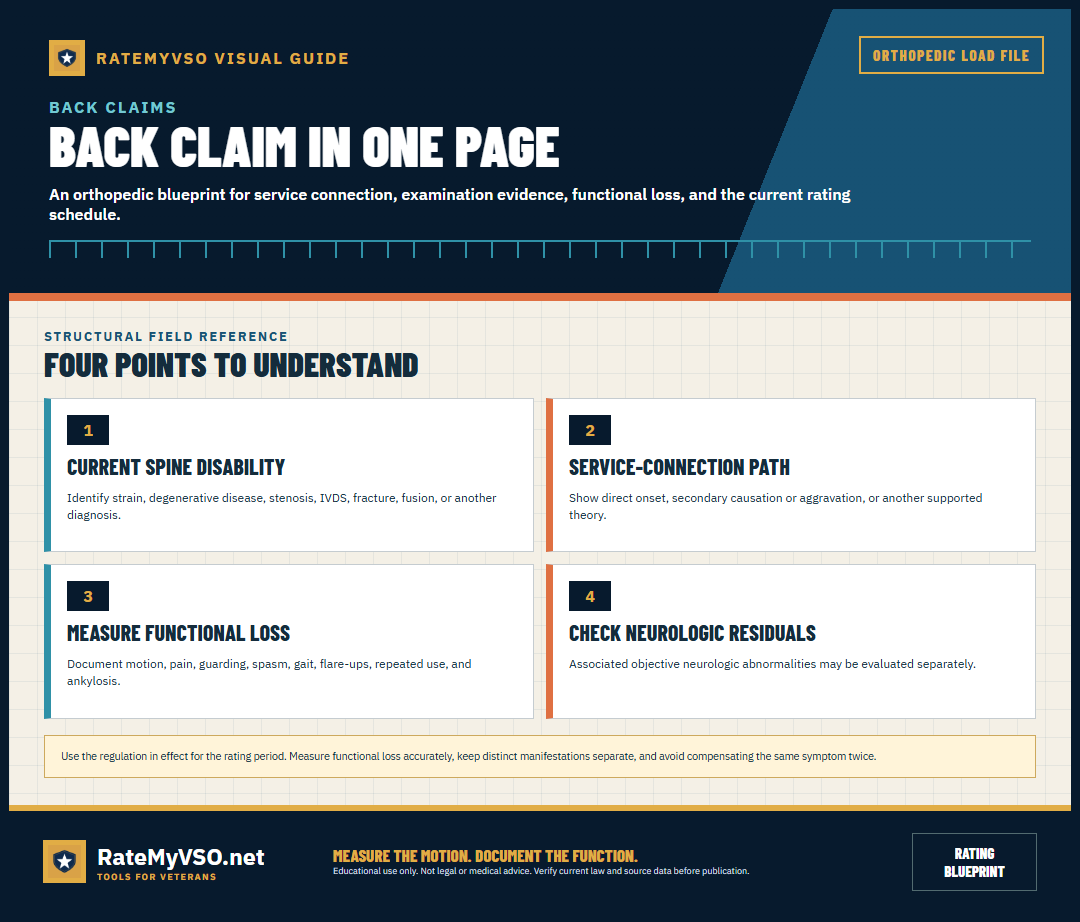
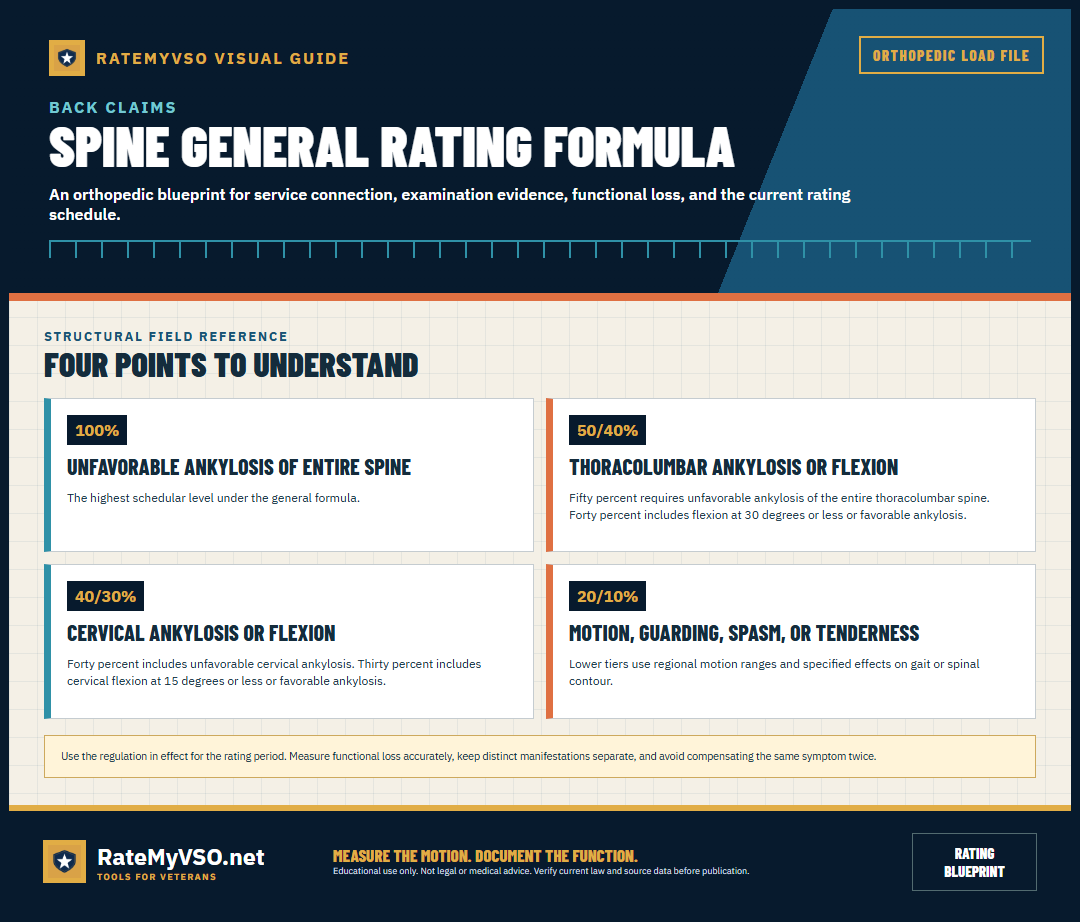
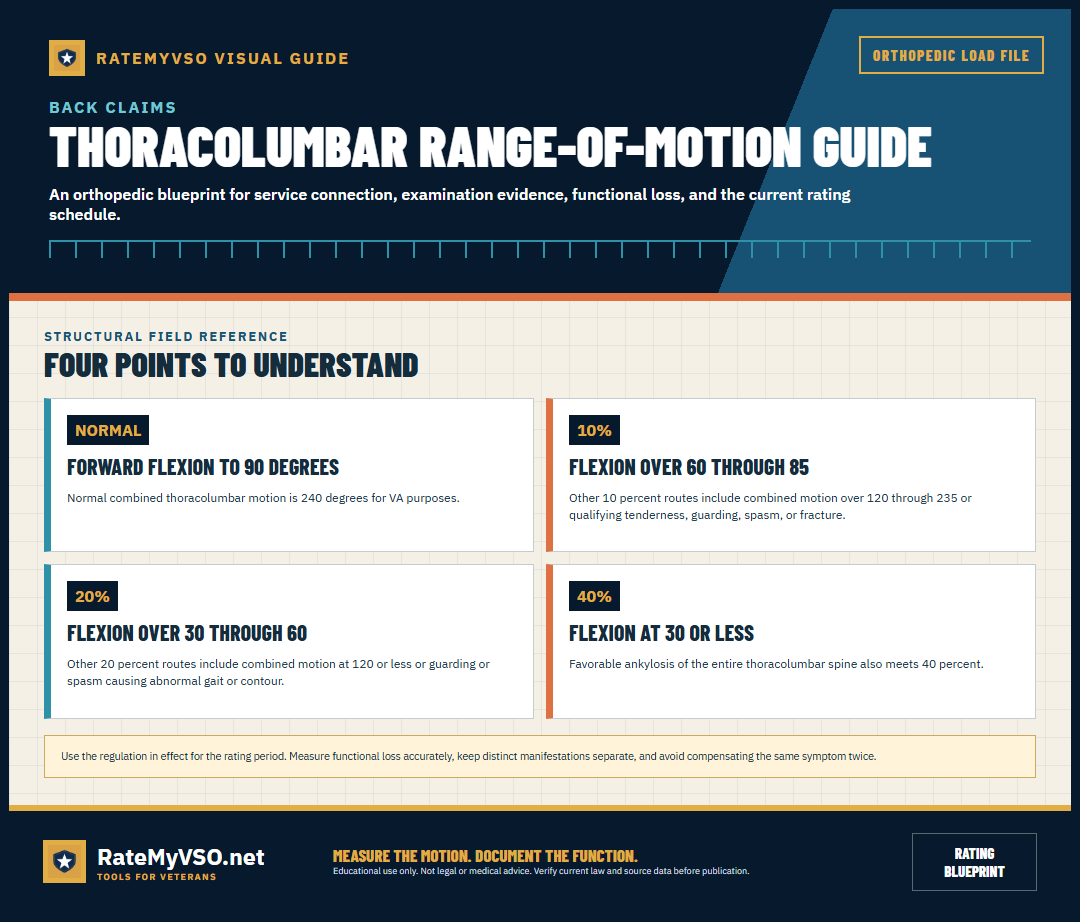
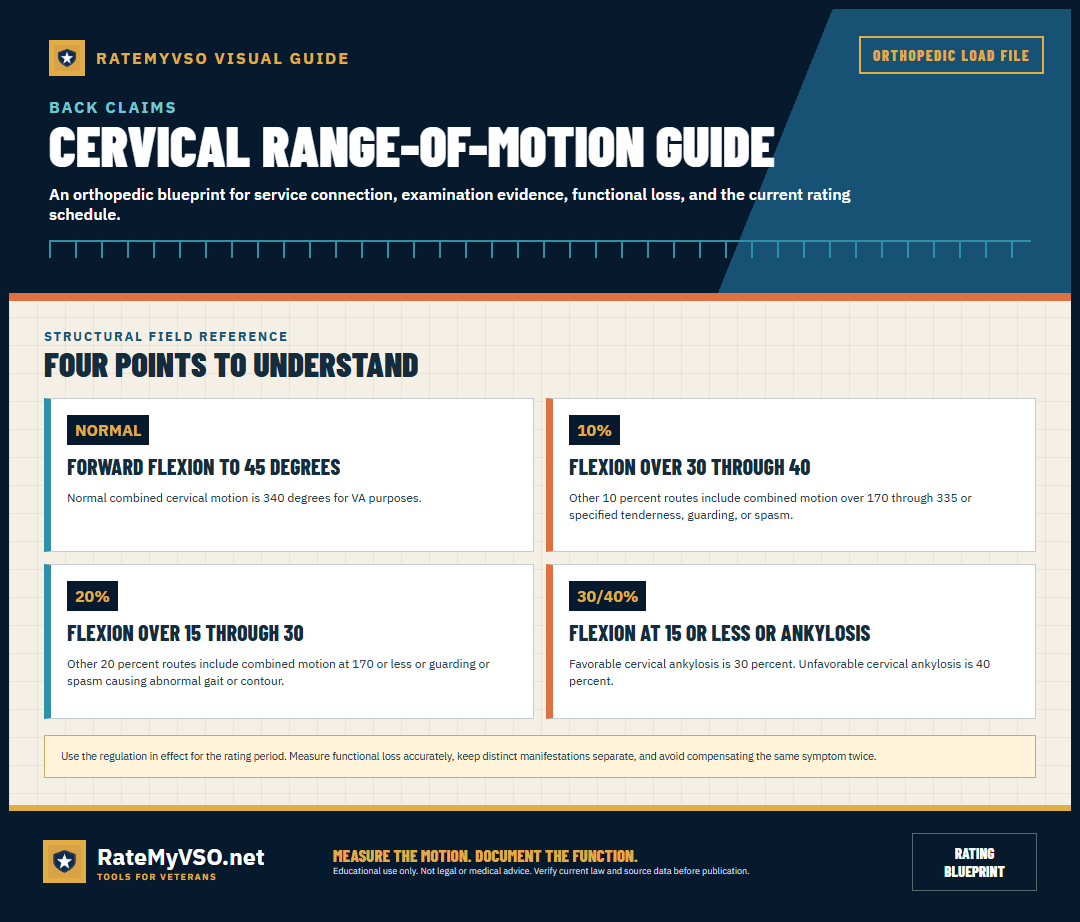
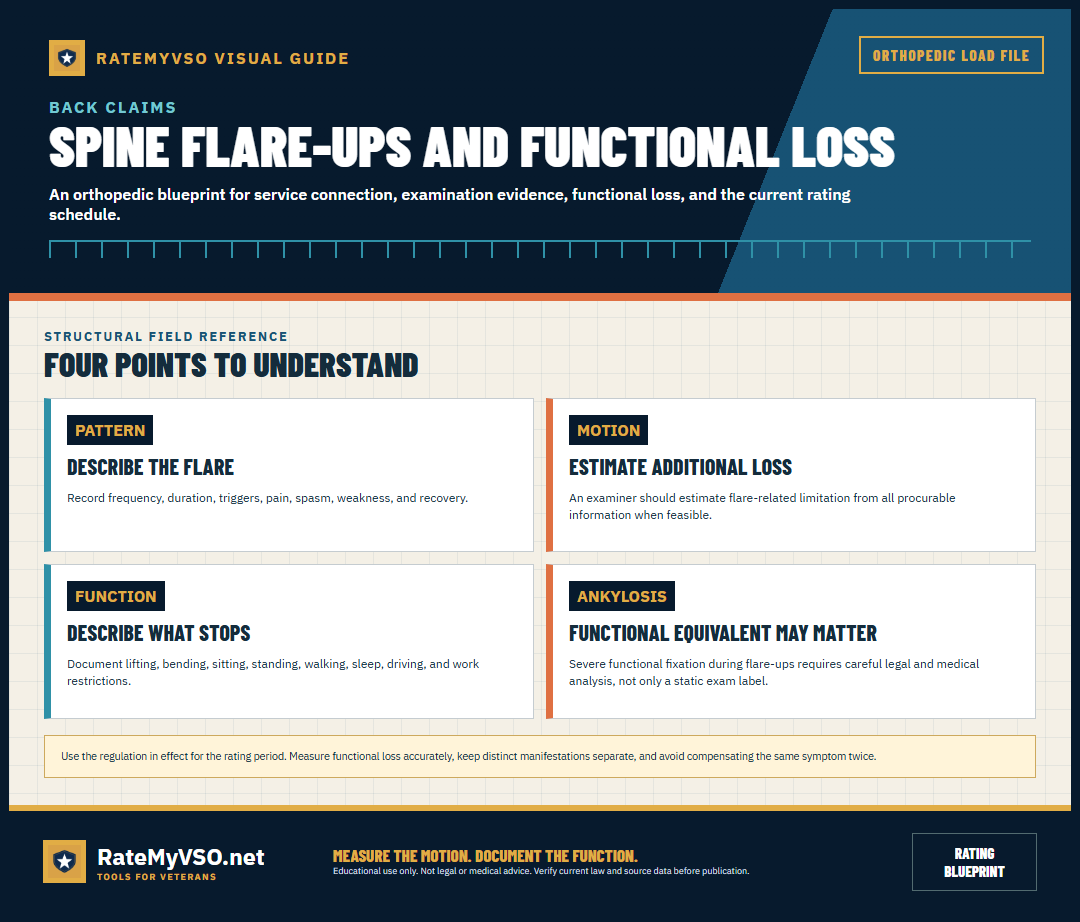
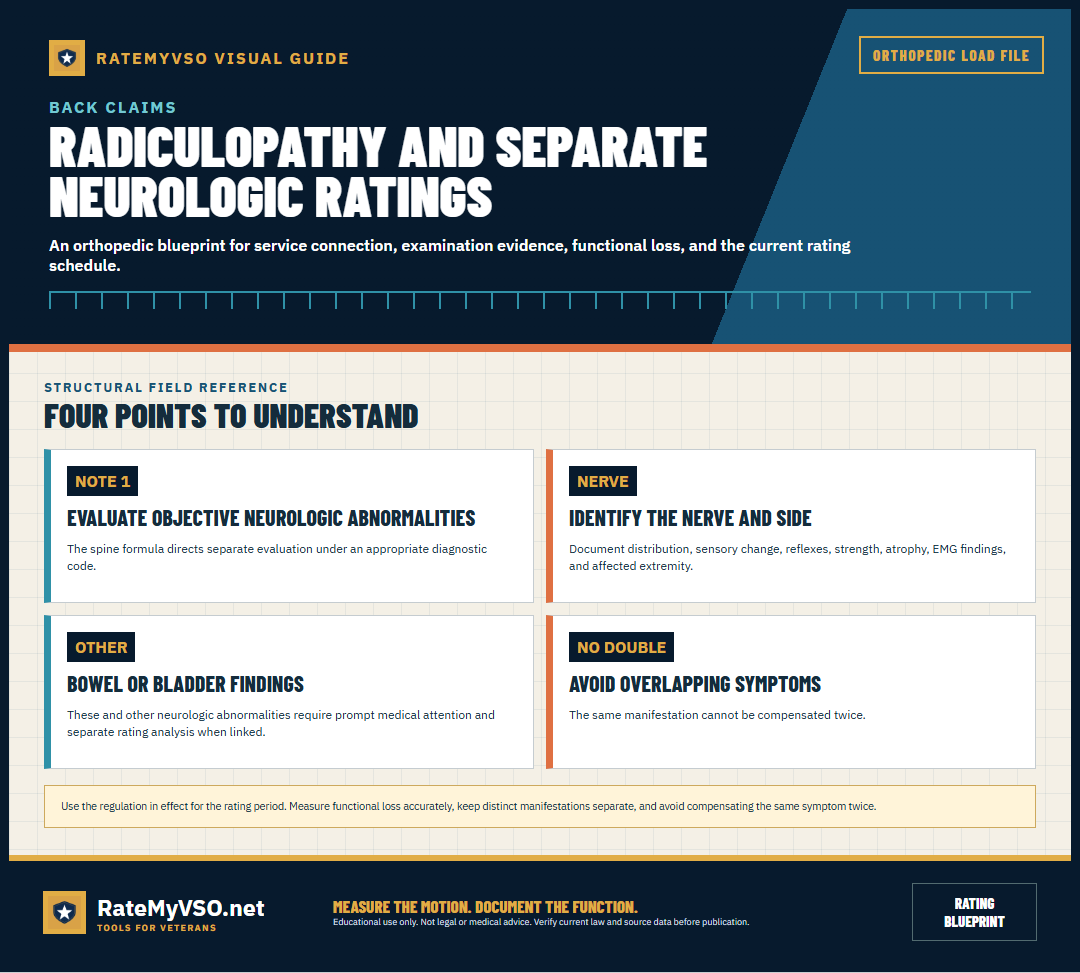
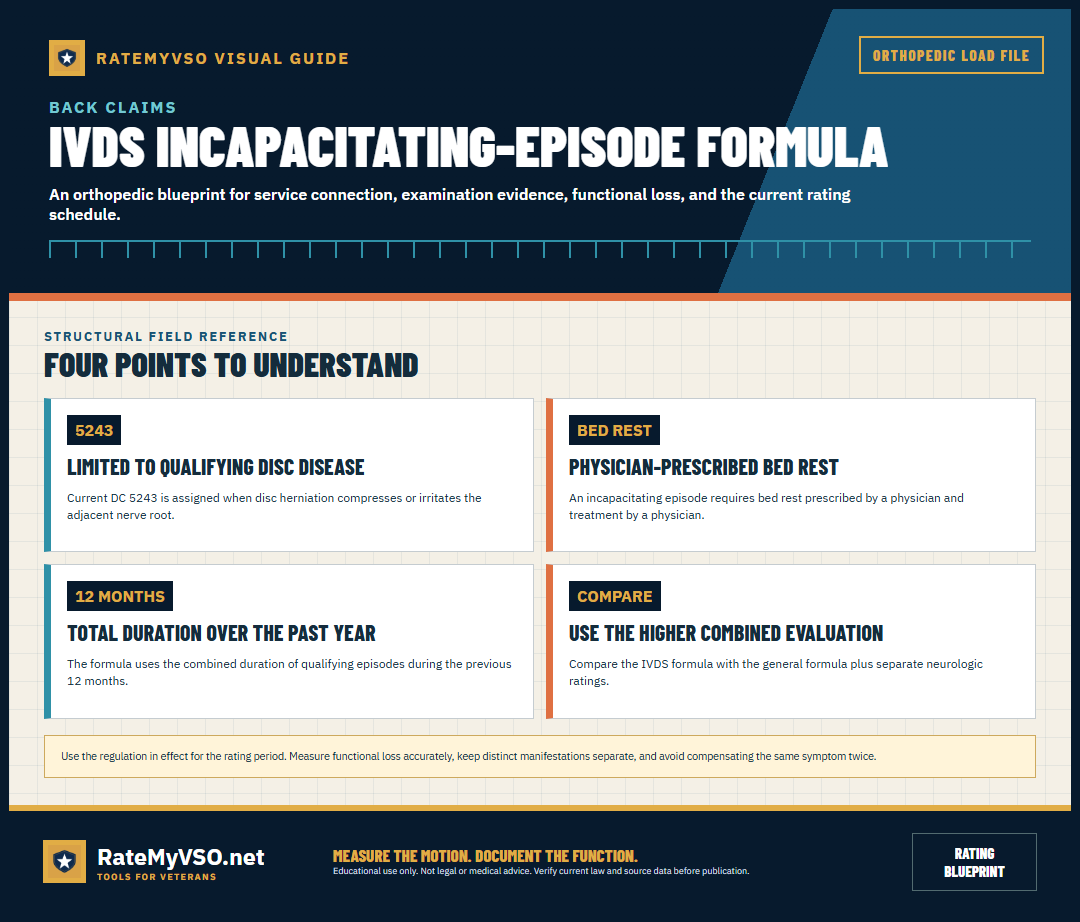
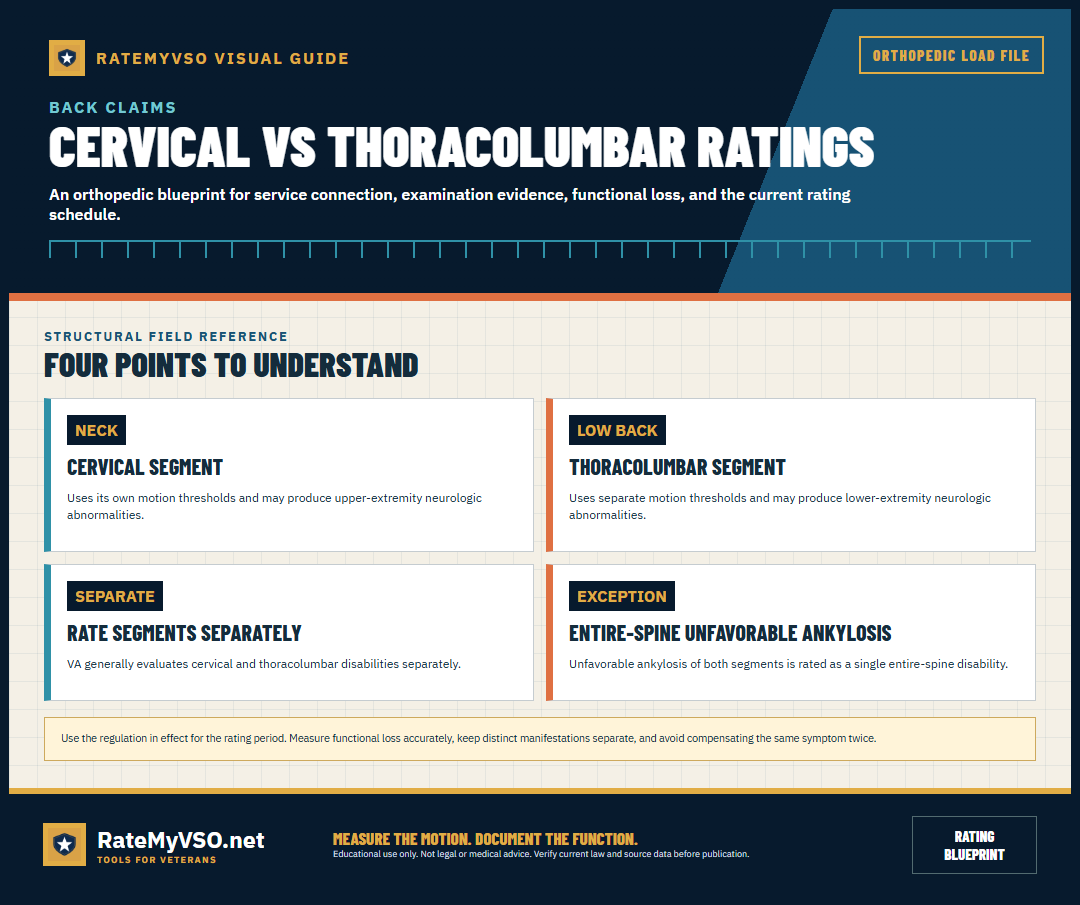
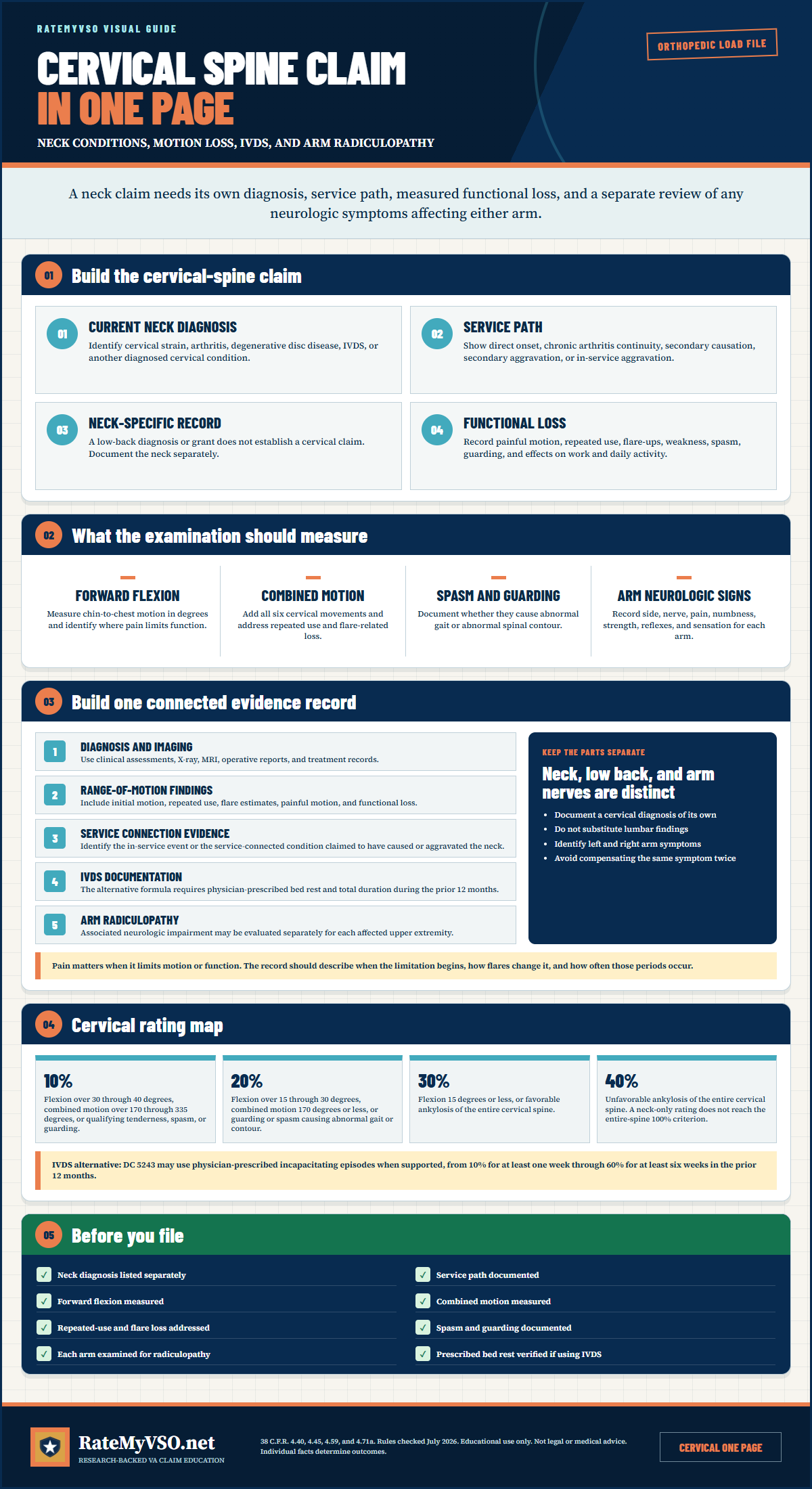
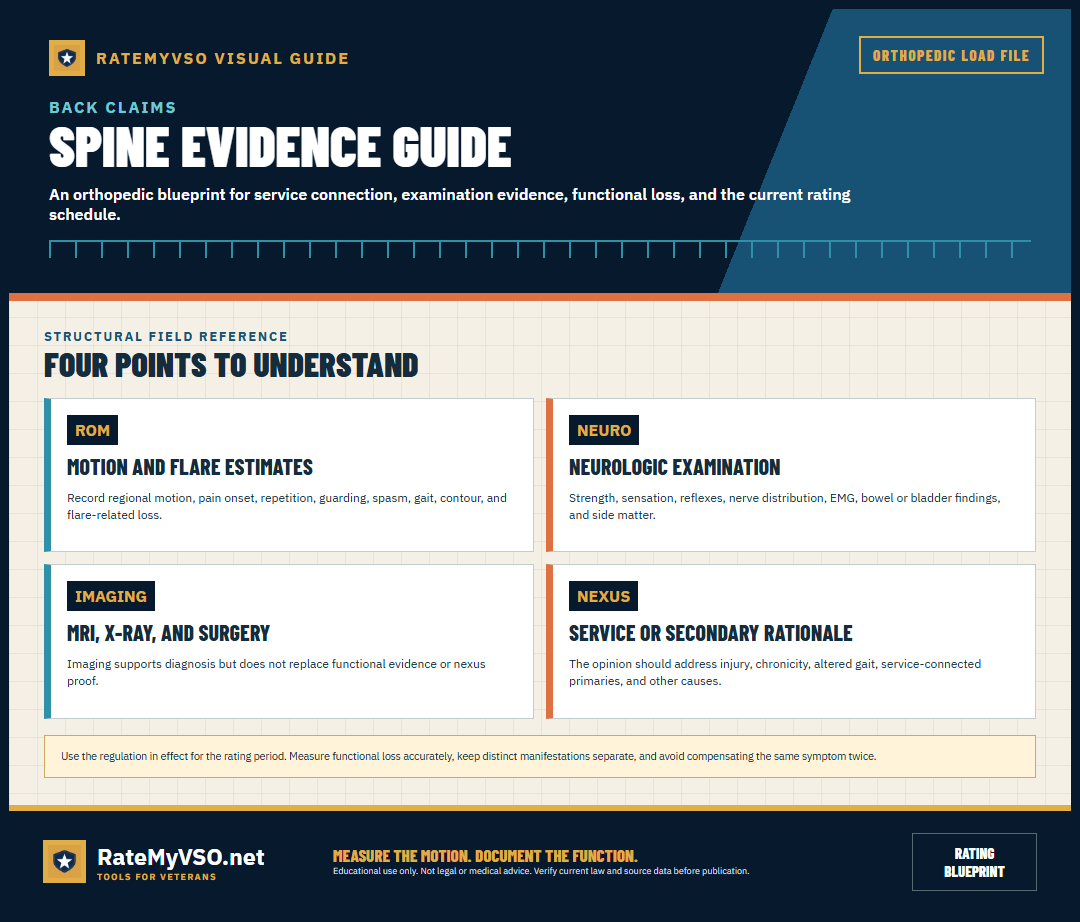
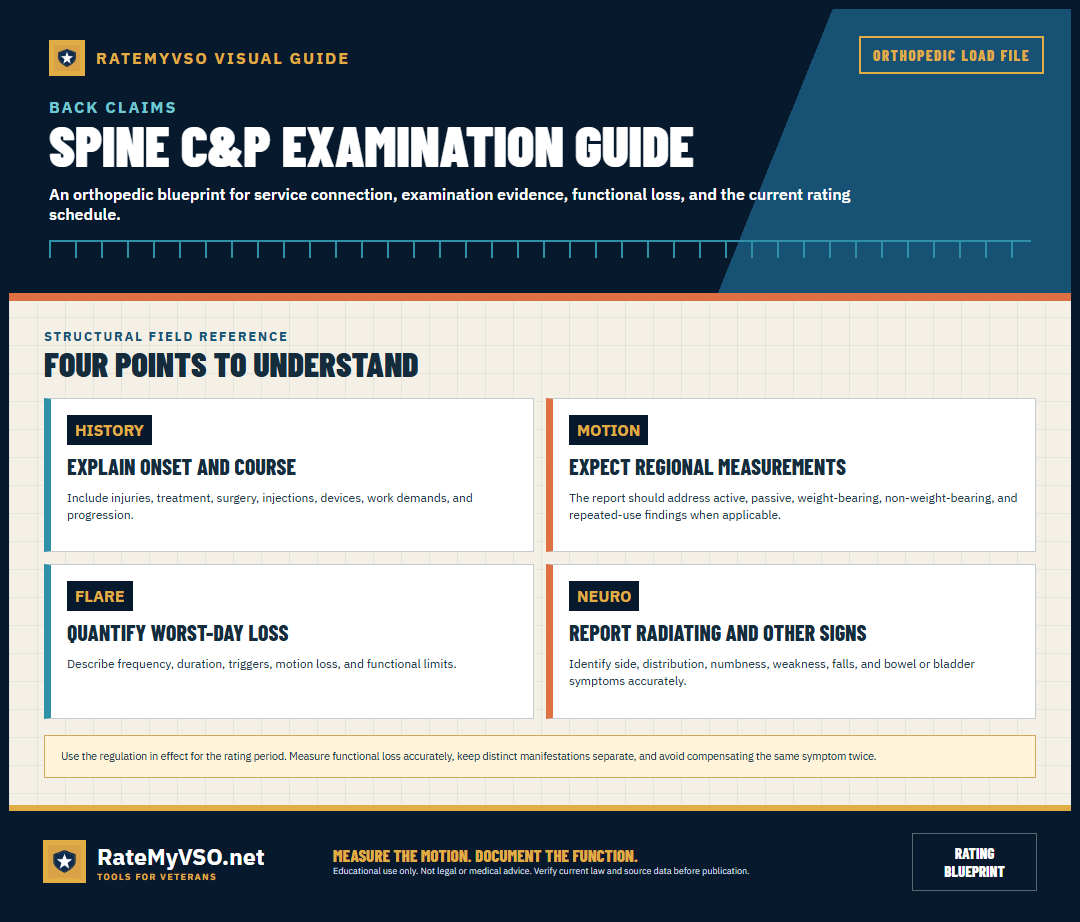
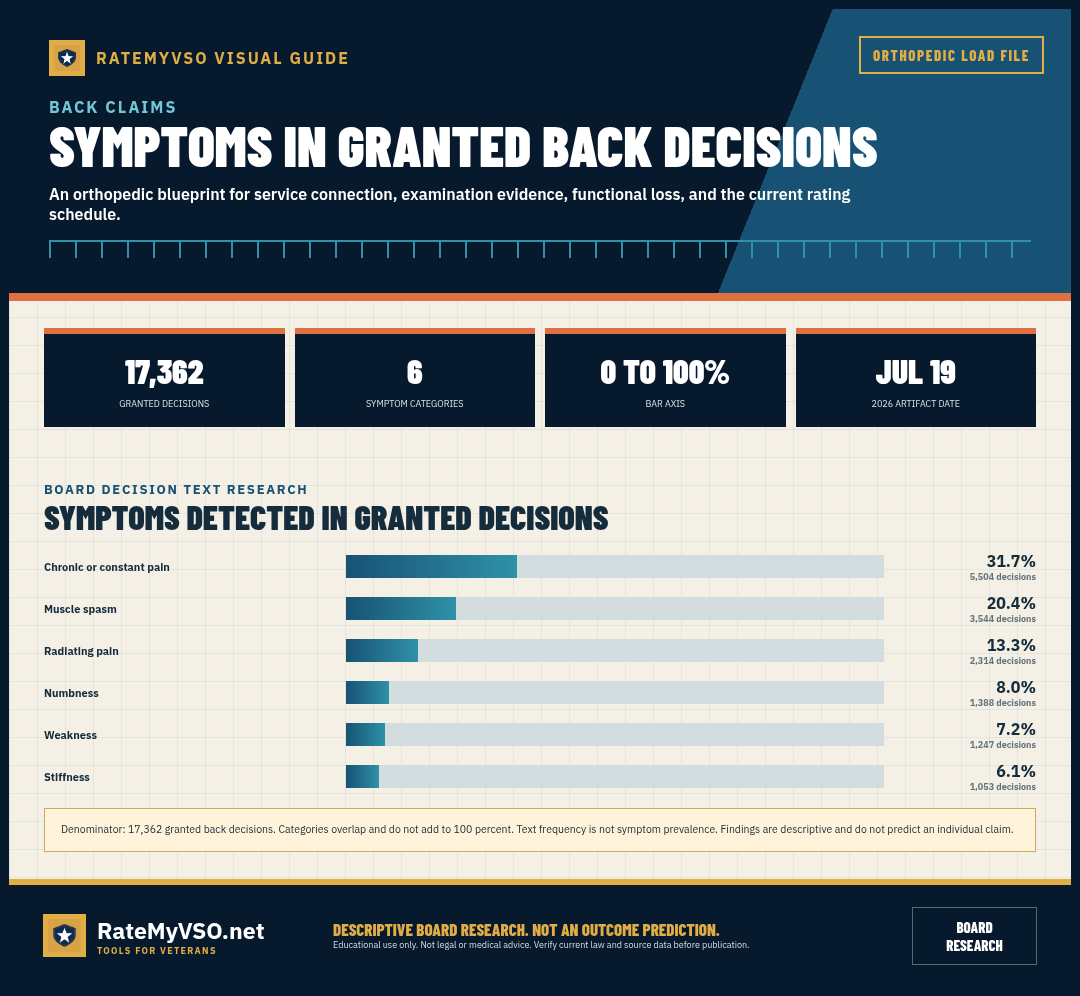
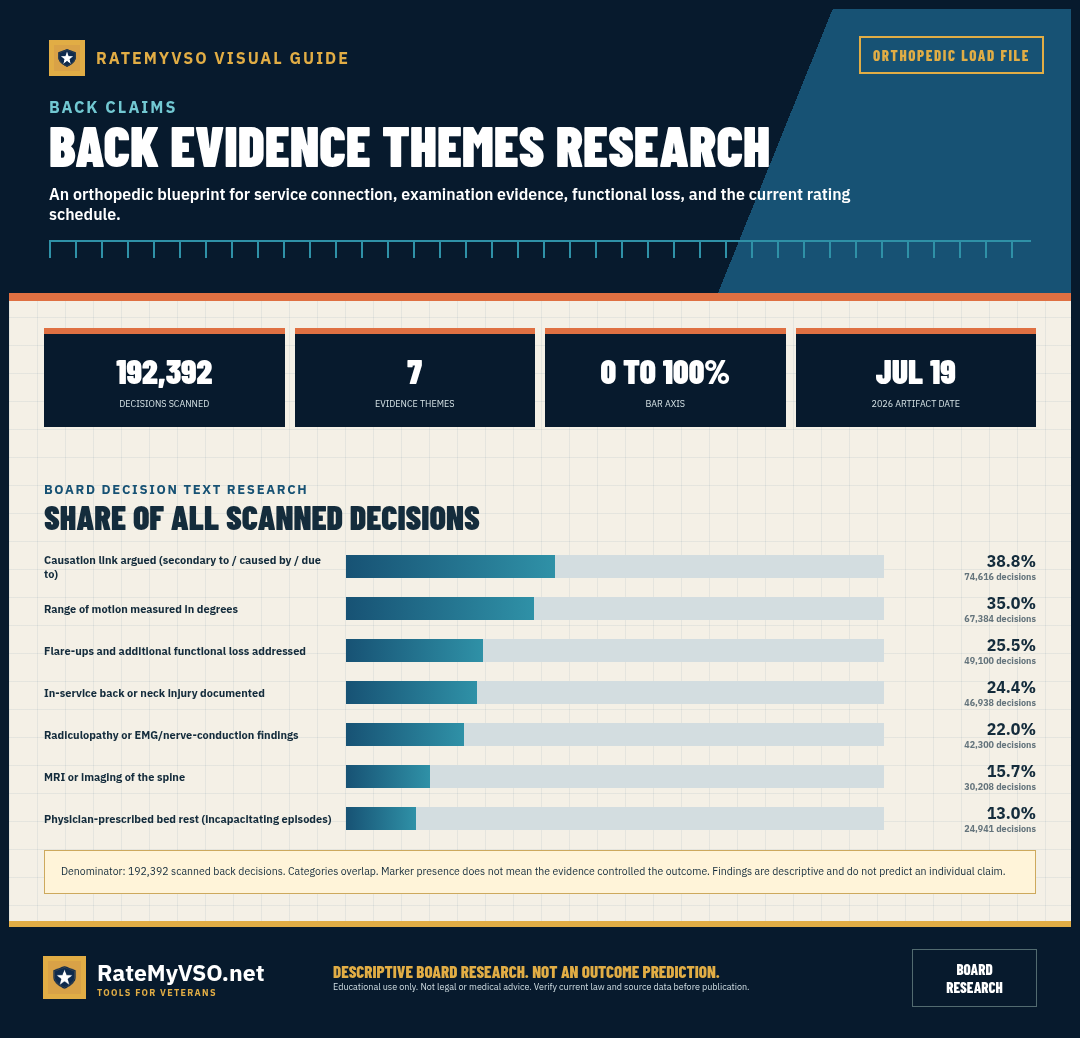
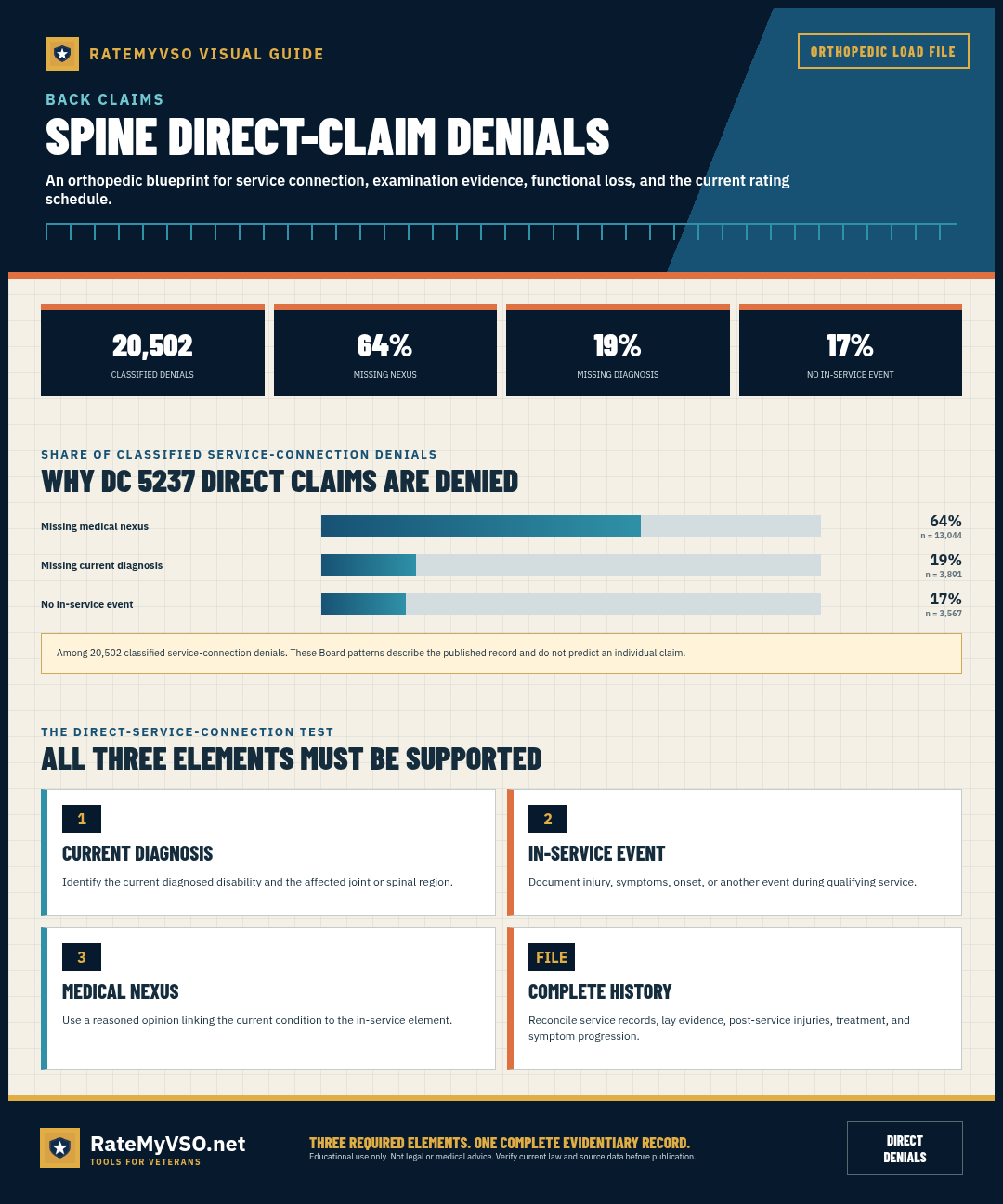
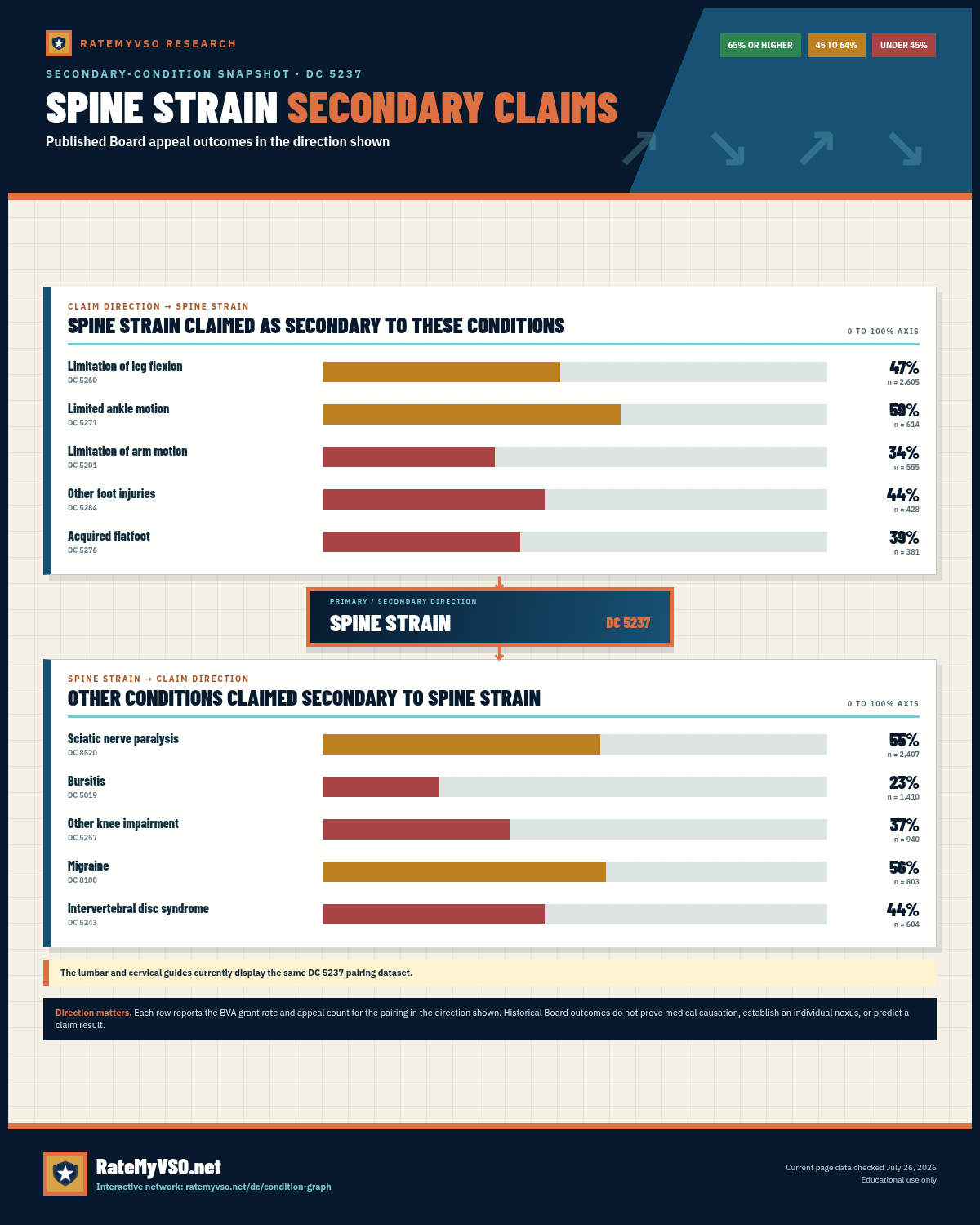
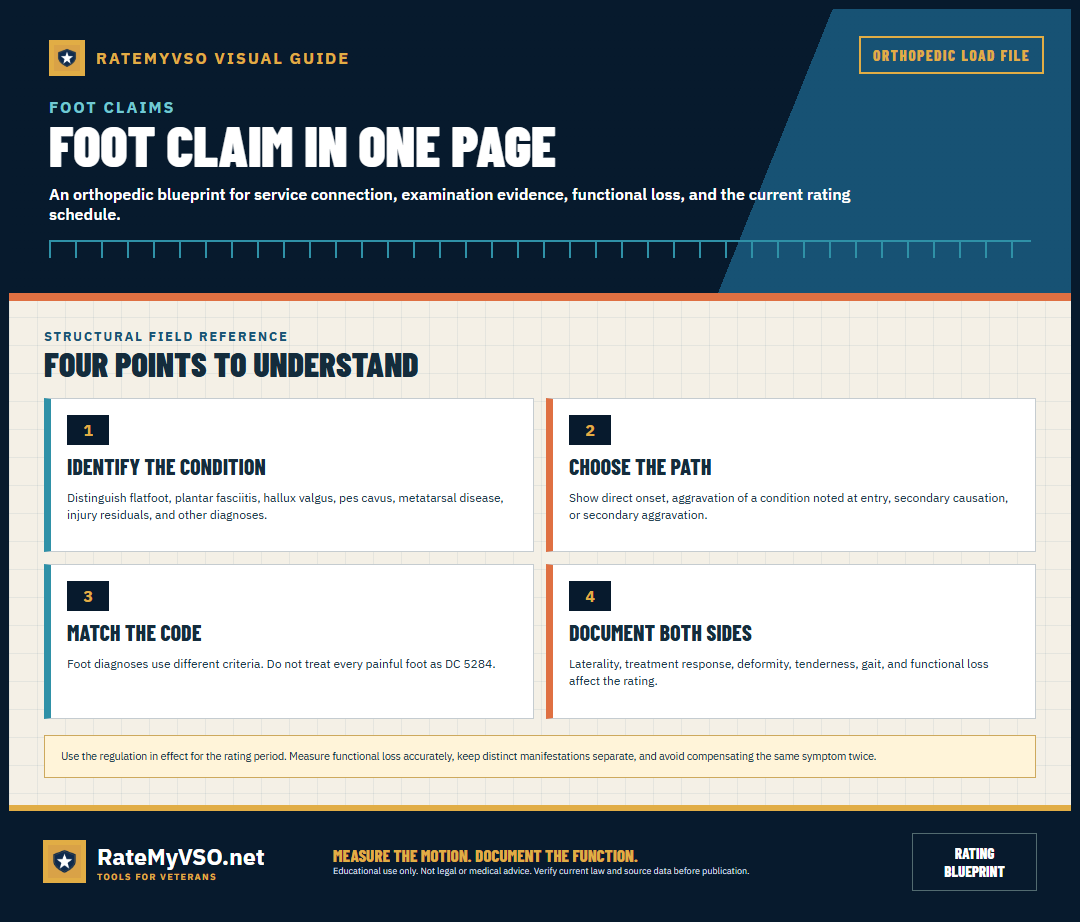
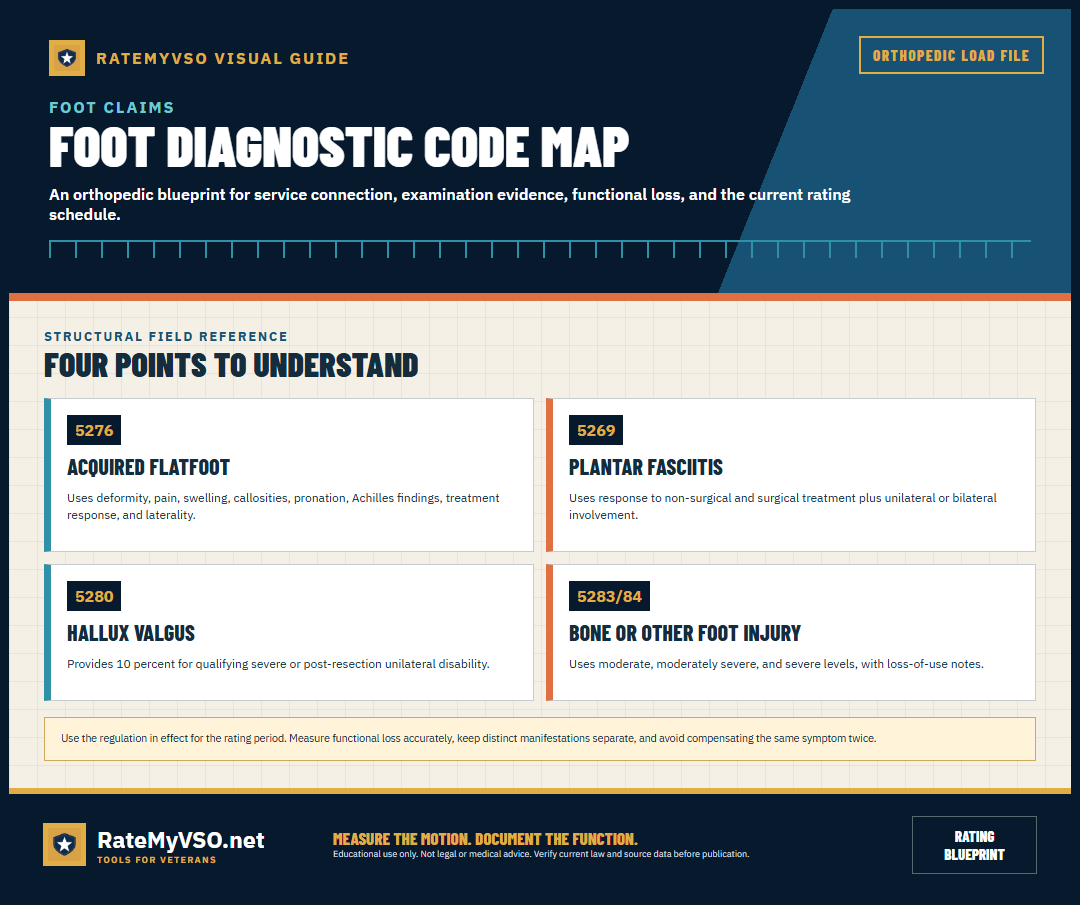
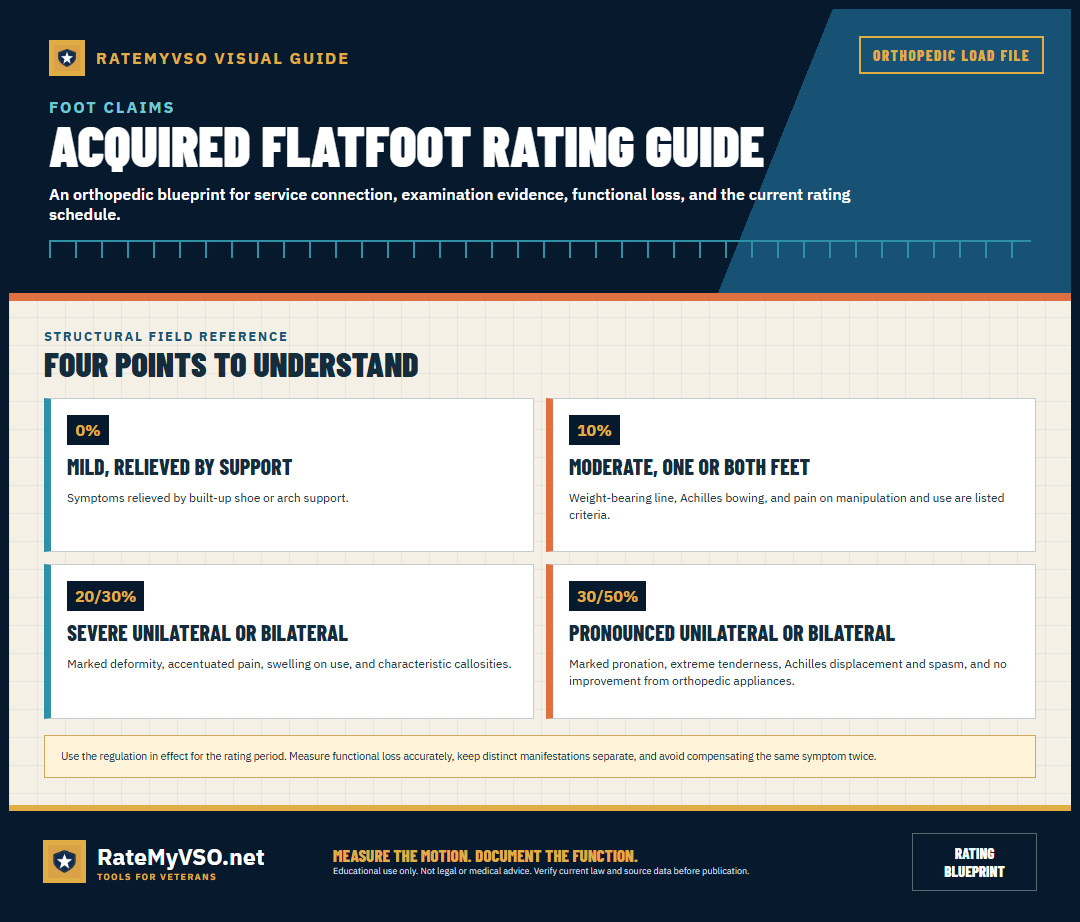
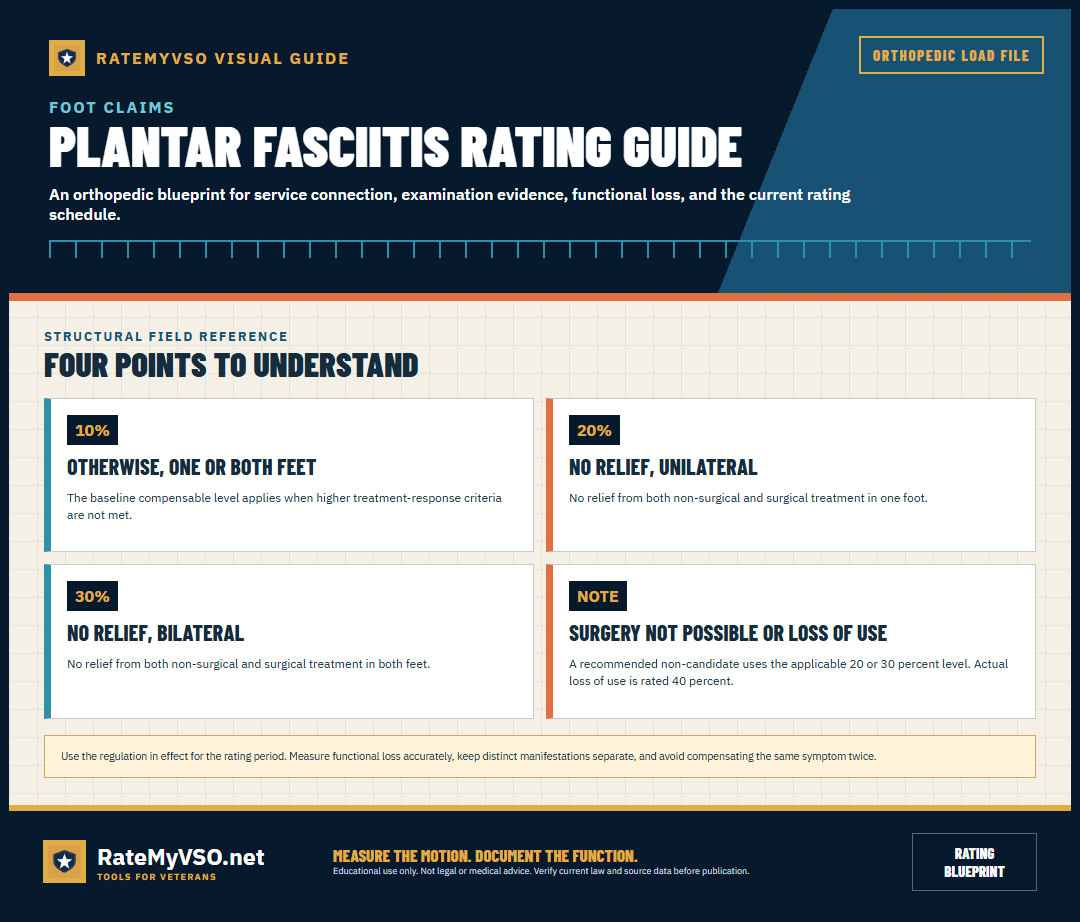
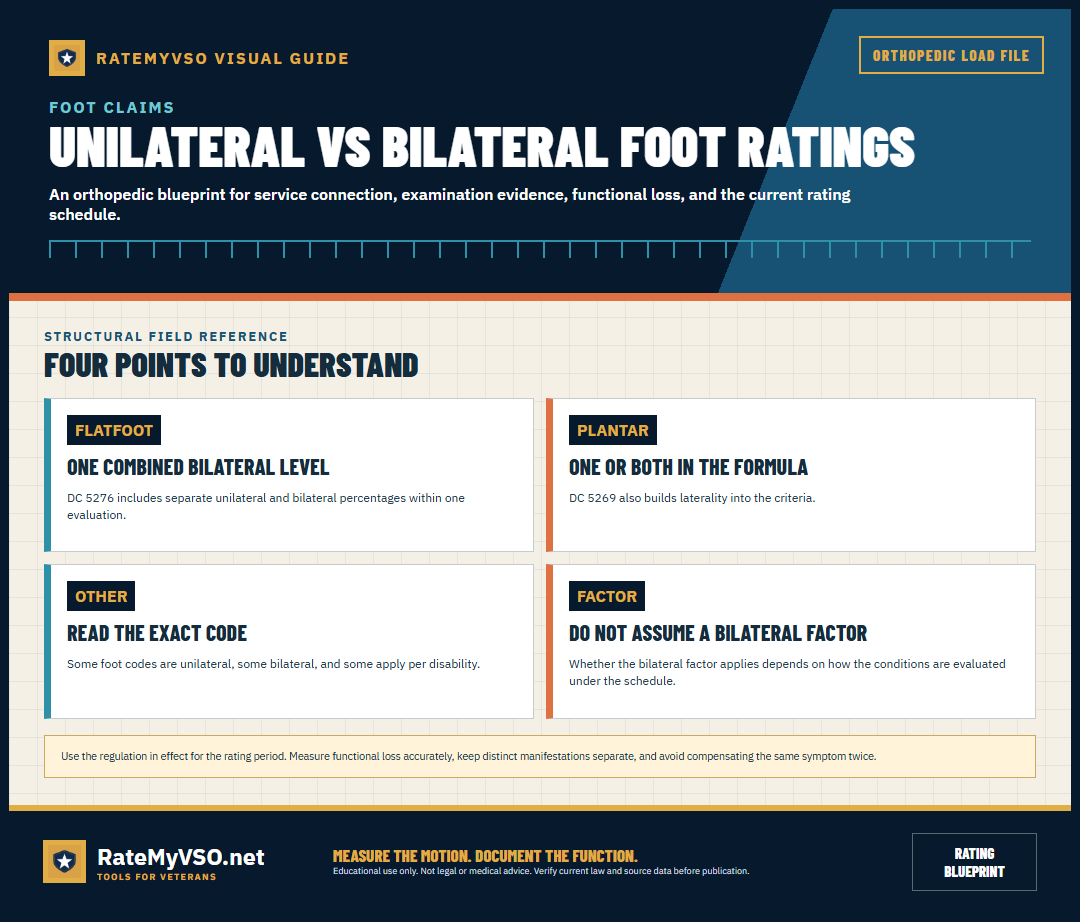
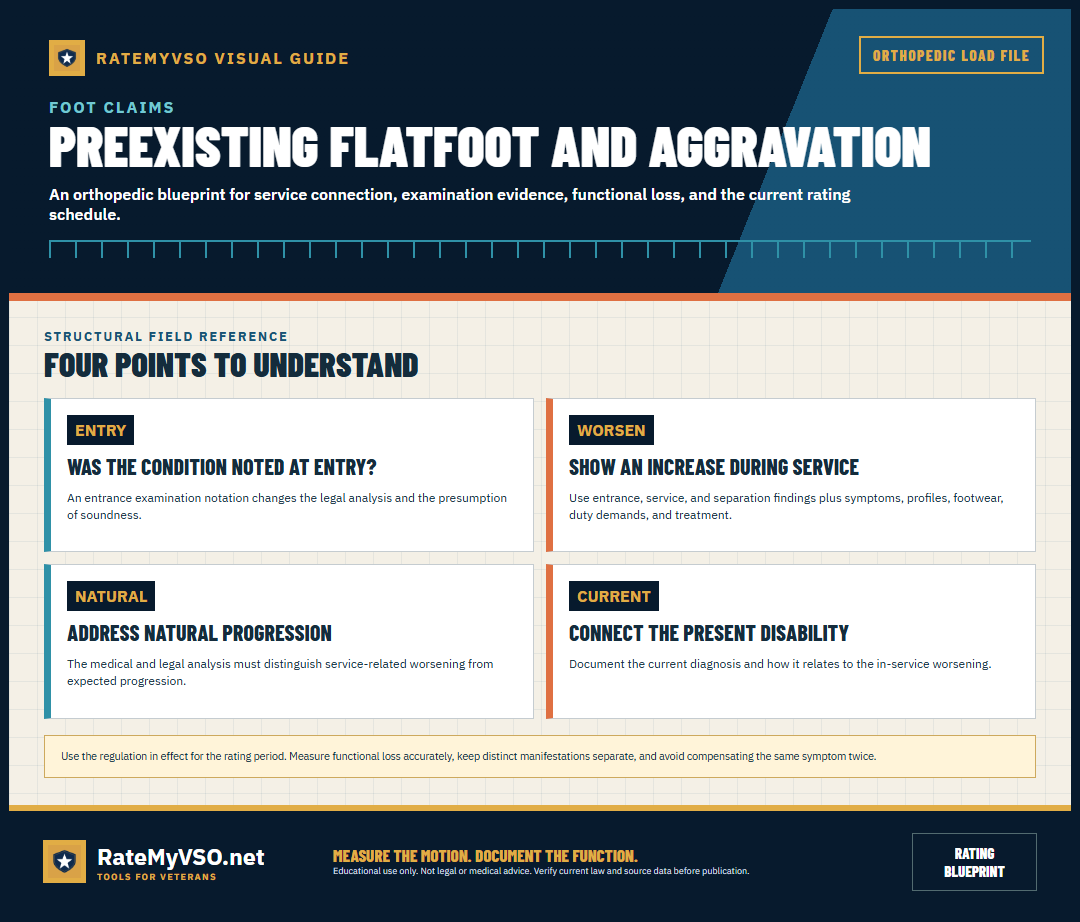
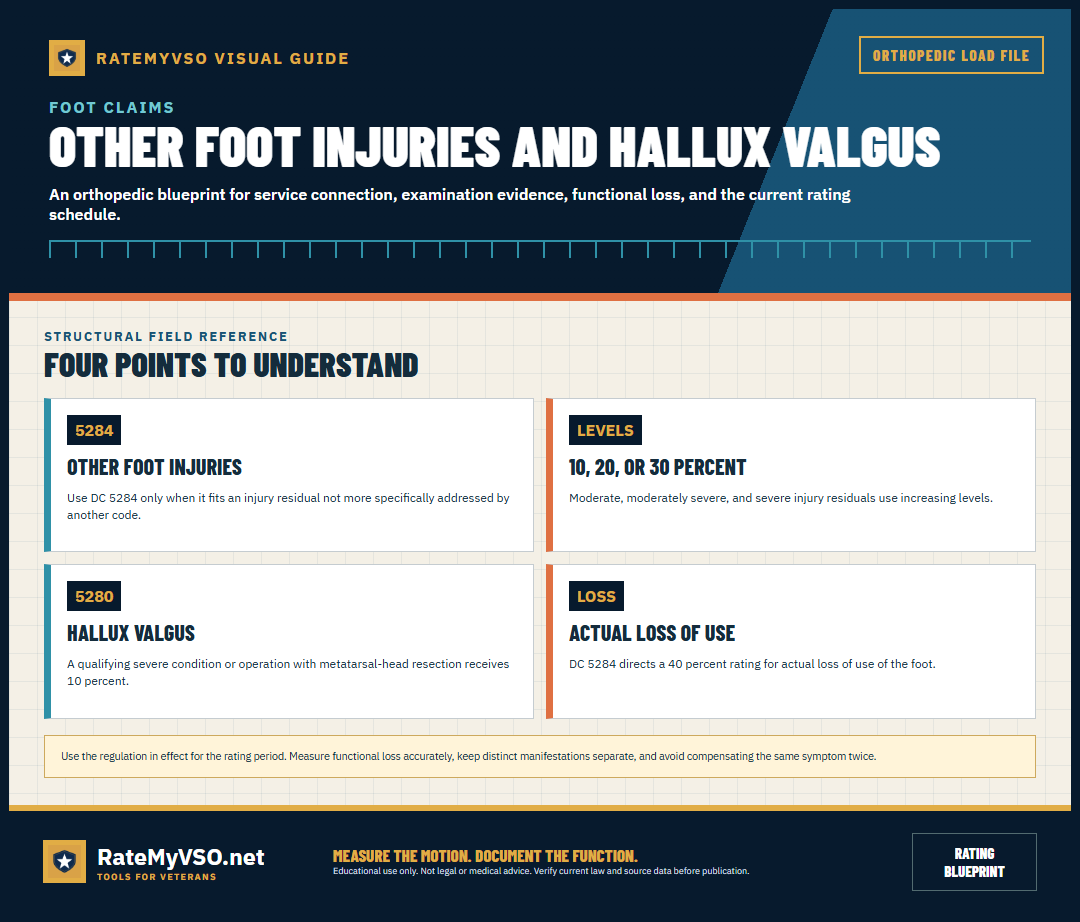
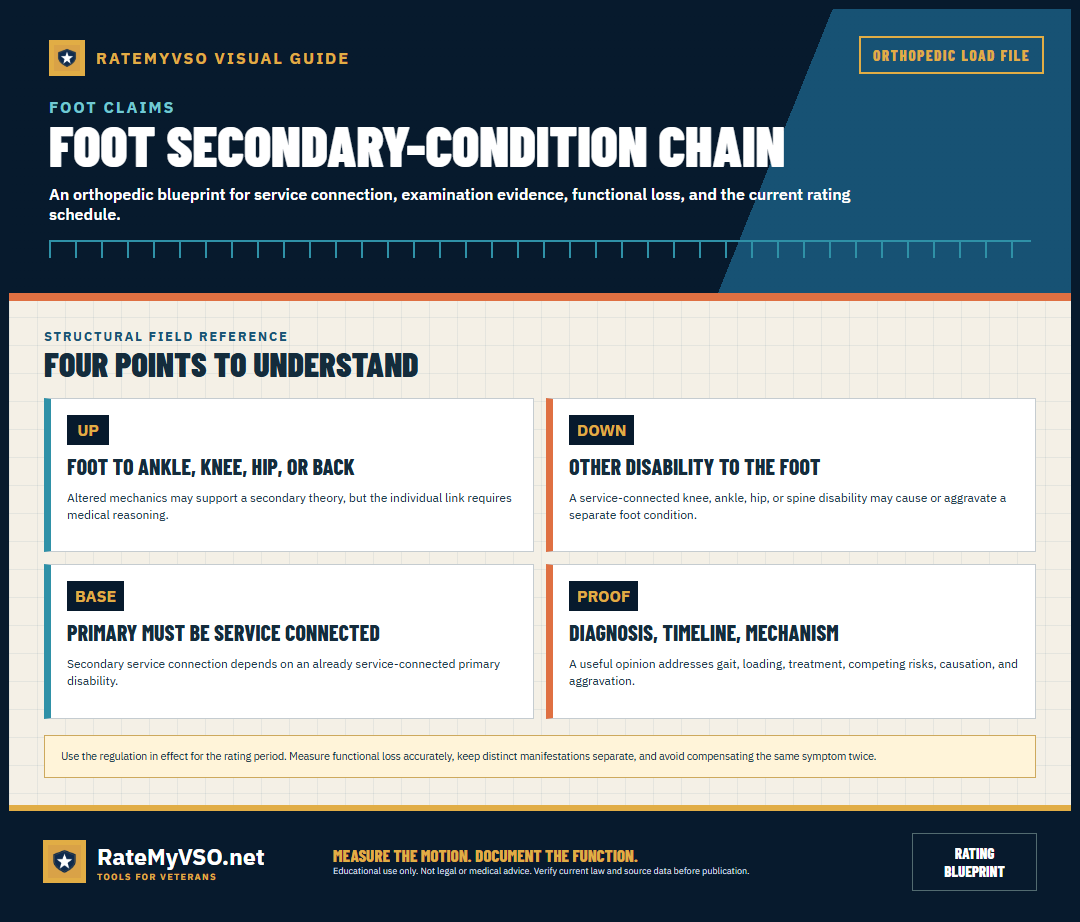
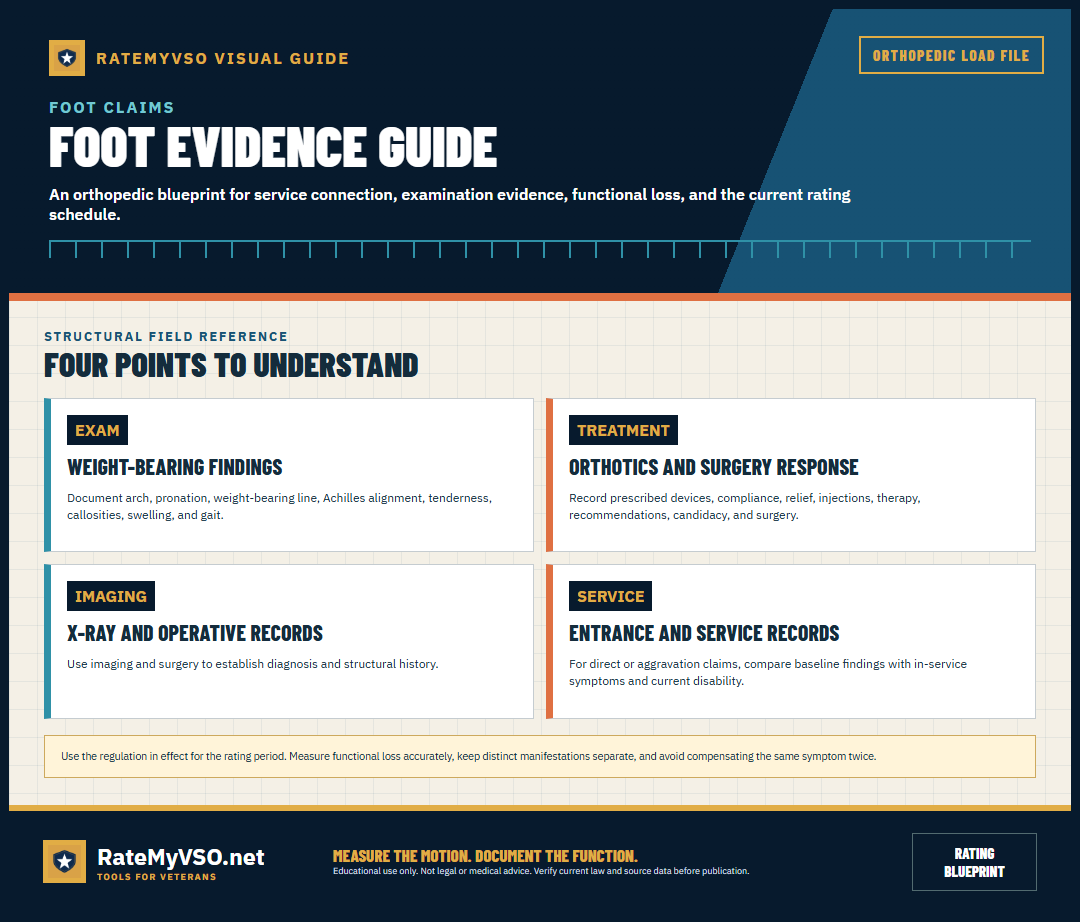
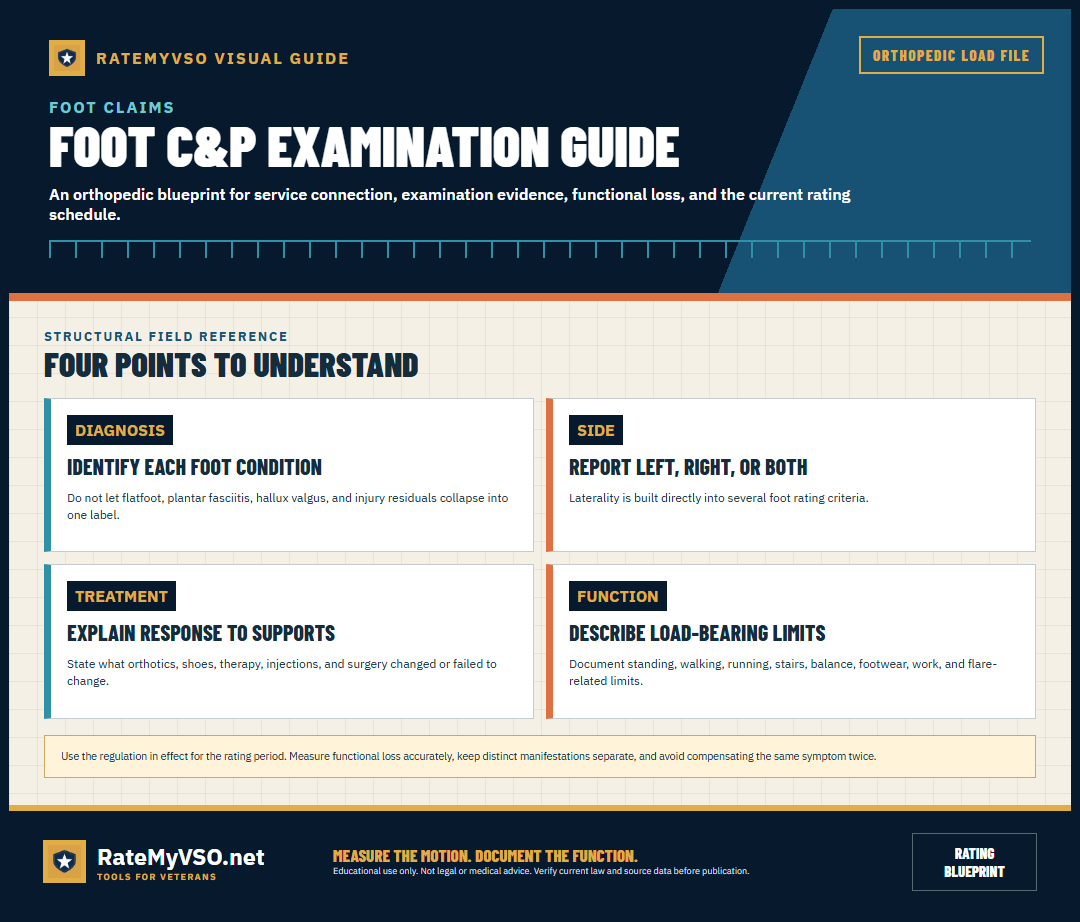
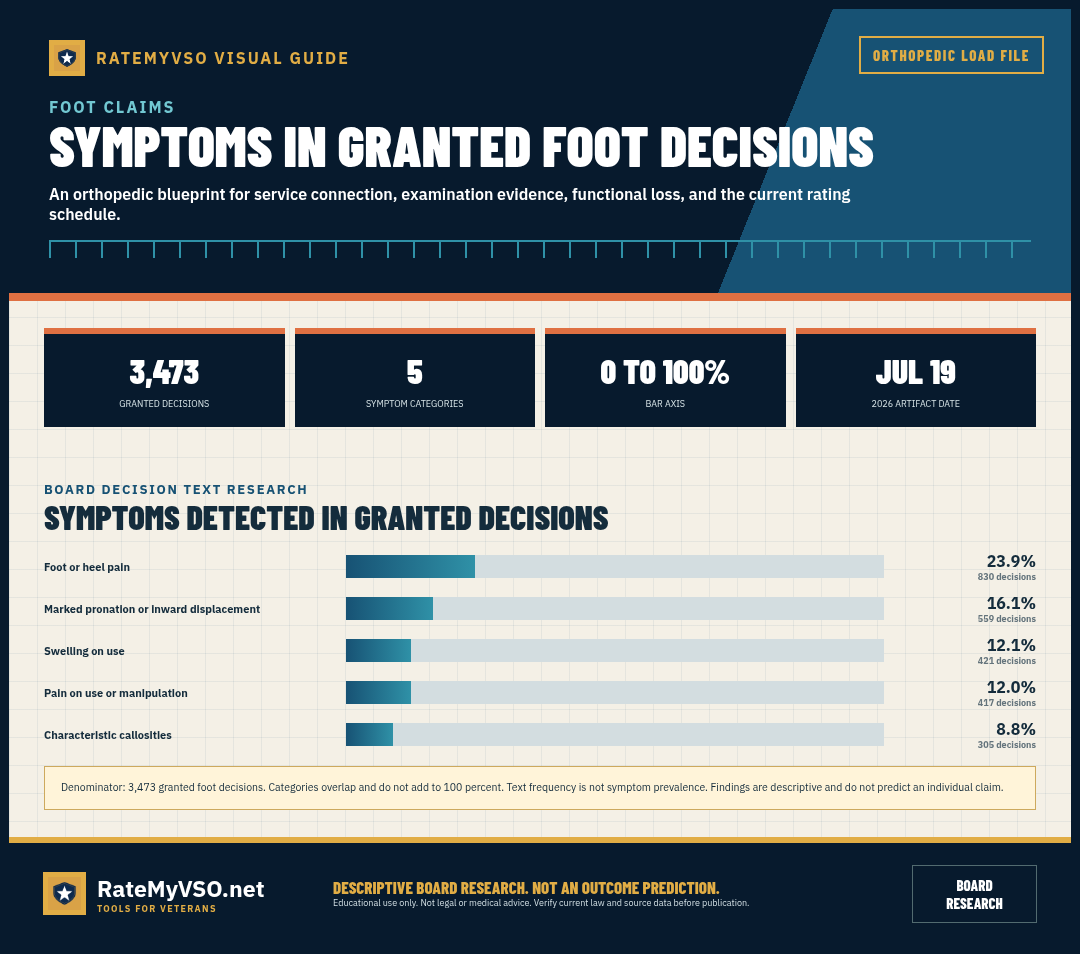
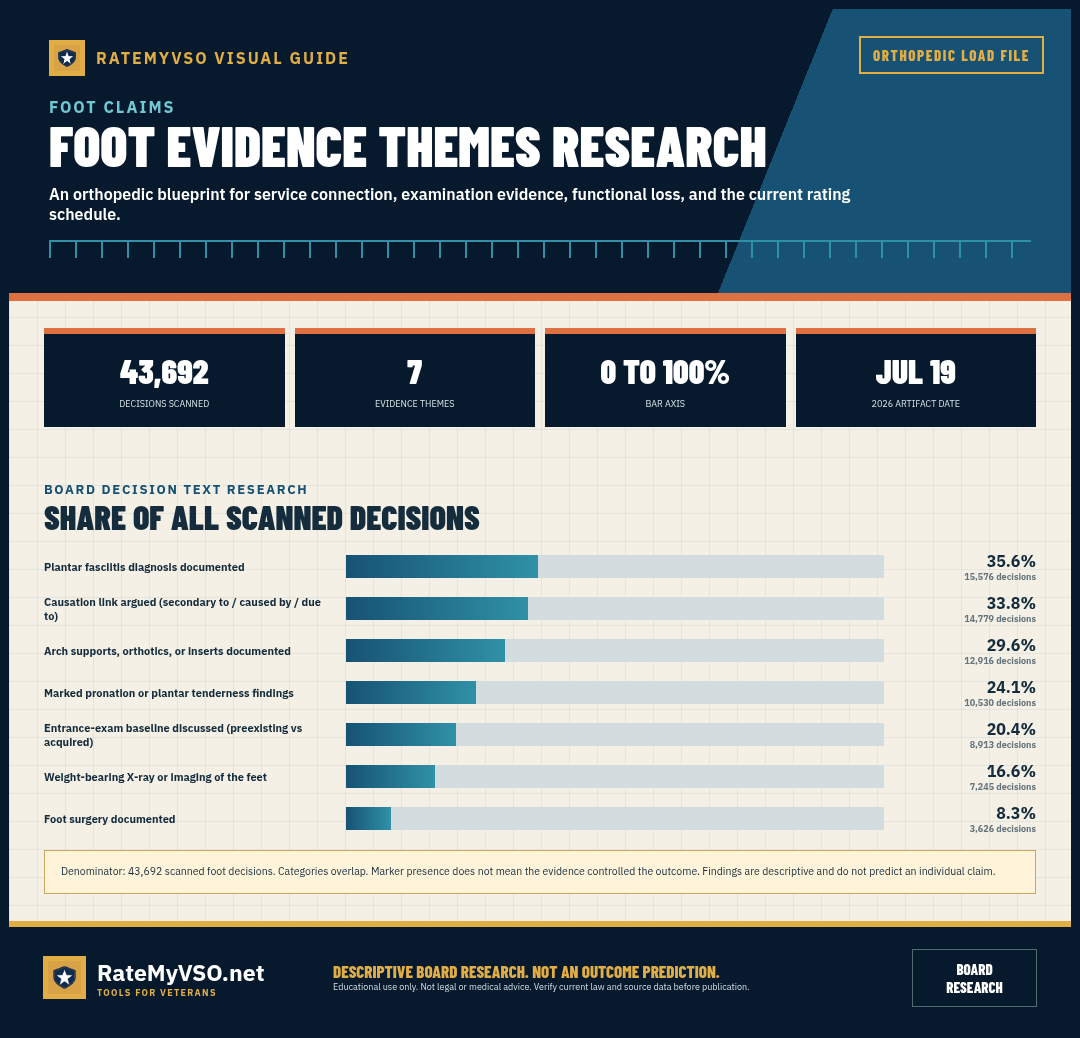
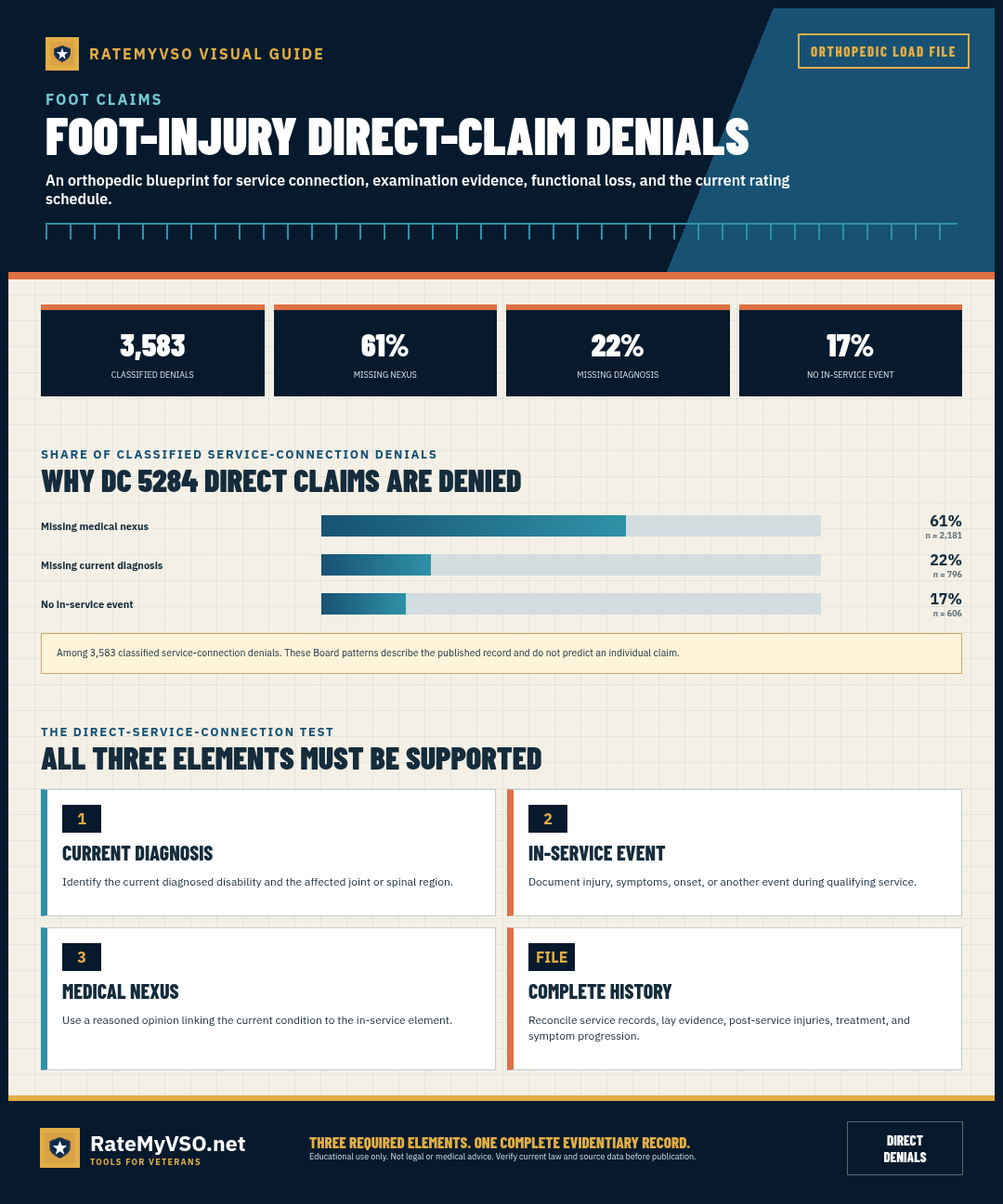
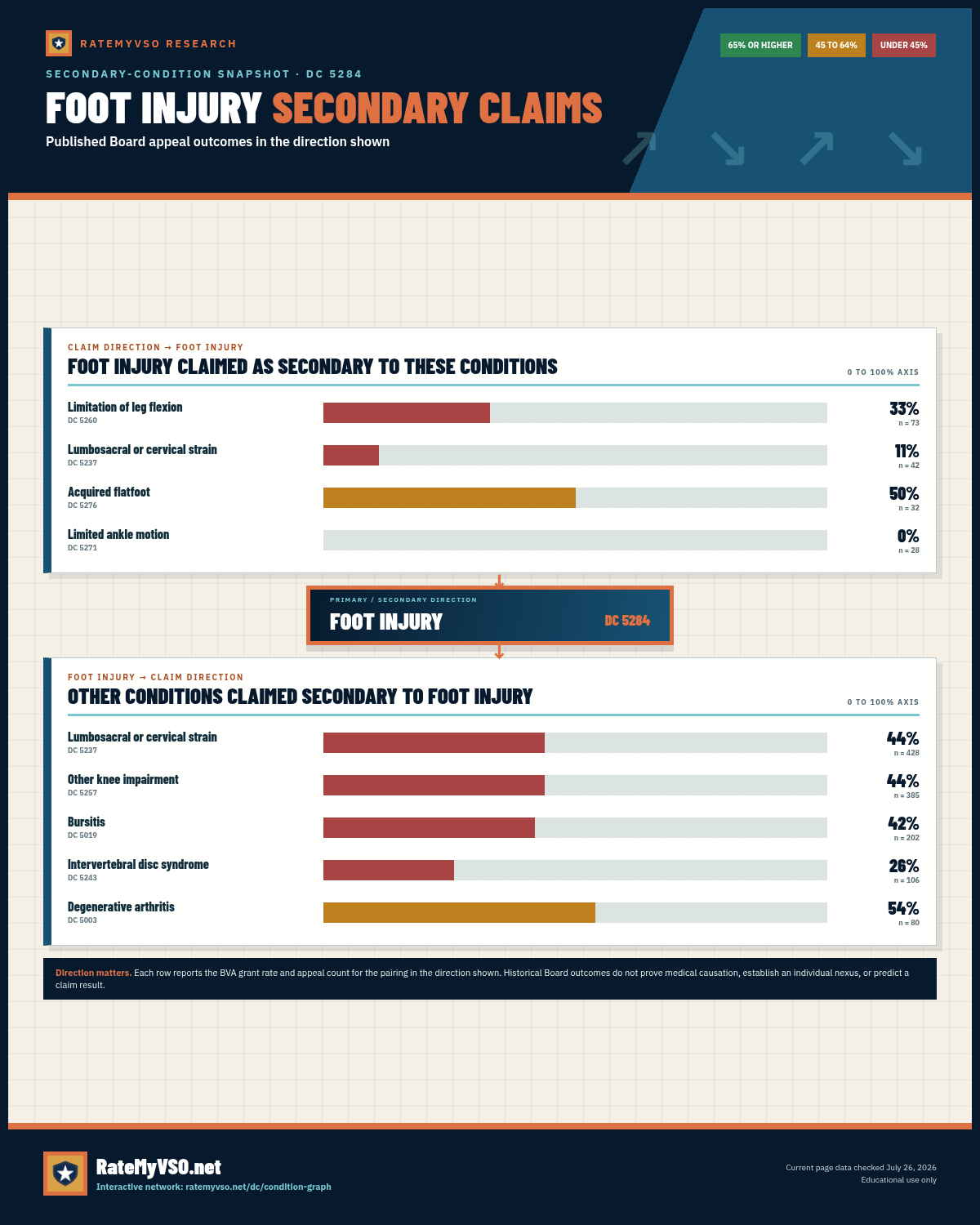
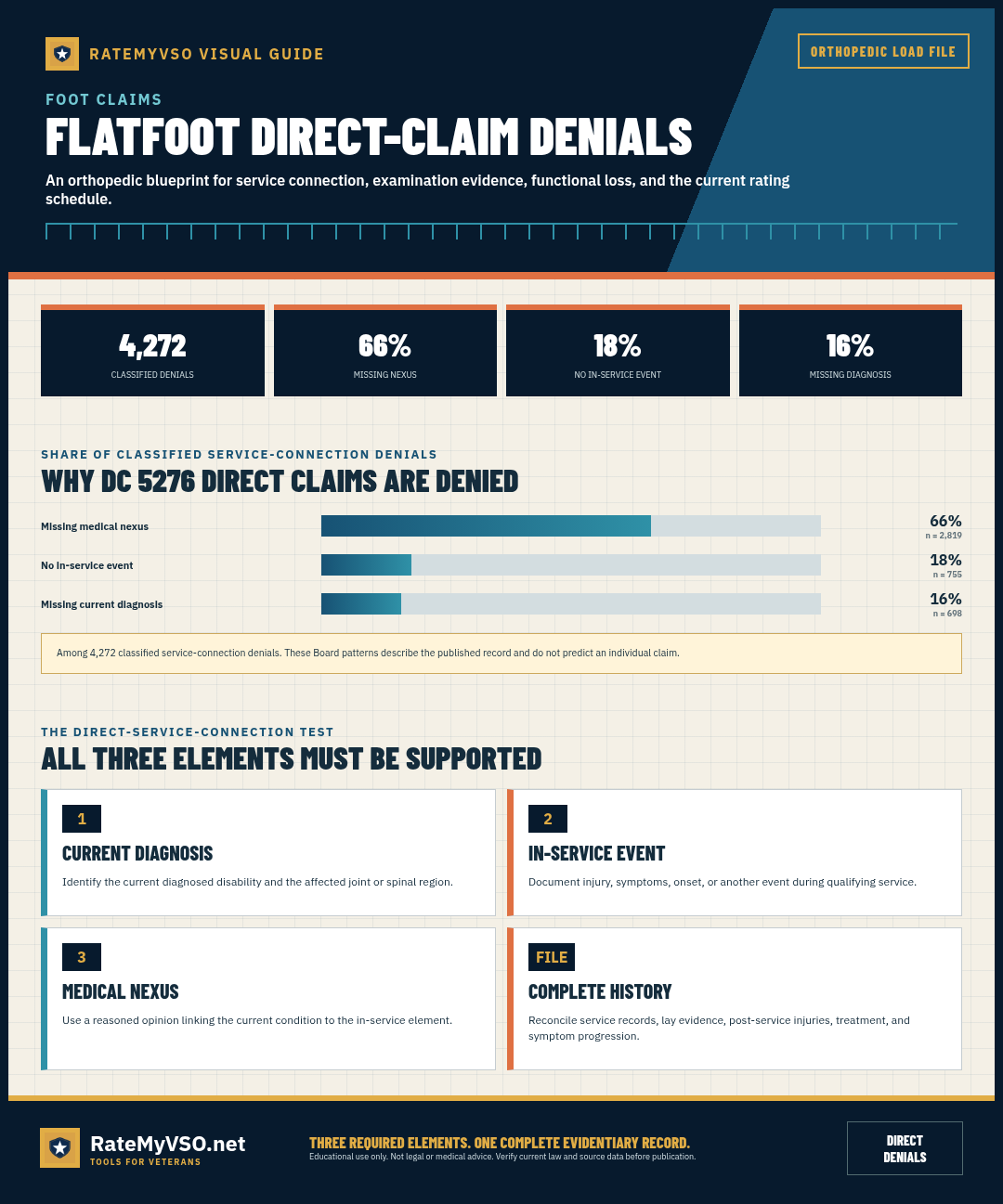
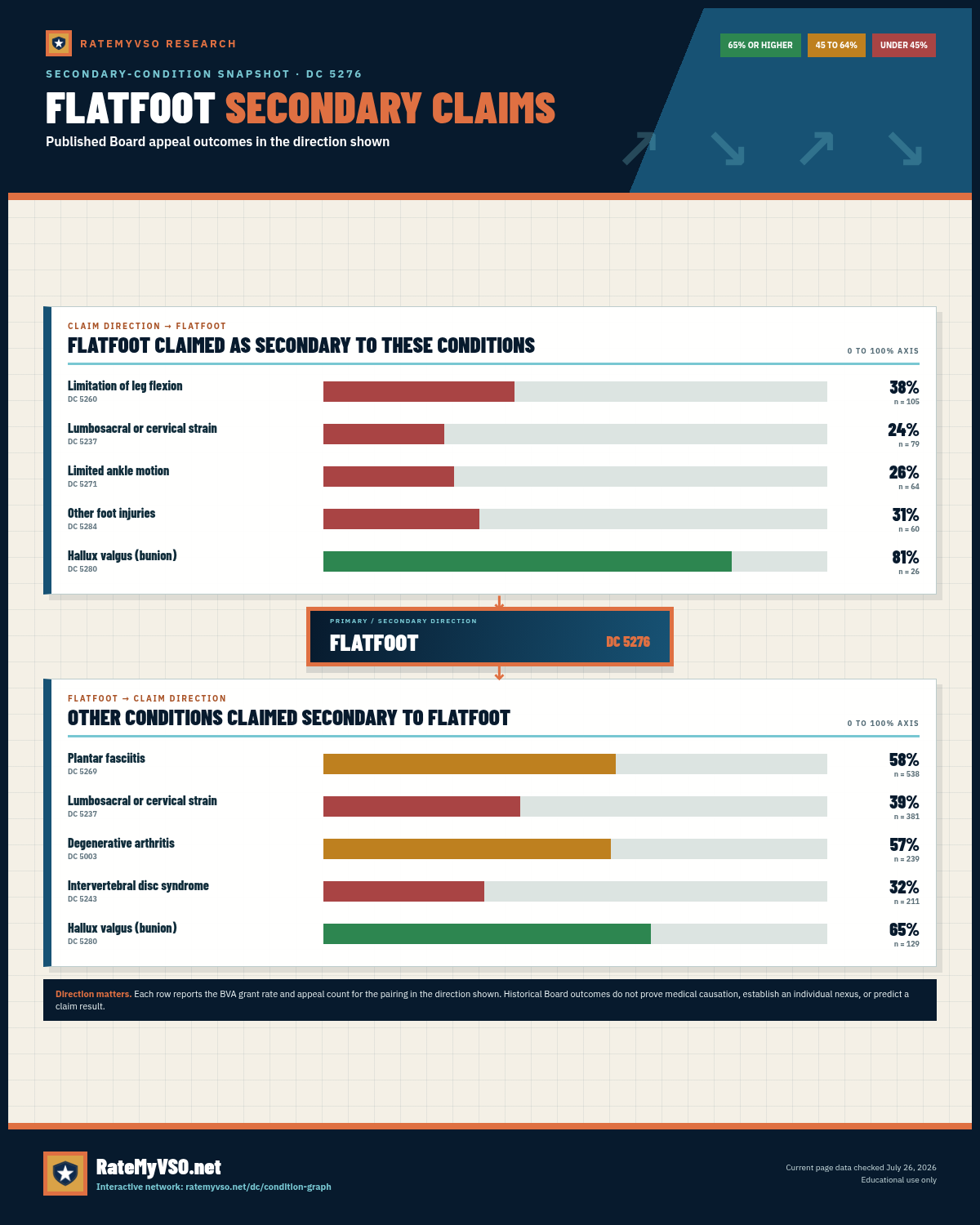
44 printable one-page charts across three body groups, covering how VA knee, back and foot claims work: the current knee instability criteria under DC 5257 that took effect February 7, 2021 and replaced the old slight, moderate and severe wording, how knee flexion and extension are measured and when a meniscus rating stacks, the spine General Rating Formula with the cervical and thoracolumbar thresholds kept separate, when radiculopathy earns its own neurologic rating, the intervertebral disc syndrome incapacitating-episode formula and the physician-prescribed bed rest it requires, acquired flatfoot and plantar fasciitis under their own codes, and research on the symptoms and evidence that appear in published Board decisions.
All 45 visual guides
How to use this library
Every guide is a single tall image sized for printing or saving to your phone. Select any card to open the full-resolution image, or use the download link under it. Use the filter to narrow to one body group. The rating charts summarize the published criteria; the research charts report what RateMyVSO measured in published Board decisions, with the denominator printed on the chart itself.
These charts catalogue the published rating criteria and what appears in published Board decisions. VA applies the version of the rating schedule in effect for each period being rated, which matters most for the knee: DC 5257 was rewritten effective February 7, 2021, so an earlier period is still scored under the older slight, moderate and severe wording. The three body groups keep separate denominators and are never pooled, and the cervical and thoracolumbar thresholds are distinct. The research charts count how often something appeared in decision text, which is not symptom prevalence, not a checklist, and not a prediction about any individual claim. These charts are not legal or medical advice. For the full written guidance, start with the knee, lumbar spine, or foot conditions guides.