Knee Limitation of Flexion Secondary to Back or Neck Strain Claim Guide
Knee Limitation of Flexion (VA diagnostic code 5260) is sometimes claimed as secondary to service-connected Back or Neck Strain (code 5237) under 38 CFR 3.310. We analyzed published Board of Veterans' Appeals decisions on that pairing; here is what they show. It is an encyclopedic reference, not a forecast.
The Numbers, from 1.9M Appeals
We analyzed the Board's published decisions and found knee limitation of flexion (DC 5260) claimed as secondary to back or neck strain (DC 5237) is one of the larger secondary claim pools at the Board that is an uphill claim once it reaches a merits decision.
How those 2,010 issues came out
Start with the essentials
- 01Service Connection
The ways a secondary connection can be established for this pairing.
- 02Diagnosis and Evidence
Common symptoms and the evidence cited in published Board appeals.
- 03Your History
What you experienced, what others observed, and what treatment changed.
Understand the claim
ICD-10 Diagnosis Codes for Knee Limitation of Flexion
The ICD-10 diagnosis codes most commonly used for DC 5260, Knee Limitation of Flexion (the kind on your medical records, decision letter, or C&P exam report). VA rates the disability and its residuals, not the diagnosis itself, so coding can vary.
What a secondary claim on this pairing needs
Under 38 CFR 3.310 a secondary claim turns on three elements:
- A current diagnosis: a medical diagnosis of knee limitation of flexion (the secondary).
- A service-connected primary: Back or Neck Strain, already service-connected (the primary). A 0% primary still counts.
- A medical nexus: a medical opinion linking the knee limitation of flexion to the back or neck strain, showing the primary caused or aggravated it.
See the Secondary Claim guide for the caused-versus-aggravated split, and the Nexus Letter guide for what makes the medical opinion strong.
Why knee limitation of flexion is claimed secondary to back or neck strain
Whether that medical link exists in any one case is a medical question decided on that case's own evidence (the nexus).
Pairing research and evidence
Symptoms Recorded in Granted Knee and lower-leg conditions Decisions
We analyzed 9,720 granted Board decisions involving knee and lower-leg conditions for symptoms named in sentences about the condition (rating-criteria recitations excluded). Descriptive of the published record, what the Board wrote down, not a checklist of what to report.
Bar length shows decisions. Percentages remain context.
Detected by phrase-reading the decision text with condition-specific vocabularies. Source: Board of Veterans' Appeals decisions, RateMyVSO analysis.
Caused By vs Aggravated By: What the Board Found
The outcome split above counts whole issues. This section goes one layer deeper. Under 38 CFR § 3.310 a secondary claim can be won two ways: the back or neck strain caused the knee limitation of flexion (§ 3.310(a)), or it aggravated an existing knee limitation of flexion (§ 3.310(b)). Every grant rests on one or the other, so the numbers below divide up the granted claims only.
Direct causation is the route that carries most grants here: 90% of them found the back or neck strain caused the knee limitation of flexion, the rest found aggravation. A practical consequence for the nexus opinion: it should address both routes, because a medical opinion that only argues causation leaves the aggravation theory, a separate legal basis, on the table. See the caused-vs-aggravated guide for how the two theories differ.
On the other side: in 229 denied claims the Board looked at this pairing and found no link, meaning it decided the back or neck strain neither caused nor worsened the knee limitation of flexion. That is a separate group from the grants above, counted here so the picture is not one-sided.
We analyzed published Board decisions on this pairing to build this split. The grant split covers granted claims only; denied, remanded, and dismissed claims are not in it. Descriptive of the published record, not a prediction.
What VA Looks For: Tests, Records, and Diagnostic Codes
We analyzed published Board decisions on these claims and ranked the records that appeared most often:
- A medical nexus opinion: the one record VA weighs most on a secondary claim, a doctor's statement linking your knee limitation of flexion to your service-connected back or neck strain and naming the mechanism.
- Range of motion measured in degrees
- Meniscal pathology documented
- Knee MRI or X-ray findings
- Instability testing
- Giving way, buckling, or locking reported
- Knee replacement (arthroplasty) documented
The diagnostic code involved: DC 5260 (Knee Limitation of Flexion). The rating levels for this code are in the rating section below.
Records ranked by how often published Board decisions cited them. The exam that captures most of this is covered in the C&P Exam section below. Source: Board of Veterans' Appeals decisions, RateMyVSO analysis.
The Evidence That Wins Knee Limitation of Flexion Secondary Claims
What veterans who win this pairing actually put in the file, and why each piece moves the claim.
- A current knee diagnosis: Every grant had one, such as knee strain, patellofemoral pain syndrome, or degenerative arthritis. In A25111189, knee x-rays showing joint space narrowing backed it up. In A25080407, knee pain that required braces and medication counted as a disability even without a named diagnosis.
- Proof your back is service connected: Each claim here depended on an already service-connected lumbar spine or low back condition.
- A nexus opinion that explains how: The winning opinions named the mechanism, such as weight shifting and altered gait from the back (A26004275, A26057700, A25111189) or back pain causing tension in the muscles around the knee (A26028604).
- An opinion that covers aggravation: The Board rejected VA opinions that never considered whether the back made the knees worse (A26057700) and trusted one that addressed both cause and aggravation (A26009659).
- An opinion based on your full history: The Board credited opinions whose writers reviewed the claims file, your statements, and the medical record (A25111189, A26057700).
- Knee treatment and exam records: Records of knee surgery, injections, braces, and painful range of motion gave the opinions facts to work from (A26057700, A25080407).
- Evidence about your gait: One VA examiner relied on a normal, non-antalgic gait to deny (A26009659), so records or statements showing how your back changes the way you walk matter.
Evidence Cited in Published Knee and lower-leg conditions Decisions
We analyzed 190,664 published Board decisions involving knee and lower-leg conditions for condition-specific evidence, counting only case-specific mentions (boilerplate recitations excluded). "Favorable" is the share of decisions citing that evidence where every issue was granted or the outcome was mixed; the baseline across all these decisions is 45.6%, combining every diagnostic code below. Evidence appearing in a decision does not mean it decided the case. Descriptive of the published record, not a prediction.
Bar length shows decisions citing the evidence.
By diagnostic code
These codes are grouped together above. They do not perform the same, so find your own code here rather than reading the combined figure. A code retired in the schedule rewrites appears without a link, because its decisions were judged under criteria that no longer apply.
Bar length shows published decisions reviewed.
Detected by phrase-reading the decision text with condition-specific vocabularies. Source: Board of Veterans' Appeals decisions, RateMyVSO analysis.
Board Grants on This Pairing, Dissected
These published Board decisions show veterans winning service connection for a knee condition as secondary to a service-connected low back (lumbar spine) condition. In each one, the Board had at least one medical opinion that tied the knees to the back, and it either found that opinion stronger than the VA opinion or found the two sides in balance. Published Board decisions are not binding precedent. Each one decides only that veteran's appeal, so read them as examples of what the record looked like, not as a promise of how your claim will go.
Chiropractor's altered-gait opinion beat VA opinions that ignored the back Citation A26057700 (June 22, 2026), Evidence Submission docket
The record: The veteran was service connected for lumbosacral strain and had a right knee strain (after a meniscectomy) and a left knee strain. He had arthroscopic surgery on both knees. A VA examiner in November 2024 said neither knee was related to service, because the right knee surgery came years after discharge and the left knee supposedly existed before service. A February 2025 VA addendum said the left knee was not aggravated by service. A private chiropractor examined him, measured painful knee flexion (to 80 degrees on the left and 75 degrees on the right), and wrote that each knee was "directly and causally related to constant and chronic compensation and adaptation to the weight shifting and altered gait caused by the lumbar spine".
Why it won: The Board found the VA opinions unpersuasive. The left knee rationale rested on a pre-service knee problem the Board could not find in the file, and the examiner cited the wrong entrance exam date. The right knee rationale relied only on the gap after service and ignored the veteran's own statements. None of the VA opinions considered whether the back caused or aggravated the knees. The Board noted, "It is notable that these opinions are the only opinions of record which address service connection on a secondary basis." It gave the veteran the benefit of the doubt and found both knees at least as likely as not caused by the service-connected low back disability.
Two VA examiners split, and the tie went to the veteran Citation A26028604 (March 30, 2026), Hearing docket
The record: The veteran was service connected for lumbosacral strain with degenerative arthritis, and VA exams diagnosed bilateral knee strain. A September 2020 VA examiner said the knees were at least as likely as not caused by the back, explaining that chronic low back pain leads to pelvic hypofunction and tension in the muscles around the knee joint. A December 2020 VA examiner disagreed and said knee strains come from local stress on the knee's own muscles and ligaments, not from strain or arthritis of the lumbar spine.
Why it won: The Board said both examiners gave reasoned opinions for their different conclusions, so the evidence was in equipoise. Under the benefit-of-the-doubt rule (38 U.S.C. 5107 and 38 CFR 3.310), the veteran wins a tie. The Board also noted that VA may not go looking for negative evidence to tip the balance. It granted service connection for both knees.
A short private opinion naming altered gait was enough Citation A26004275 (January 15, 2026), Evidence Submission docket
The record: The veteran was service connected for lumbar strain with intervertebral disc syndrome and spondylolisthesis. VA had already found a current diagnosis of bilateral patellofemoral pain syndrome. In July 2024 he submitted a private medical opinion (the decision does not state the writer's credentials) saying the knee condition was at least as likely as not related to the lumbar spine. It explained that "constant and chronic compensation and adaptation to the weight shifting and altered gait caused by the lumbar spine" had caused the knee pain.
Why it won: The Board walked through the three secondary service connection elements under 38 CFR 3.310: a current diagnosis, a service-connected back, and a medical nexus. It found the private opinion sufficient to establish the nexus. With all three elements met, it granted the claim. The decision does not describe any VA knee opinion against the claim.
Private opinion with x-rays and medical literature outweighed a VA denial Citation A25111189 (December 30, 2025), Evidence Submission docket
The record: The veteran was service connected for a back disability and had bilateral degenerative arthritis of the knees, noted on 2022 and 2023 exams. March 2022 knee x-rays showed mild joint space narrowing on the inner side of both knees. A February 2025 private opinion (credentials not stated) said the knees were related to both his heavy military duties and his back. It said the back disability can alter gait and lead to altered knee movement and excessive joint stress, which can lead to knee pain and arthritis. A July 2024 VA examination gave a negative opinion.
Why it won: The Board gave the private opinion probative value because the clinician reviewed the claims file, the veteran's statements, his medical history, and medical literature, and gave a thorough rationale consistent with the record. Weighed against the negative VA opinion, the evidence was at least in approximate balance, so the Board applied the benefit of the doubt and found the knees proximately due to and aggravated by the back under 38 CFR 3.310. This grant rests on both a direct theory (military duties) and the secondary back theory.
Why VA Denies, and How the Board Answered
The rationales below are the ones VA examiners actually used against this pairing in the published record, each paired with the Board's response.
- Read the left column first: if a VA opinion in your file uses one of these arguments, that is the reasoning your own evidence has to meet.
- The right column is the counter: it shows how the Board actually answered that argument, with the decision cited.
- A rationale appearing here is not a verdict: the same argument won some cases and lost others, on different records.
| VA examiner's rationale | How the Board answered it |
|---|---|
| There is no pathophysiologic link between a back condition and the knees. They are different anatomical and physiological systems. Knee osteoarthritis comes from wear and pressure on the knees, not from a herniated lumbar disc. The gait is not antalgic, range of motion is not limited, and the knee arthritis is progressing as expected. | The Board gave this opinion great weight because it reviewed the history, gave a full rationale, and addressed both causation and aggravation. The veteran had no medical opinion to the contrary, and his own belief about the cause was not competent medical evidence. Denied. (A26009659) |
| The knee conditions are a separate entity from the lumbar spine, and a review of the medical literature shows no causal relationship. | The Board found the opinion probative. The examiner never used the word "aggravation," but the Board held that saying the conditions are entirely separate ruled out aggravation too. With no competent opinion on the other side, the claim was denied. (A25062463) |
| There is insufficient literature or evidence to establish that a knee strain can be caused by a lumbosacral strain. | The Board noted that no medical professional had ever said the right knee was secondary to the back, and the veteran pointed to no such evidence. With no positive medical evidence, the claim was denied. (A25099876) |
| The veteran's joint problems do not correlate with each other, and there is no mechanical stress coming from a nearby joint. The cause looks inflammatory, plus age and genetics. | The Board preferred the VA opinion because the examiner examined the veteran, reviewed the evidence, and explained each joint. A private opinion linking the joints to service got no weight because it gave no rationale. Denied. (A25088028) |
| Knee strains come from local stress on the knee's muscles and ligaments, not from strain or arthritis of the lumbar spine. | A second VA examiner had found the opposite and explained it. The Board said both opinions were reasoned, found the evidence in equipoise, and granted under the benefit of the doubt. (A26028604) |
| The knee problems were not related to service because of the gap after discharge and an asserted pre-service knee problem. | The Board found these opinions unpersuasive. They rested on a wrong entrance exam date and a pre-service history it could not find, ignored the veteran's statements, and never considered whether the back caused or aggravated the knees. The private secondary opinion won. (A26057700) |
If granted: rating and daily function
If Granted: How Knee Limitation of Flexion Is Rated
The VA assigns one of these percentages based on what your medical record documents. Plain-language summary of the rating criteria at 38 CFR; the controlling text is the regulation itself.
| Rating | What the record has to show for DC 5260, Knee Limitation of Flexion |
|---|---|
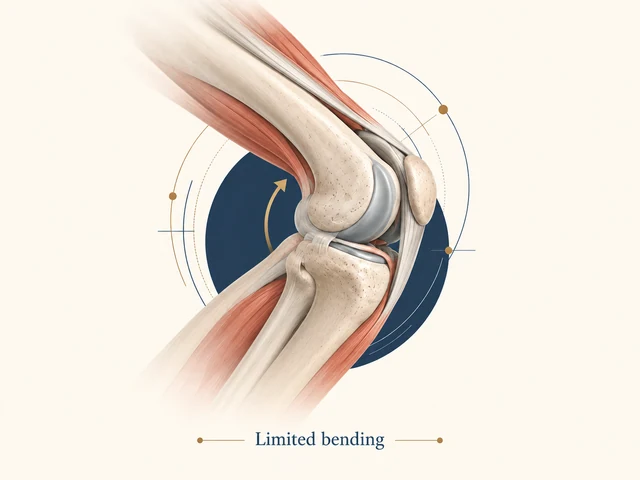
| 30% | Your knee bends only 15 degrees from a straight leg (flexion means bending the joint). A healthy knee bends to about 140 degrees, so at this level the knee barely bends at all. |
| 20% | Your knee bends only 30 degrees from a straight leg (flexion means bending the joint). A healthy knee bends to about 140 degrees, so this is a severe loss of bending. |
| 10% | Your knee bends only 45 degrees from a straight leg (flexion means bending the joint). That is about one-third of the roughly 140 degrees a healthy knee bends. |
| 0% | You can only bend your leg forward to 60 degrees (flexion means bending a joint forward). A normal leg can bend about 120-135 degrees at the knee, so this rating applies when your leg movement is significantly restricted and you can only achieve less than half of normal bending range. |
Do's and Don'ts
Every item below comes from a pattern in the decisions on this pairing, not from general claim advice.
- Get a medical opinion that explains how your back affects your knees, such as weight shifting and an altered gait. That explanation carried the grants in A26004275 and A26057700.
- Ask the opinion writer to address whether the back caused the knee condition and whether it made it worse. The Board faulted VA opinions that skipped the back theory (A26057700) and trusted one that covered both (A26009659).
- Make sure the opinion shows the writer reviewed your records, your history, and your own statements. The Board gave weight to private opinions for exactly that reason (A25111189, A26057700).
- Read the VA exam for factual mistakes, like a wrong entrance exam date or a pre-service injury that is not in your file. Those errors sank the VA opinions in A26057700.
- Put a medical opinion on your side of the scale. When two reasoned opinions disagreed, the tie went to the veteran (A26028604).
- Don't rely on a treatment note that only says your knee pain is "secondary" to back pain. With no rationale, the Board gave it no weight (A25080407).
- Don't submit a private opinion that states a conclusion without reasons. The Board gave such an opinion no weight (A25088028).
- Don't count on your own belief about the cause. In four of the five denials here (A26009659, A25062463, A25088028, A25080407), the Board said a veteran without medical training is not competent to link the knees to the back.
- Don't leave a negative VA opinion unanswered. In A26009659, A25062463, and A25099876, the Board stressed that no opinion contradicted it.
- Don't assume a VA opinion fails just because it never says "aggravation." The Board accepted one that called the knees a separate condition (A25062463).
Prepare and take the next step
Prepare: your own working pages
Optional. These are your own notes, in your own words. They are not a VA form, they are not sent to the VA, and nothing here is a medical finding or a prediction about your claim.
Three reminders while you prepare
- Keep the two conditions separate
Record the history, diagnosis, symptoms, and treatment for Back or Neck Strain and Knee Limitation of Flexion separately before describing the possible relationship. Go to this part
- Ask about causing and worsening separately
A clinician may need to address whether Back or Neck Strain caused Knee Limitation of Flexion, whether it worsened it, and what other explanations the record shows. Go to this part
- Build the timeline from records you have
Mark missing or unverified records honestly. Research from published Board decisions describes the record reviewed; it does not predict an individual claim. Go to this part
Sign in or create an account to save your answers and come back to them later. You can fill these in and print them without an account.
Two-condition timeline
Knee Limitation of Flexion: symptoms and daily function
Provider questions about the relationship
Records and unanswered questions
Decision-letter reading sheet
Quick Checklist Before You File
- Service connection already in place for Back or Neck Strain, and a current medical diagnosis of knee limitation of flexion.
- Diagnostic testing, imaging, or clinical records documenting the knee limitation of flexion, whatever your provider used to diagnose and track it.
- A nexus opinion, whenever possible from a doctor familiar with knee limitation of flexion, stating it is at least as likely as not caused or aggravated by the back or neck strain, and naming the mechanism rather than just the conclusion.
- Lay statements: spouse, family, friends, or battle buddies describing what they've witnessed or noticed.
- Your STRs and any VA opinions already in the file on either condition. If a VA opinion already went against you, your submitted opinion or statement should address its specific reasoning.
For the mechanics of filing itself, see the Standard Claim Guide and the Fully Developed Claim Guide.
The Claims Process, Step by Step
A secondary claim moves through the same pipeline as any other. Understanding who does what helps you know who to contact and what to expect.
- You file the claim, naming Back or Neck Strain as the service-connected primary and knee limitation of flexion as secondary. Directly with VA, through VA.gov, or with an accredited representative's help.
- VA assigns a Veteran Service Representative (VSR) to develop the claim: gather your service treatment records, VA and private medical records, and order a C&P exam if needed.
- The C&P exam is conducted, usually with the examiner asked to address the specific secondary theory (causation and aggravation both).
- The file goes to a Rating Veteran Service Representative (RVSR), the "rater," who weighs the medical evidence and decides service connection and, if granted, the rating percentage.
- VA issues the decision letter stating the outcome and the reasoning.
- If denied or under-rated, you choose an appeal lane, Supplemental Claim, Higher-Level Review, or a Board appeal, covered below.
Who's who: VSO vs. VSR vs. Rater vs. C&P Examiner
Your VSO
An accredited representative, agent, or attorney. Not a VA employee. Helps prepare and file, and can represent you on appeal. Has no authority to decide your claim.
VSR
VA staff who develops the claim: gathers records and schedules the exam. Does not decide the rating.
Rater (RVSR)
VA staff who reviews the complete file and makes the actual decision on service connection and percentage.
C&P Examiner
Conducts the exam and, where asked, gives a nexus opinion. Does not decide the claim, but the opinion's reasoning and legal framing carry real weight.
For the full walkthrough, see Inside Your Claim and Claim Stages.
DBQs and Your C&P Exam
A Disability Benefits Questionnaire (DBQ) is the standardized form the examiner completes for your condition. See the DBQ Guide for how these forms work and whether a private DBQ from your own doctor can be submitted instead of relying solely on a VA exam. For what to expect and how to prepare, see the C&P Exam Prep Guide, and be specific about how your knee limitation of flexion symptoms relate to your back or neck strain timeline, treatment, and any aggravation, that is the detail a nexus opinion relies on.
Reading Your Decision Letter, and What to Do If Denied
Your decision letter has a narrative "reasons and bases" section and a codesheet with the rating and effective date. See the Reading Your Decision Letter Guide or use the Letter Interpreter tool to decode your own letter. If denied, you have three main lanes:
- Supplemental Claim: refile with new and relevant evidence, such as a nexus opinion that addresses the mechanism and the specific VA rationale you're rebutting. See Supplemental Claim Guide.
- Higher-Level Review (HLR): a senior reviewer looks at the same evidence again, useful if the denial rested on a legal error. See HLR Guide.
- Board Appeal: your case goes to a Veterans Law Judge, with a direct review, evidence, or hearing docket. See Board Appeal Guide.
Not sure which lane fits? See the Appeals decision guide for a side-by-side comparison.
After You Win: Maintaining Your Rating
Keep documentation of ongoing treatment, follow-up evaluations, and any updated diagnostic testing for your knee limitation of flexion on file, this protects you if VA schedules a future reexamination. See Protect Your Rating for when a rating becomes protected and Future Reexaminations for what triggers one. If your knee limitation of flexion worsens, see the Rating Increase Guide.
References and related resources
Frequently Asked Questions
Does Back or Neck Strain have to be highly rated to support a knee limitation of flexion secondary claim?
No. 38 CFR 3.310 looks at whether the service-connected Back or Neck Strain caused or aggravated the knee limitation of flexion, not at how severe the Back or Neck Strain rating is. Even a 0% service-connected primary can anchor a secondary claim.
What do the percentages on this page mean?
They are the historical outcomes of 2,010 published Board decisions on this exact pairing: 6% granted, 26% denied, 67% remanded. They describe decided appeals already on record. They do not predict what would happen in any individual case.
RateMyVSO. Educational resource. Not affiliated with the U.S. Department of Veterans Affairs. Not legal advice. All RateMyVSO tools are free. Find a VSO representative for personalized guidance.